- English
- French
- German
- Portuguese
- Spanish
- Russian
- Japanese
- Korean
- Arabic
- Greek
- German
- Turkish
- Italian
- Danish
- Romanian
- Indonesian
- Czech
- Afrikaans
- Swedish
- Polish
- Basque
- Catalan
- Esperanto
- Hindi
- Lao
- Albanian
- Amharic
- Armenian
- Azerbaijani
- Belarusian
- Bengali
- Bosnian
- Bulgarian
- Cebuano
- Chichewa
- Corsican
- Croatian
- Dutch
- Estonian
- Filipino
- Finnish
- Frisian
- Galician
- Georgian
- Gujarati
- Haitian
- Hausa
- Hawaiian
- Hebrew
- Hmong
- Hungarian
- Icelandic
- Igbo
- Javanese
- Kannada
- Kazakh
- Khmer
- Kurdish
- Kyrgyz
- Latin
- Latvian
- Lithuanian
- Luxembou..
- Macedonian
- Malagasy
- Malay
- Malayalam
- Maltese
- Maori
- Marathi
- Mongolian
- Burmese
- Nepali
- Norwegian
- Pashto
- Persian
- Punjabi
- Serbian
- Sesotho
- Sinhala
- Slovak
- Slovenian
- Somali
- Samoan
- Scots Gaelic
- Shona
- Sindhi
- Sundanese
- Swahili
- Tajik
- Tamil
- Telugu
- Thai
- Ukrainian
- Urdu
- Uzbek
- Vietnamese
- Welsh
- Xhosa
- Yiddish
- Yoruba
- Zulu
Can Custom Socket Head Titanium Bolts Lower Maintenance Costs?
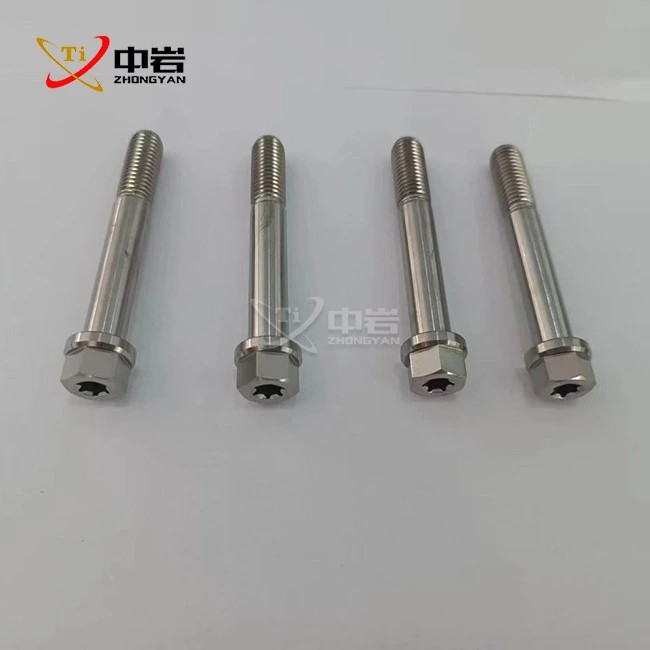
Custom Socket Head Titanium Bolts can make maintenance costs a lot cheaper in a wide range of commercial settings. These special screws use titanium's high resistance to rust, high strength-to-weight ratio, and long service life to cut down on replacements and downtime. Bolts made of Grade 5 titanium alloy, which have a tensile strength of more than 900 MPa, work very well in tough settings where steel screws break quickly. The socket head design allows for high torque uses and can handle temperatures from -252°C to 400°C. This makes them perfect for industries like aircraft, automotive, and chemical processing that need to cut down on repair costs.
Understanding Custom Socket Head Titanium Bolts and Their Properties
Custom socket head titanium nuts are a specific type of precision-engineered fastener made to meet the needs of certain industries. These parts combine the natural benefits of titanium with the ability to be made in any size or shape, making them useful in situations where standard off-the-shelf fasteners can't.
Material Composition and Grades
Because they are made of titanium, especially Grade 5 (Ti-6Al-4V) titanium metal, these nuts are strong. This material for aircraft uses 6% aluminum and 4% vanadium, which gives it superior mechanical qualities compared to other materials. Titanium bolts, which have a mass of about 4.43 g/cm³, are much lighter than steel bolts while still being stronger.
Tensile strengths of Grade 5 titanium nuts are higher than 900 MPa, which is about the same as medium-carbon steel but almost half as heavy. This amazing strength-to-weight ratio is especially useful in places where reducing weight has a direct effect on fuel use and operating efficiency, like in aircraft and high-performance automotive systems.
Socket Head Design Advantages
There are clear benefits to using socket heads instead of standard hex heads. This internal drive system lets you use more power while also lowering the chance that the tool will slip and damage the bolt head during installation or removal. Because socket head nuts are so small, they are perfect for situations where there isn't much room for error.
Titanium socket head bolts come in sizes from M3 to M20 to meet a wide range of application needs. Lengths range from 6mm to 150mm to suit different installation needs. Different mechanical systems can get the best fit and performance from precision threading choices.
Corrosion Resistance and Environmental Durability
Titanium is very resistant to corrosion because it can form a solid oxide layer that heals itself when it comes in contact with air. This self-passivating property of titanium bolts makes them almost impossible to corrode in places where steel screws would fail quickly, like saltwater, chemical processing areas, and places with a lot of moisture.
Biocompatibility and nonmagnetic qualities of the material make it useful for medical devices and delicate electronics where standard ferrous fasteners would not work. These qualities directly lead to lower maintenance needs by preventing breakdowns caused by rust and increasing the time between service intervals.
Performance and Cost Comparison: Titanium vs Other Materials
To figure out the total cost of ownership, you need to compare the Custom Socket Head Titanium Bolt to other materials in a lot of different ways. The starting cost of titanium fasteners is higher, but their long-term value becomes clear when you consider that they last longer and need less upkeep.
Material Performance Metrics
Stainless steel nuts are often used because they don't rust. Their density is about 8.0 g/cm³, which is almost twice that of titanium. This difference in weight gets big when a lot of connections are needed or when lowering the weight of a system affects how well it works. Carbon steel is cheaper to buy at first, but it doesn't fight rust, so it needs protective coatings that make it more complicated and increase the chance of failure.
Fasteners made of aluminum are lighter than titanium, but they can't match titanium's hardness. Because aluminum bolts' tensile strengths are usually between 200 and 400 MPa, they need bigger cross-sections to hold the same amount of weight. This could make the weight benefits go away.
Lifecycle Cost Analysis
Industry research shows that titanium socket head bolts can lower total purchase costs by 15–25% over 10 years of use, even though they cost more at first. This lower cost comes from longer periods between replacements, less downtime for upkeep tasks, and no longer having to deal with failures caused by rust.
When compared to stainless steel options, titanium screws allow chemical processing plants to extend the time between maintenance tasks by 200 to 300 percent. Weight-related fuel savings add up over the operational lifecycles of aerospace uses. Each kilogram of weight reduction leads to measurable fuel cost savings over the service life of an airplane.
Environmental Adaptability
Titanium can withstand temperatures from -252°C to 400°C better than most other materials, so it can be used in harsh settings without losing its performance. This thermal stability lowers breakdowns caused by thermal stress and keeps the bolt pressure the same over a wide temperature range.
The material's high resistance to wear under cyclic loading conditions makes it last longer in dynamic uses where vibration and repeated stress cycles would cause other materials to fail early. This quality is especially useful in places with moving machines and high-frequency vibration.
How to Choose and Size Custom Socket Head Titanium Bolts for Your Needs
When choosing the right custom socket head titanium nuts, you need to carefully think about the performance factors, application-specific needs, and size limitations. This methodical technique guarantees the best results while cutting costs as much as possible.
Dimensional Specifications and Standards
The first step in bolt size is to do a load study to find out what the tensile and shear strengths need to be. Because grade 5 titanium has a tensile strength of 900+ MPa, it can be used to make bolts with smaller diameters that can still hold the same amount of weight. Often, this size reduction saves weight and makes it easier to get into tight areas.
Thread standards must match up with matching parts, and both metric and imperial choices must be taken into account. In high-stress situations, precision fitting is important to make sure that the threads connect properly and that the load is spread out evenly. When normal designs don't meet specific needs, custom thread pitches can be made to fit those needs.
ASTM F136 Compliance and Certification Requirements
Meeting ASTM F136 standards makes sure that the quality and performance of materials are the same from one production batch to the next. This standard talks about the chemical makeup, mechanical qualities, and testing needs that are important for various uses. Procurement managers should check the compliance documents and tracking records of suppliers.
Getting ISO 9001:2015 approval adds to the quality guarantee by showing that quality management is carried out in a planned way throughout the whole manufacturing process. In fields like medicine and engineering, where following the rules is important, these licenses become even more important.
Supplier Selection Criteria
When looking at possible suppliers, you need to look at their manufacturing skills, quality control systems, and expert help resources. To make custom bolts, you need to be able to use CNC machines to cut accurately and have knowledge of the special processing needs of titanium.
Lead times for custom setups are usually between 2 and 6 weeks, but they can be longer or shorter based on the complexity and amount needed. Custom specs often have minimum order amounts, so it's important to find a balance between the costs of keeping inventory and the benefits of buying things quickly. Reliable providers offer expert advice to make designs better for performance and ease of production.
Best Practices for Maintaining Titanium Socket Head Bolts
Even though titanium is naturally strong and doesn't rust, it is still important to follow proper upkeep procedures to get the most out of its service life and performance throughout all operating cycles. These steps build on titanium's natural benefits and stop common ways that things go wrong.
Inspection and Monitoring Procedures
When titanium surfaces touch each other under load, galling can happen. This is why regular eye inspection should focus on finding signs of galling. This cold-welding effect can be avoided by using molybdenum disulfide or similar anti-seize chemicals to properly grease the installation area.
Verifying the torque keeps the preload levels at the right level, which ensures the best joint performance and keeps the threads from being over-tightened, which could damage them. Because titanium has a lower elastic modulus, it needs torque values that are about 70–80% of the similar steel bolt values to get the right gripping force.
Surface Treatment Considerations
Anodizing and passivation are two optional surface processes that can improve performance for certain uses. Anodizing lets you code things by color and adds to their resistance to wear, while passivation makes the natural metal layer work better to protect against rust even more.
For proper upkeep, these treatments need special care, like using cleaning products that are safe and won't damage the surface. If you don't use strong chemicals or rough cleaning methods, the process will work better, and the product will last longer.
Preventive Maintenance Strategies
By using condition-based monitoring tools, you can repair Custom Socket Head Titanium Bolts before they break. Ultrasonic testing can find the start of a fatigue crack in important uses, so the part can be replaced during planned maintenance times instead of having to be fixed in an emergency.
Keeping track of installation torques, service conditions, and inspection results is a good way to find ways to make future designs better and optimize repair times. This methodical technique increases return on investment and makes sure that the system works reliably.
Selecting Trusted Suppliers of Custom Socket Head Titanium Bolts
Strategies for getting titanium fasteners that work are built on partnerships with qualified sources. Processing titanium and making unique bolts are very specialized tasks that need suppliers with a lot of different skills and experience.
Manufacturing Capability Assessment
Finding out about a supplier's titanium processing experience and available tools is the first step in judging their skills. CNC machining of titanium needs special tools, cutting settings, and handling methods that are very different from those of CNC machining of steel. Suppliers should show that they know how to work with titanium's heat-sensitive and work-hardening qualities.
Material traceability, dimensional proof, and mechanical property testing must all be able to be done by quality control tools. Advanced providers keep approved test labs for making sure that the properties and performance traits of materials meet the standards that are in place.
Certification and Quality Standards
ISO 9001:2015 certification shows that you meet basic quality management standards, while AS9100 certification shows that you know a lot about the aerospace industry. For medical device uses, ISO 13485 compliance may be needed, which shows that you understand the rules and how to record them.
Material certificates should include chemical analysis, proof of mechanical properties, and paperwork that shows how finished goods can be traced back to the lots of materials they came from. This paperwork is needed for important tasks that need full records of the material's history.
Service and Support Capabilities
Technical help services set premium sellers apart from generic ones. Getting help from engineers during the planning process helps make sure that the bolt specs are best for the job while also taking into account how easy they are to make. This way of working together often finds ways to save money without lowering performance.
Respondent customer service makes sure that technology questions and shipping issues are dealt with quickly. Suppliers that can handle global transportation can help foreign businesses run smoothly while keeping quality standards high in all of their sites.
Conclusion
Custom Socket Head Titanium Bolts have great material qualities and can be designed to fit particular applications, which lowers upkeep costs by a large amount. When you combine better corrosion protection, a great strength-to-weight ratio, and longer service life, you get a lot of value in aircraft, automobile, medical, and industrial settings. Lifecycle cost analysis regularly shows 15–25% total ownership savings over operational periods, even though the original investment costs are higher than traditional options. These benefits are maximized when the right supplier is chosen, specifications are written, and upkeep procedures are followed. This also ensures reliable performance in tough settings.
FAQ
Do titanium socket head bolts require different maintenance compared to steel bolts?
Thanks to their resistance to corrosion and fatigue, titanium nuts need a lot less upkeep. To keep them from galling, however, they need to be installed with certain anti-seize chemicals, and the torque values should be lowered to 70–80% of steel bolt values to account for titanium's lower elasticity.
How does custom sizing impact durability and cost-efficiency?
Custom size makes bolts work better in certain situations, and it's often possible to reduce the thickness, which saves weight while still meeting strength standards. Customizing can lower the cost of materials and make them easier to get, but there may be a minimum order quantity for unique designs.
What certifications should I look for in a titanium bolt supplier?
Some important certifications are ASTM F136 for material standards, ISO 9001:2015 for quality management, and AS9100 for aerospace uses, which are specific to that business. Suppliers should give full paperwork on how to track down materials and test results for verifying their mechanical properties.
After being taken off, can titanium socket head bolts be used again?
Titanium nuts can usually be used again if they are taken off correctly and checked for damage. Unlike steel bolts, which can rust, titanium bolts usually stay strong through multiple uses as long as they are treated properly and not over-torqued.
What kinds of surface changes are there to make things work better?
Some of the processes that can be used are anodizing, which makes the metal resistant to wear and colors it, passivation, which protects against rust better, and special coatings like DLC (Diamond-Like Carbon), which lowers friction in high-wear situations.
Partner with Zhongyan for Superior Custom Socket Head Titanium Bolt Solutions
Because Zhongyan is an expert in precision CNC cutting and titanium processing, they can make unique socket head titanium bolts that are better than industry standards and will save you money in the long run on maintenance costs. Our Grade 5 titanium alloy bolts have a tensile strength of over 900 MPa, meet ASTM F136 standards, and come in lengths from 6mm to 150mm and sizes from M3 to M20. As a reliable company that makes Custom Socket Head Titanium Bolts, we use cutting-edge production methods and thorough quality control systems to make sure that our products always work well in aerospace, automobile, and industrial settings. Get in touch with our expert team at sales@titaniumstudy.com to talk about your unique needs and get cheap quotes for high-performance titanium fastening options.
References
1. American Society for Testing and Materials. "Standard Specification for Wrought Titanium-6Aluminum-4Vanadium ELI Alloy for Surgical Implant Applications." ASTM International, 2019.
2, Boyer, Rodney R. "An Overview of the Use of Titanium in the Aerospace Industry." Materials Science and Engineering: A, Volume 213, 1996.
3. Donachie, Matthew J. "Titanium: A Technical Guide, Second Edition." ASM International Materials Park, 2000.
4. Lutjering, Gerd, and James C. Williams. "Titanium Engineering Materials and Processes." Springer-Verlag Berlin Heidelberg, 2007.
5. Peters, Manfred, et al. "Titanium Alloys for Aerospace Applications." Advanced Engineering Materials, Volume 5, 2003.
6. Rack, Henry J., and John M. Qazi. "Titanium Alloys for Biomedical Applications." Materials Science and Engineering: C, Volume 26, 2006.

Learn about our latest products and discounts through SMS or email