- English
- French
- German
- Portuguese
- Spanish
- Russian
- Japanese
- Korean
- Arabic
- Greek
- German
- Turkish
- Italian
- Danish
- Romanian
- Indonesian
- Czech
- Afrikaans
- Swedish
- Polish
- Basque
- Catalan
- Esperanto
- Hindi
- Lao
- Albanian
- Amharic
- Armenian
- Azerbaijani
- Belarusian
- Bengali
- Bosnian
- Bulgarian
- Cebuano
- Chichewa
- Corsican
- Croatian
- Dutch
- Estonian
- Filipino
- Finnish
- Frisian
- Galician
- Georgian
- Gujarati
- Haitian
- Hausa
- Hawaiian
- Hebrew
- Hmong
- Hungarian
- Icelandic
- Igbo
- Javanese
- Kannada
- Kazakh
- Khmer
- Kurdish
- Kyrgyz
- Latin
- Latvian
- Lithuanian
- Luxembou..
- Macedonian
- Malagasy
- Malay
- Malayalam
- Maltese
- Maori
- Marathi
- Mongolian
- Burmese
- Nepali
- Norwegian
- Pashto
- Persian
- Punjabi
- Serbian
- Sesotho
- Sinhala
- Slovak
- Slovenian
- Somali
- Samoan
- Scots Gaelic
- Shona
- Sindhi
- Sundanese
- Swahili
- Tajik
- Tamil
- Telugu
- Thai
- Ukrainian
- Urdu
- Uzbek
- Vietnamese
- Welsh
- Xhosa
- Yiddish
- Yoruba
- Zulu
Medical Titanium Rods: Biocompatible Strength for Surgical Use

Medical titanium rods are the safest implant materials because they have high strength-to-weight ratios and don't rust, which is important for surgical uses. These carefully designed parts, made from Ti-6Al-4V ELI (Grade 23) alloy, give doctors solid options for orthopedic, dental, and spinal treatments. Their high biocompatibility lowers the chance of rejection while keeping the structure intact under physiological loads. This makes them essential for modern surgeries that need stable implants for a long time and patient safety.
Understanding Medical Titanium Rods and Their Benefits
Titanium alloy rods are used a lot in the medical device business for important surgery tasks that can't be compromised on biocompatibility or mechanical performance. These specialized parts are made using very strict methods to make sure they have the exact material qualities needed for human insertion.
Essential Characteristics of Surgical Titanium Rods
Titanium alloy bars made for medical use have special qualities that set them apart from other industry materials. The tiny structure of Ti-6Al-4V ELI is made up of carefully controlled alpha and beta phases. This gives it an elastic stiffness of about 110 GPa, which is very close to that of human cortical bone. This connection lowers the stress buffering effects that can cause bone loss around implants.
These rods are biocompatible because when they come into contact with body fluids, they can form a steady layer of titanium dioxide on the surface. This layer of inactive oxide stops the release of ions and inflammatory reactions, which ensures that the tissue will stay together for a long time. Clinical studies show that titanium implants that were made correctly stay in the body for decades without losing their skeletal integrity.
Manufacturing Excellence and Quality Standards
We make medical-grade titanium rods at Baoji Zhongyan Titanium Industry Co., Ltd. that are better than worldwide standards like ASTM F136 and ISO 5832-3. Our factory in China's Titanium Valley uses vacuum heating to get the oxygen level below 0.13%, which makes sure that the metal is very flexible and doesn't wear down easily. Before annealing, each bar goes through hot forging to achieve the needed mechanical qualities.
As part of our quality control procedures for Medical titanium rods, we use ultrasonic analysis to find problems inside the product and exact measures with 0.05mm error bars. The finish is treated with acid cleaning to get rid of surface contaminants and make the surface safe, which is needed for medical uses. These strict manufacturing standards make sure that every rod meets the high standards needed for surgery placement.
Comparing Medical Titanium Rods with Other Implant Materials
Knowing the guidelines for choosing materials helps procurement workers make smart choices when they need to find implant parts. In the market for medical devices, different materials compete. Each has its own pros and cons that affect the result of surgery and the safety of the patient.
Performance Analysis Against Alternative Materials
Even though stainless steel implants are cheap, they have a lot of problems. For example, their higher elastic stiffness can cause stress shielding, and nickel release could cause allergic reactions. The magnetic qualities of stainless steel also make MRI imaging more difficult, necessitating the removal of implants or the use of special methods. Titanium bars, on the other hand, can be used with any MRI machine because they are not magnetic.
While ceramic materials are very biocompatible, they are also very weak, which means they can break very easily when hit. Carbon fiber materials have good mechanical qualities, but they don't have the long-term clinical proof that titanium implants do. The cost of making composite materials is also much higher than making titanium because they are more complicated to make.
Economic Considerations and Value Proposition
Titanium rods are more expensive than stainless steel rods, but the total cost of ownership is lower for titanium because implants last longer and there are fewer repair surgeries. Clinical data show that titanium implants need fewer repairs over the course of a patient's lifetime, which lowers the total cost of healthcare. The material's resistance to rust eliminates problems that can come up from degradation and require expensive repairs.
A study of the market shows that makers of high-quality titanium rods can offer reasonable prices by using economies of scale and improving the way they make their products. Long-term relationships with qualified makers that can ensure consistent quality and delivery schedules while also providing technical support for unique applications are good for procurement teams.
Choosing the Right Medical Titanium Rods for Your Procurement Needs
To successfully buy surgical titanium parts, you need to carefully check the skills of the seller, the product specs, and the supplier's compliance with regulations. Due to the complexity of medical device laws, it is important to choose vendors carefully to ensure the quality of products and the dependability of the supply chain.
Critical Specification Requirements
Getting medical titanium rods starts with getting the right certifications for the materials. For most medical uses, ASTM F136 Grade 23 (Ti-6Al-4V ELI) is the best combination of strength, flexibility, and biocompatibility. The "Extra Low Interstitial" label guarantees less oxygen, nitrogen, and carbon, which could hurt tired performance. Tensile strength standards usually say that the minimum number must be 860 MPa, and the material must be able to stretch more than 10% to be ductile.
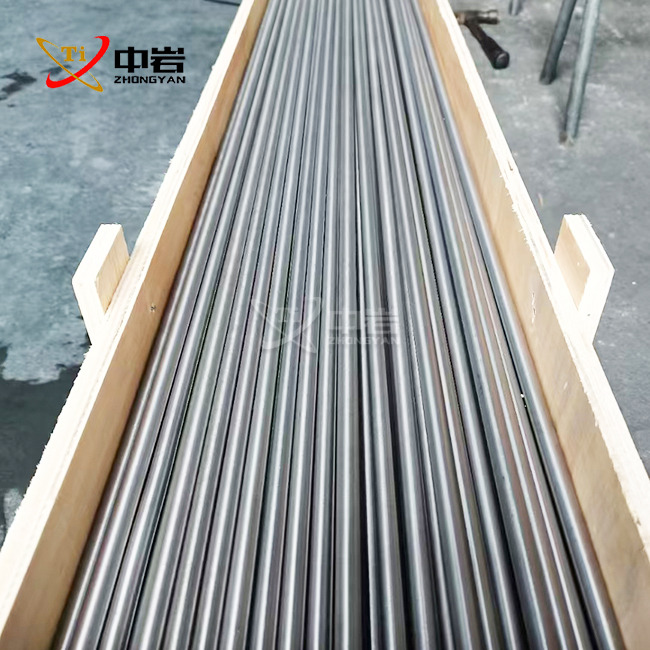
Dimensional standards must take into account the suitability of surgery instruments and the needs of the body. We can make rods with diameters from 2 mm to 12 mm and lengths from 100 mm to 300 mm, so they can be used in a wide range of medical and dental situations. A straightness error of 0.1% makes sure that the implant is in the right place during surgery, and surface finish options from "as-rolled" to "polished" can be used for a variety of implant designs.
Customization and OEM Manufacturing Solutions
Modern surgery methods often need implants with specific shapes that normal goods can't handle. Custom manufacturing services offer answers to specific medical problems, like complicated spine curves, uses in children, and revision treatments. Our tech team works with companies that make medical devices to create custom solutions that meet unique performance needs.
OEM partnerships let businesses that make medical devices get access to specialized production knowledge without having to spend a lot of money. These partnerships give product developers more freedom while still making sure they follow the rules set by regulators. Quality agreements set clear requirements and testing methods that make sure that all batches of a product are the same. This helps the FDA and CE mark clearance processes.
Procurement Insights: Where and How to Buy Medical Titanium Rods
To strategically source medical titanium parts, you need to know about global supply lines, government rules, and how the market works. Successful buying teams come up with all-encompassing plans that balance lowering costs with ensuring quality and keeping supplies safe.
Supplier Evaluation and Selection Criteria
Having a direct connection with a manufacturer has benefits like technical help, the ability to customize, and lower prices because there are no markups for distributors. When procurement teams look at possible providers, they should look at their manufacturing skills, safety certifications, and past record of following the rules. ISO 13485 approval shows dedication to medical device quality control systems, and FDA registration makes sure that the product meets the needs of the U.S. market.
Costs and shipping times are both affected by where something is located. Asian producers can often offer reasonable prices because they have access to cheaper labor and raw materials. But buying teams have to look at the total landed costs, which include shipping, taxes, and the cost of keeping the goods in stock. International goods can take a long time to arrive, so it's important to plan your needs and keep track of your supplies carefully.
Volume Purchasing and Logistics Optimization
Buying things in bulk can save you a lot of money and make sure you have enough supplies for your business needs. Medical equipment laws, on the other hand, require careful lot tracking and management of expiration dates, which can make it hard to keep track of a lot of inventory. Solutions are vendor-managed inventory systems, which give suppliers control over the goods while keeping just-in-time supply schedules.
When Medical titanium rods are shipped or handled, they need special packing and paperwork to keep them from getting contaminated and to make sure they can be tracked. Our logistics team makes sure that foreign packages have the right customs paperwork and regulatory certifications to keep delays to a minimum and make sure that import rules are followed.
Clinical Performance, Safety, and Future Prospects of Medical Titanium Rods
Titanium implants have been used in a lot of different surgeries, so there is a lot of strong evidence that they are safe and useful. Titanium technology is still getting better thanks to ongoing study, which means that future medical gadgets will work even better.
Long-term Clinical Outcomes and Safety Data
Longitudinal tests that span many decades show that titanium rod implants are very biocompatible and work very well mechanically. Hip replacement studies show that 95% of people who get them will still be alive after 15 years, while spinal fusion studies show that fusion rates are higher than 90% with few problems. Titanium's low elastic modulus helps keep bone mass around implants, which means that stress shielding doesn't happen as often as it does with harder materials.
According to available clinical statistics, allergic reactions to titanium still happen in less than 0.6% of patients, which is a very low rate. This level of safety makes it possible for titanium implants to be used on a wide range of patients, including children, where long-term biocompatibility is especially important.
Emerging Technologies and Future Developments
Surface change technologies keep getting better to help bones fuse better and speed up the mending process. Plasma spray coatings, anodization processes, and bioactive surface changes may help bones fuse better with titanium substrates while keeping their excellent mechanical qualities. These discoveries could lead to more uses in areas that need fast healing or better biological responses.
Additive manufacturing techniques make it possible to make shapes that were previously impossible to make with standard cutting methods. Using CT scan data to build implants that are specific to each patient can improve their fit and mechanical features to meet their unique anatomical needs. As these tools get better, they will probably change how surgeries are done and make things a lot better for patients.
Conclusion
Due to their special mix of biocompatibility, strength, and processing flexibility, medical titanium plates continue to make surgery easier. The material's track record in clinical uses and ongoing technical advances will make it a mainstay in medical device production for a long time to come. When procurement workers know about these technical benefits and how the market works, they can make choices that support both cost goals and clinical excellence. It is still important for qualified providers and medical device makers to work together to come up with new solutions that help patients and meet strict regulatory requirements.
FAQ
What makes medical titanium rods different from industrial titanium?
Medical titanium rods are made using special techniques, such as vacuum freezing to get rid of interstitial elements, controlled heat treatment for the best microstructure, and strict quality testing to make sure they are biocompatible. The material grade Ti-6Al-4V ELI has less oxygen than industry grades, which makes it more flexible and resistant to fatigue, which are important for implant uses.
How do I verify the quality of medical titanium rod suppliers?
To check the quality, you need to look at ISO 13485 approval, material test records that show the product meets ASTM F136 or ISO 5832-3 standards, and FDA registration for the U.S. market. Ask for samples to be tested by a third party, and if you can, visit the supplier's sites to check out their production and quality control systems.
What are the typical lead times for custom medical titanium rods?
Standard diameter rods usually ship between 2 and 4 weeks, while special specs need 6 to 8 weeks to be made and tested for quality. Depending on the paperwork and customs clearance needs, international shipping can take an extra one to two weeks. When making plans for purchases, people should think about the possibility of delays during times of high demand.
Partner with Zhongyan for Premium Medical Titanium Rod Solutions
Zhongyan is a reliable company that makes medical titanium rods. They have decades of experience and the most up-to-date production equipment in China's Titanium Valley. Our ASTM F136 Grade 23 approved rods give you the biocompatible strength and accuracy you need for surgery tasks. We offer complete solutions for medical device makers all over the world, including full quality control, unique machining services, and low prices for large orders. Our expert team helps you develop your product from the idea stage all the way through production, making sure it works perfectly and follows all the rules. Get in touch with us at sales@titaniumstudy.com to talk about your needs and find out how our titanium rod options can help your medical device business.
References
1. Niinomi, M., Nakai, M., & Hieda, J. (2012). Development of new metallic alloys for biomedical applications. Acta Biomaterialia, 8(11), 3888-3903.
2. Geetha, M., Singh, A. K., Asokamani, R., & Gogia, A. K. (2009). Ti-based biomaterials, the ultimate choice for orthopaedic implants: A review. Progress in Materials Science, 54(3), 397-425.
3. Liu, X., Chu, P. K., & Ding, C. (2004). Surface modification of titanium, titanium alloys, and related materials for biomedical applications. Materials Science and Engineering: R: Reports, 47(3-4), 49-121.
4. Long, M., & Rack, H. J. (1998). Titanium alloys in total joint replacement: A materials science perspective. Biomaterials, 19(18), 1621-1639.
5. Rack, H. J., & Qazi, J. I. (2006). Titanium alloys for biomedical applications. Materials Science and Engineering: C, 26(8), 1269-1277.
6. Wang, K. (1996). The use of titanium for medical applications in the USA. Materials Science and Engineering: A, 213(1-2), 134-137.
_1755673729494.jpg)
Learn about our latest products and discounts through SMS or email