- English
- French
- German
- Portuguese
- Spanish
- Russian
- Japanese
- Korean
- Arabic
- Greek
- German
- Turkish
- Italian
- Danish
- Romanian
- Indonesian
- Czech
- Afrikaans
- Swedish
- Polish
- Basque
- Catalan
- Esperanto
- Hindi
- Lao
- Albanian
- Amharic
- Armenian
- Azerbaijani
- Belarusian
- Bengali
- Bosnian
- Bulgarian
- Cebuano
- Chichewa
- Corsican
- Croatian
- Dutch
- Estonian
- Filipino
- Finnish
- Frisian
- Galician
- Georgian
- Gujarati
- Haitian
- Hausa
- Hawaiian
- Hebrew
- Hmong
- Hungarian
- Icelandic
- Igbo
- Javanese
- Kannada
- Kazakh
- Khmer
- Kurdish
- Kyrgyz
- Latin
- Latvian
- Lithuanian
- Luxembou..
- Macedonian
- Malagasy
- Malay
- Malayalam
- Maltese
- Maori
- Marathi
- Mongolian
- Burmese
- Nepali
- Norwegian
- Pashto
- Persian
- Punjabi
- Serbian
- Sesotho
- Sinhala
- Slovak
- Slovenian
- Somali
- Samoan
- Scots Gaelic
- Shona
- Sindhi
- Sundanese
- Swahili
- Tajik
- Tamil
- Telugu
- Thai
- Ukrainian
- Urdu
- Uzbek
- Vietnamese
- Welsh
- Xhosa
- Yiddish
- Yoruba
- Zulu
Are Custom Hex Titanium Bolts Suitable for Marine Use?
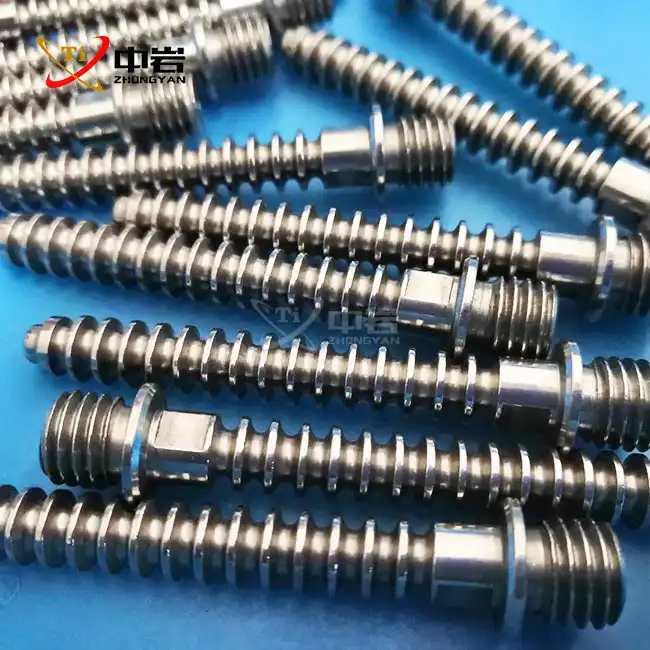
Custom Hex Titanium Bolts are the best way to attach things in naval settings because they are resistant to rust and provide structural reliability where other fasteners fail. When looking at materials for uses that are constantly exposed to saltwater, humidity, and mechanical stress, titanium fasteners show clear benefits in terms of long-term performance and less upkeep. More and more, engineers and purchasing managers in the ship, offshore platform, and marine equipment making are asking for these precision-engineered parts because they solve the main problem of materials breaking down in rough ocean conditions. This detailed guide looks at why titanium hex head fasteners are a good investment for marine projects. It does this by looking at their technical features, buying options, and performance data from real-world projects to help you make smart choices about where to get them.
Understanding Custom Hex Titanium Bolts and Their Core Properties
Marine gear needs to be made of materials that can stand up to the elements and still keep their shape when they're loaded. Custom Hex Titanium Bolts meet these requirements through a mix of metallurgical properties and precision production methods developed over decades of aircraft and industrial uses.
Material Grades and Their Distinct Characteristics
Titanium alloys used in nautical fittings can be broken down into two main groups. Commercially pure titanium Grade 2 is very resistant to corrosion and has a middling tensile strength of about 345 MPa. This makes it good for uses where durability in harsh environments is more important than high load requirements. This grade works really well in chemical processing equipment on ships and in parts of purification systems. The tensile strength of Grade 5 titanium alloy (Ti-6Al-4V) is between 860 and 1100 MPa, and the yield strength is between 795 and 930 MPa. This means that it has much better mechanical performance. Our factories in Zhongyan make both grades of hex head screws, but Grade 5 gets about 75% of marine sales because it has a better strength-to-weight ratio and doesn't fatigue easily under dynamic loads.
The Science Behind Titanium's Corrosion Resistance
Titanium is resistant to corrosion in water because it has an inactive oxide layer (TiO₂) that forms instantly when it comes in contact with air or water. This thin, stable film heals itself right away if it gets broken, protecting stainless steel screws from chloride attack, pitting, and crevice corrosion, all of which are very bad for them. Testing in the lab shows that titanium can stay submerged in salt water for decades without losing any of its structural integrity, while 316L stainless steel starts to pit within months of being exposed to the same conditions. The oxide layer stays steady in temperatures ranging from -252°C to 400°C and pH levels ranging from 3 to 12. This means that it can be used in almost all marine settings.
Mechanical Properties That Matter in Marine Applications
Hex titanium screws are very strong when pulled apart, but they are also very light (4.43 g/cm³), making them about 45% lighter than steel versions. This weight loss directly affects how well ships use fuel and makes it easier to move things around while remote platforms are being built. Hardness levels between 33 and 37 HRC are good for mechanical wear resistance while still allowing enough ductility (10% minimum extension) to handle shock loads without breaking into brittle pieces. When holding things that are exposed to both static loads and dynamic forces like wave impact, propeller vibration, and cargo moving, these balanced qualities are very important.
Why Titanium Hex Bolts Are Preferred for Marine Applications
There are a lot of problems that come up when you live near saltwater. Chloride ions attack metal surfaces, air speeds up oxidation, living things settle on structures that are buried, and mechanical loads are always changing. When these stresses are added together, they put a lot of stress on traditional fastener materials, which causes them to fail early and need expensive repairs. Custom Hex Titanium Bolts solve these issues by offering a high level of chemical stability.
Corrosion Mechanisms and Material Failures
Even though stainless steel fasteners are popular because they are cheaper at first, they can rust in some places in naval settings. Crevice corrosion happens under washers and at the points where threads meet, where the amount of oxygen changes, making electrochemical cells that break down metal faster. Pitting rust starts at flaws on the surface and moves through the cross-sections of fasteners over time. Galvanic rusting happens when two different metals touch each other in a solution. Stainless steel is usually the anode and breaks down the fastest. In harsh settings, these failure modes usually show up within the first two years of service, necessitating inspection and repair programs that cost a lot of money and put people's safety at risk.
Real-World Performance Data from Marine Operations
When offshore platform owners switch to titanium fastening methods, they say they can see a difference. Over five years, a North Sea drilling station saw a 92% drop in maintenance events linked to fasteners after switching from stainless steel bolts to Grade 5 titanium hex bolts in important structural connections and equipment mountings. Manufacturers of high-performance racing yachts use titanium bolts in all of their rigging systems. This saves 15-20 kg of weight per boat and gets rid of corrosion-related problems that used to cause equipment to be lost during competitions.
Lifecycle Value Analysis
Total cost of ownership (TCO) research is being used more and more by procurement managers to look at fastener materials. Even though titanium hex nuts are more expensive ($3 to $8 per unit vs. $0.50 to $1.50 for stainless steel equivalents), the longer life and lack of upkeep make them a good investment. When you factor in vessel downtime, crew assignment, and safety rules, replacement labor costs in marine settings often go over $150 per hour. It could take two to four hours to replace a single bolt, including getting access ready, taking apart rusted parts, and putting them back together again.
Procurement Considerations for Ordering Custom Hex Titanium Bolts
To buy titanium fasteners successfully, you need to pay attention to the specs, the supplier's skills, and the quality control methods. Engineers and buying managers have to deal with technical needs while also making sure that vendors are reliable and offer good value for money. Sourcing Custom Hex Titanium Bolts requires clear communication regarding tolerance and material certification.
Specification, Precision, and Engineering Requirements
Correctly describing fasteners stops mistakes that cost a lot of money and performance problems. Important factors include the type of thread (UNC, UNF, or metric), the theoretical diameter, the grip length (the length of the unthreaded shank below the head), the thread length, the head height, and the across-flats measurement. Custom uses might need grip lengths that aren't standard to fit certain joint shapes or to use special finishes that make them work better. Giving thorough engineering drawings with acceptable tolerances for measurements ensures that the produced parts meet the standards for assembly without any changes.
Supplier Evaluation Criteria
To find a good titanium hex bolt maker, you need to look at a number of their capabilities. AS9100 certification, which is popular among aerospace suppliers, shows that there are extra process controls that are useful for important uses. ISO 9001 certification shows that quality management systems have been in place for a while. When making something, the factory should have CNC turning and milling machines that can work with tight tolerances, thread rolling machines that do a better job with wear, and surface treatment facilities that can passivate or anodize as needed.
Quality Assurance and Testing Protocols
Tough inspections make sure that fasteners work well. Using precise measuring tools to check the dimensions ensures that the thread parameters, head dimensions, and length standards are all met. Surface checking finds flaws in the manufacturing process, like cracks, tool marks, or inclusions that could affect how well the product works. Spectroscopy is used to check the makeup of a material and ensure that the alloy chemistry is right. Strength qualities are confirmed by mechanical testing on representative samples. The frequency of testing is usually based on sampling plans that are based on the size of the production lot.
How to Select the Right Titanium Hex Bolts for Your Marine Application
Performance and cost-effectiveness are improved by matching bolt specs to application needs. When making a choice for Custom Hex Titanium Bolts, you have to look at things like motor loads, environmental exposure, assembly limitations, and the supplier's skills.
Material Grade Selection Strategy
Grade 2 commercially pure titanium is best for uses that value maximum resistance to rust over maximum strength. Grade 2 is better at withstanding reducing acids and chlorides, which makes it useful for chemical processing pipes, heat exchanger bolts, and non-structural naval fittings. When strength needs are low (working loads below 200 MPa), the lower cost of the material compared to Grade 5 is an economic benefit. When high tensile strength, wear resistance, or reducing weight are important for design, Grade 5 titanium metal is needed. Grade 5 is usually used for structural connections, engine mounts, high-load bearing uses, and marine equipment made for aircraft use. Because the alloy is strong, smaller fastener sizes can hold the same amount of weight, which makes fitting easier. Fatigue performance is very important for parts that are loaded and unloaded over and over again. Grade 5 has endurance limits that are about 40% higher than Grade 2, which means it can last longer in dynamic applications.
Sizing and Custom Dimension Considerations
Many marine uses can use standard fastener sizes, but custom measurements are better for performance in equipment designs that are unique to the customer. Longer grip lengths allow for thick joint assemblies without threads getting too tight in tapped holes, which lowers the risk of galling. Thread lengths that aren't normal allow for precise setting of the clamping zone. Head sizes that are too big or too small can affect how easy it is to use a tool or how the tool looks in obvious places. If you want to order custom hex titanium fasteners, you should use thorough drawings instead of vague statements to show all of your geometric needs. Include any required surface finish (usually between 63 and 125 Ra for finished areas) and any unique markings to help identify the part. At Zhongyan, our engineering team looks over custom specs to find possible problems with production and suggests design improvements that keep performance high while making production easier and lowering costs.
Supplier Alignment and Communication
Setting up clear ways to talk to your titanium fastener source will help you avoid mistakes and delays. Pick out the main people to talk to about technical questions, order progress, and quality problems. Talk about production wait times in a realistic way. Standard configurations usually ship within two to four weeks, but complex custom designs may need four to six weeks for inspection and approval of the first item before production numbers start. Large orders (10,000 pieces or more) benefit from shipping times that work with building goals. This way, stocking costs and storage space needs are avoided. When making your own naval tools, OEM and ODM skills become important. Suppliers who have worked with custom development teams before can help with design-for-manufacturing by suggesting changes that make fasteners work better or lower production costs without affecting their usefulness. Long-term partnerships with responsive providers give you a competitive edge through flexible schedules, inventory management programs, and joint efforts to cut costs.
Future Trends and Innovations in Marine-Grade Custom Hex Titanium Bolts
Titanium nail technology keeps getting better thanks to new alloys, better ways to make them, and efforts to be more environmentally friendly. Staying up to date on these trends helps buying teams spot chances to improve the performance of Custom Hex Titanium Bolts and cut costs.
Advanced Alloy Development
Materials study is focusing on making titanium alloys with better mixtures of properties. Near-alpha metals with better creep resistance can be used in exhaust systems at higher temperatures. Beta metals are stronger for their weight and can be shaped better to fit complicated bolt shapes. Titanium-aluminide intermetallic compounds are still new and being studied in labs, but they have the potential to be very good at high temperatures for the next generation of naval power systems. These unique materials are only used in a few specific situations right now, but within the next ten years, they may become more popular in commercial marine markets as production grows and costs go down.
Manufacturing Process Enhancements
Using additive manufacturing (3D printing) to make titanium parts opens up interesting ways to make fasteners. While modern additive processes have trouble matching the mechanical qualities and surface finish of machined parts, these problems are being worked on all the time. Layer-by-layer building makes it possible to build things with complicated internal shapes that can't be done with standard machining. For example, locking features or sensors that are built right in can be made possible. When additive and subtractive production are used together, titanium screws with better weight distribution and built-in functions may be made in the future.
Sustainability and Circular Economy Initiatives
Environmental laws and companies' goals for sustainability are having a bigger impact on buying choices. Titanium is very durable, so products last longer, and there is no need for new trash. This helps the circular economy. Titanium recycling technology has come a long way, and recovered material has qualities that are almost identical to those of new material. By choosing titanium fasteners with recycled material, you can help the environment and keep supply lines going for a long time.
Conclusion
For naval uses, Custom Hex Titanium Bolts are very useful because they don't rust, are stronger than they are light, and last longer, which means they don't need to be maintained as often and for less money. The choice of material between Grade 2 and Grade 5 alloys relies on how well the standards for mechanical load and environmental stability are met. To successfully purchase something, you need to communicate clear specifications, carefully evaluate suppliers, and do a lifetime cost analysis, keeping in mind that a higher initial investment pays off in the long run. New alloys, production methods, and environmentally friendly practices are always being improved to make titanium fasteners work better and cost less. This makes them even more important for building a strong sea infrastructure.
FAQ
How does titanium compare to stainless steel for marine fasteners?
Titanium fasteners work better than stainless steel in a number of important ways that are important for naval uses. Titanium is much better at resisting rust than stainless steel because its passive oxide layer stops pitting, crevice corrosion, and chloride attack, all of which happen to stainless steel within months of being exposed to saltwater. Titanium has a strength-to-weight ratio that is about 40% better than steel, which means that smaller, lighter parts can hold the same amount of weight. Even though stainless steel costs less at first, titanium has a lower total cost of ownership over a normal 10-year marine equipment span because it doesn't need to be replaced or maintained as often.
What lead times should I expect when ordering custom titanium hex bolts?
Standard setups with popular sizes and Grade 5 material usually ship two to four weeks after the order is confirmed. For custom designs that need non-standard sizes, threading, or surface treatments, wait times are extended to 4 to 6 weeks to allow for engineering review, first article inspection, and production setup. Orders of more than 5,000 pieces may need more time to get the materials and plan the production schedule. Zhongyan keeps titanium rods in stock in common sizes, which cuts down on delays compared to suppliers who only make to order.
Can titanium hex bolts be anodized for identification purposes?
Anodizing titanium screws gives them unique colors that can be used to identify sizes, code pressure specifications, or just look good. Type II anodizing changes colors (gold, blue, purple, and green) by changing the thickness of the oxide layer without using dyes or paints. This keeps the material's ability to resist rust and be biocompatible. Type III anodizing makes the top layer stronger and more resistant to wear. Depending on the batch size and color needs, anodizing adds about $0.50 to $2.00 per clip. This treatment is popular in racing boat gear systems because color coding makes maintenance easier and stops mistakes from happening during installation.
Partner with Zhongyan for Superior Marine Fastening Solutions
When working on marine projects, you need to fix parts that will always work in harsh conditions. The Custom Hex Titanium Bolts maker Zhongyan is ISO 9001:2015 approved and has its headquarters in Baoji, China's titanium production center. They use advanced CNC machining and strict quality control to make fasteners that meet ASTM, AMS, and ISO standards. Our engineering team works with procurement managers to make sure that the performance of the fasteners meets the needs of your marine application while also reducing costs as much as possible through efficient production processes.
We keep a large stock of titanium rods in Grades 2 and 5, which lets us start production and send items quickly to meet tight project deadlines. OEM and ODM services can make parts with custom sizes, threads, and surface processes that fit the designs of specific pieces of equipment. To talk about your boat fastening needs, email our expert sales team at sales@titaniumstudy.com. Zhongyan gives you the accuracy, quality, and dependability that your marine gear needs, whether you need to buy in bulk for shipbuilding projects or make unique solutions for offshore platforms.
References
1. American Society for Testing and Materials (ASTM). "Standard Specification for Titanium and Titanium Alloy Bars and Billets." ASTM B348-21, 2021.
2. Schutz, R.W. and Thomas, D.E. "Corrosion of Titanium and Titanium Alloys in Marine Environments." ASM Handbook Volume 13B: Corrosion: Materials, 2005, pp. 252-299.
3. Boyer, R., Welsch, G., and Collings, E.W. "Materials Properties Handbook: Titanium Alloys." ASM International, 1994.
4. Det Norske Veritas (DNV-GL). "Offshore Standards for Structural Fasteners and Installation Requirements." DNV-OS-C101, Section 7, 2019.
5. Lutjering, G. and Williams, J.C. "Titanium: Engineering Materials and Processes." 2nd Edition, Springer-Verlag, 2007, Chapter 9: Corrosion Behavior.
6. International Maritime Organization (IMO). "Guidelines for Use of Advanced Materials in Marine Structures and Equipment." Marine Equipment Circular MEPC.1/Circ.889, 2020.
_1755652968020.jpg)
Learn about our latest products and discounts through SMS or email