- English
- French
- German
- Portuguese
- Spanish
- Russian
- Japanese
- Korean
- Arabic
- Greek
- German
- Turkish
- Italian
- Danish
- Romanian
- Indonesian
- Czech
- Afrikaans
- Swedish
- Polish
- Basque
- Catalan
- Esperanto
- Hindi
- Lao
- Albanian
- Amharic
- Armenian
- Azerbaijani
- Belarusian
- Bengali
- Bosnian
- Bulgarian
- Cebuano
- Chichewa
- Corsican
- Croatian
- Dutch
- Estonian
- Filipino
- Finnish
- Frisian
- Galician
- Georgian
- Gujarati
- Haitian
- Hausa
- Hawaiian
- Hebrew
- Hmong
- Hungarian
- Icelandic
- Igbo
- Javanese
- Kannada
- Kazakh
- Khmer
- Kurdish
- Kyrgyz
- Latin
- Latvian
- Lithuanian
- Luxembou..
- Macedonian
- Malagasy
- Malay
- Malayalam
- Maltese
- Maori
- Marathi
- Mongolian
- Burmese
- Nepali
- Norwegian
- Pashto
- Persian
- Punjabi
- Serbian
- Sesotho
- Sinhala
- Slovak
- Slovenian
- Somali
- Samoan
- Scots Gaelic
- Shona
- Sindhi
- Sundanese
- Swahili
- Tajik
- Tamil
- Telugu
- Thai
- Ukrainian
- Urdu
- Uzbek
- Vietnamese
- Welsh
- Xhosa
- Yiddish
- Yoruba
- Zulu
Are CNC Aluminum Parts Better Than Cast or Forged Alternatives?
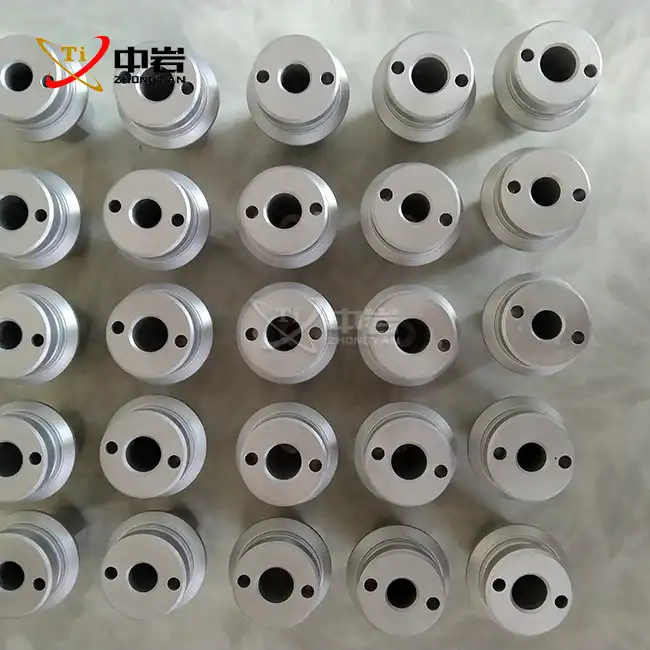
Introduction
Choosing the right way to make metal parts has a direct effect on how well they work, how much they cost, and how reliable the supply chain is. It's always hard for procurement managers, engineers, and R&D workers to find a good mix between quality, wait times, and budgets. It is very important to know the differences between CNC machining, casting, and forging when you are looking for structural brackets for aircraft use or heat sinks for electronics.
Precision CNC-machined aluminum parts have become the best choice for businesses that need accuracy, stability, and repeatability. This piece looks at the technical and business differences between CNC machining and other methods, giving B2B buying teams useful information they can use. We'll talk about how the properties of the material, the powers of the process, and the cost structures affect your sourcing choices. This will help you find the best way to make something for your unique purpose.
Understanding CNC Machined Aluminum Parts and Their Manufacturing Process
Through subtractive manufacturing, Computer Numerical Control (CNC) milling turns solid billets of metal into finished parts. Cutting tools that are very fast remove layers of material by following pre-programmed paths. This makes sure that the process is consistent across production runs. This method works with 3-axis, 4-axis, and 5-axis configurations, so makers can make complicated features like undercuts, thin walls, and internal channels with lots of different sizes and shapes.
Key Characteristics of CNC Aluminum Components
The choice of material is very important for how well a part works. Because it is easy to weld and doesn't rust, Alloy 6061-T6 is perfect for structural uses in chemical processing and industrial machines. Aerospace engineers often choose 7075-T6 because it has a higher yield strength than some steel types while still being lighter than aluminum. Medical device makers like 5052 because it is biocompatible and resistant to rust at the marine grade level. The machining factors affect tool life, surface finish, and cycle times in different ways for each metal.
The CNC Machining Workflow Explained
The first step is to prepare the CAD model and set the toolpath. The metal piece is held in place by machinists in fixtures that are made to reduce vibration and temperature expansion. During roughing passes, a lot of material is quickly removed, and during finishing passes, the goal measurements and surface quality are reached. Multi-axis machines can move the workpiece so that multiple sides can be accessed without having to be repositioned by hand. This cuts down on setup time and eliminates mistakes in alignment. Coolant systems control the flow of chips and the temperature, which keeps the work from freezing and makes tools last longer.
Achievable Tolerances and Surface Quality
Dimensional accuracy of modern CNC equipment is usually within ±0.005 inches (±0.127mm), and for certain tasks it can reach ±0.001 inches (±0.025mm). For general use, surface finishes go from Ra 3.2 μm to Ra 0.4 μm, which can be achieved by diamond turning or polishing. Because of these features, precision CNC-machined aluminum parts are necessary for tasks that need tight fits, smooth closing surfaces, or optical-grade reflectivity. After cutting, processes like anodizing add 5–50 εm of thickness, which is taken into account by machinists when planning the dimensions.
Comparing CNC Machined Aluminum Parts with Cast and Forged Alternatives
Procurement teams can make data-driven choices when they know how each production method solves different engineering problems. Process choice affects not only the part itself, but also the cost of tools, the minimum order quantity, and the number of times a design can be changed.
Process Fundamentals and Material Properties
When casting, molten metal is poured into molds. This lets makers make complicated shapes with holes inside them all at once. But the cooling process makes microporosity and uneven grains, which hurt the mechanical qualities. Tensile strength is 20–30% lower in cast aluminum than in wrought metals that are used for cutting. Forging heats aluminum and puts it under a lot of pressure, which deforms it plastically. This aligns the grains along load lines to make the metal more resistant to wear. This method works great for parts that are put under a lot of stress, like landing gear bolts and suspension arms.
CNC cutting starts with wrought stock that has already been handled and has the same mechanical properties all the way through. The subtractive method doesn't create heat-affected zones or interior flaws, so the material stays whole. This is very important when parts need to meet aircraft standards like AMS 4027 or medical rules that require certified materials in writing. Through metal chemistry and heat treatment, casting and forging can reach similar levels of strength, but their parts aren't as accurate in terms of size and surface finish as machined parts are.
Tolerances, Surface Finish, and Design Flexibility
Cast parts usually have limits of ±0.030 inches (±0.76mm), so important features need to be machined again. The roughness of the surface is usually between 6.3 and 12.5 μm, and splitting lines and ejector pin marks can be seen on it. When design changes are made, expensive mold changes are needed, which gets in the way of rapid development. Even though forged parts have better mechanical qualities, they are still limited by tolerances and generally need finish machining on their useful sides.
These problems are not a problem with Precision CNC-machined aluminum parts. Engineers can make changes to designs between prototypes and production batches without having to pay extra for new tools. This speeds up the process of making new products. The process can handle very thin walls (less than 0.020 inches or 0.5 mm), complex pocket features, and exact hole designs that would be hard to achieve with casting or forging. This adaptability is very helpful for OEM products that are made just for one client and need specific requirements.
Debunking Common Misconceptions
A lot of buying workers think that casting always has lower per-unit costs, but they don't take into account how long it takes for tools to wear out. Die casting needs an initial model investment of $5,000 to $50,000, which means that orders below 1,000 units are not cost-effective. When you use optimization and material nesting techniques with CNC machining, the cost of each part goes down. For medium-volume production, these prices often match or beat casting costs. Another myth is that forged parts always last longer than machined ones. However, when properly defined, machined parts from 7075-T6 can last longer than forged 6061 parts when the grain direction isn't load-critical.
Practical Applications and Industry Use Cases of CNC Machined Aluminum Parts
Real-life examples show how different businesses use the unique benefits of CNC metal. When engineers understand these use cases, they can choose the best production method for their needs.
Aerospace and Defense Applications
Precision CNC-machined aluminum parts are used by aircraft makers for electronics housings, hydraulic manifolds, and structural brackets. These parts save weight, which in turn saves fuel. A normal business plane has more than 50,000 aluminum parts, and many of them need to be certified to AS9100 and NADCAP standards. When compared to simple shapes, the ability to make complex coolant channels and lightning pockets cuts the weight of a component by 20 to 40 percent. For coatings used in aircraft, sputtering targets need to be flat within 0.0005 inches of a 12-inch diameter, which can only be done by precise grinding and CNC machining.
Medical Device and Diagnostic Equipment
Manufacturers of surgical instruments use polished aluminum for parts that aren't made of iron or magnets and are used in MRI rooms. Dental milling systems use biocompatible surface treatments, such as Type III hard anodizing, to turn metal discs into custom prosthetics and orthodontic tools. When made to exact specs for seal integration, aluminum's heat conductivity and EMI shielding qualities make it a good material for diagnostic equipment housings. Getting Ra 0.8 μm surface finishes makes it easier to sterilize things because they don't stick to them as well.
Electronics Thermal Management
Power electronics produce a lot of heat that can damage component durability. Custom heat sinks made from 6061-T6 have fin shapes that are designed to have the most surface area for convection cooling. CNC machining can make fins of different thicknesses, mounting pockets that are set back, and fastening bosses that are built in all at the same time, while extruded profiles can only have steady cross-sections. LiDAR sensor cases need precise mounting connections to keep the optics aligned when the temperature changes. Multi-axis machining can achieve tolerances of ±0.002 inches.
Industrial Machinery and Automation
Welded aluminum is the only material that can keep its shape when used in pneumatic pipes, special gears, and robotic end effectors. Machined parts work the same at temperatures ranging from -40°F to 300°F, which is very important for chemical working conditions. Surface treatments like Chem film (chromate conversion layer) make things more resistant to rust without changing their size by more than 0.0002 inches. Manufacturers of production tools like CNC machining because it lets them get new parts quickly, so they don't have to deal with long lead times for casting.
Cost, Lead Time, and Supply Chain Considerations for Procuring CNC Aluminum Parts
To make a budget, you need to know how the choice of materials, the difficulty of the design, and the number of orders affect the total cost of acquisition. Smart buying strategies weigh the cost of each unit against the cost of tools, the cost of keeping stockpiles, and the risk in the supply chain.
Why CNC aluminum machining costs what they do
Material makes up 20–40% of the total cost of a part. For example, 7075-T6 is 2-3 times more expensive than 6061-T6 because it needs to be alloyed and heat-treated. Machining time is directly related to how complicated the part is. Simple turned parts may take 5–10 minutes per piece, while multi-axis parts with tight specs can take more than 2 hours. Larger batch numbers are better for setup time amortization, but efficient makers can keep this from happening by standardizing fixtures and using quick-change tooling systems.
Bead blasting costs between $0.25 and $1.00 per part, and anodizing costs between $0.50 and $3.00 per part, based on the type and size of the surface. Using a CMM to check for quality costs $25 to $75 per setup plus $5 to $15 per measured feature. Having a good understanding of these cost factors helps buyers bargain better and find ways to save money without sacrificing performance.
Comparing Costs Across Manufacturing Methods
For simple shapes, die casting becomes cost-competitive at about 5,000 units, and for big numbers, the cost of a part drops below $2.00. Total costs often end up being higher than expected, though, because of tooling depreciation and extra machining processes. Forging needs the same volume limits, plus extra limits on the shapes that can be made. From trials to mid-volume production, CNC machining keeps consistent per-unit costs, which range from $15 to $200 per part based on how complicated it is.
The secret cost benefit of Precision CNC-machined aluminum parts is that they are easier to get. Casting and forging lock designs in place with expensive tools, but milling lets designs be changed between orders without any problems. Because of this, inventory risk is lower and time-to-market for new goods is sped up, which gives ROI that goes beyond simple cost-per-part comparisons.
Lead Times and Fulfillment Capabilities
Once the drawings are accepted, prototype CNC parts can usually be sent out within 5 to 10 working days. This lets the design be tested quickly. Making 100 to 500 pieces usually takes three to four weeks, but this depends on how busy the factory is and how much material is available. Building ties with suppliers and keeping an inventory of raw materials cuts down on lead times by getting rid of mill shipping delays. Forging and casting need 12 to 16 weeks to make the tools that are used to make the first products, which slows down the product development process.
Why Choose a Precision CNC Aluminum Parts Supplier?
The supplier can do a lot more than just offer reasonable prices. The success of a partnership depends on many things, such as technical know-how, spending money on tools, quality processes, and good customer service. Using a wide range of factors to evaluate possible suppliers lowers risk and guarantees long-term dependability. Zhongyan takes advantage of the region's benefits in material sourcing and processing facilities. It is located in Baoji city, which is known as China's Titanium Valley. We are experts at CNC cutting titanium for aircraft sputtering targets, dental discs, and custom anodes, but we can also make high-quality aluminum parts.
Technical Capability and Equipment Investment
3-axis, 4-axis, and 5-axis CNC machining tools from well-known brands like Haas, Mazak, and DMG Mori are used by major producers. The age of the equipment is important. Machines that are less than 10 years old have better control systems, high-speed spindles, and heat adjustments that make them more accurate and efficient. CNC turning, wire EDM, and laser cutting are all complementary skills that work together to allow single-source buying. This lowers the cost of planning and improves the consistency of delivery.
Inspection tools
Inspection tools prove that the production process can be done. Coordinate measuring tools (CMMs) with an accuracy of 0.0001 inches check that the dimensions are correct, and optical comparators and profilometers check the surface finish and geometric errors. When suppliers show off their tools during site walks, it shows that they are honest and trusting in their quality systems.
Certifications and proof of quality
ISO 9001:2015 approval sets the standard for quality management, but some businesses need more specific certifications. Aerospace suppliers need to be certified to AS9100D, which shows that they can handle configurations, do first-article inspections, and approve suppliers. ISO 13485 approval helps companies that make medical devices by making sure they keep records on biocompatibility and follow strict rules for sterile handling.
Customer service and production that can be changed
Respondent contact is what sets great providers apart from average ones. Having engineering help during design-for-manufacturability reviews makes sure that parts can be made as cheaply as possible while still meeting performance standards. Turnaround time for quotes within 24 to 48 hours shows that the company is efficient and cares about meeting customer deadlines. Businesses that care about their customers offer flexible payment terms and are ready to work with plan changes without charging too much.
Cost-Effective Solutions Without Compromising Quality
Zhongyan makes precise aluminum parts from 6061-T6, 7075-T6, and other metals. They can get dimensions within 0.005 inches of accuracy and surface finishes as fine as 0.8 μm. Our machining services include CNC milling, turning, grinding, and wire EDM. We also offer different surface treatments, such as chemical film coats and anodizing. Customers in the aircraft, medical, technology, and industrial sectors have specific needs that can be met by custom sizes, shapes, and OEM package solutions.
Conclusion
When tight tolerances, complicated geometries, and design freedom are needed, precision CNC-machined aluminum parts are clearly better than cast and forged options. Casting is good for making a lot of simple forms, and forging improves certain mechanical qualities. But CNC machining gives you the most accurate measurements, the best surface finish, and the ability to make changes quickly. Procurement experts can make choices that meet technical needs and business goals by learning about cost structures, the effects of lead times, and suppliers' abilities. The right manufacturing partner has the latest technology, quality standards, and helpful customer service to help with both prototype development and large-scale production.
FAQ
How does mechanical strength compare between CNC machined, cast, and forged aluminum?
Wrought aluminum alloys used in CNC machining offer 20–30% higher tensile strength than cast counterparts because the grains are all the same size and there are no pores. Forged parts can outperform machined parts when grain flow matches load directions. Forging is ideal for high-stress suspension parts. CNC-machined aluminum parts made from 7075-T6 alloy have yield strengths up to 70 ksi, making them suitable for aeronautical and industrial applications while maintaining size accuracy.
What lead times should I expect for custom CNC aluminum orders?
Prototypes are provided within 5–10 business days after designs are accepted. The notion can be tested quickly. The complexity of the design and space availability determine how long it takes to create 100–500 pieces. Keep a stockpile of basic materials and engage with sellers to reduce mill delivery delays, especially for specialist alloys like 7075 or 2024.
Which aluminum alloy should I specify for my application?
Due to its ease of machining and welding and moderate strength for most uses, alloy 6061-T6 is the industry standard. The increased strength-to-weight ratio of 7075-T6 makes it suitable for aerospace and high-stress situations. However, 5052's corrosion resistance makes it suitable for marine or chemical processing. Discuss cost, machinability, mechanical qualities, and your specific performance needs and environmental circumstances with your source's engineering team.
Partner with Zhongyan for Your Precision Aluminum Machining Needs
Zhongyan is ready to meet your needs for fine aluminum parts with its wide range of manufacturing options and customer-focused service. We are experts at both titanium specialization and high-quality aluminum machining, and we can make unique CNC parts that meet the strictest requirements. We work with several aluminum metals, such as 6061-T6 and 7075-T6, and can achieve tolerances of ±0.005 inches and surface finishes as fine as Ra 0.8 μm. As a precision CNC-machined aluminum parts maker with a lot of experience, we can help you with everything from testing to high-volume production. We also follow strict quality control standards set by ISO 9001:2015. Email our team at sales@titaniumstudy.com to talk about the needs of your project, get technical details, or get a full quote that fits your needs.
References
1. Davis, J.R. (2001). Aluminum and Aluminum Alloys. ASM International Handbook Committee, Materials Park, OH.
2. Kalpakjian, S. & Schmid, S.R. (2014). Manufacturing Engineering and Technology (7th ed.). Pearson Education, Upper Saddle River, NJ.
3. Boothroyd, G., Dewhurst, P., & Knight, W.A. (2011). Product Design for Manufacture and Assembly (3rd ed.). CRC Press, Boca Raton, FL.
4. Campbell, J. (2015). Complete Casting Handbook: Metal Casting Processes, Metallurgy, Techniques and Design (2nd ed.). Butterworth-Heinemann, Oxford, UK.
5. Altan, T., Ngaile, G., & Shen, G. (2005). Cold and Hot Forging: Fundamentals and Applications. ASM International, Materials Park, OH.
6. Stephenson, D.A. & Agapiou, J.S. (2016). Metal Cutting Theory and Practice (3rd ed.). CRC Press, Boca Raton, FL.
Learn about our latest products and discounts through SMS or email