- English
- French
- German
- Portuguese
- Spanish
- Russian
- Japanese
- Korean
- Arabic
- Greek
- German
- Turkish
- Italian
- Danish
- Romanian
- Indonesian
- Czech
- Afrikaans
- Swedish
- Polish
- Basque
- Catalan
- Esperanto
- Hindi
- Lao
- Albanian
- Amharic
- Armenian
- Azerbaijani
- Belarusian
- Bengali
- Bosnian
- Bulgarian
- Cebuano
- Chichewa
- Corsican
- Croatian
- Dutch
- Estonian
- Filipino
- Finnish
- Frisian
- Galician
- Georgian
- Gujarati
- Haitian
- Hausa
- Hawaiian
- Hebrew
- Hmong
- Hungarian
- Icelandic
- Igbo
- Javanese
- Kannada
- Kazakh
- Khmer
- Kurdish
- Kyrgyz
- Latin
- Latvian
- Lithuanian
- Luxembou..
- Macedonian
- Malagasy
- Malay
- Malayalam
- Maltese
- Maori
- Marathi
- Mongolian
- Burmese
- Nepali
- Norwegian
- Pashto
- Persian
- Punjabi
- Serbian
- Sesotho
- Sinhala
- Slovak
- Slovenian
- Somali
- Samoan
- Scots Gaelic
- Shona
- Sindhi
- Sundanese
- Swahili
- Tajik
- Tamil
- Telugu
- Thai
- Ukrainian
- Urdu
- Uzbek
- Vietnamese
- Welsh
- Xhosa
- Yiddish
- Yoruba
- Zulu
Why does GR4 titanium bar offer excellent fatigue resistance?
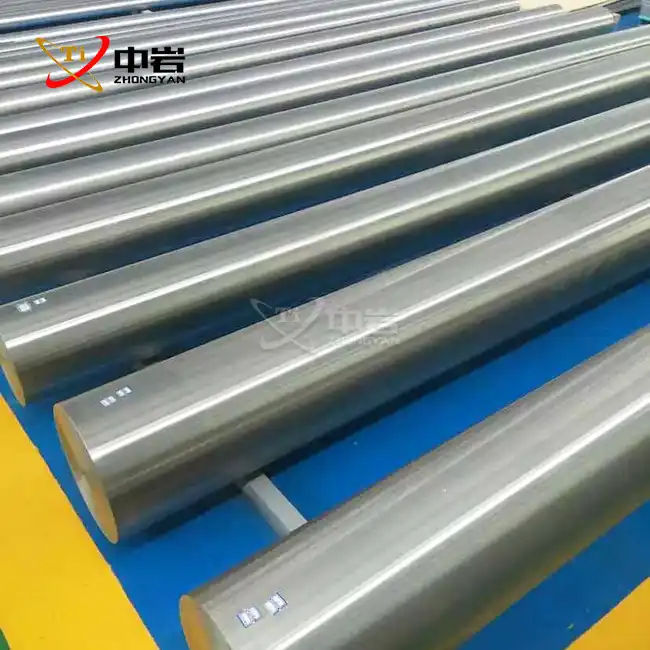
The unique alpha-phase geometry and managed interstitial element content of the GR4 titanium bar make it very resistant to wear. The material can handle repeated loads because it has the right amount of oxygen and iron, which makes the crystal structure stronger while still allowing it to bend. This grade of commercially pure titanium is better at stopping cracks from spreading than lower grades. This makes it perfect for use in medical equipment, aircraft parts, and chemical processing equipment, where stress cycles are often encountered. The material's durability limit is increased by the finer grain structure that comes from the right heat treatment. This lets parts work reliably under changing loads for long periods of time without breaking.
Understanding GR4 Titanium Bar: Composition and Mechanical Characteristics
The amazing wear resistance of GR4 titanium bars comes from their exact chemical makeup, which is mostly titanium mixed with tiny amounts of iron, oxygen, and other elements. By carefully controlling the alloying process, a material is made that has amazing mechanical qualities that directly add to its excellent performance under repeated loading conditions.
Chemical Composition and Microstructural Benefits
Grade 4 titanium has a maximum of 0.40% oxygen and a maximum of 0.50% iron. It also has small amounts of nitrogen, carbon, and hydrogen. These intermediate elements act as solid solution reinforcers by changing the lattice in ways that stop dislocations from moving and make the material more resistant to stress cracks. The alpha-phase microstructure stays steady over a wide temperature range, which means that the mechanical properties stay the same even when the temperature changes. The limited amount of air is especially important for how well you do when you're tired. Higher oxygen levels make things stronger, but they need to be carefully balanced to keep them flexible. This balance is well achieved by GR4, which has tensile strengths of at least 550 MPa and enough flexibility to absorb energy during cycle loading. This mix keeps things from breaking too soon when they are put under repeated stress.
Mechanical Properties Supporting Fatigue Resistance
GR4 exhibits a yield strength of 483 MPa minimum, providing substantial reserve capacity above typical operating stresses. The material's elastic modulus of approximately 103 GPa offers excellent stiffness while remaining lower than steel alternatives, reducing stress concentrations in joint areas. These properties work synergistically to extend fatigue life by minimizing plastic deformation during each loading cycle. The material demonstrates exceptional toughness characteristics, with impact resistance values significantly exceeding those of lower titanium grades. This toughness translates directly to improved fatigue crack propagation resistance, allowing components to continue operating safely even after minor crack initiation. The fine-grained structure achieved through proper processing further enhances these properties by providing numerous grain boundaries that deflect crack propagation paths.
Why GR4 Titanium Bar Excels in Fatigue Resistance: Key Factors Explained
The superior fatigue resistance of GR4 titanium bars results from multiple interconnected factors that work together to create an exceptionally durable material. Understanding these mechanisms helps engineers optimize component design and material selection for demanding applications.
Intrinsic Material Properties
The alpha-phase crystal structure of gr4 titanium bar inherent stability under cyclic loading conditions. Unlike beta or alpha-beta alloys that may undergo phase transformations during service, the single-phase structure remains consistent throughout the component's operational life. This stability prevents microstructural changes that could compromise fatigue performance over time. The hexagonal close-packed crystal structure exhibits excellent slip system characteristics that accommodate plastic deformation without creating stress concentrations. Multiple slip planes allow dislocations to move freely during loading cycles, distributing stress more evenly throughout the material volume. This behavior reduces the likelihood of fatigue crack nucleation at grain boundaries or inclusion sites.
Advanced Processing Techniques
Modern manufacturing processes significantly enhance the fatigue properties of GR4 titanium bars. Vacuum arc remelting eliminates atmospheric contamination and reduces inclusion content, creating a cleaner microstructure with fewer potential crack initiation sites. Multiple remelting cycles ensure chemical homogeneity throughout the ingot, preventing local variations in mechanical properties that could create weak points under cyclic loading. Heat treatment optimization plays a crucial role in developing optimal fatigue characteristics. Annealing temperatures between 650-750°C create an equiaxed grain structure that maximizes fatigue strength while maintaining adequate ductility. Controlled cooling rates prevent excessive grain growth that could reduce toughness, while ensuring complete stress relief from prior processing operations.
Surface Treatment and Finishing Effects
Surface condition dramatically influences fatigue performance in titanium components. Proper surface preparation removes machining marks and other stress concentrations that serve as crack initiation sites. Electrochemical polishing creates smooth surfaces with compressive residual stresses that further enhance fatigue life by opposing crack opening forces during tension loading cycles. Shot peening treatments introduce beneficial compressive stresses in surface layers where fatigue cracks typically initiate. These residual stresses must overcome the applied tension loads before crack propagation can begin, effectively increasing the fatigue strength by 20-30% in many applications. The combination of surface smoothness and compressive stress creates an optimized surface condition for maximum fatigue resistance.
Comparing the GR4 Titanium Bar with Other Grades and Alternative Materials
When evaluating materials for fatigue-critical applications, GR4 titanium bars present distinct advantages over alternative options. The material's performance characteristics position it uniquely among both titanium grades and competing metallic materials.
Performance Against Other Titanium Grades
Gr4 titanium bar offers superior fatigue strength compared to lower commercial purity grades while maintaining better formability than higher-strength alloys. Grade 2 titanium, while more ductile, exhibits approximately 25% lower fatigue strength due to reduced interstitial element content. The lower oxygen levels in GR2 result in decreased solid solution strengthening, making it less suitable for high-cycle fatigue applications. Compared to Ti-6Al-4V (Grade 5), GR4 provides competitive fatigue performance at significantly lower cost. While Grade 5 offers higher absolute strength, the fatigue strength difference becomes less pronounced in the high-cycle regime where most industrial applications operate. GR4's single-phase structure also eliminates concerns about alpha-beta interface effects that can influence crack propagation in dual-phase alloys. The excellent weldability of GR4 titanium provides additional advantages in fabricated structures. Welded joints retain approximately 90% of base material fatigue strength when proper procedures are followed, compared to significant reductions often seen with higher-alloy grades. This characteristic enables the design of complex components with excellent fatigue performance throughout all regions.
Advantages Over Conventional Materials
Against stainless steel alternatives, GR4 titanium demonstrates superior corrosion fatigue resistance in aggressive environments. Chloride-containing solutions that cause stress corrosion cracking in austenitic stainless steels have minimal impact on titanium fatigue performance. This resistance allows components to operate safely in marine environments, chemical processing facilities, and other corrosive applications where steel alternatives would require frequent replacement. The 45% weight reduction compared to steel provides substantial benefits in rotating machinery and aerospace applications. Lower inertial loads reduce dynamic stresses during start-up and shutdown cycles, extending component life beyond what material properties alone would predict. Reduced weight also enables design optimization opportunities that can further enhance fatigue performance through improved stress distribution.
Procurement Insights: How to Source High-Quality GR4 Titanium Bars for Your Business
Obtaining premium GR4 titanium bars requires careful supplier evaluation and specification of critical quality parameters. Successful procurement strategies focus on material traceability, certification requirements, and supplier capabilities that ensure consistent fatigue performance in production components.
Supplier Qualification Criteria
Reputable suppliers maintain comprehensive quality management systems certified to AS9100 or ISO 9001 standards, demonstrating consistent process control throughout manufacturing operations. Material certifications must include complete chemistry analysis, mechanical properties testing, and ultrasonic inspection results that verify internal soundness. Suppliers should provide full traceability documentation linking finished bars to original ingot chemistry and processing history. Manufacturing capability assessment should include evaluation of melting facilities, forging equipment, and heat treatment systems. Vacuum arc remelting capability ensures clean material with minimal inclusion content, while proper forge ratios guarantee adequate working to break up cast structures. Computer-controlled heat treatment systems provide consistent thermal cycles that optimize microstructure and mechanical properties.
Quality Specifications and Testing Requirements
Procurement specifications should reference appropriate ASTM standards while including additional requirements specific to fatigue applications. ASTM B348 provides base material requirements, but additional specifications for grain size, surface condition, and mechanical properties may be necessary. Fatigue testing per ASTM E466 can verify performance for critical applications, although such testing significantly increases cost and delivery time. Ultrasonic inspection to ASTM A388 standards detects internal discontinuities that could compromise fatigue performance. Acceptance criteria should be based on application requirements, with more stringent limits for highly stressed components. Surface inspection using penetrant testing identifies surface defects that serve as fatigue crack initiation sites.
Company Introduction and Product Solutions
Baoji Zhongyan Titanium Industry Co., Ltd. stands as a leading manufacturer and supplier specializing in high-quality GR4 titanium bars and comprehensive titanium solutions. Located in China's renowned "Titanium Valley," our company leverages decades of specialized experience and advanced manufacturing capabilities to deliver exceptional products that meet the most demanding industrial requirements.
Manufacturing Excellence and Quality Assurance
Our state-of-the-art production facilities incorporate vacuum arc remelting technology and precision CNC machining capabilities, ensuring every GR4 titanium bar meets strict international standards, including ASTM, AMS, and ISO specifications. The integrated manufacturing approach allows complete control over material properties from raw material selection through final inspection, guaranteeing consistent quality and performance characteristics. Quality management systems certified to ISO 9001:2015 standards govern all production processes, with comprehensive testing protocols that verify chemical composition, mechanical properties, and structural integrity. Advanced metallurgical laboratories equipped with spectrometers, tensile testing machines, and ultrasonic inspection equipment ensure every shipment meets specified requirements. Rigorous documentation provides complete material traceability from ingot to finished product.
Comprehensive Product Portfolio
Beyond standard GR4 titanium bars, our extensive product range encompasses various titanium grades and forms to meet diverse industrial needs. Custom CNC machining services transform raw materials into precision components for aerospace, medical, and chemical processing applications. Specialized products include titanium sputtering targets, dental discs, anodes, and custom-engineered components designed to customer specifications. Our titanium surgical plates exemplify the precision and quality standards applied across all product lines. Manufactured from Grade 2 or Grade 5 titanium in thicknesses from 0.4mm to 4.0mm, these medical components demonstrate exceptional biocompatibility and corrosion resistance. Custom sizing options accommodate specific surgical requirements, while CNC machining ensures precise fit and optimal performance in orthopedic and maxillofacial applications. The production capabilities extend to titanium rods, plates, tubes, and wires manufactured to customer specifications. Flexible OEM and ODM services accommodate both standard and highly customized requirements, including special dimensions, surface treatments, and mechanical properties. Advanced processing techniques, including laser cutting, wire EDM machining, and specialized heat treatments, enable complex geometries and optimized material properties.
Conclusion
GR4 titanium bars deliver exceptional fatigue resistance through carefully controlled chemistry, optimized microstructure, and advanced processing techniques that create materials ideally suited for demanding cyclic loading applications. The alpha-phase crystal structure provides inherent stability, while controlled interstitial elements enhance strength without compromising ductility. Superior performance compared to alternative materials, combined with excellent corrosion resistance and reduced weight, makes GR4 titanium an optimal choice for aerospace, chemical processing, and medical applications. Successful procurement requires partnering with qualified suppliers who maintain strict quality controls and comprehensive certification programs that ensure consistent material performance throughout component operational life.
FAQ
What industries benefit most from GR4 titanium's fatigue properties?
Aerospace applications utilize GR4 titanium for airframe components, engine parts, and landing gear elements where weight reduction and fatigue resistance are critical. Chemical processing industries rely on the material's corrosion fatigue resistance for pumps, valves, and pressure vessels operating in aggressive environments. Medical device manufacturers incorporate GR4 titanium in orthopedic implants and surgical instruments where biocompatibility combines with excellent fatigue performance.
How does heat treatment affect GR4 titanium fatigue performance?
Proper annealing at 650-750°C creates an optimized grain structure that maximizes fatigue strength while maintaining adequate toughness. Controlled cooling rates prevent excessive grain growth that could reduce fatigue resistance. Stress relief treatments eliminate residual stresses from machining operations that might compromise fatigue life under service conditions.
What are the key differences between GR4 and GR5 titanium for fatigue applications?
GR4 offers competitive fatigue strength at a lower cost compared to Ti-6Al-4V (GR5), with better weldability and single-phase microstructural stability. While GR5 provides higher absolute strength, fatigue performance differences diminish in high-cycle applications where most industrial components operate. GR4's superior corrosion resistance also benefits fatigue performance in aggressive environments.
How important is surface finish for GR4 titanium fatigue resistance?
Surface condition dramatically influences fatigue life, with smooth finishes eliminating stress concentrations that initiate cracks. Electrochemical polishing and shot peening treatments can increase fatigue strength by 20-30% through improved surface smoothness and beneficial compressive residual stresses. Proper surface preparation represents one of the most cost-effective methods for optimizing fatigue performance.
Partner with Zhongyan for Premium GR4 Titanium Bar Solutions
Zhongyan Titanium delivers industry-leading GR4 titanium bar solutions backed by decades of specialized manufacturing experience and comprehensive quality certifications. Our advanced production capabilities in China's Titanium Valley ensure consistent material properties and reliable supply chains for demanding applications across aerospace, chemical processing, and medical device industries. Our engineering team provides technical consultation throughout the procurement process, helping optimize material selection and component design for maximum fatigue performance. Comprehensive testing capabilities verify mechanical properties and structural integrity, while complete documentation ensures traceability and regulatory compliance. Custom sizing and machining services accommodate specific project requirements, delivering precision components ready for integration into critical applications. Contact our experienced sales team at sales@titaniumstudy.com to discuss your GR4 titanium bar requirements and explore how our manufacturing capabilities can support your project success. As a trusted Gr4 titanium bar manufacturer, we offer competitive pricing, flexible delivery schedules, and technical support that ensures optimal material performance throughout your component's operational life.
References
1. Boyer, R., Welsch, G., & Collings, E.W. (2007). Materials Properties Handbook: Titanium Alloys. ASM International, Materials Park, Ohio.
2. Lutjering, G., & Williams, J.C. (2008). Titanium Engineering Materials and Applications. Springer-Verlag, Berlin, Germany.
3. Peters, M., Kumpfert, J., Ward, C.H., & Leyens, C. (2003). Titanium and Titanium Alloys: Fundamentals and Applications. Wiley-VCH, Weinheim, Germany.
4. Donachie, M.J. (2000). Titanium: A Technical Guide, Second Edition. ASM International, Materials Park, Ohio.
5. American Society for Testing and Materials (2019). ASTM B348 Standard Specification for Titanium and Titanium Alloy Bars and Billets. ASTM International, West Conshohocken, Pennsylvania.
6. Schutz, R.W., & Thomas, D.E. (1987). Corrosion of Titanium and Titanium Alloys. ASM Handbook Volume 13: Corrosion. ASM International, Materials Park, Ohio.

Learn about our latest products and discounts through SMS or email