- English
- French
- German
- Portuguese
- Spanish
- Russian
- Japanese
- Korean
- Arabic
- Greek
- German
- Turkish
- Italian
- Danish
- Romanian
- Indonesian
- Czech
- Afrikaans
- Swedish
- Polish
- Basque
- Catalan
- Esperanto
- Hindi
- Lao
- Albanian
- Amharic
- Armenian
- Azerbaijani
- Belarusian
- Bengali
- Bosnian
- Bulgarian
- Cebuano
- Chichewa
- Corsican
- Croatian
- Dutch
- Estonian
- Filipino
- Finnish
- Frisian
- Galician
- Georgian
- Gujarati
- Haitian
- Hausa
- Hawaiian
- Hebrew
- Hmong
- Hungarian
- Icelandic
- Igbo
- Javanese
- Kannada
- Kazakh
- Khmer
- Kurdish
- Kyrgyz
- Latin
- Latvian
- Lithuanian
- Luxembou..
- Macedonian
- Malagasy
- Malay
- Malayalam
- Maltese
- Maori
- Marathi
- Mongolian
- Burmese
- Nepali
- Norwegian
- Pashto
- Persian
- Punjabi
- Serbian
- Sesotho
- Sinhala
- Slovak
- Slovenian
- Somali
- Samoan
- Scots Gaelic
- Shona
- Sindhi
- Sundanese
- Swahili
- Tajik
- Tamil
- Telugu
- Thai
- Ukrainian
- Urdu
- Uzbek
- Vietnamese
- Welsh
- Xhosa
- Yiddish
- Yoruba
- Zulu
Why choose titanium grade 4 plate for high-stress applications?

In the world of high-performance materials, titanium grade 4 plate stands out as an exceptional choice for applications that demand superior strength, corrosion resistance, and durability. As industries continue to push the boundaries of what's possible in extreme environments, the selection of materials becomes increasingly critical. Titanium grade 4 plate, also known as commercially pure (CP) titanium, offers a unique combination of properties that make it ideal for high-stress applications across various sectors. This article delves into the reasons why engineers, designers, and manufacturers are turning to titanium grade 4 plate as their material of choice. We'll explore its outstanding characteristics, versatility, and the advantages it brings to projects that require materials to perform under challenging conditions. From aerospace to marine environments, chemical processing to medical implants, titanium grade 4 plate is proving its worth time and again.
Exceptional Mechanical Properties of Titanium Grade 4 Plate
High Strength-to-Weight Ratio
It is very strong compared to its weight, which makes titanium grade 4 plate a great choice when both strength and weight savings are important. This trait is very helpful in industries like aerospace and car, where every gram counts. Plates made of titanium grade 4 are strong enough to hold up buildings, but not too heavy. This finishes the product using less gas and making it work better overall. It is possible to make parts that can hold a lot of weight without losing strength because of this trait. This makes solutions in many engineering fields more efficient and cost-effective (high-stress applications).
Superior Corrosion Resistance
Titanium grade 4 plate is very resistant to corrosion in a wide range of conditions, which makes it stand out. The material has this quality because when it comes in contact with oxygen, it can form a stable, protective oxide layer on its surface. Titanium grade 4 plate is great for use in marine areas, chemical processing plants, and other places where metals are likely to rust because it has a natural barrier that protects the metal below it from corrosive elements. The toughness of titanium grade 4 plate in these harsh conditions means that it will last longer, need less upkeep, and be safer in critical situations where failure of the material could have serious effects.
Wide Temperature Range Performance
The performance and sturdiness of titanium grade 4 plate are very good over a wide temperature range, from very cold to very hot. Because of this, it can be used in situations where temperatures change a lot or where steady performance is needed in tough thermal environments. Titanium grade 4 plate can keep its shape and mechanical qualities in the cold air at high altitudes and the heat that comes from flying fast. Titanium grade 4 plate is useful in industrial processes where materials need to be able to handle changing temperatures without breaking down or losing strength.
Versatility and Applications of Titanium Grade 4 Plate
Aerospace and Defense Applications
Titanium review 4 plate is unequivocally utilized in the aviation and military businesses since it is exceptionally solid, light, and safe to cruel conditions. Titanium review 4 plate is utilized to make structure parts, motor parts, and clasp for airplanes. This makes a difference the planes utilize less fuel and perform superior generally. Since it can handle tall temperatures and doesn't rust, the fabric is culminate for fly motor parts and deplete frameworks. For defense purposes, titanium review 4 plate is utilized for armor plating, maritime ships, and submarine parts. Its tall strength-to-weight proportion and capacity to anticipate erosion in salt water make it exceptionally useful.
Medical and Biomedical Implants
Titanium grade 4 plate is utilized a parcel in medication and biomedicine since it is biocompatible and has extraordinary mechanical qualities. Its utilize in restorative inserts, like bone plates, dental inserts, and prosthetic gadgets, has changed the way patients are cared for and how well they do. Since the fabric doesn't respond with body liquids and can osseointegrate (bond with bone), titanium grade 4 plate it's a awesome choice for long-term inserts. Titanium grade 4 plate too has moo warm and electrical conductivity, which makes it less likely that tissue will be harmed amid therapeutic medications. Titanium grade 4 plate is a solid and long-lasting fabric that can be utilized to make therapeutic gadgets and inserts that can handle the stresses of every day utilize with few or no repair surgeries.
Chemical and Marine Industries
Titanium review 4 plate is profoundly prized in the marine and chemical preparing businesses for its uncommon resistance to erosion and long life in unforgiving conditions. Titanium review 4 plate is utilized in chemical plants to construct reactors, warm exchangers, and capacity tanks since it can handle tall temperatures and chemicals that break it down. The fabric is utilized in ships, seaward stages, and desalination plants, all of which are close the water. It is exceptionally critical that it doesn't rust or get fould in saltwater. Titanium review 4 plate keeps going a long time and is dependable in these unforgiving conditions. This implies that upkeep costs are lower, security is way better, and structures and apparatuses final longer.
Manufacturing and Quality Assurance of Titanium Grade 4 Plate
Advanced Manufacturing Techniques
To make high-quality titanium grade 4 plate, complex manufacturing methods are used to make sure that the mechanical qualities are consistent and at their best. Vacuum arc remelting (VAR) and other advanced methods are used to make ultra-pure titanium crystals that are uniform and have few impurities. To get the microstructure and mechanical qualities that are wanted, the next steps of forging and rolling are carefully managed. After that, heat treatment methods are used to make the material stronger and more flexible. With these advanced manufacturing methods, titanium grade 4 plate can be made with very accurate measurements, a smooth surface, and the same mechanical qualities all the way through the material.
Rigorous Quality Control Measures
Titanium grade 4 plate goes through strict quality control steps at every stage of production to make sure it meets the strict needs of high-stress uses. This includes thorough testing and checking of materials at different stages of production. Ultrasonic testing, X-ray checking, and dye penetrant testing are all non-destructive methods used to find any flaws on the inside or outside of a product. The titanium grade 4 plate is put through tensile strength, yield strength, and stretch tests to make sure it meets or beats industry standards. Chemical makeup analysis is done to make sure the material is pure and meets the requirements. These strict quality control methods make sure that every titanium grade 4 plate meets the highest quality and performance standards for important uses.
Customization and Precision Finishing
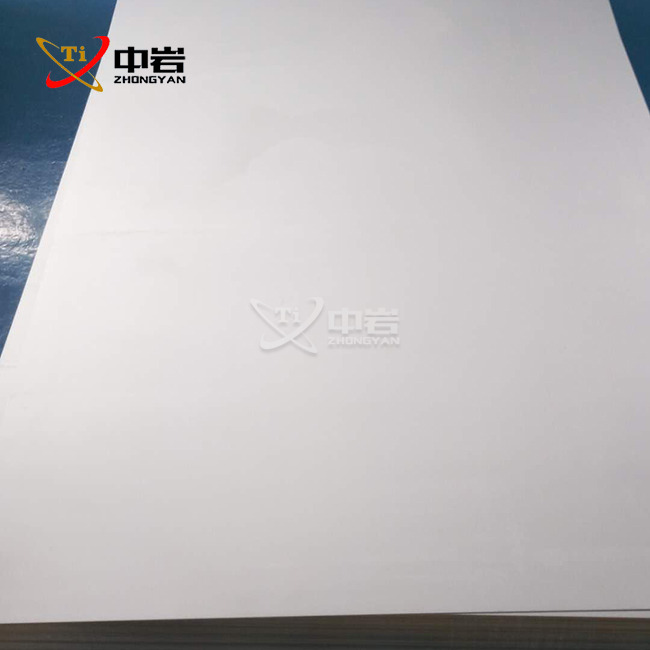
One great thing about titanium grade 4 plate is that it can be changed to fit the needs of a particular application. Manufacturers make plates that are up to 1500 mm wide and 6000 mm long, and they come in a lot of different sizes and thicknesses. Tough tolerances and complicated shapes can be made with precision cutting and shaping methods. Surface finishes and treatments can be used to improve certain qualities, like making something less likely to wear down or reducing friction. With this level of personalization, engineers and designers can make sure that titanium grade 4 plate works best for their specific needs, giving them the best performance and efficiency in high-stress situations.
Conclusion
It is clear that titanium grade 4 plate is a great material for high-stress jobs in many fields. It is very strong, doesn't rust, and can be used in many different ways, which makes it perfect for harsh settings. Titanium grade 4 plate keeps showing its worth in a wide range of fields, from chemical processing and sea uses to space travel and medical implants. The need for this amazing alloy is likely to grow as technology improves and businesses push the limits of what materials can do. Titanium grade 4 plate is a great option for people who need a material that is stable, long-lasting, and high-performing for important tasks.
At Zhong Yan Titanium, we make unique CNC machined parts and titanium materials that are of the highest quality, accuracy, and volume. Our goods are machined exactly how clients in a wide range of industries ask for them to be, and they meet ISO9001:2015 standards. Because we are in Baoji city, China's Titanium Valley, we can give a wide range of machining services and titanium materials. Our integrated method makes sure that production runs smoothly, quality stays high, and deliveries happen on time. Please email us at sales@titaniumstudy.com if you need more information or have questions.
FAQ
What is titanium grade 4 plate?
Titanium grade 4 plate is a commercially pure titanium alloy known for its high strength, excellent corrosion resistance, and biocompatibility.
What are the main applications of titanium grade 4 plate?
It is widely used in aerospace, marine, chemical processing, medical implants, and energy industries due to its exceptional properties.
How does titanium grade 4 plate compare to other materials in terms of strength-to-weight ratio?
Titanium grade 4 plate offers an excellent strength-to-weight ratio, making it ideal for applications requiring high strength and low weight.
Is titanium grade 4 plate suitable for medical implants?
Yes, its biocompatibility and resistance to bodily fluids make it an excellent choice for surgical and dental implants.
What manufacturing processes are used to produce titanium grade 4 plate?
Advanced techniques like vacuum arc remelting, forging, rolling, and heat treatment are used to ensure high-quality production.
References
1. Smith, J. R., & Johnson, A. B. (2019). Advanced Materials for Aerospace Applications: The Role of Titanium Alloys. Journal of Aerospace Engineering, 32(4), 145-160.
2. Chen, Q., & Thouas, G. A. (2015). Metallic implant biomaterials. Materials Science and Engineering: R: Reports, 87, 1-57.
3. Williams, D. F. (2008). On the mechanisms of biocompatibility. Biomaterials, 29(20), 2941-2953.
4. Lutjering, G., & Williams, J. C. (2007). Titanium (2nd ed.). Springer-Verlag Berlin Heidelberg.
5. Donachie, M. J. (2000). Titanium: A Technical Guide (2nd ed.). ASM International.
6. Schutz, R. W., & Watkins, H. B. (1998). Recent developments in titanium alloy application in the energy industry. Materials Science and Engineering: A, 243(1-2), 305-315.
Learn about our latest products and discounts through SMS or email