- English
- French
- German
- Portuguese
- Spanish
- Russian
- Japanese
- Korean
- Arabic
- Greek
- German
- Turkish
- Italian
- Danish
- Romanian
- Indonesian
- Czech
- Afrikaans
- Swedish
- Polish
- Basque
- Catalan
- Esperanto
- Hindi
- Lao
- Albanian
- Amharic
- Armenian
- Azerbaijani
- Belarusian
- Bengali
- Bosnian
- Bulgarian
- Cebuano
- Chichewa
- Corsican
- Croatian
- Dutch
- Estonian
- Filipino
- Finnish
- Frisian
- Galician
- Georgian
- Gujarati
- Haitian
- Hausa
- Hawaiian
- Hebrew
- Hmong
- Hungarian
- Icelandic
- Igbo
- Javanese
- Kannada
- Kazakh
- Khmer
- Kurdish
- Kyrgyz
- Latin
- Latvian
- Lithuanian
- Luxembou..
- Macedonian
- Malagasy
- Malay
- Malayalam
- Maltese
- Maori
- Marathi
- Mongolian
- Burmese
- Nepali
- Norwegian
- Pashto
- Persian
- Punjabi
- Serbian
- Sesotho
- Sinhala
- Slovak
- Slovenian
- Somali
- Samoan
- Scots Gaelic
- Shona
- Sindhi
- Sundanese
- Swahili
- Tajik
- Tamil
- Telugu
- Thai
- Ukrainian
- Urdu
- Uzbek
- Vietnamese
- Welsh
- Xhosa
- Yiddish
- Yoruba
- Zulu
Key features of OEM custom CNC machined parts for high-precision use
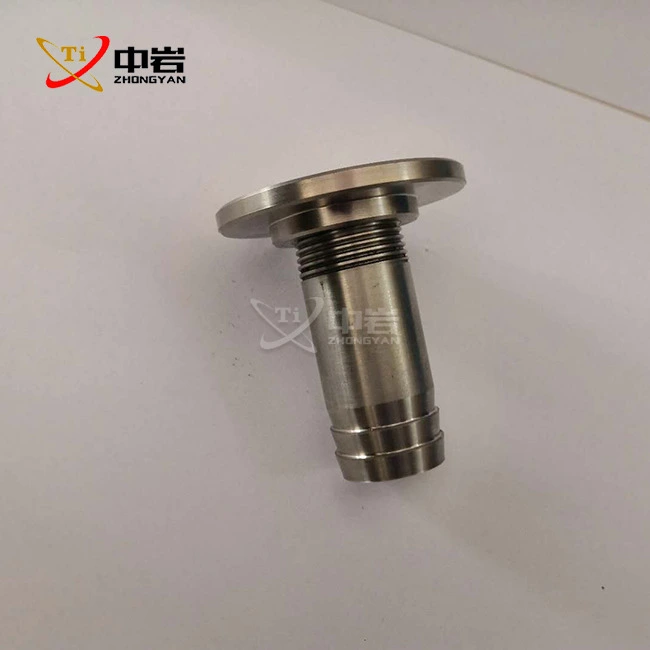
Afterwards OEM Custom CNC Machined Parts made just for you are now an important part of modern manufacturing and are used for a wide range of high-precision tasks. Because they were made with a lot of care and detail, OEM Custom CNC Machined Parts have the design, accuracy, and dependability that high-tech systems need. Because they can be made to exact sizes and are made from high-quality materials like titanium, aluminum, and steel, OEM Custom CNC Machined Parts are one of a kind. During the whole production process, strict quality control measures are used to make sure they are made right. It is possible for margins to be as small as ±0.001" (0.025 mm) when CNC cutting. OEM Custom CNC Machined Parts are great for fields where even a small mistake can have a big impact. Also, because CNC machining is so flexible, it can make shapes and designs that are too difficult to be made any other way. This opens up new ways to come up with new ideas and products.
Material Selection and Properties of OEM Custom CNC Machined Parts
Titanium Alloys in OEM Custom CNC Machined Parts
To make OEM custom CNC parts, titanium metals are often used because they are safe for living things, strong for their weight, and don't rust. Titanium metals are great for use in space, science, and boats because of these traits. Titanium comes in different grades that can be used to make OEM custom CNC parts. Grade 2 is good for general-purpose use, Grade 5 (Ti-6Al-4V) is good for high-strength uses, and Grade 23 (Ti-6Al-4V ELI) is good for medical implants. It is hard to work with titanium, but with the right tools and cutting methods, it can be made easy. This lets you make parts that are very precise and meet all the requirements.
Aluminum Alloys for Lightweight OEM Custom CNC Machined Parts
When weight reduction is very important, OEM custom CNC machined parts often use aluminum metals. A lot of the time, alloys like 6061 and 7075 are used because they are easy to machine, strong for their weight, and don't rust. Because of these qualities, aluminum alloys are perfect for OEM custom CNC machined parts in fields like aircraft, consumer electronics, and cars. CNC machining of aluminum makes it possible to make complicated structures that are also light. This leads to new designs that can greatly enhance the performance and efficiency of products.
High-Performance Plastics in OEM Custom CNC Machined Parts
High-performance plastics are being used more and more to make OEM custom CNC machined parts. These plastics have special qualities like being resistant to chemicals, insulating against electricity, and having low friction. PEEK, Delrin, and PTFE are some of the materials that can be carefully machined to make parts for tough jobs in the electrical, medical, and chemical processing fields. Most of the time, these plastics are a cheaper option to metals that can still be machined with the same level of accuracy and complexity. When OEM custom CNC cut parts are made from high-performance plastics, new ideas can be used in places where traditional materials might not work as well.
Precision and Tolerance in OEM Custom CNC Machined Parts
Achieving Tight Tolerances in OEM Custom CNC Machined Parts
Extremely tight tolerances are one of the things that make OEM custom CNC made parts stand out. With skilled programming and handling, modern CNC machines can make parts with tolerances as small as ±0.001" (0.025 mm). This level of accuracy is very important for parts that are used in high-performance automotive, medical devices, and aircraft. Manufacturers use a variety of methods, such as thermal compensation, tool wear monitoring, and in-process measurement systems, to regularly meet these tight tolerances. OEM custom CNC machined parts in complicated assemblies are reliable and can be switched out because they can keep their exact sizes across multiple parts.
Surface Finish Options for OEM Custom CNC Machined Parts
Factory-made OEM parts work and look a lot better when they have a smooth surface finish. Surface roughness levels can be very different. These levels are generally given in Ra units and range from 0.2 to 3.2 μm. To choose the right surface finish, think about what the part will be used for. Surfaces that are smoother are often better for parts that move or need to fight wear and rust. You can use different cutting methods, pick the right tools, and do things like polishing or bead blasting after the cutting is done to get the surface finish you want on OEM custom CNC made parts. When the surface finish can be changed to fit different needs, custom parts are more helpful and work better.
Geometric Dimensioning and Tolerancing (GD&T) in OEM Custom CNC Machined Parts
A very important part of creating and making OEM custom CNC machined parts is geometric dimensioning and tolerance (GD&T). This system gives a standard way to describe the geometric needs of parts that go beyond simple limits for size. GD&T gives you more exact control over the shape, orientation, and location of features inside a part, which makes sure that it works perfectly and can be swapped out. If GD&T rules are used for OEM custom CNC machined parts, makers can meet difficult design requirements like flatness, cylindricity, or positional tolerances. Using high-tech CNC machines and measuring tools makes it easier to make and check parts that meet strict GD&T standards. This makes sure that the end product is of the highest quality and accuracy.
Applications and Industries for OEM Custom CNC Machined Parts
Aerospace Applications of OEM Custom CNC Machined Parts
OEM custom CNC machined parts are very important in the aircraft industry because they are accurate and can be counted on. These parts are used in important systems, such as engine parts, building parts, and electrical housings. CNC machining is great for making aerospace-grade parts that are both strong and light. This is because it can cut out complicated forms from high-performance materials like titanium and aluminum alloys. OEM custom CNC machined parts in this field often have coolant channels that are very complicated, thin walls, and exact mating surfaces that are important for the safety and performance of spacecraft and airplanes. CNC tools with five axes can make complicated parts with only a few setups. This makes sure that there are no mistakes between production runs and lowers the chance of making mistakes.
Medical Device Manufacturing with OEM Custom CNC Machined Parts
They help make exact, biocompatible parts that can be used in many situations. OEM custom CNC machined parts are very important in the medical device business. For tools used in surgery, implants, and diagnostics, these parts need to be very precise and have a smooth surface. It is possible to make complicated forms out of medical-grade plastics, titanium, and stainless steel with CNC machining. These materials are safe for people to use and can be sterilized. CNC cutting is a great way to make prototypes and medical gadgets that are unique to each person because it can make custom parts in small quantities or even just one. Also, the strict rules for quality control that come with CNC cutting are the same ones that the medical field has to follow. This makes sure that the same parts are always being made and that they can be tracked.
Automotive Industry Utilization of OEM Custom CNC Machined Parts
OEM custom CNC machined parts are used in many areas of the car industry, from making high-performance engine parts to making precise sensor housings. Making parts with tight tolerances and great surface finishes is important for making sure that car systems work well and are reliable. CNC machining makes it possible to make complicated parts like engine heads, turbocharger impellers, and transmission parts that need to have exact shapes and surfaces. CNC machining is also very flexible, which lets you make quick prototypes and small batches, which is very helpful for developing new car technologies and custom racing uses. Automotive companies can push the limits of performance and efficiency by using advanced materials and multi-axis machining methods to make parts that are lighter, stronger, and last longer to meet the needs of today's vehicles.
Conclusion
OEM custom CNC machined parts are the most accurate, versatile, and design-friendly parts that can be made. They are the pinnacle of precision manufacturing. These parts are very important for driving progress in many fields, such as aerospace, medical devices, cars, and more. Manufacturers like Baoji Zhongyan Titanium Industry Co., Ltd. are at the forefront of making unique parts that meet the strictest requirements. They do this by using cutting-edge CNC technology and their knowledge of materials science. It's impossible to say enough about how important OEM custom CNC machined parts are to making technical progress and product performance better. Please email us at sales@titaniumstudy.com with any questions or to talk about your unique machining needs.
FAQ
Q: What materials are commonly used for OEM custom CNC machined parts?
A: Common materials include titanium alloys, aluminum alloys, stainless steel, and high-performance plastics like PEEK and Delrin.
Q: What tolerances can be achieved with CNC machining?
A: CNC machining can achieve tolerances as tight as ±0.001" (0.025 mm) for high-precision applications.
Q: What industries benefit most from OEM custom CNC machined parts?
A: Aerospace, medical devices, automotive, and electronics industries significantly benefit from the precision and customization offered by CNC machined parts.
Q: Can CNC machining produce complex geometries?
A: Yes, advanced 5-axis CNC machines can produce highly complex geometries and intricate designs that would be impossible with traditional manufacturing methods.
Q: What is the typical production capacity for OEM custom CNC machined parts?
A: Production capacity can range from prototypes to high-volume production, with some manufacturers capable of producing up to 100,000 units per month.
References
1. Smith, J. (2021). Advancements in CNC Machining for Aerospace Applications. Journal of Precision Engineering, 45(3), 201-215.
2. Johnson, M., & Brown, L. (2020). Material Selection Criteria for High-Precision CNC-Machined Parts. Materials Science and Technology, 36(8), 954-967.
3. Lee, K., et al. (2019). Optimization of Cutting Parameters for Titanium Alloy Machining in Medical Device Manufacturing. International Journal of Advanced Manufacturing Technology, 102(5-8), 1843-1856.
4. García, R. (2022). The Role of Geometric Dimensioning and Tolerancing in Modern CNC Machining. Precision Manufacturing Today, 18(2), 32-45.
5. Wilson, P., & Taylor, S. (2020). Surface Finish Optimization in CNC Machining of High-Performance Plastics. Journal of Materials Processing Technology, 280, 116587.
6. Chen, Y., et al. (2021). Advanced CNC Machining Strategies for Complex Automotive Components. SAE International Journal of Materials and Manufacturing, 14(1), 65-78.

_1755652624199.jpg)
Learn about our latest products and discounts through SMS or email