- English
- French
- German
- Portuguese
- Spanish
- Russian
- Japanese
- Korean
- Arabic
- Greek
- German
- Turkish
- Italian
- Danish
- Romanian
- Indonesian
- Czech
- Afrikaans
- Swedish
- Polish
- Basque
- Catalan
- Esperanto
- Hindi
- Lao
- Albanian
- Amharic
- Armenian
- Azerbaijani
- Belarusian
- Bengali
- Bosnian
- Bulgarian
- Cebuano
- Chichewa
- Corsican
- Croatian
- Dutch
- Estonian
- Filipino
- Finnish
- Frisian
- Galician
- Georgian
- Gujarati
- Haitian
- Hausa
- Hawaiian
- Hebrew
- Hmong
- Hungarian
- Icelandic
- Igbo
- Javanese
- Kannada
- Kazakh
- Khmer
- Kurdish
- Kyrgyz
- Latin
- Latvian
- Lithuanian
- Luxembou..
- Macedonian
- Malagasy
- Malay
- Malayalam
- Maltese
- Maori
- Marathi
- Mongolian
- Burmese
- Nepali
- Norwegian
- Pashto
- Persian
- Punjabi
- Serbian
- Sesotho
- Sinhala
- Slovak
- Slovenian
- Somali
- Samoan
- Scots Gaelic
- Shona
- Sindhi
- Sundanese
- Swahili
- Tajik
- Tamil
- Telugu
- Thai
- Ukrainian
- Urdu
- Uzbek
- Vietnamese
- Welsh
- Xhosa
- Yiddish
- Yoruba
- Zulu
Which Standards Govern Titanium Blocks Quality & Certification?

Titanium blocks are used as basic raw materials in many high-performance fields, such as chemical processing, aerospace, medical devices, and the production of semiconductors. These special materials are made to strict international standards set by groups like ASTM International, ISO, and AMS. This is to make sure that the quality, safety, and performance are always the same. The rules that govern titanium blocks include detailed requirements for the blocks' chemical makeup, mechanical properties, size tolerances, and surface finish. Manufacturers must strictly follow these rules during production and quality control. The aerospace industry uses these materials a lot for important parts, and medical device makers use biocompatible grades for surgical instruments and implants. Procurement professionals need to know a lot about quality standards because they have to deal with different grade levels, certification requirements, and compliance paperwork to make sure their sourcing choices are in line with project requirements and industry rules.
Understanding Titanium Blocks Quality Standards
Comprehensive quality standards that set clear criteria for material properties and manufacturing processes are the basis for reliable titanium procurement. This effort to standardize is led by ASTM International, whose specifications include ASTM B348, which spells out the needs for bars and billets made of titanium and titanium alloys that are used in many different fields. This standard sets important limits on things like chemical composition, mechanical property needs, and size variations so that the product works the same way in all situations.
ASTM Standards for Titanium Materials
In terms of titanium bars and billets, including block shapes used in machining, ASTM B348 is the main standard that applies. The standard divides materials into different grades based on their chemical makeup and their intended use. Grade 1 titanium is commercially pure and has great resistance to corrosion and the ability to be shaped. Grade 2 titanium is a little stronger but still has great corrosion resistance. Because of these classifications, procurement teams can choose the right materials based on performance needs and the environment.
The standard also requires strict testing methods, such as measuring tensile strength, yield strength, and elongation, to make sure that mechanical properties are correct. Chemical analysis is needed to make sure that the purity levels of titanium don't go over certain limits for elements like oxygen, nitrogen, carbon, and iron, which have a big effect on how the material behaves and how well it works.
ISO and EN Standards Implementation
International Organization for Standardization (ISO) standards provide internationally accepted criteria for titanium materials that go along with ASTM standards. Regarding titanium materials for surgical implants, ISO 5832-2 sets purity standards and biocompatibility requirements that are necessary for medical uses. European Norm (EN) standards improve quality assurance even more by adding more testing and certification steps.
These standards work together to make complete quality frameworks that meet the needs of different regulatory bodies while still being compatible around the world. Manufacturers have to show that they follow the rules by keeping a lot of paperwork and having a third-party check the properties of the materials and the way they are made.
Key Certification Processes for Titanium Blocks
When titanium blocks are certified, they go through several steps of checks to make sure they meet quality standards and can be tracked all the way through the supply chain. These steps start with qualifying the raw materials and end with inspecting the finished product. Together, they make complete quality assurance systems that lower the risks of problems with materials failing or not meeting standards.
Material Testing and Verification Procedures
Before getting certified, the raw materials are put through strict tests using high-tech analytical methods like inductively coupled plasma mass spectrometry (ICP-MS) and glow discharge mass spectrometry (GDMS) to check their chemical makeup. Trace elements can be found at parts-per-million levels using these methods. This makes sure that materials meet the strict purity requirements set by relevant standards.
Standardized protocols are used for tensile testing, measuring hardness, and impact testing, which are all types of mechanical testing. Metallographic microstructural analysis shows the characteristics of the grain structure and finds possible flaws that could affect the performance of the material. Ultrasonic inspection methods can find flaws or problems inside things that might not be apparent using regular testing methods.
Third-Party Certification Bodies
Some well-known certification bodies, like TÜV Rheinland, Lloyd's Register, and DNV, offer independent verification services that make sure manufacturers follow the rules. These groups check manufacturing facilities for flaws, look over quality control systems, and test materials on their own to make sure they meet specifications and can be used in production.
The process of getting certified includes looking over paperwork, inspecting the building, and doing regular checks to make sure the certification is still valid. Mill test certificates (MTCs) are documents that come with every shipment and contain detailed information about the material's properties and how it can be tracked. This lets customers make sure that the requirements are met and keep quality records for regulatory compliance.
Grades and Types of Titanium Blocks According to Standards
Titanium materials are divided into different grades that describe their chemical makeup, mechanical properties, and intended uses. This system of classification helps people who work in procurement choose the right materials based on performance needs, environmental conditions, and the need to follow rules.
Commercial Purity Grades
Grade 1 titanium is the most flexible and easiest to shape commercial purity grade. It has the fewest alloying elements and is very resistant to corrosion in a wide range of environments. This grade is perfect for uses that need to do deep drawing, spinning, or complicated forming while still keeping the structure and surface quality.
Grade 2 titanium is the most commonly used commercial purity grade in many industries because it is the best balance of strength and ductility. As compared to Grade 1, it is stronger and more resistant to corrosion. It can also be welded easily, which makes it ideal for structural parts, heat exchangers, and chemical processing equipment.
Grades 3 and 4 titanium are stronger than Grade 2 titanium because the interstitial element content is controlled. This gives them better mechanical properties for demanding applications while still being easy to shape and resistant to corrosion.
Titanium Alloy Classifications
Ti-6Al-4V (Grade 5) is the most common titanium alloy. It has 6% aluminum and 4% vanadium added to it, which makes it much stronger and better at handling high temperatures. This grade of alloy is used a lot in aerospace, medical implants, and high-performance sports equipment that needs to be strong while also being light.
Specialized grades, like Grade 23 (Ti-6Al-4V ELI - Extra Low Interstitial), are better for medical implants because they have less oxygen, nitrogen, and carbon in them. This change makes the base alloy composition stronger while keeping its better fracture toughness and fatigue resistance.
Our main job at Zhongyan is to make high-purity planar titanium targets out of Grade 1 and Grade 2 titanium materials. Our high-precision CNC machining skills make sure that the surfaces are very flat and uniform, which is important for physical vapor deposition processes in semiconductor and optical coating applications.
Comparison of Titanium Blocks Standards Versus Other Metals
Titanium materials are governed by very different rules than regular metals like aluminum and steel. This is because titanium alloys have special properties and are used in very specific ways. These differences make titanium stand out as the best material for high-performance uses where regular materials can't meet the needs.
Standards, Complexity, and Rigor
Titanium standards have stricter controls on chemical composition than aluminum or steel standards. This is because titanium is very sensitive to interstitial elements that have a big effect on its properties. Standards for aluminum mostly look at the amount of alloying elements and their mechanical properties. Standards for titanium, on the other hand, also have to deal with trace element contamination that can make the material less resistant to corrosion and less biocompatible.
When testing titanium blocks, you usually need to use more complex analytical methods and stricter acceptance criteria. Aerospace uses need a lot of paperwork and tracking that goes beyond what is needed for regular building materials. This is because titanium parts are so important in safety-critical systems.
Performance Standards Differentiation
Titanium standards put a lot of emphasis on tests for biocompatibility, high-temperature performance, and corrosion resistance in harsh environments. These tests are not usually needed for aluminum or steel materials. These specific needs come from the fact that titanium is used in places where other materials would fail or need to be replaced often.
Certification processes for titanium materials are more thorough than those for standard metals. They include more detailed requirements for quality management systems and ongoing monitoring. This extra supervision makes sure that quality and performance are always the same in situations where a failure of a material could have terrible effects or cost a lot of money.
Procurement Considerations: Ensuring Compliance and Quality
To successfully buy titanium materials, you need to carefully check the capabilities of the suppliers, look over the paperwork, and keep doing quality control tasks that make sure the materials meet all the standards and requirements that apply. These things are especially important when you think about how specialized titanium applications are and how bad it is when materials don't meet standards.
Supplier Qualification and Assessment
Checking certifications and accreditations from well-known groups, like AS9100 for aerospace uses or ISO 13485 for medical device production, is the first step in a good supplier evaluation. These certifications show that suppliers have put in place the right quality management systems and are audited regularly to make sure they are still following the rules.
As part of the evaluation process, the facility should be visited to look at the technical know-how, manufacturing skills, and quality control systems. Through process capability studies and historical performance data, suppliers must show that they can make materials that meet certain requirements. A review of the documentation should make sure that suppliers have the right traceability systems in place and can give full information about the material's history.
Documentation and Compliance Verification
Mill test certificates are the main paperwork that goes with titanium shipments. They have detailed information on chemical analysis, mechanical properties, and heat treatment. It is important to carefully read these documents to make sure that all the requirements are met and that proper tracking is kept up throughout the supply chain.
Third-party inspection services can give you extra peace of mind by checking the properties of the material and making sure it meets your needs. These services are especially useful for important tasks where a failure of a material could have major effects on safety or the economy.
Our specialized planar titanium targets and all of Zhongyan's other titanium products are made to meet the highest international standards thanks to our thorough quality management system. Our ISO 9001:2015 certification shows that we are dedicated to quality excellence and constant improvement in every part of our business.
Conclusion
The landscape of standards governing titanium blocks encompasses a complex framework of international specifications designed to ensure material quality, safety, and performance consistency across diverse applications. ASTM, ISO, and AMS standards provide comprehensive guidelines that address chemical composition, mechanical properties, and certification requirements essential for procurement professionals navigating this specialized market.
Understanding these standards enables informed decision-making when selecting appropriate grades, evaluating suppliers, and ensuring compliance with regulatory requirements. The rigorous certification processes and documentation requirements reflect the critical nature of titanium applications, where material performance directly impacts safety and operational success.
Successful procurement strategies must incorporate thorough supplier evaluation, comprehensive documentation review, and ongoing quality assurance activities that maintain compliance throughout the supply chain. As industries continue to demand higher-performance materials, the importance of proper standard compliance and certification verification will only increase, making this knowledge essential for procurement professionals across multiple sectors.
FAQ
What are the primary international standards governing titanium blocks?
The main standards include ASTM B348 for titanium bars and billets, ISO 5832-2 for surgical implant materials, and various AMS specifications for aerospace applications. These standards define chemical composition limits, mechanical property requirements, and testing protocols that ensure material quality and consistency.
How can I verify that a supplier's titanium blocks meet required certifications?
Verification involves reviewing mill test certificates, checking supplier certifications like AS9100 or ISO 9001, and conducting facility audits. Third-party inspection services can provide independent confirmation of material properties and compliance with specifications.
What documentation should accompany certified titanium block shipments?
Essential documentation includes mill test certificates showing chemical analysis and mechanical properties, material traceability records, heat treatment certificates, and compliance statements confirming adherence to specified standards and customer requirements.
Which titanium grades are most commonly used in industrial applications?
Grade 2 commercial purity titanium is most widely used due to its excellent balance of strength, ductility, and corrosion resistance. Ti-6Al-4V (Grade 5) is preferred for high-strength applications, while Grade 1 is selected when maximum formability is required.
How do certification requirements differ between aerospace and medical titanium applications?
Aerospace applications typically require AS9100 certification and compliance with AMS specifications, while medical applications demand ISO 13485 certification and adherence to biocompatibility standards like ISO 5832-2. Both industries require extensive traceability and documentation.
What factors influence the cost and lead times for certified titanium blocks?
Cost and delivery are affected by grade selection, required certifications, order quantities, dimensional specifications, and current market conditions. Certified materials typically command premium pricing due to enhanced testing and documentation requirements, while lead times depend on supplier capacity and certification processing.
Zhongyan: Your Trusted Partner for Premium Titanium Blocks Manufacturing
Zhongyan is one of the best companies that makes titanium blocks because it has advanced technology for making certified materials that are better than international quality standards. Because we are strategically located in China's Titanium Valley, we have easy access to high-quality raw materials and state-of-the-art research facilities that help us make high-quality products for demanding uses in the aerospace, medical, semiconductor, and industrial sectors.
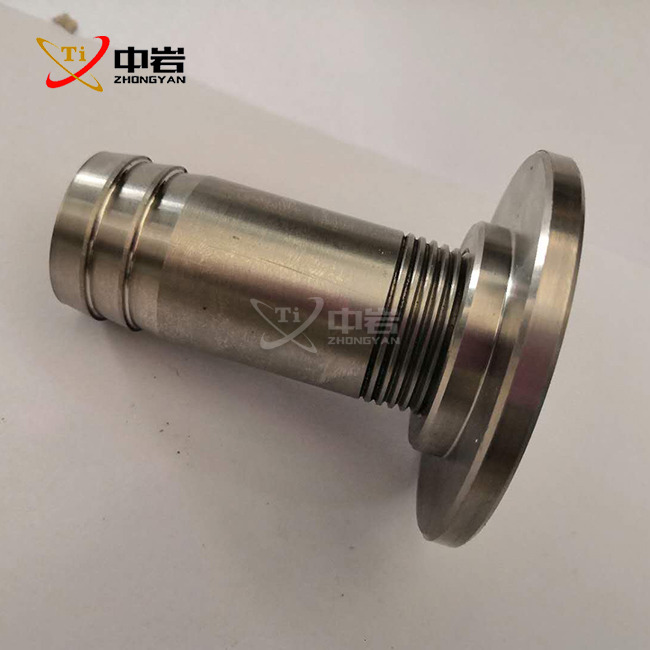
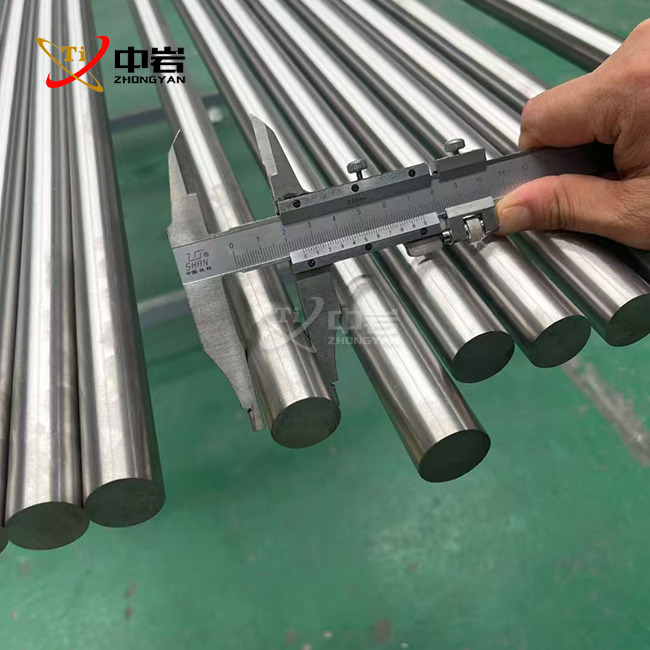
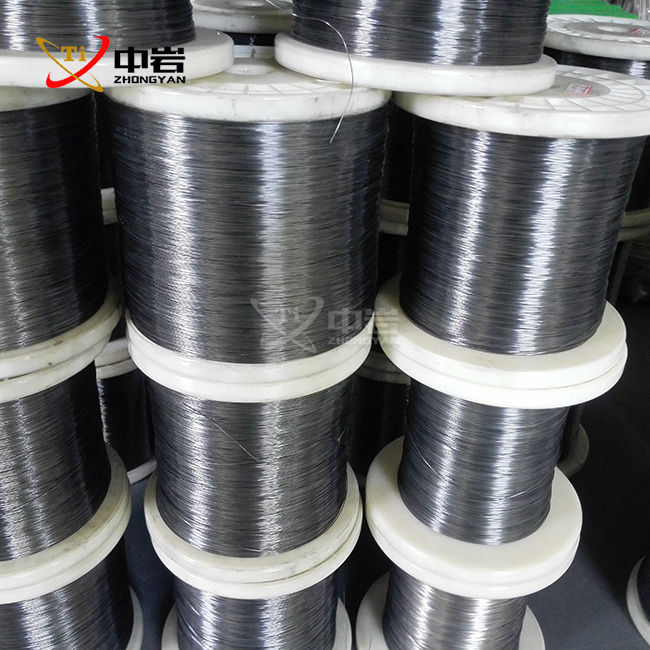
Our wide range of products includes high-purity planar titanium targets designed for physical vapor deposition processes, custom CNC-machined parts, and raw materials that come in rods, plates, tubes, and wires, among other shapes. To make sure that each product meets ASTM, ISO, and AMS standards, it goes through strict quality control tests using cutting-edge analytical tools.
The manufacturing excellence at our facilities combines precision machining capabilities with advanced metallurgical processing to achieve exceptional dimensional accuracy, surface finish, and material consistency. Our titanium blocks supplier services include OEM and ODM solutions with customizable dimensions, surface treatments, and packaging options that meet specific customer requirements.
Our technical team provides comprehensive support throughout the procurement process, from initial material selection through final delivery and beyond. We maintain detailed documentation and traceability systems that ensure complete compliance with regulatory requirements and enable efficient supply chain management. Contact our experts at sales@titaniumstudy.com to discuss your specific titanium blocks requirements and discover how our premium materials can enhance your manufacturing operations.
References
1. American Society for Testing and Materials. Standard Specification for Titanium and Titanium Alloy Bars and Billets. ASTM B348-21. West Conshohocken: ASTM International, 2021.
2. International Organization for Standardization. Implants for Surgery - Metallic Materials - Part 2: Unalloyed Titanium. ISO 5832-2:2018. Geneva: ISO, 2018.
3. Aerospace Material Specifications. Titanium Alloy Bars, Wire, Forgings, and Rings. AMS 4928N. Warrendale: SAE International, 2019.
4. Boyer, Rodney R. An Overview on the Use of Titanium in the Aerospace Industry. Materials Science and Engineering: A 213, no. 1-2 (1996): 103-114.
5. Niinomi, Mitsuo. Mechanical Properties of Biomedical Titanium Alloys. Materials Science and Engineering: A 243, no. 1-2 (1998): 231-236.
6. Lutjering, Gerd and James C. Williams. Titanium: Engineering Materials and Processes. 2nd edition. Berlin: Springer-Verlag, 2007.
Learn about our latest products and discounts through SMS or email