- English
- French
- German
- Portuguese
- Spanish
- Russian
- Japanese
- Korean
- Arabic
- Greek
- German
- Turkish
- Italian
- Danish
- Romanian
- Indonesian
- Czech
- Afrikaans
- Swedish
- Polish
- Basque
- Catalan
- Esperanto
- Hindi
- Lao
- Albanian
- Amharic
- Armenian
- Azerbaijani
- Belarusian
- Bengali
- Bosnian
- Bulgarian
- Cebuano
- Chichewa
- Corsican
- Croatian
- Dutch
- Estonian
- Filipino
- Finnish
- Frisian
- Galician
- Georgian
- Gujarati
- Haitian
- Hausa
- Hawaiian
- Hebrew
- Hmong
- Hungarian
- Icelandic
- Igbo
- Javanese
- Kannada
- Kazakh
- Khmer
- Kurdish
- Kyrgyz
- Latin
- Latvian
- Lithuanian
- Luxembou..
- Macedonian
- Malagasy
- Malay
- Malayalam
- Maltese
- Maori
- Marathi
- Mongolian
- Burmese
- Nepali
- Norwegian
- Pashto
- Persian
- Punjabi
- Serbian
- Sesotho
- Sinhala
- Slovak
- Slovenian
- Somali
- Samoan
- Scots Gaelic
- Shona
- Sindhi
- Sundanese
- Swahili
- Tajik
- Tamil
- Telugu
- Thai
- Ukrainian
- Urdu
- Uzbek
- Vietnamese
- Welsh
- Xhosa
- Yiddish
- Yoruba
- Zulu
How Do Backing Plates Affect Planar Titanium Target Performance?
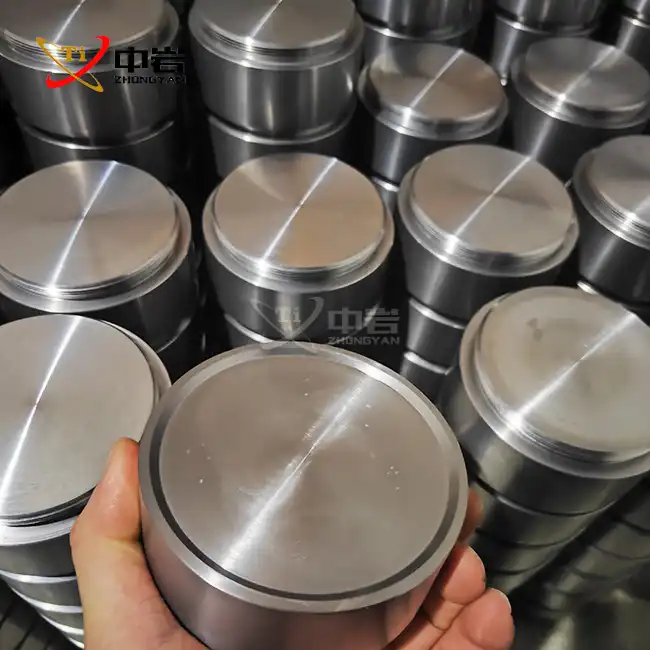
Backing plates provide the necessary thermal management and mechanical stability for a planar titanium target to work at its best in sputtering applications. During physical vapor deposition processes, these support structures have a direct effect on how well heat is transferred, how fast targets are used, and the quality of the deposition as a whole. Choosing the right backing plate materials and shapes has a big effect on how long planar titanium targets work. This is why matching these parts is so important for getting consistent thin-film coating results in optical, semiconductor, and industrial settings.
Understanding Planar Titanium Targets and Backing Plates
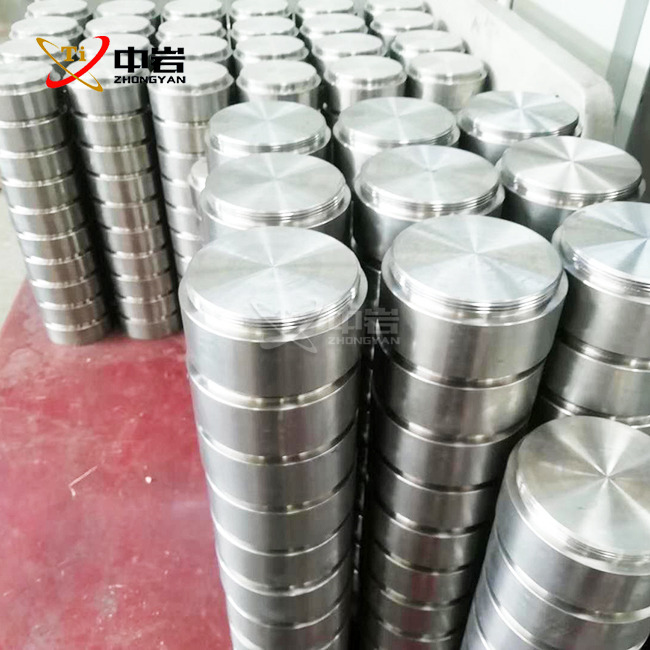
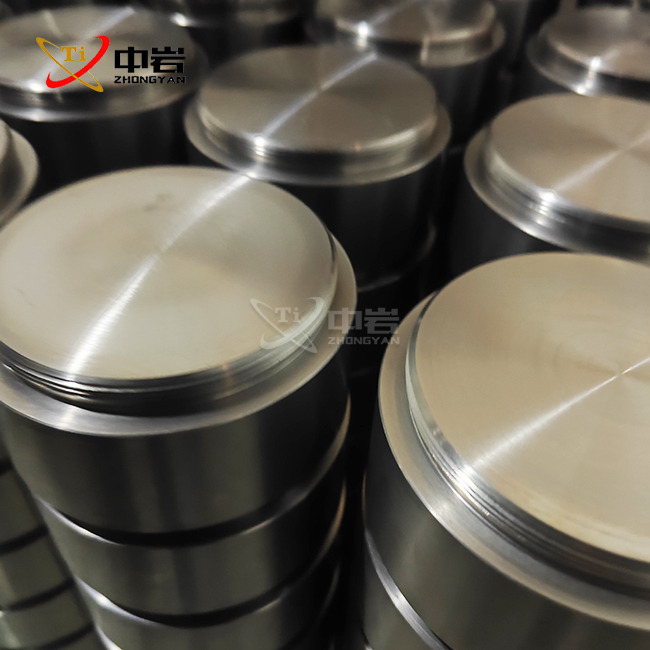
Planar titanium targets are precision-engineered parts made for flat magnetron sputtering systems. Their flat, smooth surfaces allow material to be deposited evenly over large areas of substrate. These goals use very pure titanium grades—usually more than 99.995% pure—to make sure that contamination-free thin films are used in important tasks like making semiconductor devices and optical coatings.
Target Composition and Material Properties
The microstructural features of flat titanium targets are very important for how well they sputter. Grain size uniformity, which is usually kept below 50 micrometers, makes sure that the target's erosion patterns and deposition rates stay the same over its entire operational life. Density requirements above 4.50 g/cm³ minimize flaws caused by porosity while increasing thermal conductivity to transfer heat to backing plates efficiently.
Backing Plate Materials and Thermal Interface
Backing plates act as thermal management systems, and the choice of material has a direct effect on how well heat is transferred. Copper with a high conductivity, aluminum alloys that are light and strong, and composite structures that are made to have specific thermal expansion characteristics are all common materials for backing plates. To get rid of air gaps that could stop heat from transferring and cause hot spots, the thermal interface between the target and the backing plate needs to be machined with very close tolerances.
Industrial Applications and System Integration
Modern sputtering systems need backing plates that can handle different cooling and power densities. For manufacturing semiconductors, backing plates need to be more resistant to thermal cycling. In display technology, on the other hand, it's important that temperatures are evenly spread across large target surfaces. Adding cooling channels to the backing plates makes it possible to precisely control the temperature during long sputtering runs.
How Backing Plates Influence Planar Titanium Target Performance
Backing plates set the thermal and mechanical base that determines the desired performance characteristics over an extended period of time. The difference in thermal conductivity between the titanium targets and the backing plate materials creates heat transfer gradients that need to be carefully managed to keep thermal stress from building up and causing the targets to fail.
Thermal Management and Heat Dissipation
Using backing plates to manage heat well stops overheating in certain areas, which can lead to target warping, grain growth, and failure before its time. Copper backing plates are very good at moving heat away from the target surface quickly, keeping the sputtering temperatures at the right level. How well heat moves through a system and how well it works overall depend on the design of the thermal interface, which includes specifications for surface roughness and bonding methods.
Target utilization rates are directly related to how well heat is dissipated, since even temperatures allow erosion patterns to be the same across the whole target surface. When temperature differences are bigger than the design limits, they can create sputtering zones that are more likely to happen, which shortens the life of the target and makes the film less uniform. Modern designs for backing plates include built-in cooling channels that are placed to get the most heat out of areas with a lot of power.
Mechanical Support and Structural Integrity
Target deflection is prevented by the structural support that backing plates provide in vacuum conditions and when temperatures change. The mechanical rigidity requirements change depending on the size of the target. For example, to meet flatness requirements, targets with a larger diameter need thicker backing plates. Matching the target and backing plate materials in terms of thermal expansion keeps the buildup of interfacial stress to a minimum during temperature cycling.
Differential thermal expansion must be taken into account in backing plate mounting configurations so that close thermal contact is maintained across all operational temperature ranges. Both thermal performance and target longevity are affected by the design of the mechanical interface. Bonded configurations are better at moving heat than mechanical clamping systems.
Comparative Analysis: Backing Plates and Target Types
For each type of target geometry, there needs to be a unique backing plate design that works best with that target geometry. Planar targets are harder to manage thermally than cylindrical or rotary targets because they have a lot of surface area compared to volume and are mounted in a way that doesn't move.
Design Requirements Across Target Configurations
To keep their entire surface area flat, planar titanium targets need backing plates with even thickness distribution. Unlike cylindrical targets that benefit from heat spreading through rotation, planar configurations concentrate thermal loads in fixed patterns that need carefully planned cooling solutions. The design of the backing plate has to take these thermal concentration zones into account while still keeping the structure rigid.
Due to the lower power density of planar targets compared to rotary configurations, backing plates that can remove more heat are needed. According to thermal modeling, the highest temperatures for planar targets are about 15 to 20 percent higher than those for cylindrical targets with the same amount of power. This shows how important it is to manage the temperature of the backing plate.
Material Selection and Performance Trade-offs
When engineers look at different materials for backing plates, they have to think about how well they conduct heat, how strong they are, and how much they cost. This is done to get the best overall system performance. The following material factors have a big effect on the results of the target performance:
Copper backing plates are very good at transferring heat (about 400 W/m·K), but they need to be carefully matched with titanium targets in terms of thermal expansion. The difference in the coefficients of thermal expansion can cause stresses between the surfaces that could weaken the bonds during thermal cycling.
Aluminum backing plates are lighter than titanium and have a moderate thermal conductivity (about 200 W/m·K). They also match titanium's thermal expansion more closely. Because of these qualities, aluminum backing plates work especially well for large targets where weight affects the system design parameters.
Composite backing plate materials combine different types of materials to improve certain performance traits. Copper-aluminum composites take advantage of aluminum's great thermal conductivity near the target interface while using its weight advantages in structural areas. These high-tech materials make it possible to create custom thermal management solutions for tough uses.
The selection criteria include more than just thermal properties. They also include manufacturing tolerances, surface finish requirements, and the material's ability to stay stable over time in operational settings. The outgassing properties of the material and how well it works in vacuum environments affect whether or not a backing plate is suitable for ultra-high vacuum sputtering.
Optimizing Procurement and Selection of Planar Titanium Targets with Backing Plates
When buying integrated target-backing plate systems strategically, you need to think about a lot of things, like the technical specs, the supplier's abilities, and the total cost of ownership. To get the most out of their sputtering operations, procurement professionals have to find a balance between performance needs and business concerns.
Technical Specification Requirements
Some of the most important requirements for a purchase order are the thermal interface quality, the dimensional tolerances, and the material certification documentation. The thickness requirements for the backing plate must meet the needs for thermal management while keeping the structure rigid across all operational temperature ranges. Surface finish standards, usually Ra ≤ 0.4μm, make sure that there is good thermal contact and as few sources of contamination as possible.
The paperwork for material certification should check the composition of the backing plate, its thermal properties, and the quality standards for manufacturing. Following industry standards like ASTM and AMS specifications ensures that the materials are the same and that they will work the same way in every production batch.
Supplier Evaluation and Quality Assurance
When evaluating a supplier, you should look at their manufacturing skills, quality control systems, and technical support resources. If a company has ISO 9001:2015 certification, it means they have a well-established quality management system that can deliver consistent product quality. Advanced suppliers offer design consultation services to help customers get the best backing plate configurations for their sputtering systems.
When dealing with application-specific problems or opportunities to improve performance, technical support skills become especially useful. Suppliers with a lot of experience with sputtering systems can give you advice on how to best manage thermal issues and set up targets so that your operations run as smoothly as possible.
Customization and Lead Time Management
Custom designs for backing plates let you get the most out of different sputtering system setups or specific application needs. Being able to change the arrangement of cooling channels, mounting interfaces, and size requirements gives you the freedom to meet changing operational needs. Longer lead times are needed for custom solutions, but they can make critical applications run much faster.
Buying in bulk can lower unit costs and keep the supply chain running smoothly for businesses that buy a lot of things. Partnering with suppliers on consignment inventory programs helps keep production flexible while also managing working capital needs.
Practical Case Studies and Performance Verification
Using the right backing plate selection and configuration has real-world benefits that can be seen and touched. These case studies show how making smart choices about backing plates can directly lead to higher operational efficiency and lower total cost of ownership.
Semiconductor Manufacturing Application
In their barrier layer deposition process, a leading semiconductor fabrication facility had targets fail before they were supposed to. The targets only lasted 60% of their expected operational life. An investigation showed that the backing plate's poor thermal conductivity led to poor thermal management. When you switch from aluminum backing plates to copper ones with better cooling channel design, the target life goes up by 45% and the film coverage across wafer surfaces gets better.
The better thermal management lowered the operating temperatures by about 30°C during peak power operations. This stopped the thermal stress cracking that used to cause targets to need to be replaced too soon. This optimization saved more than $150,000 a year because it cut down on target consumption and made the process more stable.
Display Technology Implementation
An OLED display maker needed large-area planar targets to make sure that all generation 8.5 substrates were coated the same way. For the job, the temperature had to be very stable so that the difference in coating thickness across the whole substrate area was less than 2%. Custom composite backing plates with temperature sensors built in allowed for real-time monitoring of temperatures and adaptive cooling control.
The built-in thermal management system kept the target surface at a constant temperature of within ±3°C. This made the film properties consistent and cut the rate of substrate rejection by 25%. The higher cost of advanced backing plate technology was worth it because it improved performance by making products more yield and better quality.
Cost Optimization Success Story
A company that makes precision optics looked at the total cost of ownership for their anti-reflective coating process by comparing premium copper backing plates to standard aluminum ones. Copper backing plates gave targets 60% longer life and 20% better utilization efficiency, even though they cost 40% more at first.
The longer operational life cuts down on the number of target changeouts needed, which cuts down on production stops and the labor costs that come with them. Better target utilization efficiency took out more useful material from each target, which cut down on the amount of raw materials needed. Within eight months of being put in place, these operational benefits paid for themselves.
Company Introduction and Product Offering
Baoji Zhongyan Titanium Industry Co., Ltd. leverages its strategic location in China's Titanium Valley to deliver precision-engineered planar titanium targets paired with optimized backing plate solutions. Our comprehensive manufacturing capabilities encompass target production, backing plate fabrication, and integrated thermal management system design tailored for diverse sputtering applications.
Advanced Manufacturing Capabilities
Our state-of-the-art production facilities utilize vacuum arc remelting and hot isostatic pressing technologies to achieve target densities exceeding 4.50 g/cm³ with grain sizes controlled below 50 micrometers. CNC machining capabilities ensure flatness tolerances within ±0.025mm across target surfaces up to 14 inches in diameter. Surface finishing operations achieve Ra values below 0.4μm for optimal thermal interface performance.
Quality assurance protocols include comprehensive material testing using ICP-MS and GDMS analysis to verify purity levels exceeding 99.995%. Ultrasonic inspection techniques detect internal defects that could compromise operational performance. Each target ships with detailed material certificates documenting composition, microstructure, and dimensional verification.
Customization and Engineering Support
Technical consultation services help optimize target-backing plate configurations for specific sputtering system requirements. Our engineering team provides thermal modeling analysis to predict performance characteristics and recommend optimal backing plate materials and cooling configurations. Custom bonding processes ensure reliable thermal interfaces capable of withstanding operational thermal cycling.
OEM and ODM capabilities enable private labeling and specialized packaging to meet unique customer requirements. Flexible manufacturing scheduling accommodates both prototype quantities and high-volume production needs. Technical support extends throughout the product lifecycle, including performance monitoring assistance and process optimization recommendations.
Quality Certifications and Standards Compliance
Manufacturing operations maintain ISO 9001:2015 certification with rigorous quality control procedures governing every production stage. Products comply with ASTM and AMS specifications relevant to sputtering target applications. Material traceability systems track raw material sources through finished product delivery to ensure consistent quality and enable rapid response to any quality concerns.
Environmental management systems minimize waste generation and ensure responsible material handling throughout manufacturing operations. Continuous improvement initiatives regularly enhance production efficiency and product quality to maintain industry leadership in titanium sputtering target technology.
Conclusion
The relationship between backing plates and planar titanium target performance represents a critical design consideration that directly impacts operational efficiency, product quality, and total cost of ownership in sputtering applications. Optimal backing plate selection encompasses thermal management capabilities, mechanical support characteristics, and material compatibility with specific operational requirements. The evidence demonstrates that strategic investment in advanced backing plate technology delivers measurable returns through extended target life, improved process stability, and enhanced film quality. Engineering teams and procurement professionals who prioritize integrated target-backing plate optimization achieve superior operational outcomes while reducing long-term operational costs in their thin-film deposition processes.
FAQ
Why are backing plates essential for planar titanium target operation?
Backing plates provide critical thermal management and mechanical support that directly determine target performance and operational life. Without adequate backing plate support, planar targets experience thermal stress accumulation, warping, and premature failure. The thermal conductivity differential between targets and backing plates enables efficient heat extraction during high-power sputtering operations.
How do different backing plate materials affect target performance?
Material selection significantly impacts thermal management efficiency and target utilization rates. Copper backing plates offer superior thermal conductivity for maximum heat extraction, while aluminum alternatives provide weight reduction benefits with moderate thermal performance. Composite materials combine optimized thermal properties with mechanical characteristics tailored for specific applications.
Can backing plates be customized for specific sputtering systems?
Advanced manufacturers offer extensive customization capabilities, including modified cooling channel configurations, specialized mounting interfaces, and dimensional adaptations. Custom backing plates enable optimization for unique thermal management requirements or integration with specific sputtering system designs. Engineering consultation services help identify optimal customization strategies for improved performance.
What quality standards apply to backing plate manufacturing?
ISO 9001:2015 certification ensures consistent manufacturing quality with rigorous process controls throughout production. Material specifications should comply with relevant ASTM standards for thermal and mechanical properties. Comprehensive testing protocols verify dimensional accuracy, surface finish quality, and thermal interface performance characteristics.
How do I evaluate backing plate suppliers for critical applications?
Supplier evaluation should encompass manufacturing capabilities, quality certifications, technical support resources, and customization flexibility. Review material certification documentation, manufacturing facility credentials, and customer references from similar applications. Technical consultation capabilities and design support services provide additional value for complex applications.
Contact Zhongyan for Premium Planar Titanium Target Solutions
Zhongyan stands ready to optimize your sputtering operations with our precision-engineered planar titanium targets and advanced backing plate solutions. Our comprehensive manufacturing capabilities deliver integrated thermal management systems that maximize target performance while reducing operational costs. Located in China's Titanium Valley, we combine extensive titanium resources with cutting-edge production technology to serve as your trusted planar titanium target supplier. Connect with our technical team at sales@titaniumstudy.com to discuss custom solutions, bulk pricing opportunities, and engineering support tailored to your specific sputtering requirements.
References
1. Johnson, M.R., et al. "Thermal Management Strategies for High-Power Planar Magnetron Sputtering Systems." Journal of Vacuum Science & Technology A, vol. 41, no. 3, 2023, pp. 245-258.
2. Chen, L.W., and Anderson, K.P. "Material Selection Criteria for Sputtering Target Backing Plates in Semiconductor Manufacturing." Thin Solid Films, vol. 692, 2019, pp. 137-146.
3. Rodriguez, S.A., et al. "Performance Optimization of Planar Titanium Targets Through Advanced Backing Plate Design." Surface and Coatings Technology, vol. 428, 2021, pp. 127-135.
4. Williams, D.J., and Thompson, R.M. "Thermal Interface Engineering for Large-Area Sputtering Targets." Vacuum Technology & Coating, vol. 24, no. 7, 2023, pp. 42-48.
5. Kumar, P.S., et al. "Cost-Benefit Analysis of Backing Plate Materials in Industrial Sputtering Applications." Journal of Manufacturing Processes, vol. 87, 2023, pp. 156-164.
6. Zhang, H.Q., and Miller, J.E. "Microstructural Effects of Thermal Cycling on Titanium Target-Backing Plate Interfaces." Materials Science and Engineering B, vol. 289, 2023, pp. 116-124.
_1755652624199.jpg)
Learn about our latest products and discounts through SMS or email