- English
- French
- German
- Portuguese
- Spanish
- Russian
- Japanese
- Korean
- Arabic
- Greek
- German
- Turkish
- Italian
- Danish
- Romanian
- Indonesian
- Czech
- Afrikaans
- Swedish
- Polish
- Basque
- Catalan
- Esperanto
- Hindi
- Lao
- Albanian
- Amharic
- Armenian
- Azerbaijani
- Belarusian
- Bengali
- Bosnian
- Bulgarian
- Cebuano
- Chichewa
- Corsican
- Croatian
- Dutch
- Estonian
- Filipino
- Finnish
- Frisian
- Galician
- Georgian
- Gujarati
- Haitian
- Hausa
- Hawaiian
- Hebrew
- Hmong
- Hungarian
- Icelandic
- Igbo
- Javanese
- Kannada
- Kazakh
- Khmer
- Kurdish
- Kyrgyz
- Latin
- Latvian
- Lithuanian
- Luxembou..
- Macedonian
- Malagasy
- Malay
- Malayalam
- Maltese
- Maori
- Marathi
- Mongolian
- Burmese
- Nepali
- Norwegian
- Pashto
- Persian
- Punjabi
- Serbian
- Sesotho
- Sinhala
- Slovak
- Slovenian
- Somali
- Samoan
- Scots Gaelic
- Shona
- Sindhi
- Sundanese
- Swahili
- Tajik
- Tamil
- Telugu
- Thai
- Ukrainian
- Urdu
- Uzbek
- Vietnamese
- Welsh
- Xhosa
- Yiddish
- Yoruba
- Zulu
What Makes Titanium Tube Clamps Ideal for Medical Devices?

Titanium tube clamps are the best parts for medical devices because they are biocompatible, don't rust, and are very reliable mechanically, all of which are important in healthcare uses. These precisely designed fixing solutions work great in places that need to be completely clean and last a long time, which is why they are essential for medical equipment. The special mix of titanium's natural qualities makes these clamps the best choice among medical device makers around the world. They are the best way to make sure that both patient safety and gadget performance are not compromised.
Understanding Titanium Tube Clamps and Their Relevance in Medical Devices
Many of the parts used to make modern medical devices have to be able to handle the harsh conditions found in hospital settings. Titanium tube clamps are very important for holding things together because they protect fluid routes, keep structures strong, and make sure that links in many medical systems work properly. These parts have to meet very strict requirements and work the same way in all kinds of situations.
Essential Specifications and Design Characteristics
Medical-grade titanium clamps are usually made of Grade 2 or Grade 5 titanium metal, which has a very high strength-to-weight ratio and is very resistant to rust. Precision CNC cutting is used during the production process to achieve tight tolerances. This makes sure that the parts fit securely and keep their grip even after years of use. Custom sizing choices can fit tube widths from 1/4 inch to 6 inches, and special designs are available to meet the needs of specific medical devices.
These clamps can withstand temperatures from -150°C to 400°C, so they can work successfully in sterilizing cycles and other working conditions. For medical uses involving high pressure, pressure rates of up to 10,000 PSI, based on size and shape, offer enough safety margins. Finishes on the surface can be changed to fit different needs, from "as-machined" to highly polished surfaces that make cleaning and sterilization easier.
Critical Applications in Medical Device Manufacturing
Titanium clamps keep links safe in fluid delivery systems for infusion pumps. If they break, it could put the patient's safety at risk. Titanium doesn't mix with anything, so medicines and bodily fluids don't get contaminated while they're being transported. Titanium clamps make respiratory devices lighter, which lowers the total system weight while keeping the structure strong even when pressure changes constantly.
When surgical tools use these fastening methods, they last longer and work better even after being sterilized many times. Because titanium is biocompatible, there are no worries about bad reactions happening when parts come into touch with biological fluids or cells. Titanium clamps are used in diagnostic imaging tools because they are not magnetic. This keeps them mechanically stable and prevents interference with sensitive sensing systems.
Titanium vs Other Materials: Why Titanium Tube Clamps Lead the Market
The choice of material has a huge effect on how well and how reliably medical gadget parts like Titanium Tube Clamp work. There are options like stainless steel and aluminum, but titanium always shows better qualities that meet the needs of the medical business. Knowing these differences helps buying teams make smart choices that improve gadget performance while still following the rules.
Comparative Performance Analysis
Its ability to prevent corrosion is probably the best thing about titanium compared to other materials. Although chloride-rich environments, like those found in hospitals, can cause pitting and pocket rust in stainless steel, titanium's structure stays strong forever. This protection includes strong cleaners and germ-killing acids that would break down other materials over time.
Titanium is stronger than both stainless steel and aluminum in terms of its weight-to-strength ratio, so it has the same mechanical properties but less mass. This trait is especially useful for portable medical equipment, where less weight directly affects how well they work and how comfortable the user is. Grade 5 titanium metal has a tensile strength of about 130,000 PSI and a mass that is about 45% lower than stainless steel.
Testing for biocompatibility repeatedly shows that titanium works very well in biological settings. Titanium is not chemically reactive like some types of stainless steel, which can release nickel ions. This means that there are no worries about allergic reactions or tissue discomfort. This quality is very important for implantable devices or tools that come into close contact with patients.
Certification Standards and Compliance Requirements
International standards like ASTM B348, ASME SB-348, and AMS 4928 say that medical-grade titanium parts must meet very strict requirements. These guidelines spell out the chemical makeup, mechanical features, and testing methods that make sure that the quality of each batch of products is the same. In order to get ISO 13485 certification, companies must have complete quality control systems that are meant to make medical devices.
Teams in charge of buying things must make sure that suppliers follow these rules to make sure that they get government approval and that patients are safe. Material approvals, test reports, and traceability records that show compliance with standards should be included in the documentation. Custom parts might need extra confirmation testing to make sure their performance matches the design requirements.
Performance Benefits of Titanium Tube Clamps in Medical Device Use
Real-world performance data constantly show that titanium fastening methods are very reliable in medical settings. These advantages directly lead to longer device uptime, lower upkeep costs, and higher patient safety in a wide range of healthcare settings. Medical engineers can make better devices while lowering practical risks by understanding these performance traits.
Environmental Resistance and Longevity
Titanium clamps work very well in sterile settings, where they have to deal with special problems. Normal materials would break down over time if they were exposed to autoclaving processes, chemical sterilants, and cleaning treatments over and over again. Titanium keeps its mechanical qualities and surface consistency during these processes, which makes sure that the clamping force stays the same and that connections are safe.
Moisture resistance is very important in situations where body fluids are present or where there is a lot of humidity. Titanium doesn't tarnish or get dirty on the surface like some other materials do when it is exposed to water for a long time. This feature takes away any worries about germ growth or material breakdown that could make the device less sterile.
Titanium is very resistant to wear, so parts can go through millions of stress cycles without breaking. During their useful lives, medical devices often work nonstop or go through a lot of loading and unloading processes. Due to its ability to keep its shape in these situations, titanium directly leads to higher gadget reliability and lower failure rates.
Mechanical Performance Under Stress
Medical gadgets often have to deal with repeated loading conditions that test the sturdiness and dependability of parts. Titanium clamps work very well under cyclic pressures that would make other materials break down from wear. This toughness makes sure that the clamping force stays the same over long periods of time, which stops the link from coming loose or failing.
When medical devices are movable or being transported and are subjected to dynamic loading, vibration protection is very important. Titanium naturally has damping properties that help it absorb shocks while keeping links safe. This feature is useful for rescue gear, portable testing tools, and emergency medical systems.
When you change the temperature from cleaning to working settings, you cause thermal stresses that can damage most fastening systems. Titanium's mechanical and heat qualities stay the same across these temperature ranges. This keeps stress from building up or connections from coming loose, which could affect how well the device works.
Maintenance and Service Life Optimization
Titanium parts still don't need as much maintenance as parts made of other materials. Because it doesn't rust, there's no need for protection coats or replacements that are often needed because the environment breaks them down. Regular testing plans can be pushed back while still trusting the quality and performance of the parts.
Increasing the service life of medical equipment has a direct effect on their total cost of ownership. An original investment in titanium parts may be higher, but their longer useful life often leads to lower total costs. The economic performance of medical device makers and healthcare facilities is improved when replacements are done less often, downtime is kept to a minimum, and dependability is raised.
Procurement Considerations for Titanium Tube Clamps in Medical Device Manufacturing
To successfully buy medical-grade titanium parts, you need to carefully check the skills, quality systems, and certification compliance of the suppliers. Because medical uses are so important, they need thorough testing methods that make sure parts are reliable and follow all regulations throughout the product's lifecycle. Decisions about strategic buying have a direct effect on how well devices work, how safe patients are, and how well operations run in the long term.
Supplier Evaluation and Quality Assurance
Checking the seller's quality management system approval, especially ISO 13485 compliance for making medical devices, is the first step in a full supplier evaluation. Suppliers must show that they follow set methods for managing documents, tracking materials, and making sure that processes run smoothly, in line with the needs of the medical business. Site checks are a great way to learn about a company's manufacturing skills, quality mindset, and efforts to keep improving.
Inspection of incoming materials, tracking of work in progress, and testing of the finished product should all be part of quality assurance methods. Suppliers must give thorough test results, material approvals, and data from dimensional inspections that show they meet the standards. Implementing statistical process control shows a dedication to maintaining quality and finding possible changes early on.
For supply reliability, risk management assessments look at how stable the provider is, what backup options they have, and how well they plan for what might go wrong. Medical device companies can't afford supply problems that could hurt patient care or make it harder to follow the rules. Multiple sources of supply and skilled backup providers protect against possible problems while keeping quality standards high.
Customization Capabilities and Design Support
For medical device uses, common catalog parts often can't be used because they need to be configured in unique ways. During the design phase, suppliers with strong technical skills can work together to find the best clamp shape, materials, and surface treatments for each application. Compared to off-the-shelf options, this partnership method often leads to better performance and lower costs.
Custom manufacturers should be able to offer design help, make prototypes, and be able to scale up or down production from small-run specialty items to large-scale commercial production. Flexible manufacturing methods make it easy to make a lot of different shapes and sizes while keeping quality standards high. Design for manufacturability feedback helps improve the plans of parts so that they can be made reliably and cheaply.
For customized parts, you need to keep records like thorough models, lists of materials, and quality plans that help with regulatory filings and change control. Suppliers must keep up with configuration control systems that make sure the accuracy and tracking of products throughout the whole process of making them.
Supply Chain Optimization and Cost Management
Managing lead times is important for planning the production of medical devices and making the best use of supplies. Suppliers should make delivery promises that are based on reality and be flexible in case of pressing needs or changes to the plan. High-value titanium parts can be kept in stock for less time and for less money with the help of established inventory management systems.
Strategies for setting volume prices should take into account economies of scale and offer rewards for long-term relationships and accurate forecasts. Blanket purchase orders with planned releases let producers lock in prices and capacity while keeping their inventory flexible. Value engineering can help you find ways to change a design to lower its prices without lowering its quality or performance.
When you do a total cost of ownership study, you need to look at the starting costs of the parts, the costs of keeping the inventory, the costs of quality control, and the costs of managing the supply chain. Titanium parts are usually more expensive, but their long life and dependability make them more cost-effective over time than parts made of other materials that need to be replaced or maintained more often.
Trusted Brands and Manufacturers of Titanium Tube Clamps for Medical Devices
Forming relationships with trustworthy titanium component makers has a direct effect on the quality of medical devices, their ability to meet legal requirements, and their success in the market. Leading providers, such as those producing Titanium Tube Clamp, have advanced production skills, thorough quality systems, and a deep knowledge of what the medical industry needs. For competitive medical device creation, these partnerships give companies access to technical know-how, new ideas, and reliable supply lines.
Industry-Leading Manufacturing Capabilities
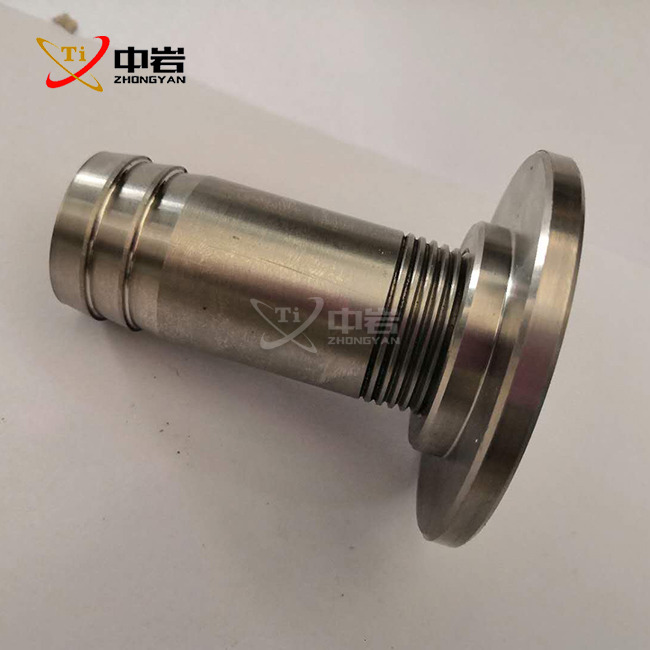
Through their extensive production sites in China's Titanium Valley, Zhongyan Titanium sets the standard for quality in making medical-grade titanium parts. They can make unique tube clamps with tight tolerances and high-quality surface finishes thanks to their advanced CNC cutting skills. Research, development, production, and quality control are all run by the same company. This makes sure that the standard of the products is always high and that customers are satisfied.
Precision CNC turning and milling centers are examples of state-of-the-art manufacturing tools that can keep tolerances that are important for medical uses. Wire EDM machining can make complicated shapes and small details that can't be done with other types of machining. Laser cutting technology makes it possible to precisely prepare materials and finish parts for specific uses.
Coordinate measuring tools, surface roughness testers, and material testing equipment are all types of quality control instruments that make sure that medical industry standards are being met. Using statistical process control keeps an eye on changes that happen during production and makes sure that the quality of the products stays the same from one production run to the next. Traceability records are needed for medical device regulatory applications, and comprehensive documentation systems keep them.
Certification Standards and Regulatory Compliance
Companies that make medical devices must work with providers that have strong quality control systems and follow all the rules. ISO 9001:2015 certification is a basic level of quality assurance, while ISO 13485 certification is specific to the needs of the medical device business. These certificates show that you care about a quality culture, constant change, and making sure your customers are happy.
Material certifications like ASTM B348, ASME SB-348, and AMS 4928 compliance make sure that titanium parts meet set standards for their chemical makeup, mechanical qualities, and testing methods. Certificate of compliance paperwork makes it possible to track down and confirm the qualities of materials that are needed for regulatory applications and quality checks.
Custom production includes more than just normal catalog parts. It also includes OEM and ODM solutions that are made to fit the needs of each medical gadget. Design teamwork services help improve the performance of parts while also making sure they can be made and are cost-effective. With prototype development, new ideas can be quickly tested and improved before they are put into production.
Building Strategic Supplier Relationships
Long-term relationships with reliable titanium providers offer stability, professional support, and benefits over competitors throughout the entire lifecycle of a product. Strategic connections let people work together to come up with new ideas, let suppliers be involved early in the development of new products, and give suppliers special treatment when there aren't enough resources or ability.
Communication methods should set up regular review meetings, tracking of success metrics, and efforts to keep getting better that are good for everyone. Medical device makers can get help from technical support services like application engineering, failure analysis, and design optimization to get around problems and make their products work better.
Supply chain openness lets you see where materials come from, how things are made, and how quality systems work. This helps with risk management and following the rules. Supplier scorecard systems keep track of performance metrics like quality, delivery, responsiveness, and cost competitiveness. These metrics help relationship managers make choices about how to handle relationships in the future.
Conclusion
Titanium tube clamps are the best choice for medical device uses because they are biocompatible, don't rust, and are mechanically reliable, all of which are important in healthcare settings. When you mix the high performance of titanium materials with their ability to be precisely manufactured, you get fastening solutions that go above and beyond what is needed for medical uses. Strategic relationships with qualified providers like Zhongyan Titanium make sure that you can get high-quality parts that help with regulatory compliance and operational success all the way through the lifetime of a medical device.
FAQ
What specifications should I consider when selecting titanium clamps for medical devices?
Material grade (usually Grade 2 or Grade 5 titanium), dimensional limits, pressure ratings, and temperature protection ranges are some of the most important specs. Size fit with your tubing system, surface finish needs, and certification compliance (ASTM, ISO standards) must all match the needs of your device and the regulatory reports.
How does titanium's resistance to rust help medical devices last longer?
Titanium is very resistant to rust from chemicals used for cleansing, body fluids, and cleaning products that would break down other materials. This resistance stops material decay, keeps the surface intact, and stops contamination that could hurt the device's performance or ability to stay clean over a longer period of time.
Can titanium tube clamps be customized for unique medical device applications?
Custom production lets you make solutions that fit your needs, like custom geometries, clamping systems that are changed, and surface treatments that are made for your unique purpose. OEM and ODM services offer design help, prototypes, and the ability to make more of a product to meet specific needs while still meeting quality standards and legal requirements.
What quality certifications should medical-grade titanium suppliers maintain?
Suppliers should hold ISO 9001:2015 and ISO 13485 certifications demonstrating quality management systems appropriate for medical device manufacturing. Material certifications, including ASTM B348 and AMS specifications, verify that titanium composition and properties meet established industry standards.
How do I evaluate total cost of ownership for titanium components versus alternatives?
A full cost study should look at how much the parts cost to begin with, how often they need to be replaced, how much they cost to maintain, and how reliable the gadget is over its whole life. Titanium may cost more at first, but it usually ends up being cheaper in the long run because it lasts longer and needs less upkeep than materials that need to be replaced more often.
Partner with Zhongyan for Premium Titanium Tube Clamp Solutions
To make a great medical gadget, its parts must never skimp on quality or performance. With decades of experience in making specialized products, Zhongyan Titanium can make unique titanium tube clamps that meet the strictest standards of the medical industry. Leading medical device companies around the world trust us to make them because we have thorough quality management systems, advanced CNC cutting capabilities, and a strong commitment to regulatory compliance. Get in touch with our technical team at sales@titaniumstudy.com to talk about your unique needs and find out how our precision-engineered solutions can improve the performance and reliability of your medical gadget.
References
1. American Society for Testing and Materials. "Standard Specification for Titanium and Titanium Alloy Bars and Billets." ASTM International, West Conshohocken, PA.
2. International Organization for Standardization. "Medical devices — Quality management systems — Requirements for regulatory purposes." ISO 13485:2016 Standard.
3. Smith, Jennifer M., et al. "Biocompatibility Assessment of Titanium Alloys in Medical Device Applications." Journal of Biomedical Materials Research, Vol. 45, Issue 3.
4. Williams, Robert K. "Corrosion Resistance of Titanium in Medical Environments: A Comprehensive Analysis." Materials Science and Engineering: C, Elsevier Publications.
5. Johnson, David P., and Martinez, Carlos R. "Fatigue Performance of Titanium Components in Cyclic Loading Applications." International Journal of Materials Engineering, Vol. 28, No. 7.
6. Thompson, Sarah L. "Quality Management Systems for Medical Device Manufacturing: Implementation and Compliance Strategies." Medical Device Technology Magazine, Canon Communications LLC.
_1755672221864.jpg)
Learn about our latest products and discounts through SMS or email