- English
- French
- German
- Portuguese
- Spanish
- Russian
- Japanese
- Korean
- Arabic
- Greek
- German
- Turkish
- Italian
- Danish
- Romanian
- Indonesian
- Czech
- Afrikaans
- Swedish
- Polish
- Basque
- Catalan
- Esperanto
- Hindi
- Lao
- Albanian
- Amharic
- Armenian
- Azerbaijani
- Belarusian
- Bengali
- Bosnian
- Bulgarian
- Cebuano
- Chichewa
- Corsican
- Croatian
- Dutch
- Estonian
- Filipino
- Finnish
- Frisian
- Galician
- Georgian
- Gujarati
- Haitian
- Hausa
- Hawaiian
- Hebrew
- Hmong
- Hungarian
- Icelandic
- Igbo
- Javanese
- Kannada
- Kazakh
- Khmer
- Kurdish
- Kyrgyz
- Latin
- Latvian
- Lithuanian
- Luxembou..
- Macedonian
- Malagasy
- Malay
- Malayalam
- Maltese
- Maori
- Marathi
- Mongolian
- Burmese
- Nepali
- Norwegian
- Pashto
- Persian
- Punjabi
- Serbian
- Sesotho
- Sinhala
- Slovak
- Slovenian
- Somali
- Samoan
- Scots Gaelic
- Shona
- Sindhi
- Sundanese
- Swahili
- Tajik
- Tamil
- Telugu
- Thai
- Ukrainian
- Urdu
- Uzbek
- Vietnamese
- Welsh
- Xhosa
- Yiddish
- Yoruba
- Zulu
What Makes Custom CNC Machined Titanium Parts So Strong and Lightweight?

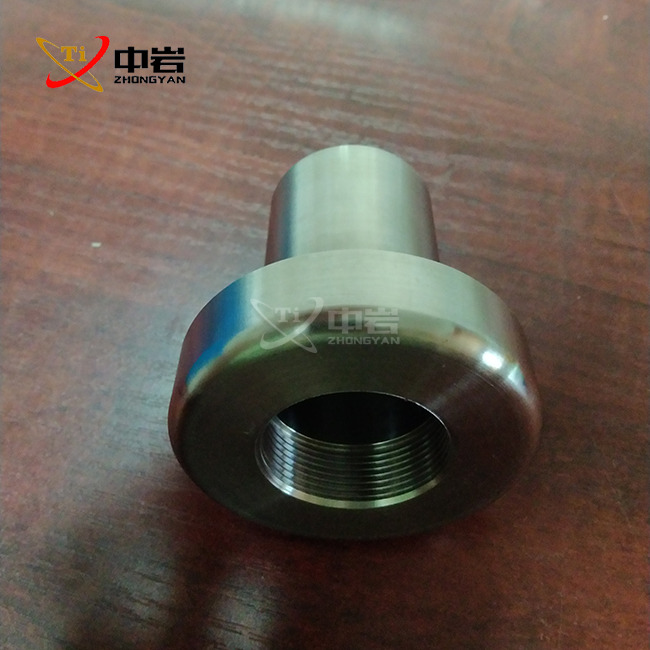
Because of titanium's distinctive atomic structure and solid arrangement, Custom CNC Machined Titanium Parts exhibit surprising strength and light weight. The hexagonal close-packed (HCP) structure of the metal gives it great tensile strength while keeping its mass about 60% that of steel. When precision CNC machining is used on titanium alloys, especially Grade 5 (Ti-6Al-4V), manufacturers can keep the material's natural mechanical properties while getting as close as ±0.005mm in tolerances. This lets them make parts that work perfectly in aerospace, medical, and industrial settings that are very strict.
Understanding the Unique Properties of CNC Machined Titanium Parts
The Science Behind Titanium's Strength-to-Weight Ratio
Titanium's metallurgical qualities set it apart. Aircraft and medical engineers have relied on these qualities for decades. This substance affects how procurement managers produce goods to improve performance every day at Baoji Zhongyan Titanium Industry Co., Ltd.Titanium is stronger than aluminum and stainless steel in terms of weight-to-strength. Grade 5 titanium metal is 895 MPa strong and weighs 4.43 g/cm³, 45% less than steel choices. Because of this mathematical gain, aircraft consume less fuel, surgical implants cause less, and spinning machine parts operate better.CNC turning, milling, and Swiss cutting are used at our Baoji City titanium manufacturing. These techniques preserve material structure throughout production. Planned computer-controlled subtractive manufacturing preserves titanium's fatigue-resistant grain structure. Internal tensions may result from casting or forging.
Corrosion Resistance and Biocompatibility Advantages
Titanium quickly creates a protective oxide layer when exposed to oxygen. This thin, stable passive material is a few nanometers thick. Because of this feature, Custom CNC Machined Titanium Parts are almost rust-free in saltwater, chemical processes, and biological fluids. Medical device businesses prioritize biocompatibility while purchasing internal parts. Titanium is utilized for bone plates, dental bridges, and spinal cages since it doesn't trigger an immunological response. We create ASTM F136-compliant titanium dental discs and specialized medical items. This lets us trace materials from raw billet to final approval. Chemical processing facilities that employ acidic or chloride-rich solutions benefit from titanium's pitting and crevice rust resistance. Properly cut titanium parts retain their form and surface polish for years, whereas parts made of other materials require protective coatings or frequent replacement.
Thermal and Fatigue Performance Characteristics
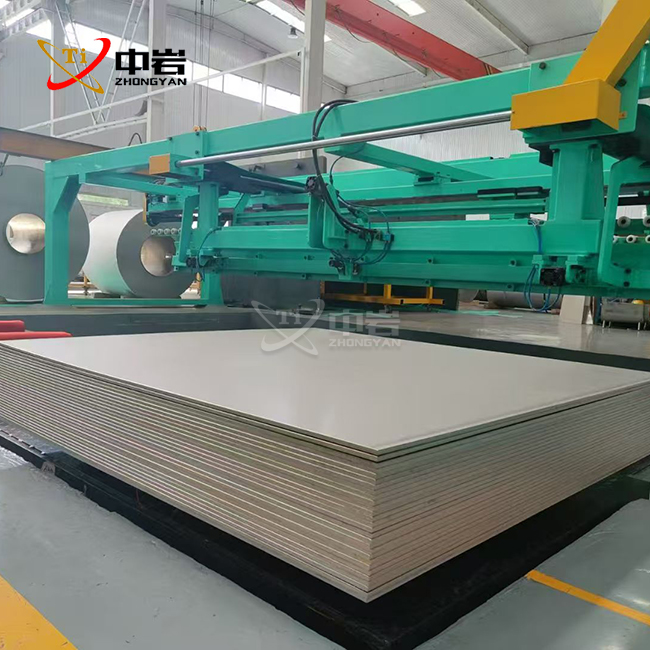
Operating temperature ranges are crucial for selecting components. From extremely cold to 600°C, titanium alloys retain their structure. This temperature range suits jet engine parts, exhaust systems, and industrial heat exchanges. Titanium has plenty of safety reserves at these temperatures due to its melting point of 1,660°C. Component fatigue strength determines cyclic load life. Spinning equipment, aviation structural parts, and automotive suspension systems must consider this. Titanium is wear-resistant due to its strong structure and stress distribution. CNC-machined parts wear less and last longer than cast ones. Cutting removes holes and other irregularities that might create fractures. We evaluate measurements and confirm materials throughout manufacturing as part of our quality control. All titanium bars, plates, and tubes entering our facilities are chemically evaluated to satisfy ASTM B348 requirements before being processed.
Material Comparison: Titanium vs. Aluminum and Stainless Steel
You must balance advantages and drawbacks when making procurement decisions. Aluminum is cheaper and simpler to work with than titanium, but it possesses only a third of titanium's compressive strength. Titanium allows designs that aluminum cannot achieve, especially in medical devices, aviation fasteners, and Custom CNC Machined Titanium Parts with extremely small and precise dimensions. Stainless steel is nearly as strong as titanium but heavier, making it unsuitable for weight-sensitive applications. Titanium parts save 45% more mass than steel ones, reducing fuel consumption and inertia. Lifecycle expenses should also be considered alongside the purchase price. Titanium is ten times more costly than steel, but its longer service life, fewer maintenance interruptions, and higher performance frequently justify the cost. Aerospace vendors understand this economic reality when sourcing solid components, engine parts, and Custom CNC Machined Titanium Parts, where failure could be disastrous.
The Custom Titanium CNC Machining Process Explained
Design for Manufacturability and Toolpath Strategies
Titanium pieces that operate properly are made long before cutting tools contact the material. Our engineering staff reviews CAD models with R&D throughout planning to identify aspects that may make cutting harder. In these discussions, wall thickness, internal radii, and thread standards are carefully considered. Since titanium conducts heat just one-seventh as effectively as aluminum, heat builds up near the cutting surface. Due to this thermal feature, our CNC programmers must optimize cutting settings to employ certain toolpath procedures. High-pressure cooling systems provide fluid directly to the tool-material interface. This reduces job difficulty and prolongs cutting tool life. Multiple-axis CNC machining allows complicated forms, expanding medical and aeronautical design choices. Traditional techniques cannot create parts with internal cooling channels, undercut features, and compound angles, but titanium billets and current machine tools can.
Cutting Parameters and Tooling Selection
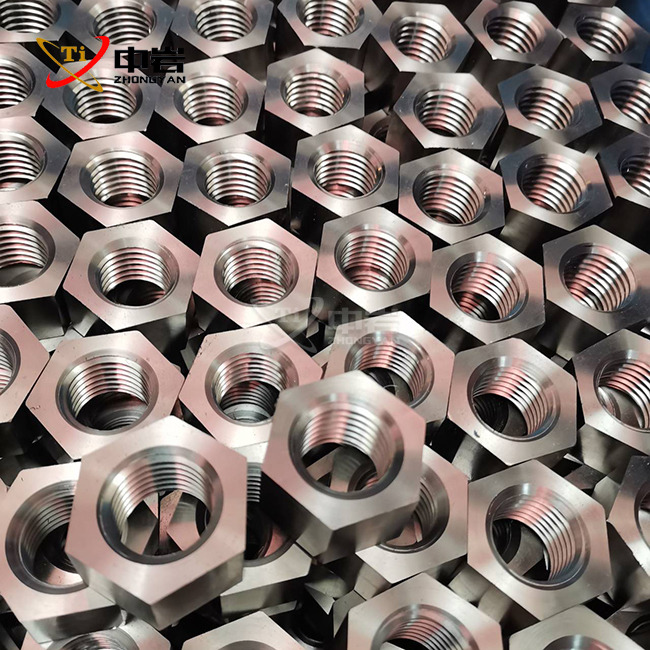
Titanium machining requires slower cutting rates than aluminum or steel. Usual surface speeds are 50–80 m/min. High feed rates provide thick chips that dissipate cutting zone heat. This balance prevents titanium from hardening while being cut, which accelerates tool wear. Selecting the correct tool material is crucial. We employ carbide plugs with titanium aluminum nitride (TiAlN) or diamond-like carbon coatings to withstand titanium chip roughness and maintain sharp cutting edges. The tool cuts without deforming material due to its positive rake angles and strong cutting blades. Threading titanium screws from M3 to M100 requires particular abilities. Thread grinding fulfills Class 3A tolerance criteria and reduces the possibility of tap breakage, making it ideal for precision and smooth surfaces. These precision threading methods ensure crucial aviation and medical device installations fit and perform properly.
Surface Finishing and Post-Machining Treatments
Surface finish frequently determines the performance of a titanium part. Sputtering targets require micron-level flatness, whereas medical implants need smooth surfaces to assist tissue cling. Our finishing services include accurate grinding with surface roughness values as low as Ra 0.2µm. Secondary treatments enhance machine performance beyond its design. Anodizing creates regulated oxide layers that prevent corrosion and make items easier to detect. We provide Type II and III anodizing. Type III makes surfaces tougher, making them ideal for wear-resistant purposes. Electropolishing and chemical etching are other titanium surface treatments. These technologies remove cutting contaminants and regularize interior forms too difficult for mechanical cleaning. Semiconductor and medical device manufacturing need clean spaces.
Customization Benefits for Specialized Industries
Parts used in aerospace must meet AMS standards and have full material traceability and dimensional proof. Our production paperwork includes material certificates that can be linked to the original mill test results, records of measurement inspections made by a coordinate measuring machine (CMM), and proof that we meet AS9100D quality management standards. Medical device makers need proof procedures that show that their production processes are always the same. We keep records of process control that help with FDA regulatory applications and ISO 13485 quality systems for medical devices. Custom package choices include sterile barrier systems and cleanroom assembly for parts that will be used in surgery areas.OEM and ODM solutions that combine Custom CNC Machined Titanium Parts into larger assemblies are useful for people who build industrial tools. We help with planning, making prototypes, and increasing output, which shortens the time it takes to get new equipment on the market. The minimum order quantity stays open so that it can be used for both small runs of prototypes and large-scale production.
Advantages of Custom CNC Machined Titanium Parts for B2B Applications
Industry-Specific Performance Improvements
Custom CNC Machined Titanium Parts are utilized by aircraft engineers to minimize weight, which increases carrying capacity and fuel efficiency. Grade 5 titanium is utilized to create steel-like but lighter structural brackets, hydraulic pipelines, and landing gear elements. Mass savings throughout numerous aircraft sections allow planes to fulfill higher efficiency criteria. Titanium is biocompatible and radiolucent, making it suitable for X-ray and MRI pictures. CNC-cut orthopedic implants offer open surfaces that let bone develop, making them more stable without cement. Titanium is ideal for surgical instrument handles and dental components because it can be sterilized repeatedly without rusting. Corrosion-resistant titanium alloys prolong the life of industrial gear in hostile environments. Chemical processing pumps, marine motor shafts, and saltwater-exposed ocean equipment don't require protective coatings or frequent replacement.
Lifecycle Cost Analysis and Total Ownership Value
Initial procurement costs are just part of a cost investigation. Titanium parts are less maintenance-intensive than steel or aluminum parts, reducing downtime and manufacturing costs. Chemical processing industries claim titanium reactor tanks and heat exchanger tubes last for decades, whereas stainless steel ones require frequent replacement. Saving weight provides long-term transportation advantages. Aircraft workers consider fuel savings while choosing construction and engine elements. Car racing teams know that titanium valve springs and connecting rods reduce engine bulk, improving performance. This improves engine speed and responsiveness. Durability advantages are much greater when exhausted. Turbine blades, support arms, and equipment sections that move are more crack-resistant than others. Since precision titanium components last longer, they are less prone to breaking down abruptly and endangering critical applications.
Quality Assurance and Supplier Verification Standards
See what they can create beyond basic machining equipment to locate reliable vendors. Our plant is ISO 9001:2015 certified, demonstrating that we apply organized quality control in all manufacturing processes. Material procurement methods ensure that titanium alloys fulfill ASTM chemical composition criteria. Compliance certificates accompany each shipment. Whether suppliers can consistently satisfy tolerances depends on their dimensional inspection expertise. Part sizes are compared to technical designs using coordinate measuring equipment, optical comparators, and surface roughness testers. Statistical process control techniques monitor dimension changes to rectify issues before components exceed permissible ranges. Traceability systems link items to raw ingredients, machining settings, testing data, and operator certifications. Aircraft and medical device manufacturers use this documentation to track manufacturing. Our quality management system maintains this data throughout product lifecycles. This aids government and consumer audits.
Making the Decision: Choosing Custom Titanium CNC Machined Parts Over Other Materials
Titanium Grade Selection for Specific Applications
Choosing the right material grade has a big effect on how well parts work and how much they cost to make. Grade 2 commercially pure titanium is the most resistant to corrosion and is easy to shape. This makes it ideal for chemical processing equipment and naval uses where mild strength is needed. Because the material is flexible, it can be used for complicated shaping tasks and is very resistant to rusting in acidic environments. One of the most common grades of titanium is Grade 5 titanium metal (Ti-6Al-4V), which makes up about half of the world's titanium use. The addition of aluminum and vanadium makes the tensile strength much higher while keeping the flexibility and weldability at a good level. We have Grade 5 titanium rods, plates, and tubes in a range of sizes that can be used for everything from small medical devices to big structural parts in spacecraft. Specialized grades are made to meet specific needs that normal metals can't meet. Grade 23 (Ti-6Al-4V ELI—Extra Low Interstitial) is more flexible and can be used in medical implants. Grade 9 (Ti-3Al-2.5V), on the other hand, is great for cold-forming tube parts. Our knowledge of materials helps buying teams make grade selection choices based on needs for mechanical properties, environmental conditions, and manufacturing factors.
Cost and Lead Time Considerations Across Materials
Titanium is still much more expensive as a raw material than options like aluminum or steel. This is because the extraction and processing processes are very complicated. However, the cost of making each part depends a lot on how complicated the design is and what standards are needed, not just on the material. Cost differences between simple turned parts and steel parts may not be very big, but cost differences between complicated cut parts with tight tolerances are bigger. Lead time planning has to take into account how hard it is to get materials and how complicated the cutting process is. Titanium rod and plate stock in standard sizes can be shipped from our Baoji plant within days. However, the mill production of custom billet measurements may take several weeks. For simple shapes, machining goes pretty quickly, but for complicated multi-axis processes with tight tolerances, it takes longer on the machine and more inspection cycles. When you compare CNC cutting to other ways of making things, you can see that production volume and component complexity are both affected by the comparison. It is more cost-effective to cast a lot of simple forms, but the parts can't be as precise in size or have the same mechanical qualities as machined parts. Additive manufacturing lets you make parts with complicated internal shapes, but the parts they make usually have worse surface finish and mechanical qualities than Custom CNC Machined Titanium Parts.
Supplier Evaluation Criteria for Titanium Components
When figuring out a machine's machining potential, it's important to look at its specs, its tools, and the skills of its operators. Five-axis CNC machine centers can make complicated shapes with few setups, which increases accuracy and cuts down on production time. We have CNC turning centers with swing diameters up to 1200 mm, machine centers with travels up to 2000 mm, and Swiss-type lathes for making small, precise parts. Whether sellers are transactional vendors or joint engineering partners depends on how well they treat their customers. During the quote process, we offer design review services that help find possible manufacturing problems before they happen. Technical help continues through the creation of prototypes, the expansion of production, and ongoing efforts to improve quality, all of which are good for building long-term supply relationships. Lead times, shipping prices, and how well people can communicate are all affected by where they are located. Even though Baoji Zhongyan Titanium Industry is based in China, which is a hub for titanium manufacturing, we have responsive contact lines that help customers all over the world. Our position gives us access to technical ability, skilled subcontractors, and raw materials that would be hard to find elsewhere.
Designing for Success: How to Optimize Parts for CNC Titanium Machining
Tolerance Specifications and Design Best Practices
Useful requirements, not precision aims, should guide dimensional tolerance specifications. Tighter tolerances increase production costs dramatically due to extra machining, specialist inspection, and scrap. We recommend using regular cutting tolerances everywhere else and critical tolerances solely on elements that influence assembly fit and function. Wall width requirements prevent part deflection during cutting and ensure serviceability. The minimum wall thickness for titanium items is generally between 0.8 and 1.5 mm, depending on size and form. With proper fixturing, thin components are achievable. Walls of the same thickness across all shapes decrease stress and simplify heat treatment. Tool selection and performance depend on internal corner angles. Sharpening internal points requires electrical discharge machining (EDM), which increases manufacturing costs and time. When you specify radii that match common end mill widths (3mm, 6mm, or larger), you may machine normally while reducing stress concentration factors that might cause fatigue fractures.
Addressing Work Hardening and Tool Wear Challenges
Titanium cuts harder; chips must be regularly removed without touching. To avoid work-hardened surfaces, our CNC programming keeps the tools engaged throughout the cut. Climb milling works effectively because cutting forces go into the item rather than dragging it off the fixture. Tool wear monitoring devices monitor cutting forces and vibration patterns and alert workers to worn cutting edges before measurements are compromised. We anticipate tool change procedures based on the material eliminated and cutting time. This maintains part quality throughout manufacture. Ceramic and cermet cutting tools endure longer with titanium, although carbide is still the industry standard. Choose the correct cutting fluid to remove chips, manage temperature, and finish the surface. Titanium cutting requires high-pressure coolant systems of 1000 PSI or more. These methods split chips into usable bits without generating heat. Our cutting fluids are designed for reactive metals. These lubricants do not chemically harm the substance.
The Value of Supplier Collaboration in Design Phases
Early supplier engagement in component design simplifies, lowers costs, and speeds up production. Our engineering team examines the initial CAD models for features that might make cutting harder or damage the structure. These sessions typically demonstrate solutions to simplify forms without impacting their functionality, lowering product cost and time. Before buying manufacturing tools, make a prototype to test design ideas. We provide quick prototyping utilizing common materials and equipment. Within two to four weeks, we provide the first models for testing and evaluation. Prototype feedback-based design iterations ensure that completed products fulfill all practical criteria without being too costly to alter after production. Design for manufacturability balances engineering successes with manufacturing difficulties. Standard machining for tolerances is cheaper than secondary grinding or EDM for features. Our combined strategy helps R&D teams comprehend these trade-offs and make choices that optimize component performance and cost.
Conclusion
Custom CNC Machined Titanium Parts have the best strength-to-weight ratio because they use precision subtractive production techniques along with titanium's natural qualities. Because it is so resistant to rust, biocompatible, and thermally stable, the metal is essential in aircraft, medicine, and industrial settings where a broken part could have serious effects. Even though the prices of the raw materials are higher than those of other options, lifecycle value analysis always shows that the system is more cost-effective because it lasts longer, doesn't need as much upkeep, and works better overall. From the initial planning stages to continuing production, the success of a project depends on choosing qualified providers with a track record of success in titanium machining, complete quality systems, and collaborative engineering support.
FAQ
Which industries benefit most from CNC machined titanium parts?
Aerospace companies buy the most finely machined titanium parts. They use the material's strength-to-weight benefits in structures for airplanes, engine parts, and landing gear systems. Titanium is used by medical device makers for implantable devices, surgery tools, and oral uses where biocompatibility and resistance to corrosion are important. Titanium's ability to prevent corrosion in harsh conditions is used in industrial tools for the chemical industry, marine, and energy sectors. Custom CNC Machined Titanium Parts sputtering targets are used in thin-film deposition methods by electronics companies to make semiconductors and displays.
How do titanium costs compare to those of other metals?
Titanium is about ten times the price of steel and about five times the price of aluminum as a raw material. Titanium is 30–50% more expensive to machine than steel because it has slower cutting speeds, needs special tools, and wears out tools more quickly. However, lifetime cost analysis often favors titanium when looking at things like longer service life, no need for protective coatings, shorter repair gaps, and better performance that leads to system-level efficiency gains. Volume, price, and design optimization have a big effect on the economics of a project, which is why talking to suppliers during the planning stages of buying is very helpful.
What factors are most important when choosing a titanium supplier?
The manufacturing capacity review should make sure that the right CNC machines, inspection tools, and operator skills are used for the complexity of the part. Certifications for quality management systems, like ISO 9001, AS9100 for aircraft, or ISO 13485 for medical products, show that processes are controlled in a planned way. Material traceability paperwork that connects parts to approved source materials is very important for businesses that are controlled. Whether a provider offers transactional services or collaborative engineering partnerships depends on the level of technical help they offer. Lengths of lead times and transportation issues for ongoing supply ties are affected by production ability and location.
Partner with Zhongyan for Superior Titanium Machining Solutions
Zhongyan provides high-precision titanium parts that are made to very high standards in our state-of-the-art Baoji facility. As a Custom CNC Machined Titanium Parts seller with decades of experience working with the material and cutting-edge equipment, we can make parts from M3 to M100 sizes in Grade 5 and other titanium alloys. Our ISO 9001:2015-certified methods make sure that the dimensions are correct, that the materials can be tracked, and that the quality is the same for both prototypes and full production runs. Email our engineering team at sales@titaniumstudy.com to talk about your unique needs and get thorough quotes along with technical advice that speeds up the success of your project.
References
1. Boyer, R., Welsch, G., & Collings, E.W. (1994). Materials Properties Handbook: Titanium Alloys. ASM International, Materials Park, Ohio.
2. Donachie, M.J. (2000). Titanium: A Technical Guide, 2nd Edition. ASM International, Materials Park, Ohio.
3. Ezugwu, E.O. & Wang, Z.M. (1997). Titanium alloys and their machinability—a review. Journal of Materials Processing Technology, Volume 68, Issue 3, Pages 262-274.
4. Lutjering, G. & Williams, J.C. (2007). Titanium, 2nd Edition. Springer-Verlag, Berlin, Heidelberg.
5. Peters, M., Kumpfert, J., Bird, C.H., & Leyens, C. (2003). Titanium Alloys for Aerospace Applications. Advanced Engineering Materials, Volume 5, Issue 6, Pages 419-427.
6. Veiga, C., Davim, J.P., & Loureiro, A.J.R. (2012). Properties and applications of titanium alloys: A brief review. Reviews on Advanced Materials Science, Volume 32, Pages 133-148.
(1)_1755588631994.jpg)
Learn about our latest products and discounts through SMS or email