- English
- French
- German
- Portuguese
- Spanish
- Russian
- Japanese
- Korean
- Arabic
- Greek
- German
- Turkish
- Italian
- Danish
- Romanian
- Indonesian
- Czech
- Afrikaans
- Swedish
- Polish
- Basque
- Catalan
- Esperanto
- Hindi
- Lao
- Albanian
- Amharic
- Armenian
- Azerbaijani
- Belarusian
- Bengali
- Bosnian
- Bulgarian
- Cebuano
- Chichewa
- Corsican
- Croatian
- Dutch
- Estonian
- Filipino
- Finnish
- Frisian
- Galician
- Georgian
- Gujarati
- Haitian
- Hausa
- Hawaiian
- Hebrew
- Hmong
- Hungarian
- Icelandic
- Igbo
- Javanese
- Kannada
- Kazakh
- Khmer
- Kurdish
- Kyrgyz
- Latin
- Latvian
- Lithuanian
- Luxembou..
- Macedonian
- Malagasy
- Malay
- Malayalam
- Maltese
- Maori
- Marathi
- Mongolian
- Burmese
- Nepali
- Norwegian
- Pashto
- Persian
- Punjabi
- Serbian
- Sesotho
- Sinhala
- Slovak
- Slovenian
- Somali
- Samoan
- Scots Gaelic
- Shona
- Sindhi
- Sundanese
- Swahili
- Tajik
- Tamil
- Telugu
- Thai
- Ukrainian
- Urdu
- Uzbek
- Vietnamese
- Welsh
- Xhosa
- Yiddish
- Yoruba
- Zulu
What Are the Key Properties of Medical Grade Titanium Wire?
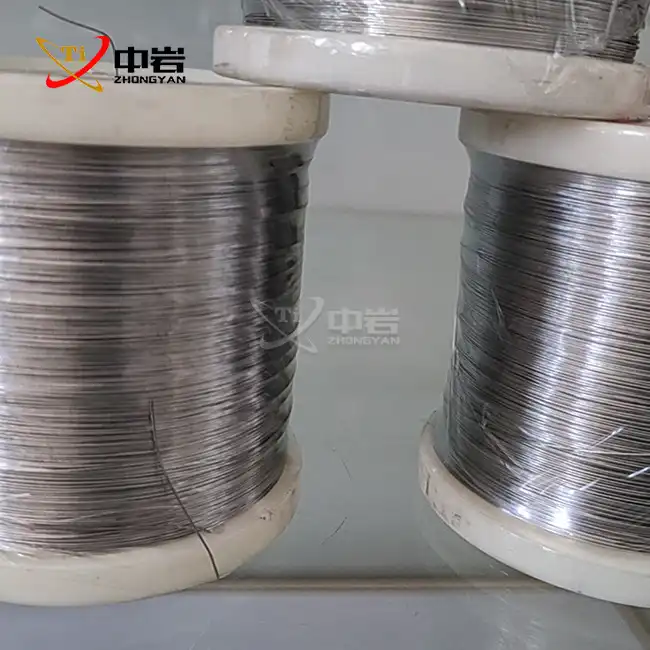
Medical grade titanium wire is a unique biomaterial engineered to deliver specific properties essential for healthcare applications. The most important features are its high strength-to-weight ratio for long-lasting but light uses, its excellent biocompatibility that keeps tissues from reacting badly, and its nonmagnetic qualities, which are necessary for MRI compatibility. These features, along with its high fatigue resistance and ability to fuse with bone, make it the best choice for implantable devices and surgical tools that must be safe for patients and perform reliably over the long term.
Overview of Medical Grade Titanium Wire
Medical-grade titanium wire is a high-tech biomaterial that was made to be used in surgery and for internal medical devices. This specialized wire is very different from industrial-grade options because it is made with strict rules and quality checks that make sure it is safe and compatible with living things.
Understanding Medical Grade Classifications
ASTM F67 (commercially pure titanium) and ASTM F136 (Ti-6Al-4V ELI alloy) are the types that are most often used. We make ASTM F67 Grade 1, which is very easy to shape and safe for living things because it has a managed oxygen content of 0.18% and a nitrogen content of 0.03%. This mix makes sure that there isn't much inflammation and that the structure stays strong for the whole life of the implant.
Manufacturing Excellence and Certification Standards
To make something, complex melting, refining, and cold-working methods are used in controlled air conditions. Each batch goes through a lot of tests to make sure it meets foreign standards like ISO 5832-2, FDA rules, and CE marks. Our factory in Baoji follows strict quality standards that include checking the mechanical properties, analyzing the chemical makeup, and inspecting the surface finish.
Wire Specifications and Customization Capabilities
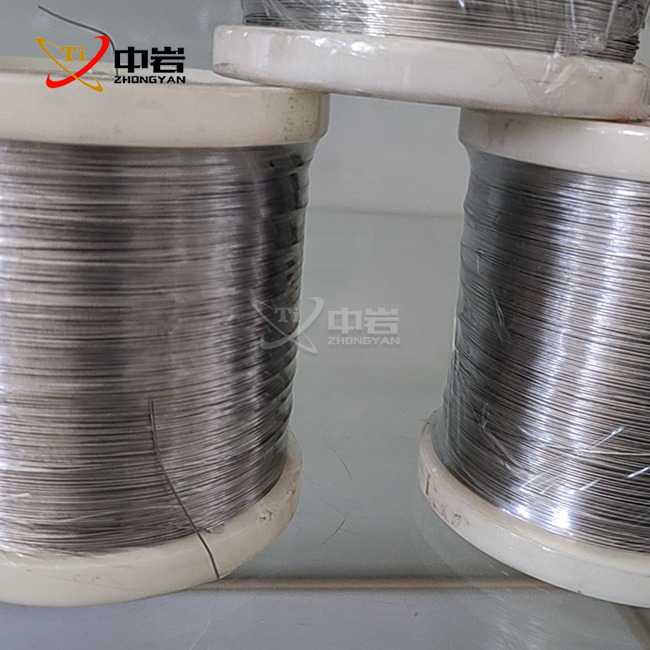
Different wire shapes are used for different medical purposes. The widths range from very small (0.6 mm) for orthodontic use to bigger sizes for fixing bones in place. Surface finishes range from highly polished designs that cause less tissue discomfort to specialty treatments that help bones fuse. Custom spooling setups are made to fit the needs of each hospital, making it easy to handle during surgeries.
Essential Properties of Medical Grade Titanium Wire
The main things that make medical grade titanium wire different are its special mechanical structure and carefully controlled makeup. These qualities directly solve the most important problems that medical device makers and healthcare workers face.
Biocompatibility and Tissue Integration
Biocompatibility is the most important trait because it ensures that the material can live together with living things without causing inflammation or immune reactions. The layer of passive titanium dioxide that forms on top naturally acts as an inactive barrier that stops ions from escaping and helps cells stick together. Clinical studies show that a properly made titanium wire that is properly made has tissue acceptance rates that are higher than 95% in long-term insertion situations.
Mechanical Strength and Durability Characteristics
When our Grade 1 titanium wire is annealed, it becomes very flexible while still having a tensile strength of 240 MPa. This mix makes it possible to do complex shaping processes while making sure the device is strong enough for load-bearing uses. The wear resistance of the material is especially useful in dynamic uses like cardiovascular devices, which go through millions of stress cycles over the course of their life.
Corrosion Resistance in Biological Environments
Titanium is much more resistant to rust than stainless steel and most other metals used in biomaterials. Even when it comes into contact with body fluids, which are high in chloride, the self-healing oxide layer keeps its protective properties. This feature stops the release of metal ions that could damage tissue or be harmful to the body as a whole, which makes it perfect for situations where the device will be implanted permanently.
Non-Magnetic Properties and Compatibility with MRI
Titanium wire is safe for patients during magnetic resonance imaging treatments because it is not magnetic. Unlike ferromagnetic materials, which can heat up or move when exposed to magnetic fields, titanium stays steady and doesn't show many imaging flaws. This trait is very important for patients who need to be monitored regularly by MRI, especially in neurological and orthopedic settings.
Medical Grade Titanium Wire vs Other Materials: A Comparative Analysis
Knowing how titanium wire compares to other materials and what its benefits are lets you make smart purchasing choices that balance performance and cost. Each type of material has its own unique properties that affect how well it works in different situations.
Titanium vs Stainless Steel Performance
The cost of surgical stainless steel is cheaper, but it has a lot of problems in biological settings. Even though stainless steel is strong enough, it can pit and rust in salt conditions, which can cause implants to fail and tissue problems. Titanium's better corrosion resistance and biocompatibility make up for the higher original cost by lowering the number of surgeries that need to be redone and improving patient results.
Comparison with Nickel-Titanium Alloys
Nickel-titanium alloys have special properties that make them useful for things like dental archwires and self-expanding stents. These qualities include the ability to remember their shape and be very elastic. However, worries about nickel reactivity in some people make them less useful for everyone. Pure titanium types don't pose any allergy risks and have known mechanical behavior that makes designing and making devices easier.
Economic Considerations and Value Analysis
Even though gold wire is very biocompatible, it can only be used in very specific situations where it needs to be very conductive or very resistant to rust. Titanium wire has the best performance qualities at a fair cost, especially when you look at long-term clinical outcomes and fewer complications, which means lower costs for the healthcare system.
Material Selection Criteria for Procurement
Material properties must be weighed against specific application needs, legal compliance needs, and budget limits by procurement managers. Titanium wire can be used in a lot of different medical areas, which can help with inventory management and seller relationships. This can save money and provide other benefits besides better performance.
Practical Uses of Medical Grade Titanium Wire in Healthcare
Because of its adaptability, medical grade titanium wire can be used in a wide range of clinical settings, each of which can take advantage of its unique qualities to solve its own set of problems. Knowing these uses helps people who work in buying understand the material's strategic value.
Orthopedic Applications and Bone Fixation
Orthopedic doctors use titanium wire for cerclage fixation because it is flexible enough to keep bone fragments stable while still allowing healing areas to get blood. The measure of flexibility of the material is more like that of bone than stainless steel. This means that it doesn't protect against stress as well, which can cause the bone to break down around implants. The constant mechanical qualities of our wire mean that it will work reliably in tough load-bearing situations.
Dental and Orthodontic Implementations
Titanium wire is great for dental uses because it helps implants fuse securely with bone, which is important for long-term support. The material's biocompatibility and ability to be shaped are used in orthodontics to make unique archwires. The non-magnetic qualities are especially helpful for people who need to be monitored by an MRI as their treatment goes on.
Cardiovascular Device Manufacturing
Because the heart contracts and relaxes all the time, cardiovascular uses need materials that don't wear down easily. Titanium wire is great for making pacemaker lead cores and guidewires because it doesn't wear down easily. The radiopacity of the material makes it easier to see with a fluoroscope during placement processes, and it still has the flexibility needed to move through the complicated anatomy of the circulatory system.
Regulatory Compliance and Clinical Validation
There are many government approvals for our titanium wire, such as FDA 510(k) clearance, CE marking, and ISO 13485 certification. Clinical tests that cover decades show that the drug works well over a long period of time and has few side effects. These certifications give makers peace of mind about the regulatory submission processes and make sure that patients are safe throughout the entire lifetime of the device.
How to Choose and Procure Medical Grade Titanium Wire for B2B Needs
To make sure uniform quality and dependable delivery schedules, it's important to know both the technical requirements and the supplier's abilities. Because making medical devices is so complicated, suppliers need to be able to offer full help throughout the whole product creation cycle.
Supplier Evaluation and Certification Requirements
When looking at possible providers, you need to make sure that they have the right manufacturing certifications, quality system compliance, and government approvals. Our factory has ISO 9001:2015 approval and full tracking systems that keep track of the history of materials from the time they are received as raw materials to the time they are inspected for quality. Regular checks by a third party make sure that the ongoing agreement with changing legal requirements is maintained.
Technical Specifications and Customization Options
Standard requirements include the thickness of the wire, its tensile strength, the finish on its surface, and the way it is packaged. Specialized metal formulas, unique surface treatments, and custom spooling arrangements that meet specific manufacturing needs are all things that we can change. Material test certificates, dimensional inspection records, and biocompatibility validation data are all examples of technical paperwork.
Order Planning and Inventory Management
Minimum order numbers usually show the cheapest way to make something while taking into account how long it will last and how much space it needs. Lead times depend on how complicated the design is and how busy the factory is right now. Our planning team works closely with customers to come up with inventory management plans that meet both the needs for continuous production and lowering costs.
Quality Assurance and After-Sales Support
Each shipment comes with a lot of quality paperwork, like a study of the chemical makeup, proof of the mechanical properties, and results of dimensional inspections. Our expert support team is always available to answer questions about applications, help with processing, and fix problems. This collaborative method makes sure that the best use of materials is made while reducing interruptions to production.
Conclusion
For biological uses that need the best biocompatibility, corrosion protection, and mechanical performance, medical grade titanium wire is the gold standard. It has a special mix of qualities that solves important problems in modern healthcare and gives producers reliable, flexible material options. A lot of government approvals and clinical validation back its continued use in a wide range of medical fields. When procurement workers know about these properties, they can make choices that are best for both performance and cost in today's competitive medical device market.
FAQ
What is the difference between Grade 1 and Grade 5 medical titanium wire?
Grade 1 titanium is commercially pure and has a maximum oxygen level of 0.18%. It is very easy to shape and is safe for living things. Grade 5 (Ti-6Al-4V) has aluminum and vanadium added to it, which makes it stronger but may cause problems with biocompatibility in some situations. Grade 1 is the safest level for implanted devices that need to touch tissue directly.
How does surface finish affect titanium wire performance in medical applications?
Polished surfaces are great for temporary devices and surgery tools because they don't irritate tissues and don't let bacteria form biofilms. Acid-etched or grit-blasted surfaces have more surface area, which helps permanent implants fuse with the bone. The choice of finish depends on the intended use and the way the tissue should combine with the finish.
Can medical grade titanium wire be sterilized using standard hospital methods?
Medical-grade titanium wire can still be sterilized using all common methods, such as steam autoclaving, ethylene oxide treatment, and gamma irradiation. The material doesn't break down or become contaminated during multiple sterilization processes; it keeps its mechanical properties and surface features.
What certifications are required for medical grade titanium wire procurement?
Important licenses include FDA approval for medical device uses, ASTM F67 compliance for material makeup, and ISO 5832-2 compliance for biocompatibility. To make sure shipments can be tracked and meet regulations, each one must come with a mill test certificate that lists the chemicals used and their mechanical features.
Partner with Zhongyan for Premium Medical Grade Titanium Wire Solutions
You can trust Zhongyan as a provider of medical grade titanium wire. They offer precision-engineered ASTM F67 Grade 1 solutions that are perfect for healthcare uses. Our wide range of manufacturing options in China's Titanium Valley guarantees stable quality, low prices, and on-time deliveries for your most important production needs. We have a lot of experience working with the aircraft, medical, and tech industries, so we know the strict standards that are needed to make medical devices. Get in touch with our engineering team at sales@titaniumstudy.com to talk about your unique needs and see for yourself why we're a preferred partner for medical makers around the world.
References
1. American Society for Testing and Materials. "Standard Specification for Unalloyed Titanium, for Surgical Implant Applications (UNS R50250)." ASTM F67-13, 2017.
2. Niinomi, Mitsuo. "Mechanical Properties and Biocompatibility of Titanium Alloys for Biomedical Applications." Journal of Biomechanical Science and Engineering, Vol. 3, No. 4, 2008.
3. International Organization for Standardization. "Implants for Surgery - Metallic Materials - Part 2: Unalloyed Titanium." ISO 5832-2, 2018.
4. Williams, David F. "Titanium for Medical Applications: Principles and Applications in Medical Implant Devices." Woodhead Publishing Series in Biomaterials, 2014.
5. Rack, Henry J., and Quesnel, Joel V. "Titanium Alloys for Biomedical Applications: Properties and Performance Requirements." Materials Science and Engineering C, Vol. 26, No. 8, 2006.
6. Food and Drug Administration. "Guidance Document for Testing and Labeling Medical Devices for Safety in the Magnetic Resonance Environment." Center for Devices and Radiological Health, 2021.
Learn about our latest products and discounts through SMS or email