- English
- French
- German
- Portuguese
- Spanish
- Russian
- Japanese
- Korean
- Arabic
- Greek
- German
- Turkish
- Italian
- Danish
- Romanian
- Indonesian
- Czech
- Afrikaans
- Swedish
- Polish
- Basque
- Catalan
- Esperanto
- Hindi
- Lao
- Albanian
- Amharic
- Armenian
- Azerbaijani
- Belarusian
- Bengali
- Bosnian
- Bulgarian
- Cebuano
- Chichewa
- Corsican
- Croatian
- Dutch
- Estonian
- Filipino
- Finnish
- Frisian
- Galician
- Georgian
- Gujarati
- Haitian
- Hausa
- Hawaiian
- Hebrew
- Hmong
- Hungarian
- Icelandic
- Igbo
- Javanese
- Kannada
- Kazakh
- Khmer
- Kurdish
- Kyrgyz
- Latin
- Latvian
- Lithuanian
- Luxembou..
- Macedonian
- Malagasy
- Malay
- Malayalam
- Maltese
- Maori
- Marathi
- Mongolian
- Burmese
- Nepali
- Norwegian
- Pashto
- Persian
- Punjabi
- Serbian
- Sesotho
- Sinhala
- Slovak
- Slovenian
- Somali
- Samoan
- Scots Gaelic
- Shona
- Sindhi
- Sundanese
- Swahili
- Tajik
- Tamil
- Telugu
- Thai
- Ukrainian
- Urdu
- Uzbek
- Vietnamese
- Welsh
- Xhosa
- Yiddish
- Yoruba
- Zulu
What Are the Benefits of Custom Flat Head Titanium Bolt Fasteners?
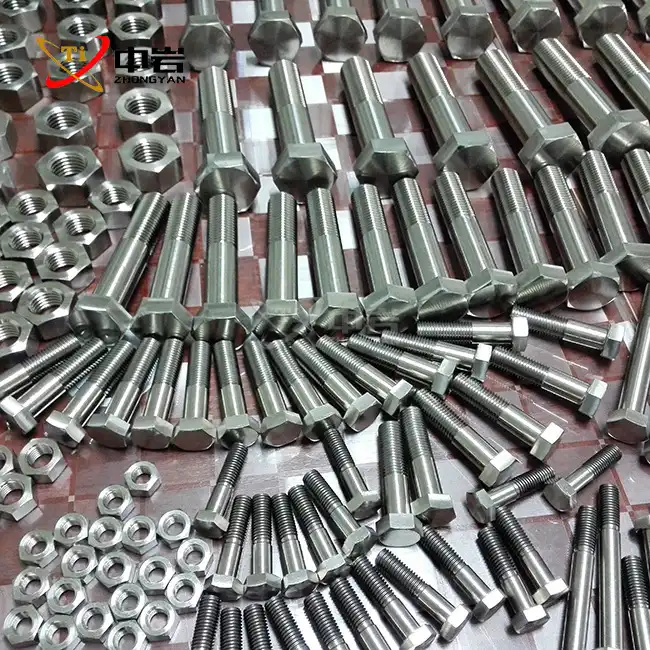
Custom flat-head titanium bolt fasteners deliver exceptional value through their unique combination of strength, corrosion resistance, and lightweight design. These precision-engineered components address key challenges in aerospace, marine, medical, and industrial applications by providing flush-mounting capabilities that reduce aerodynamic drag while preserving structural integrity. Unlike standard fasteners, custom titanium bolts offer material customisation in sizes from M4 to M16, length options from 10mm to 100mm, and compliance with ASTM F136 standards. The flat head profile allows for seamless integration into countersunk assemblies, removing protrusions that could affect performance or safety in demanding environments.
Understanding Custom Flat Head Titanium Bolts
Defining Precision-Engineered Titanium Fasteners
A custom flat-head titanium bolt is a specialised fastener made to exact OEM specifications, with a conical countersunk head that sits flush with the mating surface. Unlike mass-produced hardware that strictly follows DIN 7991 or ISO 10642 standards, these components meet unique assembly requirements with tailored dimensions, thread configurations, and material selections. The flat head design typically incorporates an 82-degree or 100-degree countersink angle, allowing complete concealment within the substrate when properly installed.
Our manufacturing process at Baoji Zhongyan Titanium Industry utilises advanced CNC machining technologies to produce bolts with tight tolerances that meet diverse industry needs. Each fastener undergoes precision turning and milling operations in our facilities located in China's Titanium Valley, where access to premium raw materials and specialised expertise ensures consistent quality. The customisation extends beyond basic dimensions to include specific thread pitches, shank lengths, and head configurations that standard catalogues cannot accommodate.
Material Grades and Their Performance Impact
There are two main grades of titanium used for bolts, and they both have their own set of mechanical properties. With a density of about 4.43 g/cm³ and a tensile strength ranging from 895 to 1000 MPa, Grade 5 titanium alloy (Ti-6Al-4V) offers an exceptional strength-to-weight ratio that is essential for uses in aerospace and automobiles. The addition of vanadium and aluminium to this alloy improves its mechanical qualities and makes it more resistant to heat up to 400°C.
When exceptional ductility and excellent corrosion resistance are more important than maximum strength, grade 2 commercially pure titanium is the way to go. This grade's 345 MPa tensile strength makes it ideal for use in chemical processing settings that frequently involve forceful media interaction. Grade 2 bolts are designed for situations with severe chemical exposure, while Grade 5 bolts are ideal for structural assemblies that require a high load-bearing capacity. The choice of material has a direct impact on the bolt performance in these specific operational contexts.
When made with rolled threads instead of cut threads, both grades show remarkable fatigue resistance. Rolling increases fatigue life by around 30% compared to conventional cutting procedures because it compresses the grain structure. Important for high-performance assemblies, our precise CNC production guarantees thread integrity and dimensions within micron-level tolerances.
Measurement and Specification Best Practices
Accurate dimensional specification prevents costly errors in custom bolt procurement. Engineers and procurement managers must clearly define three critical measurements: nominal diameter (M4 through M16 in our product range), overall length from head to tip (10mm to 100mm options), and head diameter corresponding to the countersink dimension. Thread pitch selection between fine and coarse configurations affects assembly torque requirements and vibration resistance.
The countersink angle requires careful attention—standard 82-degree angles suit most applications, but specialised assemblies may demand 90-degree or 100-degree variations. Head height also impacts flush-mounting success; insufficient countersink depth leaves protruding heads, while excessive depth weakens the substrate. We recommend providing detailed technical drawings with geometric dimensioning and tolerancing (GD&T) callouts to eliminate ambiguity during manufacturing.
Material certification documentation should accompany specifications, particularly when ASTM B348 or AMS 4928 compliance verification is necessary. Our quality control process includes spectrometry analysis to confirm chemical composition and coordinate measuring machine (CMM) inspections to validate dimensional accuracy before shipment.
Key Benefits of Using Custom Flat Head Titanium Bolts
Superior Corrosion Resistance and Lifecycle Cost Reduction
Titanium fasteners are impervious to oxidising acids, which quickly erode stainless steel substitutes, and to seawater corrosion altogether. Titanium bolts eliminate the need to replace fasteners as often in maritime applications since they remain structurally sound for more than a decade without pitting or crevice corrosion. Although there may be a higher initial investment, the longevity of the product results in significant savings over its lifetime.
Titanium, unlike other materials, can withstand high concentrations and temperatures of sulphuric acid, chlorides, and other aggressive media, making it an ideal choice for chemical processing facilities. Titanium has built-in corrosion protection in the form of an oxide layer that, if destroyed, immediately regenerates. Reducing operational downtime and the need for replacement parts inventory, maintenance intervals are extended substantially.
The environmental conditions faced by offshore platforms and subsea equipment are exceptionally harsh. The rapid corrosion of conventional stainless steel fasteners in high-salinity, high-pressure environments means that they are usually replaced within 18 to 24 months. Titanium fasteners made to order often have service lives that last longer than 10 years in these harsh environments, and the money saved on maintenance and materials alone provides a substantial return on investment.
Exceptional Strength-to-Weight Performance
Titanium alloy bolts weigh approximately 45% less than steel equivalents while maintaining comparable or superior tensile strength. This weight reduction directly impacts fuel efficiency in aerospace and automotive applications, where every gram removed from rotating or structural assemblies improves performance metrics. Aircraft manufacturers achieve significant payload capacity increases by substituting titanium fasteners throughout airframe assemblies.
The high specific strength of Grade 5 titanium enables engineers to design lighter structures without compromising safety margins. Racing vehicle suspensions, high-performance bicycles, and drone frames use titanium bolts to minimise unsprung weight and rotational inertia. The reduced mass improves acceleration, handling response, and energy efficiency across diverse applications.
Beyond weight savings, titanium demonstrates excellent fatigue resistance under cyclic loading conditions typical in industrial machinery and automotive powertrains. The material's low thermal expansion coefficient ensures dimensional stability across temperature variations, maintaining preload consistency in critical bolted joints. Non-magnetic properties additionally make titanium fasteners essential for medical imaging equipment and precision electronics, where magnetic interference must be eliminated.
Flush-Mounting Advantages and Aerodynamic Benefits
The flat head profile creates aerodynamically smooth surfaces critical for aircraft exteriors, performance vehicles, and wind energy installations. Protruding bolt heads generate turbulent airflow that increases drag and reduces efficiency. Countersunk titanium bolts eliminate these disturbances, contributing measurable improvements to fuel economy and operational performance.
Marine vessels benefit similarly from flush-mounted fasteners that prevent debris snagging—fishing lines, seaweed, and marine growth accumulate on protruding hardware, increasing hull resistance and maintenance burden. The smooth surface finish additionally enhances aesthetic appeal in architectural applications and consumer products where visual quality influences purchasing decisions.
Installation precision becomes simpler with properly designed countersunk assemblies. The conical head geometry naturally centres the fastener during insertion, reducing alignment challenges in blind assembly operations. This self-locating characteristic improves manufacturing efficiency and reduces assembly defect rates in high-volume production environments.
Customisation and Procurement Considerations for Titanium Bolts
Thread Configurations and Surface Treatment Options
Dimensional differences and specialised configurations are both covered by custom threading. For precision assemblies, fine thread pitches offer better vibration resistance and more thread engagement, while coarse threads allow for quicker installation and better performance on lower-density substrates. We can manufacture metric threads with sizes ranging from M4 to M16 and a variety of pitch parameters to meet the needs of any given application.
The use of thread rolling instead of cutting results in fasteners that are stronger and more resistant to fatigue. Residual compressive stresses created by the compression of surface grains during cold working prevent crack formation. To guarantee the highest level of dependability in demanding environments, we routinely use this top-tier production technique.
Beyond the basic material qualities, surface treatments increase functionality. Component coding or aesthetic differentiation can be achieved using anodising, which generates a range of colours (gold, blue, purple, and black) without impacting dimensional tolerances. Coatings such as diamond-like carbon (DLC) and physical vapour deposition (PVD) make surfaces harder and reduce friction coefficients, which effectively eliminate galling when applying and removing them. Options customised to specific operational requirements are offered by nitride treatments, which provide similar benefits through distinct metallurgical methods.
Understanding MOQ, Lead Times, and Cost Structures
The minimum order quantity (MOQ) for bespoke titanium bolts is usually determined by the expenses of tooling setup and the efficiency of material procurement. For simple shape changes that don't involve forged heads or special dies, the minimum order quantity (MOQ) might be 500 pieces; for more complicated geometries, it could be 2,000 to 5,000 units. We provide prototype runs to evaluate ideas before committing to production volumes, and we work closely with procurement teams to reconcile customisation requests with economic order quantities.
The complexity of the customisation and the current production schedule determine the lead times. Typically, normal threaded stock dimension variations are delivered in two to three weeks. The usual turnaround time for custom configurations is three to five weeks, although it might be longer if additional tooling, CNC setup, or forging die manufacture is required. Project delays can be avoided, and just-in-time manufacturing techniques can be strengthened by arranging procurement schedules around these deadlines.
Pricing structures depend on the costs of materials, the complexity of machining, volume discounts, and necessary surface treatments. Grade 5 titanium has a higher price because of its alloy content and processing demands, while Grade 2 is cheaper for applications that do not need maximum strength. Compared to minimum quantity pricing, volume commitments lead to 15-20% reductions in per-unit prices, especially for purchases above 10,000 units.
Selecting Certified Manufacturers and Quality Assurance
Reliable titanium bolt suppliers maintain comprehensive quality certifications demonstrating manufacturing capability and process control. ISO 9001:2015 certification confirms systematic quality management practices, while AS9100 certification indicates aerospace industry-specific quality standards compliance. Medical device applications require ISO 13485 certification, ensuring biocompatibility controls and traceability protocols.
Material certifications provide chemical composition verification through spectrometry analysis, confirming alloy content matches specified grades. Mechanical testing certifications document tensile strength, yield strength, and elongation properties through destructive sampling of production lots. We provide complete material traceability from raw material mill certificates through finished component inspection reports, supporting aerospace and medical regulatory requirements.
Dimensional inspection protocols should utilise coordinate measuring machines (CMM) and optical comparators to verify countersink angles (typically ±1°), thread geometry against GO/NO-GO gauges (6g/4h class fit), and surface finish specifications. Our quality control process includes 100% visual inspection plus statistical sampling for dimensional verification, ensuring consistent conformance to customer specifications across production runs.
Comparing Custom Flat Head Titanium Bolts with Other Fastener Materials
Titanium Versus Stainless Steel Performance Analysis
Considerations of mechanical qualities, corrosion resistance, and lifespan costs must be taken into account when choosing between titanium and stainless steel as materials. Titanium grade 5 has a tensile strength comparable to that of Class 10.9 steel, but it is 45 per cent lighter and significantly more corrosion resistant. While austenitic stainless steels such as 316 are resistant to most types of corrosion, titanium is immune to chloride-rich environments and hence suffers from stress corrosion cracking and crevice corrosion.
Titanium is ideal for use in marine environments since it is completely resistant to corrosion from saltwater. Titanium fasteners typically outlast 10-year service intervals without deterioration, whereas stainless steel bolts, when exposed to saltwater, require inspection and replacement every 2-5 years, depending on the severity of the environment. By reducing maintenance labour and extending replacement cycles, this durability advantage more than offsets the higher starting costs.
Another thing that separates these materials is how they react to heat. When it comes to applications that undergo thermal cycling, titanium's low thermal expansion coefficient is preferable to stainless steel for maintaining dimensional stability over temperature fluctuations. This allows for the preservation of joint preload. Assemblies that benefit from thermal isolation are better able to retain heat due to the material's lower thermal conductivity.
Carbon Steel Versus Titanium in Demanding Environments
Carbon steel fasteners offer cost advantages and high strength, but rapidly corrode in moisture or chemical exposure. Industrial machinery operating in controlled indoor environments might justify carbon steel selection, but outdoor installations, marine service, or chemical processing applications demand corrosion-resistant materials. Titanium eliminates the protective coating requirements necessary with carbon steel—zinc plating, phosphating, or organic coatings that add cost and eventually fail.
Mechanical stress tolerance comparisons reveal Grade 5 titanium approaches high-strength steel performance while maintaining corrosion immunity. Carbon steel's susceptibility to hydrogen embrittlement in cathodic protection systems creates reliability concerns in marine and underground applications that titanium completely avoids. The material selection decision fundamentally depends on whether environmental exposure occurs and whether periodic maintenance access exists.
Weight-critical applications favour titanium despite cost premiums. Racing vehicles, aerospace structures, and portable equipment achieve performance improvements from reduced mass that justify material investment. Industrial machinery in stationary installations might prioritise initial cost savings through carbon steel selection when corrosion risks remain minimal.
Flat Head Versus Hex Head Design Considerations
The surface profile, tool needs, and ease of installation are all affected by the choice of head style. In situations where there is a need to avoid debris buildup, decrease aerodynamic drag, or improve aesthetics, flush-mounted assemblies with flat heads are a particularly effective choice. Unlike straight-drilled holes for hex head bolts, the countersunk geometry necessitates exact hole preparation with suitable countersink angles and depths, which adds machining operations.
Hex head bolts achieve higher preload because their bigger tool engagement surfaces allow for better torque application capabilities. Even in tight quarters, external hex heads can be easily accessed, unlike countersunk recesses. Smaller options with built-in hex drives are socket head cap screws, but their protruding heads make surfaces uneven, which isn't ideal for things like aerodynamics or avoiding snags.
The optimal head arrangement is ultimately determined by application-specific criteria. To keep the aerodynamic efficiency of aircraft skin panels, flush-mounted fasteners are required. Hex head bolts may be the preferred installation method and torque capacity for structural assemblies that are not visible to the naked eye. When it comes to OEM customisation, we can accommodate a wide range of head styles that are tailored to meet specific functional needs and installation limitations.
Applications and Industry Use Cases of Custom Flat Head Titanium Bolts
Aerospace and Aviation Weight Reduction Initiatives
Aircraft makers are constantly looking for ways to reduce weight, both to boost fuel economy and the amount of cargo they can carry. For commercial aeroplanes, every kilogram saved in airframe construction saves over $3,000 in fuel expenses per year. A typical narrow-body aeroplane includes approximately 2.5 million fasteners; therefore, there are enormous mass reduction opportunities when titanium is used instead of steel. Titanium flat-head bolts are a big part of these initiatives to save weight.
External skin panels are fastened using flush-mounted titanium fasteners, which keep the aerodynamic smoothness necessary to reduce drag. For these performance-critical parts, engine mount assemblies use high-strength titanium bolts that can endure temperature cycling and intense vibration. Thanks to titanium's resistance to fatigue, landing gear structures can withstand repeated loading cycles for the duration of an aircraft's operating life.
Systematic weight optimisation allows unmanned aerial vehicles (UAVs) and drones to achieve prolonged flying endurance. The use of titanium fasteners in the airframe assembly helps to decrease the overall structural mass while still meeting the necessary strength standards. Advanced aerospace platforms favour titanium fasteners due to the metal's non-magnetic characteristics, which also protect navigation systems and electronic payloads from interference.
Marine and Offshore Corrosion Resistance
Subsea equipment operates in exceptionally harsh environments, combining high salinity, elevated pressure, and temperature variations. Custom flat-head titanium bolts in sensor housings, valve assemblies, and structural connections maintain integrity for decades without the pitting or crevice corrosion that plagues stainless steel alternatives. Offshore platform operators report maintenance cost reductions exceeding 60% when specifying titanium fasteners for critical applications.
Yacht builders and performance sailboat manufacturers leverage titanium's corrosion resistance and weight advantages. Rigging hardware, keel bolts, and deck fittings utilise titanium fasteners to reduce displacement while ensuring reliable performance in saltwater environments. The flush-mounted profile prevents line snagging and facilitates cleaning, addressing practical operational concerns alongside material performance.
Desalination plants and coastal industrial facilities experience accelerated corrosion from airborne salt exposure. Titanium bolts in pump assemblies, piping systems, and structural supports eliminate frequent replacement cycles required with conventional materials. The investment in corrosion-resistant fasteners delivers measurable lifecycle cost advantages through extended service intervals and reduced unplanned maintenance.
Automotive and High-Performance Vehicle Applications
Racing vehicles exploit titanium's strength-to-weight ratio throughout suspension systems, brake assemblies, and powertrain components. Reduced unsprung weight from titanium fasteners improves handling response and ride quality by minimising mass that suspension systems must control. Brake rotor mounting bolts benefit from titanium's thermal stability and resistance to fatigue under extreme thermal cycling.
Performance motorcycles utilise titanium bolts extensively to achieve competitive weight advantages. Engine cases, exhaust systems, and chassis components incorporate lightweight fasteners that contribute to overall performance improvements. The aesthetic appeal of anodised titanium additionally enhances visual differentiation in premium motorcycle markets.
Electric vehicle manufacturers face strict weight budgets to maximise battery range efficiency. Titanium fasteners throughout vehicle structures support mass reduction goals while maintaining crashworthiness and durability standards. The material's non-magnetic properties prevent interference with electric motor operation and electronic systems, providing functional advantages beyond simple weight savings.
Conclusion
Custom flat head titanium bolts deliver measurable advantages across demanding industries through their exceptional corrosion resistance, superior strength-to-weight performance, and flush-mounting capabilities. The combination of customisable dimensions from M4 to M16, length options from 10mm to 100mm, and compliance with ASTM F136 standards ensures these fasteners meet diverse application requirements. Titanium's immunity to saltwater corrosion, resistance to aggressive chemicals, and extended service life provide compelling lifecycle cost advantages despite higher initial investment compared to conventional materials. Aerospace weight reduction, marine durability, and high-performance automotive applications particularly benefit from titanium fastener specifications. Careful supplier selection, emphasising quality certifications, OEM customisation capabilities, and responsive technical support, ensures procurement success in sourcing these specialised components.
FAQ
Why do titanium flat-head bolts outperform stainless steel in marine environments?
Titanium demonstrates complete immunity to saltwater corrosion through its self-regenerating oxide layer, while stainless steel suffers from crevice corrosion and pitting in chloride-rich environments. Marine applications expose fasteners to continuous saltwater contact, often under crevice conditions where oxygen depletion occurs. Stainless steel's passive layer breaks down in these conditions, leading to accelerated localised corrosion. Titanium maintains structural integrity for over ten years in seawater service without degradation, compared to 18-24 month replacement cycles typical for stainless steel fasteners in similar conditions.
How can I verify supplier quality and essential certifications for titanium bolts?
Request ISO 9001:2015 certification confirming quality management systems, along with industry-specific certifications like AS9100 for aerospace or ISO 13485 for medical applications. Material certifications should include spectrometry analysis confirming chemical composition and mechanical testing reports documenting tensile strength, yield strength, and elongation. Dimensional inspection certificates using CMM measurement and thread verification with GO/NO-GO gauges ensure manufacturing conformance. Reputable suppliers provide complete traceability documentation from raw material mill certificates through finished component inspection reports, supporting regulatory compliance and quality assurance requirements.
Are custom titanium bolts cost-effective for small to medium production volumes?
Custom titanium bolts require careful economic analysis, balancing higher material costs against lifecycle advantages. Small production runs under 500 pieces face proportionally higher tooling setup costs, potentially limiting cost-effectiveness unless application requirements mandate titanium's unique properties. Medium volumes between 1,000 and 5,000 pieces often achieve favourable economics when factoring in extended service life, reduced maintenance requirements, and the elimination of protective coating expenses that are necessary with alternative materials. Prototype quantities allow design validation before committing to production volumes, supporting risk management in procurement decisions.
Partner with Zhongyan: Your Trusted Custom Flat Head Titanium Bolt Manufacturer
Baoji Zhongyan Titanium Industry delivers precision-engineered titanium fasteners backed by over 15 years of manufacturing expertise in China's Titanium Valley. Our advanced CNC machining capabilities produce custom flat head bolts from M4 to M16 sizes with length options spanning 10 mm to 100 mm, all manufactured to strict ASTM F136 and AMS standard compliance. We offer comprehensive OEM and ODM customisation, including fine and coarse thread configurations, anodising colour options, and specialised surface treatments like DLC coating. Our ISO 9001:2015 certified quality systems ensure dimensional accuracy within micron-level tolerances and complete material traceability. Request your detailed quote today by contacting sales@titaniumstudy.com to discuss your specific fastener requirements and discover how partnering with a reliable custom flat-head titanium bolt supplier enhances your project success through superior quality and responsive technical support.
References
1. Boyer, R., Welsch, G., & Collings, E.W. (1994). Materials Properties Handbook: Titanium Alloys. ASM International, Materials Park, Ohio.
2. Donachie, M.J. (2000). Titanium: A Technical Guide, 2nd Edition. ASM International, Materials Park, Ohio.
3. American Society for Testing and Materials. (2020). ASTM F136-13: Standard Specification for Wrought Titanium-6Aluminum-4Vanadium ELI Alloy for Surgical Implant Applications. ASTM International, West Conshohocken, Pennsylvania.
4. Schutz, R.W. & Thomas, D.E. (1987). Corrosion of Titanium and Titanium Alloys. Corrosion: Fundamentals, Testing, and Protection, ASM Handbook Volume 13A, ASM International.
5. Aerospace Material Specification. (2019). AMS 4928: Titanium Alloy Bars, Wire, Forgings, Rings, and Drawn Shapes 6Al-4V, Annealed. SAE International, Warrendale, Pennsylvania.
6. Lutjering, G. & Williams, J.C. (2007). Titanium, 2nd Edition. Springer-Verlag, Berlin, Heidelberg, Engineering Materials and Processes Series.
_1755652968020.jpg)
Learn about our latest products and discounts through SMS or email