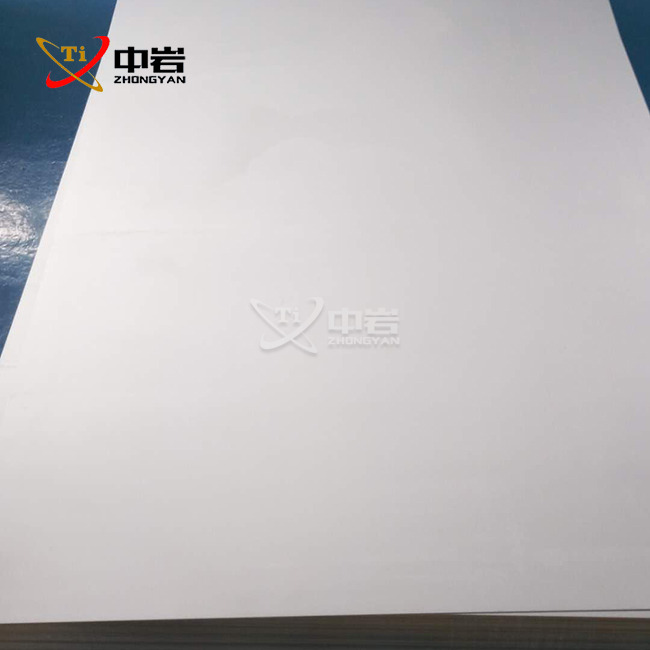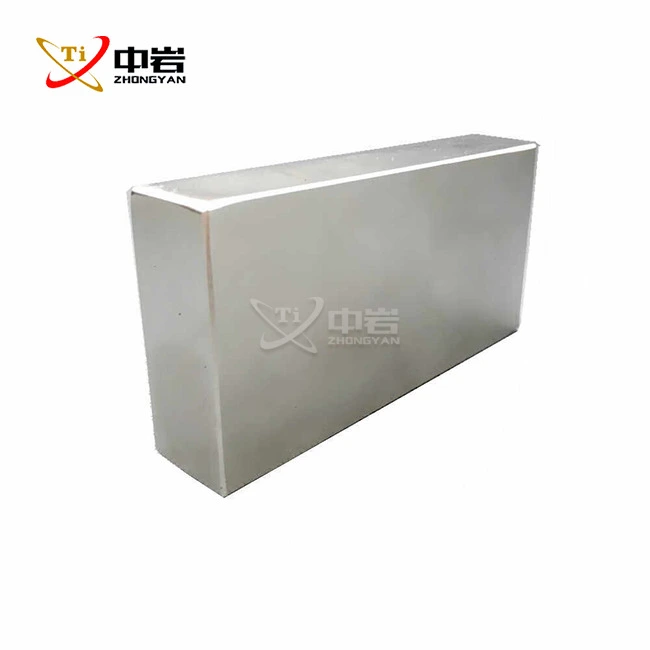
Grade 5 titanium blocks represent the gold standard for aerospace applications, delivering unmatched performance where failure is not an option. These premium titanium alloys (Ti-6Al-4V) offer aerospace engineers a winning combination of incredible strength, lightweight properties, and exceptional corrosion resistance. When your project demands materials that can withstand extreme temperatures, crushing pressures, and corrosive environments while maintaining structural integrity, Grade 5 titanium blocks provide the reliability that keeps aircraft soaring safely through the skies.
Key Parameters and Performance Indicators
Engineers choose the right materials for their projects by knowing about the technical details of Grade 5 titanium. These titanium alloys have densities between 4.43 and 4.51 g/cm³. This makes them much lighter than common metals used in aircraft, like steel or aluminum, when they are used in similar strength levels.
The yield strength is between 828 and 862 MPa, and the tensile strength is between 895 and 1000 MPa. The elongation percentage usually lies between 10% and 15%, which gives the material enough flexibility to handle complicated machining tasks. The temperature resistance for continuous service goes up to 400°C (752°F), and short-term exposure can hit 600°C.
A strength of 114 GPa makes the material very hard to bend. Fatigue strength performance is better than that of many other materials. This is important for parts that experience cyclic loading in aircraft settings. These titanium blocks, bars, and sheets keep their mechanical properties even when temperatures change a lot, which makes sure that they always work the same way during flight operations.
Core Benefits for Aerospace Applications
The aerospace business needs materials that can do more than ever while always being completely dependable. Grade 5 titanium has great strength-to-weight ratios that make it possible to carry more weight and use less fuel. Aircraft makers remove a lot of weight from parts made of steel without hurting their strength.
It also has a very important resistance to corrosion. These titanium plates don't rust or corrode as quickly as other metals do when they're exposed to salt spray and chemicals. This long life makes maintenance cheaper and service longer, which is very useful for business aviation where downtime means losing money.
Grade 5 titanium can be counted on to work well in very harsh situations because it maintains its temperature. When they are exposed to arctic cold or engine heat, parts of the engine, exhaust systems, and structural pieces keep their properties. The low thermal expansion rate of the material means that it won't change size or shape much when the temperature changes.
Biocompatibility makes it easier to use different parts in the cabin and for the driver. Titanium doesn't hurt your health if you touch it for a long time, unlike some aerospace metals. The non-magnetic features make sure that avionics and navigation equipment that are sensitive don't get mixed up with them. This is very important for current aircraft systems.
Zhongyan's Titanium Blocks vs. Competitors
Zhongyan Titanium uses strict quality checks and cutting-edge manufacturing techniques to make their aerospace-grade materials stand out. When we machine titanium, we make titanium blocks with tighter tolerances than the norm in our business. This means that fewer secondary operations are needed and the precision of the final part is improved.
We make use of China's Titanium Valley, where it's easy to get materials and there is a lot of expert knowledge. Compared to usual suppliers, our methods of working with titanium give better surface finishes and dimensional accuracy. Each block is tested for defects with ultrasound, which makes sure that the inside is intact in a way that many rivals can't promise.
The way we cast and form titanium makes blocks with the best grain structures. This focus on metallurgical details leads to better mechanical qualities and resistance to fatigue. Other suppliers might offer normal grades, but we change the density and makeup of titanium to meet the needs of the aerospace industry.
The full range includes titanium tubes, titanium rods, and unique shapes. Our unified method for production manages quality from the moment we choose the materials to the last check. This vertical integration removes supply chain variables that can compromise material consistency in competitor goods.
Maximizing Benefits Through Proper Selection and Usage
Choosing the right size and specifications for a titanium block needs a lot of thought about what the end part needs. Aerospace uses are something that your titanium metal block supplier should know about so they can suggest the right grades and heat treatments.
When you plan how to position a part, think about the cutting direction in relation to the flow of the grain. This planned way of doing things makes things as strong as possible in the most stressful areas. When using proper titanium welding methods to join several parts together, the properties of the material are kept intact.
Before machining, the integrity of the material is protected by storage and handling practices. Do not let blocks in controlled settings come into contact with things that can make them dirty. To avoid making stress concentrations, use the right tools to lift.
Work with vendors that provide a lot of expert help during every stage of your project. When you buy titanium blocks from a good source, they help you with machining decisions, give you information about quality that makes your manufacturing processes easier, and use their knowledge of metallurgy.
Use incoming inspection methods to make sure the properties of the materials match the specifications. Record the traceability of the raw materials used in aerospace and legal compliance, which is very important.
Quality Standards and Certifications
Aerospace uses need the most high-quality standards, and Grade 5 titanium blocks have to meet strict global standards. ASTM B381 standards outline the chemicals, mechanics, and ways of making it all. AMS (Aerospace Material Specifications) standards add more needs that are specific to aviation.
ISO 9001:2015 certification makes sure that production quality control is always the same. Regular checks and ongoing improvement efforts help our manufacturing plant keep these certifications. When aerospace and medical standards meet, FDA certification allows the use of medical devices.
Every shipment comes with a material test certificate that shows the chemical analysis, mechanical properties, and dimensional checks. These certificates give you the ability to trace things back to where they came from, which is needed for aircraft quality systems and to follow the rules.
Heat treatment certificates make sure that the right temperatures and cooling rates were used. These thermal processing settings have a direct effect on the end mechanical properties. They must be carefully monitored and recorded.
Applications in Modern Aerospace Engineering
Grade 5 titanium is used more and more in modern airplane designs for important parts of the structure. The fatigue strength and corrosion protection of the material are good for landing gear parts. Engine mounts and structural parts use the high strength-to-weight ratio to get the best performance.
Turbine engines are used in fan blades, disk parts, and exhaust systems. These materials can handle high temperatures and protect against rust, making them perfect for hot-section parts where other metals would fail.
Titanium's steadiness in vacuum conditions and ability to block radiation are useful in spacecraft technology. These qualities make sure that satellite structures, rocket engines, and space station parts can handle being in the space environment for a long time.
Military aircraft must have the best speed and dependability. In places where mission success relies on how well the material works, Grade 5 titanium is used in missile structures, defense systems, and fighter jet parts.
Conclusion
Grade 5 titanium blocks represent the pinnacle of aerospace material engineering, delivering unmatched performance characteristics that enable next-generation aircraft designs. The combination of exceptional strength-to-weight ratio, corrosion resistance, and temperature stability makes these materials indispensable for critical aerospace applications. Zhongyan's commitment to quality manufacturing, comprehensive technical support, and competitive delivery ensures your projects receive materials that exceed performance expectations while meeting stringent aerospace requirements.
FAQ
Q: What makes Grade 5 titanium superior to other titanium grades for aerospace applications?
A: Grade 5 titanium (Ti-6Al-4V) offers the optimal balance of strength, weight, and workability for aerospace use. Its tensile strength reaches 895-1000 MPa while maintaining excellent ductility and fatigue resistance. The aluminum and vanadium additions create a stronger alloy than commercially pure titanium grades while retaining corrosion resistance and biocompatibility.
Q: How do titanium block prices compare to other aerospace materials?
A: While initial titanium costs exceed aluminum or steel, the total lifecycle value often proves superior. Reduced weight improves fuel efficiency, lower maintenance requirements decrease operational costs, and extended service life provides long-term savings. The strength-to-weight ratio allows designers to use less material for equivalent performance.
Q: What quality certifications should I expect from aerospace titanium suppliers?
A: Reputable suppliers provide ASTM B381 compliance, AMS specifications conformance, and ISO 9001:2015 certification. Material test certificates documenting chemical composition, mechanical properties, and dimensional accuracy should accompany every shipment. Heat treatment certifications and traceability documentation are essential for aerospace applications.
Experience Premium Quality with Zhongyan Titanium Blocks
Aerospace engineers and procurement managers seeking reliable titanium blocks manufacturer partnerships will find exceptional value in Zhongyan's comprehensive capabilities. Our advanced titanium industrial use expertise, combined with strategic location advantages in China's Titanium Valley, delivers superior materials that exceed aerospace performance requirements.
Zhongyan's commitment to quality extends beyond standard specifications through continuous investment in advanced manufacturing technology and metallurgical expertise. Our experienced technical team collaborates with customers to optimize material selection, processing parameters, and delivery schedules that support critical aerospace programs.
The integrated production system ensures consistent quality while maintaining competitive pricing for both prototype and production quantities. Whether you need standard dimensions or custom titanium block dimensions, our flexible manufacturing capabilities adapt to your specific requirements.
Ready to elevate your aerospace projects with premium Grade 5 titanium materials? Our technical specialists are prepared to discuss your requirements and recommend optimal solutions. Contact us at sales@titaniumstudy.com to discover how Zhongyan's aerospace-grade titanium blocks can enhance your next project's success.
References
1. Donachie, Matthew J. "Titanium: A Technical Guide, Second Edition." ASM International Materials Park, Ohio, 2000.
2. Boyer, Rodney R. "An Overview on the Use of Titanium in the Aerospace Industry." Materials Science and Engineering Journal, Vol. 213, 1996.
3. Lutjering, Gerd and James C. Williams. "Titanium, Second Edition: Engineering Materials and Processes." Springer-Verlag Berlin Heidelberg, 2007.
4. American Society for Testing Materials. "ASTM B381 Standard Specification for Titanium and Titanium Alloy Forgings." ASTM International, West Conshohocken, PA, 2017.
5. Aerospace Material Specification. "AMS 4928 Titanium Alloy Bars, Wire, Forgings, and Rings." SAE International, Warrendale, PA, 2019.
6. Froes, Francis H. "Titanium: Physical Metallurgy, Processing, and Applications." ASM International Handbook Committee, Materials Park, Ohio, 2015.
_1755674651182.jpg)
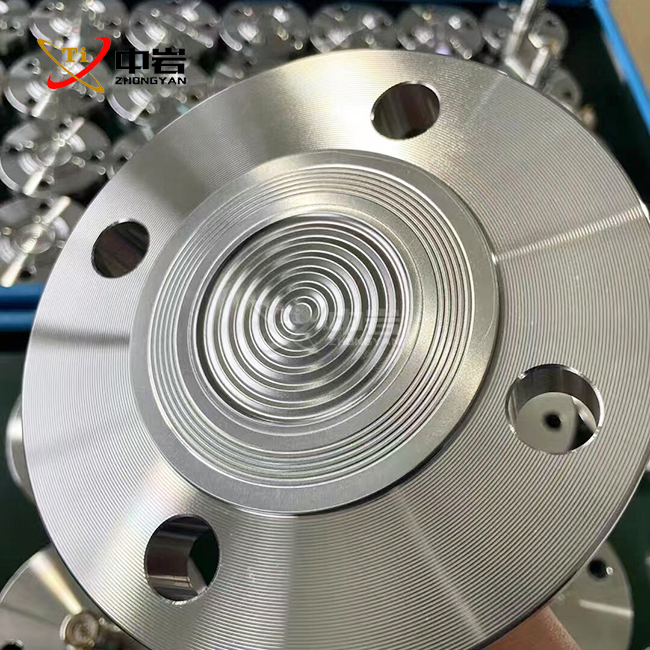
_1755652968020.jpg)