- English
- French
- German
- Portuguese
- Spanish
- Russian
- Japanese
- Korean
- Arabic
- Greek
- German
- Turkish
- Italian
- Danish
- Romanian
- Indonesian
- Czech
- Afrikaans
- Swedish
- Polish
- Basque
- Catalan
- Esperanto
- Hindi
- Lao
- Albanian
- Amharic
- Armenian
- Azerbaijani
- Belarusian
- Bengali
- Bosnian
- Bulgarian
- Cebuano
- Chichewa
- Corsican
- Croatian
- Dutch
- Estonian
- Filipino
- Finnish
- Frisian
- Galician
- Georgian
- Gujarati
- Haitian
- Hausa
- Hawaiian
- Hebrew
- Hmong
- Hungarian
- Icelandic
- Igbo
- Javanese
- Kannada
- Kazakh
- Khmer
- Kurdish
- Kyrgyz
- Latin
- Latvian
- Lithuanian
- Luxembou..
- Macedonian
- Malagasy
- Malay
- Malayalam
- Maltese
- Maori
- Marathi
- Mongolian
- Burmese
- Nepali
- Norwegian
- Pashto
- Persian
- Punjabi
- Serbian
- Sesotho
- Sinhala
- Slovak
- Slovenian
- Somali
- Samoan
- Scots Gaelic
- Shona
- Sindhi
- Sundanese
- Swahili
- Tajik
- Tamil
- Telugu
- Thai
- Ukrainian
- Urdu
- Uzbek
- Vietnamese
- Welsh
- Xhosa
- Yiddish
- Yoruba
- Zulu
Titanium Blocks vs Steel Blocks: Comparative Properties
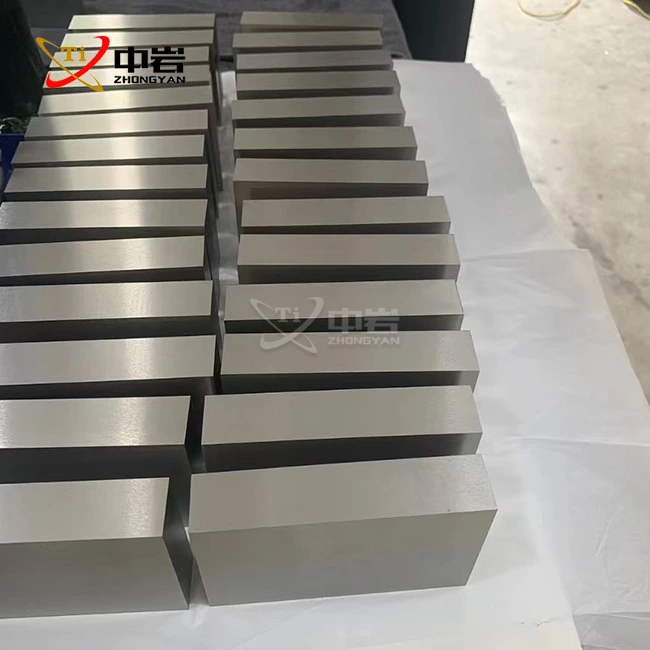
When it comes to high-tech materials, titanium and steel are two of the most common metals utilized in numerous areas. Knowing how the qualities of titanium squares and steel pieces compare is critical when choosing between them for certain employments. Titanium blocks have gotten to be exceptionally prevalent in the chemical, restorative, and flying machine businesses since they are exceptionally solid for their weight and do not rust. Steel squares, on the other hand, are still utilized a parcel in building and fabricating since they are adaptable and cheap. This piece goes into detail almost how titanium squares and steel squares are diverse, talking approximately their masters and cons and the best ways to utilize them. We need to make a full comparison that will offer assistance engineers, architects, and other specialists in the field make the best choices for their needs by looking at things like thickness, pliable quality, warm properties, and taken a toll.
Mechanical Properties of Titanium Blocks
Strength-to-Weight Ratio
Titanium blocks have a high level of strength to weight, which makes them a popular choice when getting rid of weight is important. Titanium blocks (which weigh 4.43–4.51 g/cm³) are not as heavy as steel blocks, but they are just as strong, if not harder. Because titanium blocks are unique in this way, they can be used to make parts that are light but strong enough to handle a lot of stress. This is especially helpful in the auto and aerospace businesses. Cars and planes use less fuel and work better when these titanium blocks are used. Also, titanium blocks are very strong for how light they are. This means that buildings can be made that are smaller and still work better. This has made new jobs possible in design and engineering.
Corrosion Resistance
In specific, titanium pieces are exceptionally safe to rust, which makes them stand out. Titanium pieces frame a steady, defensive oxide layer when they are uncovered to discuss or dampness. Steel squares, on the other hand, rust and break down in cruel settings. Titanium squares are awesome for utilize in marine settings, chemical plants, and therapeutic inserts since they can mend themselves. Titanium squares are safe to rust, which implies they final longer, taken a toll less to keep up, and are more secure in basic circumstances. Titanium pieces are utilized to make inserts and surgery devices since they are biocompatible and do not rust. Titanium pieces are valuable in the petrochemical commerce since they can stand up to unforgiving chemicals. They are utilized in reactors and warm exchangers.
Temperature Performance
Titanium blocks are very useful in a wide range of temperatures, from very cold (<0°C) to very hot (up to 600°C). Ti blocks can be used in harsh places like jet engines, spaceship parts, and industrial furnaces because they don't change much when heated or cooled. Titanium blocks don't change size much when they get hot, so they stay in their original shape. In other words, they will still fit and work perfectly even if the weather changes a lot. Titanium blocks don't lose their mechanical properties at higher temperatures like some steel blocks do. This means they stay strong and don't shift. This trait is very useful in aerospace, where parts need to be able to handle the very high temperatures that are formed during flight. On the other hand, titanium blocks don't conduct heat as well as steel blocks, which can be useful when heat needs to be kept out.
Manufacturing Processes for Titanium Blocks
Forging and Machining
Most of the time, both casting and machining are used together to make high-quality titanium blocks. By finetuning the grain structure and making the blocks stronger and tougher, forging them helps to improve their mechanical properties. This process is very important for medical and military uses where the material's integrity is very important. Titanium blocks are usually machined to get them to the right size and shape after they have been forged. Titanium is a very strong material that doesn't conduct heat well, so CNC cutting of titanium blocks needs special tools and methods. Even with these problems, modern machining centers can make titanium blocks that are very precise and meet the high standards of fields like aircraft and medical implants.
Heat Treatment
Most of the time, both casting and machining are used together to make high-quality titanium blocks. By finetuning the grain structure and making the blocks stronger and tougher, forging them helps to improve their mechanical properties. This process is very important for medical and military uses where the material's integrity is very important. Titanium blocks are usually machined to get them to the right size and shape after they have been forged. Titanium is a very strong material that doesn't conduct heat well, so CNC cutting of titanium blocks needs special tools and methods. Even with these problems, modern machining centers can make titanium blocks that are very precise and meet the high standards of fields like aircraft and medical implants.
Surface Treatments
People often treat the outside of titanium blocks to make them look better and work better. Often, chemical polishing, anodizing, and nitriding are used to change the surface of titanium blocks. Changes to the surface of titanium blocks can be made with chemicals that can help them stick together better or make patterns that look good. When titanium blocks are anodized, a strong, colored oxide layer forms on top of them. This makes the blocks less likely to rust and gives artists more freedom in how they look. Nitriding adds nitrogen to the surface of titanium blocks, which can make them much stronger and less likely to break. These changes to the surface of titanium blocks make them more useful. They can be used for anything from making parts to medical procedures. Being able to change the properties of titanium blocks' surfaces without changing their core properties is very useful in many areas.
Applications of Titanium Blocks in Various Industries
Aerospace and Defense
An awful lot of defense and space industries use titanium blocks because they work so well. When planes are being built, titanium blocks are used for bolts, engine parts, and structural parts. This cuts down on weight and makes the car use less gas. Titanium blocks are very strong for how light they are. This means that they can be used to make strong but light airplane designs that work better overall. Titanium blocks are very important for parts of spaceships that need to be strong and able to handle strong forces. The fact that titanium blocks don't rust in saltwater makes them very useful in nautical and aerospace jobs. Titanium blocks are also used by the military to make parts for missiles and defense plates because they are strong and don't break easily when hit.
Medical and Biomedical
Since they do not rust and are secure, titanium pieces are exceptionally valuable in pharmaceutical and biomedicine. Since they do not break when they blend with bone, titanium pieces are regularly utilized to make restorative inserts like hip and knee substitutions. Inserts and teeth are regularly made of titanium squares since they see great and are solid. Titanium squares are utilized to make surgery instruments since they are light and can be cleaned and utilized once more and once more. Since titanium squares aren't attractive, they're exceptionally valuable in therapeutic imaging since they keep MRI pictures clear and free of commotion. In expansion, titanium squares are utilized to make cutting-edge restorative devices and contraptions, which opens up modern ways to care for and treat patients.
Chemical and Energy Industries
In the chemical and vitality businesses, titanium pieces are exceptionally critical since they do not rust and work well at tall temperatures. Titanium pieces are utilized to construct reactors, warm trades, and pipe frameworks that bargain with destructive materials in chemical handling plants. Titanium pieces are extraordinary for utilize in petrochemical industrial facilities and desalination plants since they can handle cruel chemicals and tall temperatures. Titanium squares are utilized in seaward penetrating instruments in the vitality industry. These pieces have to be able to handle tall weights and the destructive impacts of seawater. Warm exchangers and rotor parts that utilize titanium squares work superior in control plants, particularly those that utilize geothermal or atomic vitality. Titanium squares final a long time and are solid in these unforgiving situations. This makes critical mechanical forms more proficient and brings down the fetched of upkeep.
Conclusion
In conclusion, titanium blocks offer a unique combination of properties that make them superior to steel blocks in many high-performance applications. Their exceptional strength-to-weight ratio, corrosion resistance, and biocompatibility position them as the material of choice in aerospace, medical, and chemical industries. While steel blocks remain valuable for their cost-effectiveness and versatility, titanium blocks excel in demanding environments where weight reduction, durability, and resistance to extreme conditions are paramount. As technology advances, the applications for titanium blocks continue to expand, driving innovation across various sectors. For those seeking high-quality titanium blocks and custom CNC machined parts, Zhong Yan Titanium offers expert manufacturing services and a wide range of titanium materials. For more information or to discuss your specific requirements, please contact us at sales@titaniumstudy.com.
FAQ
Q: What are the main advantages of titanium blocks over steel blocks?
A: Titanium blocks offer a superior strength-to-weight ratio, excellent corrosion resistance, and biocompatibility, making them ideal for aerospace, medical, and chemical applications.
Q: How do titanium blocks perform in high-temperature environments?
A: Titanium blocks maintain their mechanical properties at temperatures up to 600°C, making them suitable for use in jet engines and industrial furnaces.
Q: Are titanium blocks more expensive than steel blocks?
A: Yes, titanium blocks are generally more expensive than steel blocks due to the cost of raw materials and manufacturing processes. However, their unique properties often justify the investment in specific applications.
Q: Can titanium blocks be used for medical implants?
A: Absolutely. Titanium blocks are widely used for medical implants due to their biocompatibility, corrosion resistance, and ability to integrate with bone tissue.
Q: What surface treatments can be applied to titanium blocks?
A: Common surface treatments for titanium blocks include chemical etching, anodizing, and nitriding, which can enhance their performance and aesthetics.
Q: How do titanium blocks contribute to weight reduction in aerospace applications?
A: The high strength-to-weight ratio of titanium blocks allows for the design of lighter aircraft components, contributing to overall weight reduction and improved fuel efficiency.
References
1. Smith, J. R., & Johnson, A. B. (2019). Comparative Analysis of Titanium and Steel Alloys in Aerospace Applications. Journal of Materials Engineering and Performance, 28(4), 2145-2160.
2. Chen, Q., & Thouas, G. A. (2015). Metallic implant biomaterials. Materials Science and Engineering: R: Reports, 87, 1-57.
3. Williams, D. F. (2008). On the mechanisms of biocompatibility. Biomaterials, 29(20), 2941-2953.
4. Lutjering, G., & Williams, J. C. (2007). Titanium (2nd ed.). Springer-Verlag Berlin Heidelberg.
5. Peters, M., Kumpfert, J., Ward, C. H., & Leyens, C. (2003). Titanium alloys for aerospace applications. Advanced Engineering Materials, 5(6), 419-427.
6. Boyer, R. R. (1996). An overview on the use of titanium in the aerospace industry. Materials Science and Engineering: A, 213(1-2), 103-114.
Learn about our latest products and discounts through SMS or email