- English
- French
- German
- Portuguese
- Spanish
- Russian
- Japanese
- Korean
- Arabic
- Greek
- German
- Turkish
- Italian
- Danish
- Romanian
- Indonesian
- Czech
- Afrikaans
- Swedish
- Polish
- Basque
- Catalan
- Esperanto
- Hindi
- Lao
- Albanian
- Amharic
- Armenian
- Azerbaijani
- Belarusian
- Bengali
- Bosnian
- Bulgarian
- Cebuano
- Chichewa
- Corsican
- Croatian
- Dutch
- Estonian
- Filipino
- Finnish
- Frisian
- Galician
- Georgian
- Gujarati
- Haitian
- Hausa
- Hawaiian
- Hebrew
- Hmong
- Hungarian
- Icelandic
- Igbo
- Javanese
- Kannada
- Kazakh
- Khmer
- Kurdish
- Kyrgyz
- Latin
- Latvian
- Lithuanian
- Luxembou..
- Macedonian
- Malagasy
- Malay
- Malayalam
- Maltese
- Maori
- Marathi
- Mongolian
- Burmese
- Nepali
- Norwegian
- Pashto
- Persian
- Punjabi
- Serbian
- Sesotho
- Sinhala
- Slovak
- Slovenian
- Somali
- Samoan
- Scots Gaelic
- Shona
- Sindhi
- Sundanese
- Swahili
- Tajik
- Tamil
- Telugu
- Thai
- Ukrainian
- Urdu
- Uzbek
- Vietnamese
- Welsh
- Xhosa
- Yiddish
- Yoruba
- Zulu
How to Choose the Best Planar Titanium Target Size and Shape?
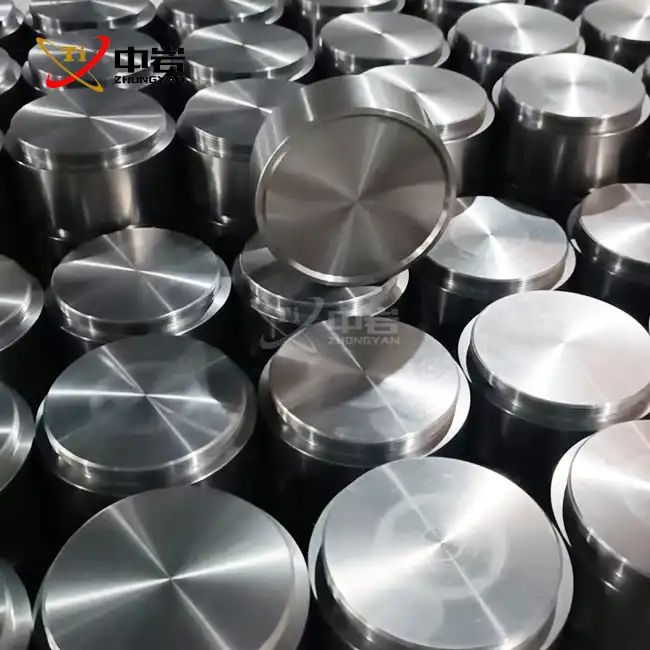
It is very important to choose the right size and form of planar titanium targets for high-quality thin film deposition in many fields, such as displays, semiconductors, and advanced materials. The target's size and shape have a big effect on how well the sparking process works, how even the film is, and how well the coating works overall. This piece will show you the most important things you need to think about when picking the right size and shape of planar titanium target for your needs. We will talk about how the size of the target affects deposition rates, material use, and coating consistency. We will also talk about how important it is to make sure that the target fits the needs of your sputtering system. By knowing these important things, you'll be able to make a choice that improves your thin film production process and guarantees reliable, high-quality results.
Factors Influencing Planar Titanium Target Selection
Sputtering System Compatibility
It is very important to make sure that the planar titanium target you choose works with your sputtering equipment. Your equipment's magnetron or cathode assembly must be able to hold the object properly. This covers not only the overall size, but also how it will be mounted and how it will cool. Planar titanium targets come in a range of standard sizes, with diameters usually between 2 and 14 inches. On the other hand, custom sizes can be made to fit unique needs. To make sure a perfect fit, it's important to look at the specifications of your sputtering system and work closely with the goal supplier. A planar titanium target that is the right size will improve cooling, increase power delivery, and eventually improve the performance of the sputtering process.
Deposition Rate Requirements
The statement rate you can get from your sputtering handle is straightforwardly related to the estimate and shape of a level titanium target. In common, higher control sources can work with greater targets, which leads to speedier statement rates. This interface isn't continuously direct, in spite of the fact that. Target thickness and the way the attractive field is set up are two other things that matter. When choosing a level titanium target, you ought to think approximately how much film you require to make and how quick you require to make it. A greater target might offer assistance if you require to put thick movies or make a parcel of things. On the other hand, a littler target might be superior for employments that require fine control over lean movies or lower generation volumes. To get the best comes about, you require to discover a blend between the statement rate and other things like target utilization and film consistency.
Film Uniformity Considerations
The size and shape of a flat titanium target have a big effect on how even the film that is formed is. Larger targets usually give better uniformity over a larger area. This is especially important when coating large surfaces or many small substrates at the same time. You can also change the shape of the object to make it more uniform. For example, some uses may benefit from target shapes that are carefully made to account for uneven erosion patterns. When choosing a planar titanium target, you should think about the substrates' size and shape, as well as any specific regularity needs you have for your application. You can predict film uniformity for different target configurations with the help of advanced simulation tools and real-world data from target suppliers. This lets you make an informed choice that ensures consistent coating quality across all of your substrates.
Optimizing Planar Titanium Target Utilization
Target Thickness and Lifespan
The breadth of a planar titanium target is a key figure in how long it endures and how well it is utilized by and large. Since they hold more starting fabric, targets that are thicker tend to final longer. But the best thickness depends on numerous things, such as the plan of the sputtering framework, the control thickness, and how well the cooling works. When picking a planar titanium target, think almost the trade-offs between the target width and other execution components. Targets that are thicker might require higher start volts, and this can alter how solid the attractive field is at the target's surface. More slender targets, on the other hand, might require to be supplanted more frequently, which seem cruel more downtime and higher costs. Work with your target supplier to discover the best thickness for your application in terms of both toughness and sputtering execution.
Erosion Profile Management
The erosion profile of a flat titanium target has a big effect on how much material is used and how cost-effective it is generally. As the sputtering process goes on, the target usually develops a unique "racetrack" degradation pattern, which can cause uneven material loss. To get the most out of your target, think about tactics that encourage more even erosion. This could mean picking targets with special shapes, like cone- or cylinder-shaped ones, that make up for preferred erosion. Some sputtering systems also use moving targets or dynamic magnetic fields to spread the damage out more evenly across the target surface. Talk to your supplier and system maker about erosion profile management methods when picking a planar titanium target. This will help you get the most out of the material and make the target last longer.
Bonding and Backing Plate Options
The gluing method and backing plate material you choose for your planar titanium target can have a big impact on how well it works and how well it handles heat. Titanium targets are often attached to backing plates made of copper, stainless steel, or aluminum to make them more stable and good at conducting heat. It is important to carefully choose the bonding method, like soldering, brazing, or diffusion bonding, to make sure good heat contact and stop delamination during use. When picking a flat titanium target, think about how hot your sputtering process needs to be and whether the backing plate material will work with your system. Specialized backing plate designs that include extra cooling features may be useful in some situations. Talk to your target provider to find out which bonding and backing plate choices will work best for your needs, allowing for the best heat transfer and performance.
Advanced Considerations for Planar Titanium Target Selection
High-Power Sputtering Applications
When using high-power sputtering, you need to be extra careful when choosing flat titanium targets. Targets that can handle high power levels and stay stable under extreme thermal loads are often needed for these uses. When picking a flat titanium target for high-power sputtering, you should think about things like better ways to cool it, better grain structure, and more advanced bonding methods. Some makers make targets with cooling channels inside or special backing plate designs that help heat escape. Also, think about targets with finely tuned microstructures that can handle heat stress better and lower the chance of cracking or deformation. Talk to your target supplier about your high-power sputtering needs to make sure that the planar titanium target you choose will work well and last a long time in tough circumstances.
Reactive Sputtering Considerations
There are some extra things that need to be thought about when using flat titanium targets in reactive sputtering methods, like putting down films of titanium nitride or titanium oxide. Target poisoning can happen during reactive sputtering, which changes the rate of sputtering and makes the process less stable. To fix this, you could use flat metal targets that have been treated on the outside or have special shapes that make them less likely to get poisoned. Some companies make targets with textured surfaces or certain crystal positions that help reactive sputtering work more reliably. The target's size and shape can also change how the reactive gas is spread out in the chamber, which can change how evenly the reaction happens. Talk to your supplier about your individual process parameters and needs when choosing a planar titanium target for reactive sputtering to make sure that your reactive deposition process works well and consistently.
Custom Target Designs for Specialized Applications
In some specific situations, normal planar titanium targets might not work as well as they should. In these situations, custom target patterns can be very helpful. These could be targets with non-standard shapes, patterns that are broken up into segments, or compositions that use gradients. Custom planar titanium targets can be made to solve specific problems, like making the film more uniform over complicated substrate geometries, getting better target utilization, or getting particular film properties. If you're thinking about custom target designs, make sure you and your provider agree on what your application needs and what your performance goals are. Give specifics about your sputtering system, the properties of the material, and the properties of the film you want to make. You can use advanced simulation tools and make prototypes to create and test custom target designs before they are made on a large scale. This way, you can be sure that the final product fits your needs and makes the most of your sputtering process.
Conclusion
Choosing the best planar titanium target size and shape is crucial for optimizing thin film deposition processes across various industries. By carefully considering factors such as sputtering system compatibility, deposition rate requirements, and film uniformity, you can select a target that maximizes performance and efficiency. Zhong Yan Titanium excels in manufacturing custom CNC machined parts and titanium materials with high quality, precision, and production volume. Our products meet ISO9001:2015 standards and cater to diverse industry needs. For expert guidance on selecting the ideal planar titanium target for your application or to explore our wide range of titanium products, please contact us at sales@titaniumstudy.com. Our team is ready to provide tailored solutions that meet your specific requirements and enhance your thin film production processes.
FAQ
Q: What are the standard sizes available for planar titanium targets?
A: Standard sizes typically range from 2 inches to 14 inches in diameter, with custom sizes available upon request.
Q: How does target thickness affect sputtering performance?
A: Thicker targets generally offer longer lifespan but may require higher ignition voltages and affect magnetic field strength at the target surface.
Q: What backing plate materials are commonly used for planar titanium targets?
A: Common backing plate materials include copper, stainless steel, and aluminum, chosen based on thermal conductivity and system compatibility.
Q: How can I improve target utilization in my sputtering process?
A: Target utilization can be improved through specialized target designs, dynamic magnetic fields, or target motion mechanisms that promote more uniform erosion.
Q: Are custom target designs available for specialized applications?
A: Yes, custom target designs including non-standard shapes, segmented designs, or gradient compositions are available for specialized applications.
Q: What should I consider when choosing a planar titanium target for reactive sputtering?
A: Consider targets with surface treatments or specialized designs that enhance resistance to poisoning and promote stable reactive sputtering processes.
References
1. Smith, J.A. (2019). "Advanced Materials for Thin Film Deposition: A Comprehensive Guide to Planar Targets." Journal of Vacuum Science & Technology, 37(4), 041501.
2. Johnson, R.B., & Thompson, C.V. (2020). "Optimization of Titanium Target Geometry for High-Power Sputtering Applications." Thin Solid Films, 698, 137869.
3. Lee, S.H., et al. (2018). "Effect of Target Size and Shape on Film Uniformity in Magnetron Sputtering." Surface and Coatings Technology, 354, 39-45.
4. Wang, X., & Liu, Y. (2021). "Recent Advances in Planar Sputtering Target Design for Reactive Deposition Processes." Materials Science and Engineering: R: Reports, 146, 100642.
5. Chen, F., et al. (2017). "Influence of Target Thickness on the Properties of Titanium Thin Films Deposited by DC Magnetron Sputtering." Vacuum, 141, 175-181.
6. Müller, K.H. (2022). "Computational Modeling of Erosion Profiles in Planar Sputtering Targets: Implications for Target Utilization." Journal of Applied Physics, 131(2), 025302.
(1)_1755588631994.jpg)
_1755672221864.jpg)
Learn about our latest products and discounts through SMS or email