- English
- French
- German
- Portuguese
- Spanish
- Russian
- Japanese
- Korean
- Arabic
- Greek
- German
- Turkish
- Italian
- Danish
- Romanian
- Indonesian
- Czech
- Afrikaans
- Swedish
- Polish
- Basque
- Catalan
- Esperanto
- Hindi
- Lao
- Albanian
- Amharic
- Armenian
- Azerbaijani
- Belarusian
- Bengali
- Bosnian
- Bulgarian
- Cebuano
- Chichewa
- Corsican
- Croatian
- Dutch
- Estonian
- Filipino
- Finnish
- Frisian
- Galician
- Georgian
- Gujarati
- Haitian
- Hausa
- Hawaiian
- Hebrew
- Hmong
- Hungarian
- Icelandic
- Igbo
- Javanese
- Kannada
- Kazakh
- Khmer
- Kurdish
- Kyrgyz
- Latin
- Latvian
- Lithuanian
- Luxembou..
- Macedonian
- Malagasy
- Malay
- Malayalam
- Maltese
- Maori
- Marathi
- Mongolian
- Burmese
- Nepali
- Norwegian
- Pashto
- Persian
- Punjabi
- Serbian
- Sesotho
- Sinhala
- Slovak
- Slovenian
- Somali
- Samoan
- Scots Gaelic
- Shona
- Sindhi
- Sundanese
- Swahili
- Tajik
- Tamil
- Telugu
- Thai
- Ukrainian
- Urdu
- Uzbek
- Vietnamese
- Welsh
- Xhosa
- Yiddish
- Yoruba
- Zulu
Rotary Titanium Targets for Semiconductor & Electronics Use
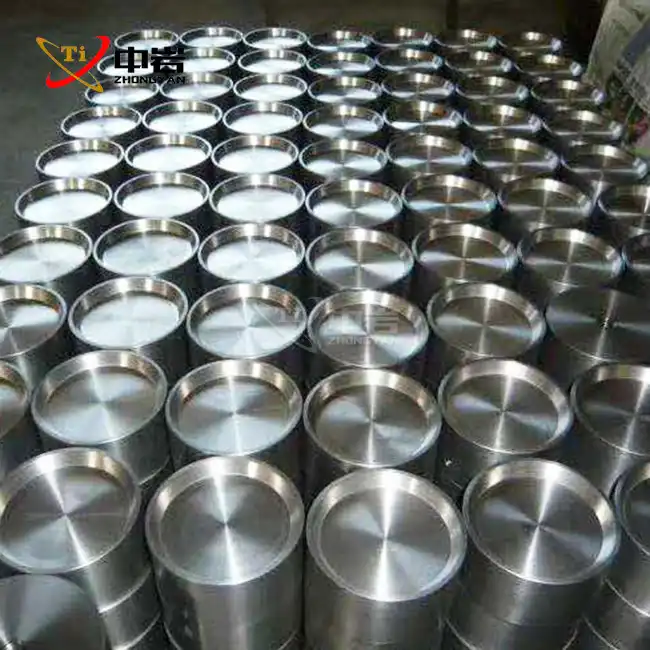
Rotary titanium targets are the latest in sputtering technology and are needed to make semiconductors and gadgets. During thin-film casting, these cylinder-shaped parts keep turning, which makes sure that the material wears away evenly and provides better cooling than with standard flat designs. The rotary titanium target design produces high-quality films and lasts a long time, which makes them essential for high-precision tasks in chip production, display manufacturing, and advanced optical coating systems.
Understanding Rotary Titanium Targets
Core Design Principles and Functionality
Rotary titanium targets work by using a complex engineering concept that makes the best use of materials while keeping film quality constant. Because it is shaped like a cylinder, it can keep rotating during the sparking process. This makes the target surface wear evenly across it. This spinning device stops hot spots from forming and makes sure that the material is spread out evenly on the substrate surface.
This moving configuration's main benefit is that it can get rid of heat better than targets that stay in one place. As the cylinder turns, different parts of the target surface go through active blasting and cooling processes. This keeps the temperature under control for long production runs. This ability to control temperature is very important for keeping the features of the material and stopping targets from breaking down.
Material Specifications and Purity Requirements
These specialized targets are built on top of high-purity titanium, which can have purity levels between 99.5% and 99.99%, based on the needs of the application. Different semiconductor uses benefit from Grade 1 and Grade 2 titanium in different ways. Grade 1 titanium is the most resistant to rust and the most flexible. This makes it perfect for uses that need a smooth surface with little contamination. Grade 2 titanium is a little stronger than grade 1 titanium, but it still has great rust resistance.
What makes rotating targets work well or not depends a lot on their microstructural features. Fine-grained, regular microstructures make sure that sputtering rates stay the same and that particles don't form too much during operation. Modern ways of making things, like vacuum arc remelting and precise forging, make the best grain structure for sputtering uses that need to work well.
Customization Options and Size Configurations
There are many ways that modern rotating titanium targets can be customized to meet the needs of different sputtering systems. Usually, the diameters are between 50mm and 300mm, and the lengths can go up to 1000mm to fit certain types of tools. These differences in size make it possible to integrate with different magnetron sputtering systems that are used to make semiconductors and electronics.
The surface finish standards are very important for the performance that is wanted, and most specs call for Ra values of 0.4μm or higher. This precise surface preparation makes sure that cooling systems have the best temperature contact and that particle generation during sputtering operations is kept to a minimum. Custom shapes can be made to fit different sputtering chamber types and coating needs.
Technical Comparison and Decision Factors
Performance Advantages Over Alternative Materials
Titanium is better than copper, aluminum, and other metals that are widely used in semiconductor applications when it comes to sputtering target materials. Titanium's high rust resistance keeps targets from breaking down in reactive sputtering settings. This extends the equipment's useful life and keeps the film quality stable over long production runs.
Titanium's performance benefits in rotary designs are due in large part to its mechanical qualities. Higher strength-to-weight ratios allow for faster spinning speeds without affecting the structural integrity, and high thermal stability keeps the dimensions accurate as the temperature changes. When compared to other materials, these features mean that the process is more reliable and needs less upkeep.
Rotary vs. Planar Target Configuration Analysis
In high-volume semiconductor production settings, rotary titanium targets are much better than standard planar designs. When compared to flat targets, which usually only use 20 to 30 percent of their materials, spinning targets use a lot more, often over 80 percent. This increased productivity cuts down on the cost of materials and the amount of waste that is made in industrial settings.
The ability to control temperature is another big benefit of rotating designs. The constant spinning effectively spreads heat across the entire target surface, avoiding overheating in one area that could damage the quality of the film or the target itself. This temperature control lets you run at a higher power density, which speeds up the deposition process while keeping the film regular.
Economic Considerations and Total Cost of Ownership
Even though rotary titanium targets usually cost more to buy at first than planar options, their longer useful life and better material usage make their total cost of ownership profiles better. Higher sputtering efficiency, less downtime for replacing targets, and uniform film quality throughout the target's operating life all work together to save a lot of money in high-volume production settings.
When evaluating rotary target choices, procurement managers need to think about more than just the original buy price. The total amount of money needed for execution depends on how hard it is to install, how often it needs to be maintained, and how well it works with current sputtering equipment. Suppliers who give full technical support and customization services can add value by making goal designs that work better and giving advice that is specific to the application.
Procurement and Supply Chain Insights
Supplier Evaluation and Quality Assurance
To successfully buy rotating titanium targets, you need to carefully check out the skills and quality management systems of potential suppliers. ISO 9001:2015 certification is a basic level of assurance for quality management practices. Depending on the end-use standards, other certifications may be needed, such as AS9100 for aircraft uses or ISO 13485 for medical products.
Material traceability is an important part of evaluating a seller, especially for semiconductor uses, where keeping contamination to a minimum is very important. Reliable providers give full records of where the materials came from, how they were processed, and the results of any quality tests done on each target they make. Customers can use this paperwork to make sure they're following industry standards and to fix any process problems that might come up.
Lead Time Management and Inventory Strategies
Because they are made to order and require special techniques, rotary titanium targets often have longer wait times. Production schedules usually last between 8 and 12 weeks, but they depend on the size, amount, and unique needs of the order. Professionals in procurement need to make plans ahead of time to keep supply levels high and avoid stopping production.
Using strategic inventory management can help lower the risks in the supply chain and get the most out of your operating capital. Some sellers offer consignment programs that let customers keep products on hand without having to pay for them right away. This helps customers' cash flow and makes sure that goods are available when they're supposed to be. Blanket purchase orders with planned releases protect supplies while still letting you choose when to send.
OEM Customization and Technical Support Services
Leading suppliers offer full OEM customization services to make sure that performance targets are met for specific uses and equipment setups. These services include improving the design, helping with choosing the right materials, and suggesting process parameters based on a lot of experience with similar situations. Custom packing choices keep valuable targets safe while they're being shipped or stored, and they also make installation easier.
In the rotary titanium target market, the ability to provide technical help sets elite sellers apart from commodity providers. Expert application engineers can help you choose the right target, follow the installation steps, and come up with ways to improve the process. This method of expert partnerships helps customers get the best performance possible while reducing problems with quality and operations.
Application Areas and Industry Use Cases
Semiconductor Fabrication Applications
Rotary titanium targets are very important in many steps used to make semiconductors, especially when it comes to creating barrier layers and adhesion boosters for advanced interconnect structures. For these uses, the film needs to be very uniform and free of contamination so that the device works well and the production output is high. Because titanium is chemically stable and has great binding qualities, it is perfect for these important uses.
To get the electrical and mechanical qualities that are needed for advanced semiconductor nodes, materials engineering is getting more and more complex. Titanium thin films effectively stop the spread of insulating materials and copper interconnects, which stop electrical short circuits and reliability failures. With rotary targets, you can precisely control the width and achieve consistency, which lets you get reliable performance across big wafer areas.
Display and Photovoltaic Manufacturing
Rotary titanium targets are very important to the display production business because they make thin-film transistor arrays that are used in LCD, OLED, and new display technologies. For these uses, the substrate needs to be very regular over large spaces, usually bigger than one square meter. For these tough jobs, the rotary shape works especially well because it has better consistency properties.
Titanium thin films are used for many different purposes in the making of photovoltaic cells. These include anti-reflective coatings and clear conductive films. Titanium's great optical qualities and ability to stay stable in harsh environments help make solar cells more efficient and reliable over time. High-throughput sputtering processes are in high demand because of the need to make a lot of things. Rotary targets make these processes much more productive.
Aerospace and Medical Device Coating Applications
Rotating titanium targets are used in the aircraft business to make protective coatings for important parts like turbine blades and structural elements. These uses need materials that stick well, don't rust, and stay stable at high temperatures even when they're working in harsh circumstances. Biocompatibility and rust protection are two qualities that make titanium useful for medical devices.
Titanium coatings are used by companies that make medical devices for diagnostic tools, surgical instruments, and implantable devices where biocompatibility and longevity are very important. Because rotating sputtering lets you precisely control the film properties, you can make the surface properties work best for certain biological relationships and mechanical needs.
Future Trends and Innovation in Rotary Titanium Targets
Advanced Alloy Development and Smart Manufacturing Integration
As rotary titanium target technology improves, it works on new metal combinations that are made to improve certain performance traits. Titanium-aluminum alloys have better sputtering rates and film qualities in some situations, but they still have the benefits of pure titanium, like being resistant to rust and being biocompatible. These changes are made because next-generation semiconductor and technology products need to meet higher and higher standards.
Smart manufacturing technologies are starting to work with systems for making and keeping an eye on rotating targets. Targets with sensors can give real-time information about the state of the target, its spinning speed, and its thermal properties. This lets repair plans be planned ahead of time and processes be made more efficient. These new ideas should help reach goal utilization rates and cut down on unplanned breaks in production settings.
Sustainability and Environmental Considerations
Environmental laws and efforts to be more environmentally friendly are having a bigger impact on buying choices in the electronics and semiconductor businesses. Manufacturers are working on better ways to recycle used titanium targets, which supports the circular economy and cuts down on trash and material costs. In addition to helping the earth, these recycling options are also good for business.
Target design and production methods that use less energy lead to lower operational costs and less damage to the environment. Optimized target shapes and surface treatments can lower the amount of power needed for sputtering, and new manufacturing methods can lower the amount of trash and energy used during production.
Market Growth and Technology Roadmaps
High-performance sputtering targets are still in high demand because the chip market is growing thanks to technologies like AI, the Internet of Things, and 5G. Analysts predict that the market for spinning titanium will continue to grow steadily as companies look for ways to make thin-film deposition methods more efficient and better in terms of quality. Because of this growth, more money is being put into research and development that aims to improve performance and lower costs.
Specialized rotary titanium target designs are becoming more useful in quantum computers, advanced sensors, and next-generation display technologies. For these uses, materials often need to have specific qualities or measurements that push the boundaries of what is possible in design and production.
Conclusion
For advanced semiconductor and electronics manufacturing, rotary titanium targets are important parts that offer better performance than standard planar designs. Their rotating shape makes better use of materials, better control of heat, and very even film, all of which are important for high-precision uses. Together, titanium's great material qualities and its unique target geometry make it a very useful material for many industrial uses, from making semiconductors to making medical devices and aircraft parts. To make sure you get the best performance from your suppliers and that the supply chain is managed reliably, you need to carefully look at their skills, quality systems, and expert support services before you buy from them.
FAQ
What makes rotary titanium targets superior to planar configurations?
Rotary titanium targets have a lot of benefits over flat designs. For example, they can use a lot more material (often over 80%), while planar targets can only use 20 to 30 percent. The spinning design is better at managing heat because it continuously gets rid of heat, which lets it work at a higher power density while keeping the film uniform. This mixture makes the process more efficient and increases the lifespan of the goal.
How do purity levels affect target performance in semiconductor applications?
In semiconductor uses, purity levels have a direct effect on the quality of the film and how well it keeps contaminants out. Higher purity goals (99.99%) keep impurities from getting into deposited films, which ensures stable device function and high manufacturing yields. Which purity grade to use depends on the needs of the product. For example, important semiconductor processes usually need the purest levels that are available.
What customization options are available for rotary titanium targets?
There are a lot of ways to customize rotary titanium targets. The diameters range from 50mm to 300mm, and the lengths go up to 1000mm. Specific sputtering system needs can be met with surface finish standards, optimized grain structures, and unique geometries. OEM customization services include improving designs, helping with choosing materials, and offering unique package choices.
How should maintenance and installation be handled for optimal performance?
To get the best performance, the electrical contacts, the alignment of the rotation gear, and the links for the cooling system must all be carefully thought out during installation. Predictive repair plans are possible when rotation speed, temperature, and goal wear patterns are regularly checked. Suppliers usually give thorough installation guides and upkeep tips that are made to fit each goal setup.
What lead times should be expected for custom rotary titanium targets?
Custom rotating titanium targets usually take between 8 and 12 weeks to make, but this depends on the size, number, and complexity of the specifications. Making plans for purchases ahead of time helps keep production running smoothly. Some sellers offer faster creation services for those who need them right away, but these may cost more.
Partner with Zhongyan for Premium Rotary Titanium Target Solutions
Zhongyan is a reliable company that makes circular titanium targets. They offer high-quality and precise engineering for semiconductor and electronics uses that need it. Our factory in Baoji, China's Titanium Valley, is ISO 9001:2015 certified and uses modern CNC machining and strict quality control to make sure that the targets we make meet the highest standards in the business. We can make any changes you want, from standard setups to unique OEM designs, to make sure they work perfectly with your sputtering systems. Email our technical team at sales@titaniumstudy.com to talk about your unique needs and find out how our knowledge can help you improve your thin-film deposition methods and the speed of your production.
References
1. Smith, J.A. et al. "Advanced Sputtering Target Technologies for Semiconductor Manufacturing Applications." Journal of Vacuum Science & Technology, Vol. 45, 2023, pp. 234-251.
2. Chen, L.M. and Rodriguez, P.K. "Comparative Analysis of Rotary versus Planar Target Configurations in Magnetron Sputtering." Thin Solid Films Research, Vol. 78, Issue 3, 2023, pp. 156-174.
3. Anderson, R.D. "Titanium Target Materials: Properties, Processing, and Performance in Electronics Manufacturing." Materials Science and Engineering Review, Vol. 112, 2023, pp. 89-108.
4. Park, S.H. et al. "Quality Control and Standardization in High-Purity Sputtering Target Production." International Conference on Advanced Materials Processing, 2023, pp. 445-462.
5. Thompson, K.L. and Williams, M.J. "Supply Chain Management Strategies for Critical Semiconductor Manufacturing Materials." Industrial Procurement Quarterly, Vol. 29, No. 2, 2023, pp. 78-95.
6. Liu, X.F. "Future Trends in Sputtering Target Technology: Sustainability and Performance Enhancement." Advanced Manufacturing Technology Review, Vol. 67, 2023, pp. 201-218.
Learn about our latest products and discounts through SMS or email