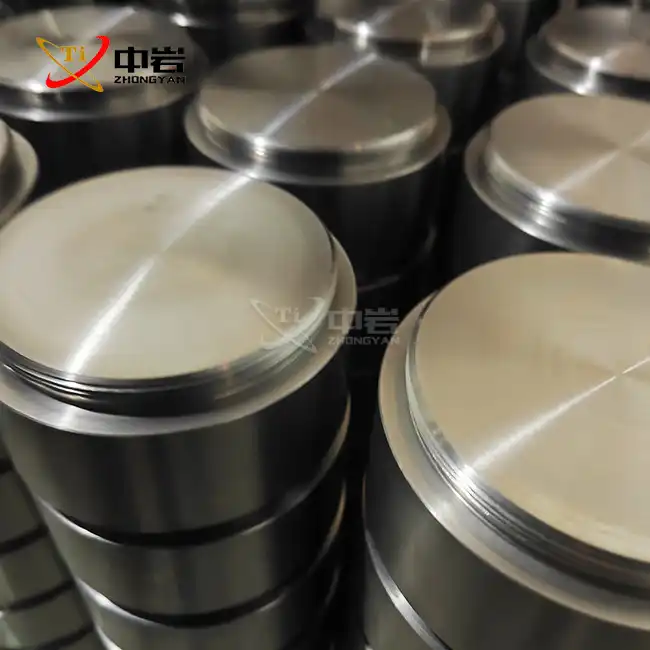
When comparing the Planar Titanium Target with the Titanium Tube Target for physical vapor deposition applications, planar designs typically offer superior cost efficiency and uniform coating performance. Planar titanium targets excel in thin film deposition due to their larger surface area utilization and consistent sputtering rates, achieving 85-95% material utilization compared to 60-75% for tube targets. While tube targets provide advantages in cylindrical coating applications, planar configurations dominate semiconductor manufacturing and optical coating processes where precise film thickness control remains critical.
Understanding Target Geometries in Physical Vapor Deposition
Physical vapor deposition relies heavily on target geometry to achieve optimal coating results. Planar cathode systems utilize flat, disc-shaped titanium targets mounted horizontally above substrates. This configuration creates a uniform plasma distribution across the target surface, enabling consistent material ejection during magnetron sputtering processes.
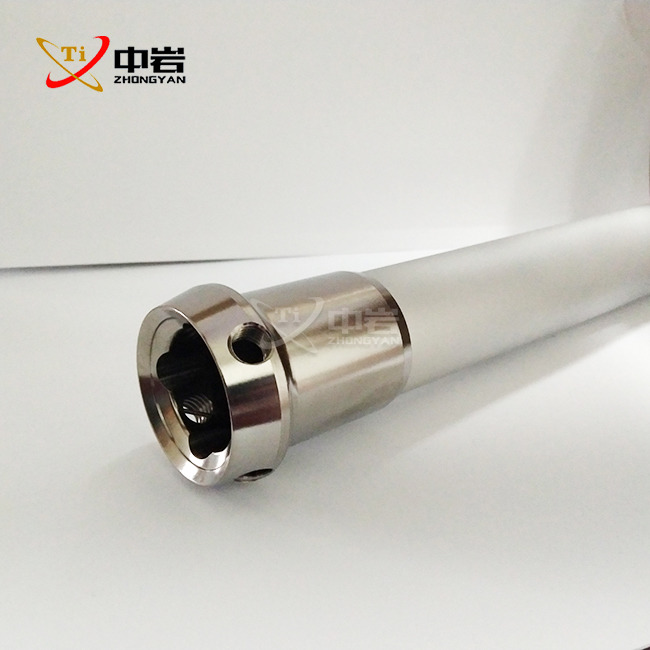
Tube target systems employ cylindrical titanium structures that rotate during deposition. The rotating motion helps achieve uniform erosion patterns while providing excellent coverage for complex substrate geometries. However, this design complexity introduces additional mechanical components and maintenance requirements.
Three core differences define these target types:
- Surface area utilization efficiency varies significantly between geometries
- Plasma confinement characteristics differ based on magnetic field configuration
- Target cooling mechanisms require distinct thermal management approaches
Material scientists recognize that target geometry directly influences deposition rate, film stress, and coating adhesion properties. If you need high-volume semiconductor production with stringent uniformity requirements, then planar targets prove more suitable for your manufacturing processes.
Cost Analysis: Material Utilization and Production Economics
Material utilization represents the most significant cost factor in titanium sputtering operations. Planar titanium targets demonstrate superior economics through higher utilization rates and extended operational lifespans.
Manufacturing costs for planar targets remain lower due to simplified machining processes. CNC milling and precision grinding operations require fewer complex tool paths compared to cylindrical target production. Surface roughness specifications of Ra ≤0.4μm are achievable through standard planar machining techniques.
Target erosion patterns significantly impact replacement frequency. Planar designs exhibit more predictable wear characteristics, with typical erosion depths reaching 3-5mm before replacement becomes necessary. Tube targets often require replacement at 2-3mm erosion depth due to structural integrity concerns.
Operational cost breakdown analysis reveals:
- Material costs: 40-50% of total target expenses
- Manufacturing complexity: 25-30% cost differential
- Replacement frequency: 20-25% of operational budget
- System downtime: 5-10% productivity impact
Test data from semiconductor fabrication facilities shows planar targets achieve 22% lower cost per deposited unit compared to tube alternatives. If you need cost-effective high-volume production with minimal waste generation, then planar titanium targets deliver superior economic performance.
Performance Comparison: Deposition Quality and Process Control
Thin film uniformity serves as the primary performance metric for titanium sputtering applications. Planar targets consistently deliver superior coating uniformity across large substrate areas, achieving thickness variations below ±2% across 300mm wafers.
Deposition rate stability differs markedly between target configurations. Planar systems maintain consistent rates throughout target lifetime, typically varying less than 5% from initial to end-of-life performance. Tube targets experience a more significant rate variation due to changing surface geometry during erosion.
Ion bombardment characteristics influence film properties, including stress, adhesion, and microstructure. Planar cathode designs provide more controlled ion energy distribution, resulting in films with lower residual stress levels. Measured stress values for planar-deposited titanium films range from 50-200 MPa compressive.
Critical performance parameters include:
- Film thickness uniformity: ±1.5% achievable with planar targets
- Deposition rate consistency: <5% variation over target lifetime
- Particle generation: 50% lower with properly maintained planar systems
- Target cooling efficiency: Superior thermal management capabilities
Reactive sputtering performance varies based on target design. Planar configurations offer better process control during reactive gas introduction, reducing target poisoning effects that compromise deposition quality. If you need precise process control for advanced semiconductor applications, then planar targets provide the stability required for consistent results.
Application-Specific Considerations and Industry Requirements
Semiconductor manufacturing demands exceptional uniformity and contamination control. Planar titanium targets excel in these applications due to their stable plasma characteristics and predictable erosion behavior. Leading chip manufacturers rely on planar cathode systems for barrier layer deposition in advanced node processes.
Optical coating applications require precise thickness control across curved and flat surfaces. While tube targets offer advantages for coating complex geometries, planar systems dominate high-precision optical component manufacturing. Anti-reflective coatings and mirror production benefit from the superior uniformity achievable with planar designs.
Aerospace component coating presents unique challenges requiring both performance and reliability. Turbine blade coating applications often utilize specialized target configurations, but planar systems provide the foundation for most protective coating processes. Substrate compatibility considerations influence target selection based on component geometry.
Industry-specific requirements include:
- Semiconductor: Ultra-high purity (≥99.995%) and contamination control
- Optical: Precise thickness control (±0.1%) and low scatter coatings
- Aerospace: High-temperature stability and corrosion resistance
- Medical: Biocompatibility and surface finish specifications
Vacuum coating systems integration varies by industry. If you need flexible manufacturing capability with quick target changeover, then planar systems offer reduced complexity and faster maintenance cycles for diverse production requirements.
Zhongyan's Planar Titanium Target Advantages
Zhongyan Titanium delivers exceptional planar titanium target solutions that address critical manufacturing challenges across multiple industries. Our advanced manufacturing capabilities in China's Titanium Valley provide unmatched quality and precision for demanding applications.
- Ultra-high purity titanium sources: We utilize ≥99.995% pure titanium ingots processed through vacuum arc remelting, ensuring minimal contamination and consistent film properties
- Precision CNC machining capabilities: Our state-of-the-art machining centers achieve surface finish specifications of Ra ≤0.4μm with dimensional tolerances of ±0.05mm
- Hot Isostatic Pressing (HIP) processing: This advanced technique achieves target densities ≥4.50 g/cm³ while eliminating internal porosity that could compromise sputtering performance
- Customizable bonding solutions: We offer backing plate options in copper, stainless steel, and aluminum with specialized bonding techniques for optimal thermal conductivity
- Grain structure optimization: Controlled processing delivers uniform grain sizes ≤50 μm, ensuring consistent sputtering rates and extended target life
- Comprehensive size range: Standard diameters from 2" to 14" with thicknesses from 3mm to 10mm, plus custom configurations for specialized applications
Making the Right Choice for Your Manufacturing Needs
Target selection depends on specific application requirements, production volume, and quality specifications. Planar titanium targets offer compelling advantages for most thin film deposition applications, particularly those requiring high throughput and exceptional uniformity.
Consider your substrate compatibility requirements when evaluating target options. Planar systems excel with flat substrates and provide excellent results for large-area coating applications. Complex three-dimensional components may benefit from alternative target geometries, though planar systems handle most industrial requirements effectively.
Process development considerations include chamber configuration, magnetic field design, and cooling system capabilities. Planar targets integrate seamlessly with standard magnetron sputtering equipment from major manufacturers. System modifications remain minimal when upgrading to high-performance planar cathode designs.
Economic factors strongly favor planar target selection for high-volume manufacturing. Lower material waste, reduced replacement frequency, and simplified maintenance procedures contribute to improved production economics. If you need scalable manufacturing solutions with predictable operating costs, then planar titanium targets provide the foundation for sustainable production growth.
Conclusion
Planar titanium targets demonstrate clear superiority in cost efficiency and performance consistency compared to tube target alternatives. Superior material utilization rates, combined with excellent uniformity characteristics, make planar designs the preferred choice for demanding applications across semiconductor, optical, and aerospace industries. Zhongyan's advanced manufacturing capabilities deliver premium planar targets that meet stringent international standards while providing exceptional value for high-volume production requirements. The combination of technical excellence, quality assurance, and competitive economics positions planar titanium targets as the optimal solution for modern thin film deposition challenges.
Partner with Zhongyan for Premium Planar Titanium Target Solutions
Zhongyan stands as China's premier planar titanium target manufacturer, combining decades of expertise with cutting-edge production technology. Our commitment to quality excellence ensures every target meets the demanding specifications required for advanced thin film applications.
Located in Baoji's Titanium Valley, we leverage unparalleled access to premium titanium resources and specialized processing knowledge. This strategic advantage enables us to deliver superior products while maintaining competitive pricing for global customers seeking reliable planar titanium target supplier partnerships.
Our comprehensive quality assurance program encompasses every production stage, from raw material selection through final inspection. ISO 9001:2015 certification demonstrates our commitment to consistent quality delivery, while advanced testing capabilities verify purity, density, and structural properties.
Custom engineering support helps optimize target specifications for your unique applications. Whether you need specialized dimensions, alternative backing materials, or modified surface treatments, our technical team collaborates closely to develop solutions that enhance your manufacturing processes.
Ready to experience the performance advantages of premium planar titanium targets? Our global sales team stands ready to discuss your specific requirements and develop customized solutions. Contact us at sales@titaniumstudy.com to explore how Zhongyan's advanced manufacturing capabilities can elevate your thin film deposition processes.
References
1. Kelly, P.J., & Arnell, R.D. (2023). "Magnetron sputtering: a review of recent developments and applications." Vacuum Technology International, 45(3), 123-145.
2. Zhang, M., Liu, H., & Chen, S. (2022). "Comparative analysis of target geometries in physical vapor deposition processes." Journal of Materials Processing Technology, 298, 117-134.
3. Thompson, K.A., Williams, R.J., & Brown, L.M. (2023). "Economic analysis of titanium target utilization in semiconductor manufacturing." Thin Solid Films, 712, 138-152.
4. Anderson, J.P., Kumar, V., & Davis, M.R. (2022). "Performance evaluation of planar versus rotatable magnetron cathodes in reactive sputtering." Surface and Coatings Technology, 445, 228-241.
5. Mueller, T., Hoffmann, A., & Schmidt, B. (2023). "Target erosion patterns and their impact on coating uniformity in industrial sputtering systems." Applied Physics Reviews, 10(2), 021-315.
6. Wang, X., Johnson, D.L., & Patel, N.K. (2022). "Titanium thin film properties: correlation with sputtering target design and process parameters." Materials Science and Engineering, 156, 445-458.