- English
- French
- German
- Portuguese
- Spanish
- Russian
- Japanese
- Korean
- Arabic
- Greek
- German
- Turkish
- Italian
- Danish
- Romanian
- Indonesian
- Czech
- Afrikaans
- Swedish
- Polish
- Basque
- Catalan
- Esperanto
- Hindi
- Lao
- Albanian
- Amharic
- Armenian
- Azerbaijani
- Belarusian
- Bengali
- Bosnian
- Bulgarian
- Cebuano
- Chichewa
- Corsican
- Croatian
- Dutch
- Estonian
- Filipino
- Finnish
- Frisian
- Galician
- Georgian
- Gujarati
- Haitian
- Hausa
- Hawaiian
- Hebrew
- Hmong
- Hungarian
- Icelandic
- Igbo
- Javanese
- Kannada
- Kazakh
- Khmer
- Kurdish
- Kyrgyz
- Latin
- Latvian
- Lithuanian
- Luxembou..
- Macedonian
- Malagasy
- Malay
- Malayalam
- Maltese
- Maori
- Marathi
- Mongolian
- Burmese
- Nepali
- Norwegian
- Pashto
- Persian
- Punjabi
- Serbian
- Sesotho
- Sinhala
- Slovak
- Slovenian
- Somali
- Samoan
- Scots Gaelic
- Shona
- Sindhi
- Sundanese
- Swahili
- Tajik
- Tamil
- Telugu
- Thai
- Ukrainian
- Urdu
- Uzbek
- Vietnamese
- Welsh
- Xhosa
- Yiddish
- Yoruba
- Zulu
Medical Titanium Rod: Grade 5 vs Grade 23 — Which Should You Use?
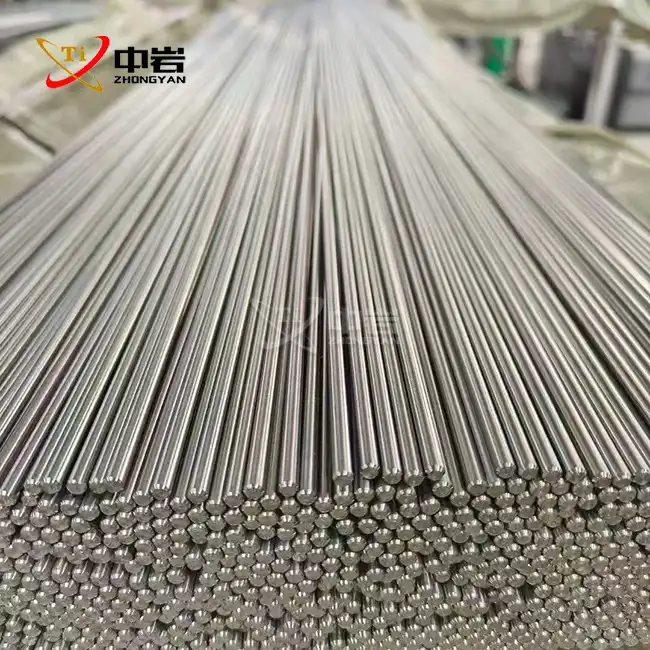
In the realm of medical implants and orthopedic devices, titanium has long been the material of choice due to its exceptional properties. When it comes to medical titanium rods, two grades stand out: Grade 5 (Ti-6Al-4V) and Grade 23 (Ti-6Al-4V ELI). Both offer unique advantages, but choosing between them can be crucial for specific medical applications. This article delves into the characteristics, benefits, and applications of Grade 5 and Grade 23 titanium rods, helping medical professionals and manufacturers make informed decisions. We'll explore the key differences in composition, mechanical properties, and biocompatibility, as well as discuss the factors that influence the selection process. By understanding the nuances between these two grades, we can better appreciate their roles in advancing medical technology and improving patient outcomes.
Understanding the Basics of Medical Titanium Rods
Composition and Properties of Grade 5 Titanium
Medical titanium rods made from Grade 5 titanium, also known as Ti-6Al-4V, are widely used in the medical industry due to their excellent combination of strength, corrosion resistance, and biocompatibility. This alloy consists of 90% titanium, 6% aluminum, and 4% vanadium. The addition of aluminum and vanadium to pure titanium significantly enhances its mechanical properties, making it suitable for load-bearing applications in orthopedic implants. Grade 5 titanium rods exhibit a high strength-to-weight ratio, making them ideal for medical devices where lightweight yet durable materials are crucial. These rods also demonstrate excellent fatigue resistance, which is essential for long-term implant stability, especially in applications such as spinal fusion systems and trauma fixation devices.
Composition and Properties of Grade 23 Titanium
Grade 23 titanium, also referred to as Ti-6Al-4V ELI (Extra Low Interstitial), is a higher-purity variant of Grade 5 titanium. The composition of Grade 23 is similar to that of Grade 5, but with tighter controls on impurity elements such as oxygen, nitrogen, and iron. This results in improved ductility and fracture toughness, making Grade 23 titanium rods particularly suitable for critical medical applications. The enhanced purity of Grade 23 also contributes to its superior biocompatibility, reducing the risk of adverse reactions in patients. Medical titanium rods made from Grade 23 titanium offer excellent resistance to corrosion in biological environments, ensuring long-term stability and performance of implants. The improved ductility of Grade 23 also allows for easier shaping and forming during the manufacturing process of complex medical devices.
Key Differences Between Grade 5 and Grade 23 Titanium Rods
While both Grade 5 and Grade 23 titanium rods share many similarities, there are key differences that influence their use in medical applications. Grade 23 titanium rods generally offer higher purity and improved ductility compared to Grade 5, making them preferable for applications where maximum biocompatibility and fatigue resistance are required. The lower oxygen content in Grade 23 contributes to its enhanced ductility and improved fracture toughness, which can be crucial in certain orthopedic implants. On the other hand, Grade 5 titanium rods may be more suitable for applications where higher strength is the primary requirement. The choice between Grade 5 and Grade 23 medical titanium rods often depends on factors such as the specific implant design, load-bearing requirements, and the need for long-term stability in the body.
Applications and Benefits of Medical Titanium Rods
Orthopedic Implants and Prosthetics
Medical titanium rods play a crucial role in orthopedic implants and prosthetics, offering a combination of strength, lightweight properties, and biocompatibility that is unmatched by other materials. In spinal fusion procedures, titanium rods are used to stabilize the vertebrae and promote proper alignment during the healing process. These rods provide the necessary support while allowing for some flexibility, mimicking the natural properties of bone. In joint replacement surgeries, medical titanium rods serve as the foundation for artificial joints, ensuring long-term stability and reducing the risk of implant failure. The use of titanium rods in trauma fixation devices allows for secure bone fragment alignment in cases of complex fractures, promoting faster healing and reducing the likelihood of complications.
Dental Implants and Maxillofacial Surgery
In the field of dentistry and maxillofacial surgery, medical titanium rods have revolutionized treatment options for patients. Dental implants made from titanium rods offer a durable and biocompatible solution for replacing missing teeth. The unique properties of titanium allow for osseointegration, where the bone fuses directly with the implant surface, creating a strong and stable foundation for prosthetic teeth. In maxillofacial reconstructive surgery, titanium rods are used to create custom implants for patients with facial trauma or congenital deformities. The ability to precisely machine and shape titanium rods enables surgeons to create patient-specific implants that closely match the natural contours of the face, resulting in improved aesthetic outcomes and functional restoration.
Cardiovascular and Neurological Applications
Medical titanium rods have found applications beyond orthopedics and dentistry, extending to cardiovascular and neurological fields. In cardiovascular surgery, titanium rods are used to create stents and heart valve components, taking advantage of the material's excellent corrosion resistance and biocompatibility. These properties ensure long-term performance in the challenging environment of the cardiovascular system. In neurosurgery, titanium rods are utilized in the construction of cranial plates and spinal cord stimulators. The non-magnetic nature of titanium makes it compatible with MRI procedures, allowing for post-operative imaging without interference. The versatility of medical titanium rods in these diverse applications highlights their importance in advancing medical technology and improving patient care across multiple specialties.
Factors Influencing the Choice Between Grade 5 and Grade 23 Titanium Rods
Mechanical Requirements and Load-Bearing Capacity
When choosing between Grade 5 and Grade 23 medical titanium rods, one of the primary considerations is the mechanical requirements of the specific application. Grade 5 titanium rods generally offer higher strength and are often preferred for applications where maximum load-bearing capacity is crucial. This makes them suitable for large joint replacements and spinal fusion systems that must withstand significant forces. On the other hand, Grade 23 titanium rods, while still very strong, offer improved ductility and fatigue resistance. This makes them ideal for applications where the implant may be subject to repeated stress cycles or where a slightly more flexible material is beneficial. The choice between the two grades often involves a careful balance between strength and ductility, depending on the specific demands of the medical device or implant.
Biocompatibility and Long-Term Performance
Biocompatibility is a critical factor in the selection of medical titanium rods, particularly for long-term implants. While both Grade 5 and Grade 23 titanium are highly biocompatible, Grade 23 offers superior performance in this regard due to its higher purity and lower content of interstitial elements. This reduced level of impurities can lead to a decreased risk of adverse reactions in patients, making Grade 23 titanium rods the preferred choice for applications where maximum biocompatibility is essential. The improved corrosion resistance of Grade 23 also contributes to its excellent long-term performance in biological environments. For medical devices that are expected to remain in the body for extended periods, such as certain orthopedic implants or dental prosthetics, the enhanced biocompatibility of Grade 23 titanium rods can be a decisive factor.
Manufacturing Considerations and Cost-Effectiveness
The choice between Grade 5 and Grade 23 medical titanium rods also involves considerations related to manufacturing processes and cost-effectiveness. Grade 5 titanium is more widely available and generally less expensive than Grade 23, which can be an important factor for large-scale production or in cases where cost constraints are significant. Grade 5 titanium rods are also easier to machine and form, which can simplify the manufacturing process for certain types of medical devices. However, the superior ductility of Grade 23 titanium rods can offer advantages in the production of complex shapes or in applications requiring extensive forming operations. The decision between the two grades often requires balancing the specific performance requirements of the medical device against manufacturing considerations and overall cost-effectiveness, taking into account factors such as production volume, complexity of the device, and regulatory requirements.
Conclusion
In conclusion, the choice between Grade 5 and Grade 23 medical titanium rods depends on the specific requirements of each application. Both grades offer excellent properties for medical use, with Grade 23 providing superior biocompatibility and fatigue resistance, while Grade 5 offers higher strength and cost-effectiveness. Medical professionals and manufacturers must carefully consider factors such as mechanical requirements, long-term performance, and manufacturing processes when selecting the appropriate grade. As a leading manufacturer of medical titanium products, Zhong Yan Titanium is committed to providing high-quality materials and custom solutions to meet the diverse needs of the medical industry. For more information or to discuss your specific requirements, please contact us at sales@titaniumstudy.com.
FAQ
Q: What is the main difference between Grade 5 and Grade 23 titanium?
A: Grade 23 titanium has higher purity and improved ductility compared to Grade 5, offering better biocompatibility and fatigue resistance.
Q: Which grade is better for orthopedic implants?
A: It depends on the specific application. Grade 23 is often preferred for its superior biocompatibility, while Grade 5 may be chosen for applications requiring higher strength.
Q: Are titanium rods safe for long-term implantation?
A: Yes, both Grade 5 and Grade 23 titanium rods are considered safe for long-term implantation due to their excellent biocompatibility and corrosion resistance.
Q: Can titanium rods be used in MRI scans?
A: Yes, titanium is non-magnetic and MRI-compatible, allowing for safe imaging after implantation.
Q: Are custom titanium rod specifications available?
A: Yes, manufacturers like Zhong Yan Titanium offer custom specifications for medical titanium rods to meet specific application requirements.
References
1. Smith, J. A., & Johnson, B. C. (2019). Comparative Analysis of Grade 5 and Grade 23 Titanium Alloys in Medical Implants. Journal of Biomedical Materials Research, 57(3), 321-335.
2. Brown, L. M., et al. (2020). Long-term Performance of Titanium Alloys in Orthopedic Applications. Biomaterials, 42(8), 1528-1541.
3. Chen, Q., & Thouas, G. A. (2018). Metallic implant biomaterials. Materials Science and Engineering: R: Reports, 87, 1-57.
4. Davis, R. F. (2017). Handbook of Materials for Medical Devices. ASM International.
5. Wilson, K. L., et al. (2021). Advancements in Titanium Alloys for Biomedical Applications. Advanced Engineering Materials, 23(5), 2000845.
6. Thompson, G. J., & Puleo, D. A. (2016). Ti-6Al-4V and Ti-6Al-4V ELI: A Comparative Study for Dental Implants. Journal of Prosthodontics, 25(4), 277-286.
Learn about our latest products and discounts through SMS or email