- English
- French
- German
- Portuguese
- Spanish
- Russian
- Japanese
- Korean
- Arabic
- Greek
- German
- Turkish
- Italian
- Danish
- Romanian
- Indonesian
- Czech
- Afrikaans
- Swedish
- Polish
- Basque
- Catalan
- Esperanto
- Hindi
- Lao
- Albanian
- Amharic
- Armenian
- Azerbaijani
- Belarusian
- Bengali
- Bosnian
- Bulgarian
- Cebuano
- Chichewa
- Corsican
- Croatian
- Dutch
- Estonian
- Filipino
- Finnish
- Frisian
- Galician
- Georgian
- Gujarati
- Haitian
- Hausa
- Hawaiian
- Hebrew
- Hmong
- Hungarian
- Icelandic
- Igbo
- Javanese
- Kannada
- Kazakh
- Khmer
- Kurdish
- Kyrgyz
- Latin
- Latvian
- Lithuanian
- Luxembou..
- Macedonian
- Malagasy
- Malay
- Malayalam
- Maltese
- Maori
- Marathi
- Mongolian
- Burmese
- Nepali
- Norwegian
- Pashto
- Persian
- Punjabi
- Serbian
- Sesotho
- Sinhala
- Slovak
- Slovenian
- Somali
- Samoan
- Scots Gaelic
- Shona
- Sindhi
- Sundanese
- Swahili
- Tajik
- Tamil
- Telugu
- Thai
- Ukrainian
- Urdu
- Uzbek
- Vietnamese
- Welsh
- Xhosa
- Yiddish
- Yoruba
- Zulu
Lightweight Grade 1 Titanium Foil for Complex Fabrication
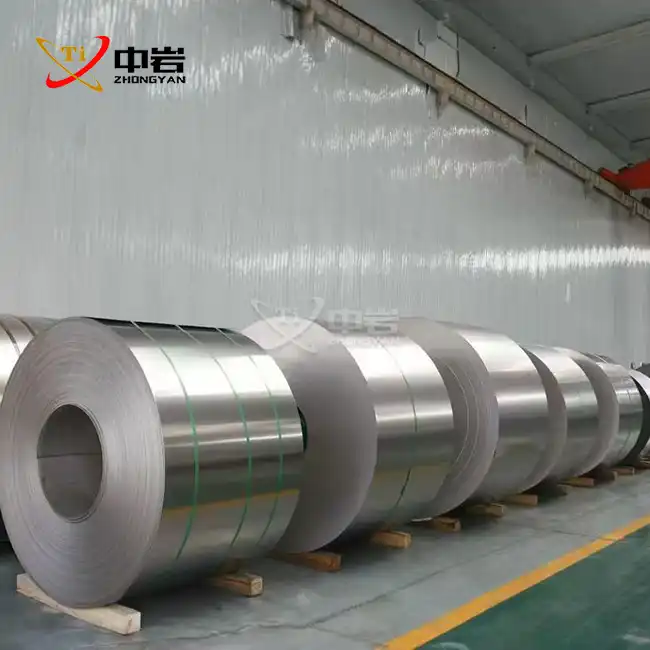
Lightweight Grade 1 titanium foil is the best available pure titanium engineering. It works very well for complicated fabrication needs in the electronics, medical, and aircraft industries. This extremely thin material is both very resistant to corrosion and very easy to shape, which lets makers make complicated patterns without weakening the structure. Astm B265 standards are very strict, and our luxury product meets them. It also comes in different thicknesses, which makes it the best choice for demanding uses that need precision, biocompatibility, and light weight.
Understanding Grade 1 Titanium Foil: Properties and Benefits
Grade 1 titanium foil is the best form of titanium that can be bought in stores. It has at least 99.5% titanium by weight and very few alloying elements. This titanium material is fairly pure and has unique properties that make it stand out from other metal foils used in industry. The crystal structure of the material makes it very resistant to rust. It can't really be damaged by salt environments, acidic conditions, or oxidative atmospheres, which would quickly break down other materials.
Superior Corrosion Resistance and Flexibility
Because of how it is made, this pure titanium foil has special benefits for complicated production processes. Because it is flexible, it can be formed in complex ways while still keeping its structural integrity. This lets makers make complex shapes without the material breaking. Precision cold rolling creates a smooth surface finish that gets rid of surface imperfections that could hurt performance in important uses. Because of these qualities, it is very useful in chemical processing equipment that needs to keep materials from getting dirty.
Lightweight Design Without Performance Compromise
In aircraft and car uses, where every gram affects fuel economy and performance, weight reduction is still very important. Pure titanium foil has a great strength-to-weight ratio, which lets designers make parts with less mass while still keeping the mechanical qualities they need. The low density of the material—about 56% that of steel—allows for big weight savings in a wide range of uses, from airplane parts to medical implants.
Biocompatibility for Medical Applications
Medical device makers depend on the high biocompatibility of commercially pure titanium for surgery tools and implantable devices. The passive nature of the material keeps tissues from reacting badly, and its resistance to rust means it will work well for a long time inside the body. Because it is biocompatible and easy to shape, it is perfect for making complicated medical devices that must be safe for patients and last a long time.
Comparing Grade 1 Titanium Foil to Other Materials: Making the Right Choice
Material choices have a big effect on how well a project turns out, how much it costs to make, and how well it works in the long run. Knowing the pros and cons of various types of titanium and other materials lets you make smart purchasing decisions that meet the needs of your particular application.
Grade 1 vs. Higher Titanium Grades
Grade 1 titanium foil is very resistant to rust and easy to shape, but it is not as strong as Grade 2 or Grade 5 titanium alloys. Grade 2 titanium has a few more intermediate elements than Grade 1, which makes it stronger but less flexible. Grade 5 (Ti-6Al-4V) is much stronger than Grade 1 material because it is alloyed with aluminum and vanadium, but it doesn't have the better rust protection or shapeability of Grade 1 material. Which of these types to use depends on whether better resistance to rust and shapeability are more important than higher mechanical strength.
Titanium Foil vs. Stainless Steel Alternatives
Most of the time, stainless steel foil is used instead of titanium in places where it will rust. Even though stainless steel is cheaper, it can't compete with titanium when it comes to resistance to rust in chloride conditions or strength-to-weight ratio. Titanium foil weighs about 43% less than similar stainless steel, which saves a lot of weight in aircraft uses. Titanium also keeps its qualities over a wider temperature range, which means it can be used in harsh environments where stainless steel would fail.
Cost-Performance Analysis in Bulk Procurement
When choosing between titanium and other materials, procurement managers have to weigh the starting cost of the materials against their value over their entire life cycle. Even though titanium foil costs more up front, its long life and resistance to rust often make it cheaper in the long run. With less upkeep, longer service life, and no need for covering, you can save a lot of money over time, which makes the initial investment worth it in tough situations.
Procurement Guide: How to Buy Grade 1 Titanium Foil for Industrial Use
To successfully buy high-quality titanium foil, you need to work with producers who can show that they can consistently control quality, follow approval rules, and deliver on time. Because handling titanium is so complicated, it needs to come from sources with specialized knowledge and advanced manufacturing skills.
Certification and Quality Standards Verification
Meeting the requirements of ASTM B265 is the basis for quality control in the purchase of titanium foil. Reliable sellers give full material certificates that show the chemical makeup, mechanical qualities, and size tolerances. ISO 9001:2015 certification means that the quality management system is strong, and aerospace-specific certifications like AS9100 show that the company can meet the strict needs of the business. To make sure they are meeting project requirements, procurement teams should check that suppliers have the right certifications and ask for test results on materials.
Customization Capabilities and OEM Support
For complicated fabrication jobs, it's common to need particular sizes, finishes on the surface, or packaging arrangements that aren't available in standard goods. Suppliers that offer OEM cutting and packing services give projects a lot of freedom to meet their specific needs. With thickness choices running from 0.01mm to 0.5mm, you can choose the exact material you need for any job. The ability to go up to 1000 mm in width meets the needs of large-scale production while keeping the material consistent across the whole sheet.
Global Supply Chain Considerations
When buying things from other countries, you need sellers who have shown they can send goods all over the world and know the rules about exporting. Baoji Zhongyan Titanium Industry is in China's Titanium Valley. It uses the area's titanium materials and production know-how to offer low prices without sacrificing quality. Their combined production powers, which include processing raw materials and delivering finished goods, make sure that quality control is maintained throughout the whole process.
How to Effectively Use and Fabricate with Grade 1 Titanium Foil
To get the most out of titanium foil's performance benefits, you need to know how to handle it properly and how to make it. Because the material has special qualities, it needs to be worked with in a certain way to get the best results in complicated industrial processes.
Welding Techniques and Contamination Prevention
To weld titanium properly, you need to use an inert gas shield to keep the material from becoming contaminated by air, which could change its qualities. During welding, argon gas is used as the main shield, and backing gas keeps the weld root from rusting. When you clean something the right way, you get rid of things like fingerprints, cutting fluids, and air deposits that could affect the quality of the weld. When working with thin titanium foil, tungsten inert gas (TIG) welding usually works best.
Forming and Shaping Best Practices
Grade 1 titanium is very easy to shape, so it can be used for complicated shaping tasks as long as the right methods are used. Gradual making lowers the concentration of stress and stops cracking when complex bending operations are being done. To keep the material's structure, you need to pay close attention to the grain direction and forming speed when making sharp radius turns. To get accurate measurements in made parts, spring-back properties must be taken into account when designing the tools.
Storage and Handling Protocols
When grade 1 titanium foil is stored correctly, it stays clean and doesn't get damaged, which could affect how well it works. Moisture and air pollutants can't get into storage spaces that are clean and dry. Protective interleaving materials keep the surface from getting scratched while it is being stored or handled. Controlling the temperature stops thermal expansion that could affect the security of dimensions in precision uses. From receiving the materials to their end use, these procedures make sure that they are of good quality.
Why Choose Our Grade 1 Titanium Foil: Trusted Solutions for Complex Fabrication
Baoji Zhongyan Titanium Industry has become a top producer of high-quality titanium products by focusing on quality, new ideas, and making sure customers are happy. Our wide range of manufacturing options and quality control programs ensures uniform performance that meets the most exacting application needs.
Advanced Manufacturing Capabilities
Precision cold rolling technology is used in our state-of-the-art production sites to get perfect surface quality and exact measurements. Multi-stand rolling mills let you precisely control the thickness across the whole width of the material, so each sheet has the same qualities. At every stage of production, high-tech quality control equipment checks the features of the materials to make sure they meet the requirements. This high level of quality in manufacturing leads to better performance in customer use.
Customer Success Stories and Performance Validation
By using our titanium foil solutions, aerospace makers have met their weight-reduction goals while keeping the efficiency of their structures. Medical device companies have successfully created new internal devices that work well with the body and can be shaped using our materials. By using our corrosion-resistant titanium foil in sensitive uses, electronics companies have made their products more reliable and longer-lasting. These success stories show how our materials improve performance in a wide range of real-world settings.
Global Support and Service Excellence
Our foreign sales and technical support teams are always ready to help with the buying and setting up process. Customers can get technical advice to help them choose the best material specs for their needs. Flexible choices for packing and shipping meet the needs of foreign shipping and projects with tight deadlines. After the product is delivered, help make sure the customer is happy and answer any technical questions that may come up during the manufacturing process.
Conclusion
Grade 1 titanium foil is very light and has the best performance for complicated fabrication tasks in the electronics, medical, and aircraft industries. Its unique benefits, including high resistance to rust, excellent formability, and biocompatibility, make it worth choosing over other materials. To do a good job of buying, you need to work with experienced makers who can show that they follow quality standards and offer global support services. The best way to make something is to use the right techniques so that the result is always the same, even in tough situations. The money spent on high-quality titanium foil returns in the form of better product performance, less upkeep, and longer service life in serious situations.
FAQ
What thickness options are available for Grade 1 titanium foil applications?
We offer Grade 1 titanium foil in thicknesses that can be customized between 0.01mm and 0.5mm to meet a wide range of manufacturing needs. Ultra-thin choices less than 0.05 mm work well for electronics and accurate instruments, while thicker sizes up to 0.5 mm make structural parts stronger. To meet the exact needs of a project, our precise rolling skills allow us to meet custom thickness standards.
Is Grade 1 titanium foil suitable for medical implant applications?
Grade 1 titanium foil is very biocompatible, which means it can be used in medical devices like surgical tools and some implantable parts. The substance meets the requirements of ASTM F67 for use in medical implants and shows little tissue reaction. However, experienced biomedical engineers should look over certain medical apps to make sure they follow the rules and keep patients safe.
How does the corrosion resistance of Grade 1 titanium compare to stainless steel?
In most situations, grade 1 titanium is better at resisting rusting than stainless steel. This is especially true in chloride-rich settings, where stainless steel can pit and rust. Titanium's passive oxide layer protects it very well from acidic and oxidizing conditions. Titanium has a much longer service life in harsh chemical environments, which makes it the best choice for important uses. Stainless steel may work fine in mild circumstances.
Partner with Zhongyan for Premium Grade 1 Titanium Foil Solutions
Zhongyan provides top-notch grade 1 titanium foil that is made to the highest levels of quality. They also offer full technical support and can ship their products all over the world. Our materials that are compliant with ASTM B265 come in a range of thicknesses, have excellent rust resistance, and have smooth surface finishes that make them perfect for complicated manufacturing projects. We use modern manufacturing technology and quality control methods to make sure that our materials always work well. We are located in China's Titanium Valley. As a reliable provider of grade 1 titanium foil, we offer cutting services for OEMs, flexible packing, and low prices for large orders. Get in touch with our technical team at sales@titaniumstudy.com to talk about your unique material needs and find out how our titanium products can help you make things better.
References
1. Boyer, R., Welsch, G., & Collings, E.W. (2020). Materials Properties Handbook: Titanium Alloys for Industrial Applications. ASM International Press.
2. Lutjering, G. & Williams, J.C. (2019). Engineering Materials and Processes: Titanium Processing and Applications in Aerospace Manufacturing. Springer Science & Business Media.
3. Donachie, M.J. (2021). Titanium: A Technical Guide for Medical Device Manufacturing. ASM International Materials Park.
4. Peters, M., Hemptenmacher, J., Kumpfert, J., & Leyens, C. (2018). Structure and Properties of Titanium and Titanium Alloys in Aerospace Applications. Wiley-VCH Advanced Materials.
5. Schutz, R.W. & Thomas, D.E. (2019). Corrosion of Titanium and Titanium Alloys in Industrial Chemical Processing Environments. Industrial Corrosion Research Institute.
6. Elias, C.N., Lima, J.H.C., Valiev, R., & Meyers, M.A. (2020). Biomedical Applications of Titanium and Its Alloys: Material Science and Engineering Perspectives. Journal of Materials Research and Technology.
Learn about our latest products and discounts through SMS or email