- English
- French
- German
- Portuguese
- Spanish
- Russian
- Japanese
- Korean
- Arabic
- Greek
- German
- Turkish
- Italian
- Danish
- Romanian
- Indonesian
- Czech
- Afrikaans
- Swedish
- Polish
- Basque
- Catalan
- Esperanto
- Hindi
- Lao
- Albanian
- Amharic
- Armenian
- Azerbaijani
- Belarusian
- Bengali
- Bosnian
- Bulgarian
- Cebuano
- Chichewa
- Corsican
- Croatian
- Dutch
- Estonian
- Filipino
- Finnish
- Frisian
- Galician
- Georgian
- Gujarati
- Haitian
- Hausa
- Hawaiian
- Hebrew
- Hmong
- Hungarian
- Icelandic
- Igbo
- Javanese
- Kannada
- Kazakh
- Khmer
- Kurdish
- Kyrgyz
- Latin
- Latvian
- Lithuanian
- Luxembou..
- Macedonian
- Malagasy
- Malay
- Malayalam
- Maltese
- Maori
- Marathi
- Mongolian
- Burmese
- Nepali
- Norwegian
- Pashto
- Persian
- Punjabi
- Serbian
- Sesotho
- Sinhala
- Slovak
- Slovenian
- Somali
- Samoan
- Scots Gaelic
- Shona
- Sindhi
- Sundanese
- Swahili
- Tajik
- Tamil
- Telugu
- Thai
- Ukrainian
- Urdu
- Uzbek
- Vietnamese
- Welsh
- Xhosa
- Yiddish
- Yoruba
- Zulu
Industrial Titanium Wire Spool: Enhanced Temper and Mechanical Properties
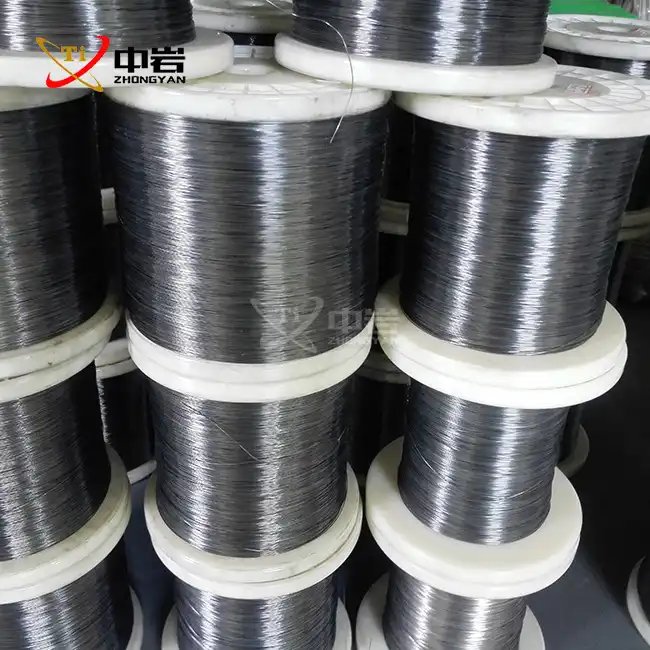
Industrial titanium wire spools are the best building materials because they have great mechanical qualities that make them perfect for the toughest industrial uses. These precision-wound spools have better mechanical strength and better tempering properties, which make them essential in the marine, chemical processing, aircraft, and medical fields. Industrial titanium wire spools are made with a higher heat that makes them very flexible while still keeping their shape in harsh circumstances. Modern production techniques make wire with reliably better mechanical qualities, such as tensile strengths above 345 MPa and yield strengths above 275 MPa. This makes these materials the best choice for demanding uses that need to be reliable and work well.
Understanding Industrial Titanium Wire Spools: Properties and Specifications
Precision-engineered materials like industrial titanium wire spools have great strength-to-weight ratios and great resistance to rust. The titanium wire on these spools is carefully wound and made to exact specs, so it works the same way in a wide range of industrial settings. The width of the wire is usually between 0.5mm and 5mm, which makes it useful for a wide range of industrial processes.
Temper Characteristics and Their Impact on Performance
The grade of titanium wire has a direct effect on how it works mechanically and what it can be used for. When titanium wire is annealed, it becomes more flexible, which makes it perfect for shaping and bonding. The grain structure of the material is optimized by this heat treatment process, which makes it easier to work with while keeping the natural power of titanium. The finish that has been heated is very easy to shape, so makers can make complicated shapes without damaging the material. Pure titanium wire of grade 2 that is sold in stores is a great mix of strength and flexibility. With a density of 4.51 g/cm³, this material is much lighter than most others on the market while still having better tensile properties. The managed substructure that comes from heating correctly makes sure that the performance is the same along the whole length of the spool.
Mechanical Property Specifications and Standards
To make sure they work well in serious situations, industrial titanium wire spools have to meet strict mechanical property standards. The ASTM B863 standard says what titanium wire goods must be made of, how they should be made, and what quality standards they must meet. This standard says that Grade 2 titanium wire must have a tensile strength of 345 MPa and a yield strength of 275 MPa.Quality titanium wire usually has a stretch property of more than 20%, which means it is very flexible and can be used for shaping and making things. Having this quality is very important for uses that need to draw, bend, or shape wire in complicated ways. The high strength and great bending qualities of titanium wire make it better than many other materials in tough situations.
Available Grades and Dimensional Options
Different types of commercially pure titanium have different amounts of strength and resistance to rust. The most common type of titanium is grade 2, which has the best mix of mechanical qualities and cost-effectiveness. The rust protection of this type is very good in sea settings and chemical processes. Dimensional freedom lets makers choose different spool weights and sizes based on the needs of the application. Standard spool weights are between 5 kg and 15 kg, so they can be used for both small-batch and high-volume production. Custom packing choices make sure that materials are handled and stored as efficiently as possible.
Comparing Industrial Titanium Wire Spools to Alternative Materials
Material selection decisions significantly impact project success, manufacturing costs, and long-term performance. Titanium wire spools offer distinct advantages over traditional materials, including stainless steel, aluminum, and nickel alloys. Understanding these performance differences enables procurement teams to make informed decisions that optimize both cost and performance objectives.
Strength-to-Weight Ratio Analysis
Titanium wire has an amazing strength-to-weight ratio that is better than most other materials. Aluminum has a smaller density, but it can't be used in high-stress settings because it's not very strong. While stainless steel is strong enough, it is very heavy, which makes it less fuel-efficient in aircraft uses and more expensive to handle in production. Grade 2 titanium wire has a specific strength of about 76,000 meters, which is much higher than aluminum (about 28,000 meters) and stainless steel (about 20,000 meters). This better strength-to-weight ratio saves material, lowers shipping costs, and makes the product work better in uses that care about weight.
Corrosion Resistance Comparison
When used in tough settings, an industrial titanium wire spool is much more resistant to rust than most other materials. Titanium forms a protective oxide layer that makes it very resistant to chemical attack. This is different from stainless steel, which can experience pitting rust in salt settings. This quality is especially useful in coastal settings and places where chemicals are processed. It is possible for titanium wire to prevent rust in a lot of different chemical conditions, such as seawater, acids, and alkaline solutions. Because it can be used in so many ways, it doesn't need to be coated with safe materials or replaced often. This means that it lasts longer and doesn't need as much upkeep as other materials.
Cost-Performance Considerations
Titanium wire is more expensive than common materials, but in difficult situations, the total cost of ownership often works out better. In many industry settings, the initial investment is worth it because of the longer service life, lower upkeep needs, and better performance. Lifecycle costs, such as material costs, handling costs, upkeep needs, and replacement regularity, must be looked at by procurement pros. Titanium wire has very high longevity and resistance to rust, which often means that it has lower total ownership costs even though it costs more to buy at first.
Best Practices in Handling and Storing Industrial Titanium Wire Spools
Proper handling and storage procedures preserve the mechanical properties and surface quality of titanium wire spools throughout the supply chain. Environmental factors, including humidity, temperature fluctuations, and contamination, can significantly impact material performance and processing characteristics.
Environmental Storage Requirements
To keep their best qualities, titanium wire spools need to be stored in a controlled setting. Temperature stability stops temperature cycles that could change the composition and tensile qualities of a material. For the least amount of surface rust and pollution, the relative humidity should stay below 60%. Storage areas should keep things safe from direct sunlight and high temperatures. Storage places that are covered and have enough airflow help keep the environment calm and stop wetness from building up. Warehouses with climate control are the best places to store large amounts of valuable titanium wire.
Contamination Prevention Measures
How well titanium wire works in welding and making depends a lot on how clean its surface is. Oils, fingerprints, or foreign particles can make soldered parts fail or cause finish goods have problems with their surface quality. When moving things around, pollution can be avoided by following clean handling methods and wearing the right personal safety equipment. The inside of storage bins should be clean and have walls that don't let water in. Sealed packaging keeps the wire clean while it's being shipped and stored, so it doesn't need to be cleaned before it's used. Checking stored materials on a regular basis can help find problems with contamination before they affect the quality of production.
Inventory Management Strategies
Effective inventory movement makes sure that materials keep their best qualities while they are being stored. First-in, first-out cycle keeps materials from being stored for long periods of time, which could change their properties. Labeling systems that work right keep track of licensing information, output dates, and material lot numbers. Keeping certificates, test reports, and records of how materials can be tracked throughout the supply chain are all examples of documentation needs. Digital inventory management systems make it easier to keep track of things and make sure that quality management standards are met.
How to Choose the Right Industrial Titanium Wire Spool: A Buying Guide
Selecting appropriate titanium wire spools requires careful evaluation of application requirements, supplier capabilities, and quality standards. Procurement teams must balance technical specifications, cost considerations, and supply chain reliability to ensure project success.
Application Requirements Assessment
Before choosing a material, it's important to carefully look at its application needs, such as mechanical loads, weather conditions, and how it will be processed. For welding, certain wire types and surface finishes may be needed, while for making, flexibility and accuracy are more important. Chemical exposure analysis figures out the amounts of rust protection that are needed and the alloying elements that are okay. For marine uses, materials must be very resistant to chlorides, and for high-temperature uses, they must keep their qualities at high temperatures.
Supplier Evaluation Criteria
When choosing a supplier, you should put a lot of weight on quality standards, the ability to manufacture, and expert support services. ISO 9001 recognition shows that quality management systems are in place, and industrial titanium wire spools show that the company knows how to make titanium. A manufacturing capability review looks at things like how much can be produced, how complex the equipment is, and how quality control is done. Compared to basic production processes, advanced manufacturing centers are more consistent, have faster lead times, and offer better expert support.
Quality Assurance and Certification Requirements
Material approvals must list the chemicals used, their engineering qualities, and the steps used to make the material. Mill test papers show that the product can be tracked and meets certain standards, such as those set by ASTM, AMS, and ISO. Verification through third-party testing increases trust in the quality of the materials and the supplier's abilities. Mechanical qualities, chemical makeup, and microstructural features can be evaluated without bias by independent testing labs.
Zhongyan Titanium: Premium Industrial Wire Spool Solutions
Baoji Zhongyan Titanium Industry uses its many years of experience and cutting-edge production tools to send high-quality industrial titanium wire spools all over the world. Our cutting-edge factories in China's Titanium Valley use the country's abundant titanium resources and the latest technology to make materials that are better than those expected by the industry.
Manufacturing Excellence and Quality Control
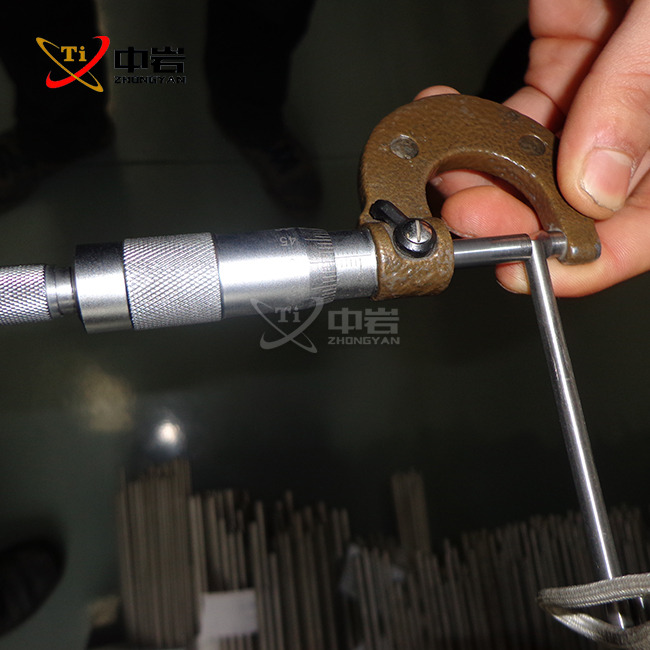
Precision winding technology is used in our production methods to make sure that the tension is always the same and the spool shape is just right. Computer-controlled industrial systems keep errors small while getting the most out of materials and making sure quality is always the same. Each production batch goes through a lot of tests to make sure the mechanical features, accuracy of the dimensions, and quality of the surface are all good. Quality control methods include checking arriving materials, keeping an eye on work in progress, and checking the finished product. Every spool meets the standards thanks to high-tech testing tools like tension testing machines, chemistry testers, and physical measurement systems.
Product Range and Customization Capabilities
As usual, we sell Grade 2 economically pure industrial titanium wire spools with widths from 0.5 mm to 2 mm, which come on rolls that can hold between 5 kg and 15 kg. There are different types of surface finishing, such as bright polished and pickled, to meet the needs of different applications. Special metal formulas, specific size needs, and unique package arrangements can all be met by custom making. Our tech team works with customers to come up with the best solutions that meet all the needs of the application while still being cost-effective.
Technical Support and Global Logistics
Full technical support services include application advice, help choosing materials, and suggestions for processing. Our skilled engineers can give you help on the best ways to weld, shape, and check the quality of your work. With global transportation skills, you can be sure that your packages will get delivered safely and securely all over the world. Moisture-proof packing, the right paperwork, and insurance protect the goods while they're in transit and make it easy to meet customs standards.
Conclusion
Industrial titanium wire spool that have better temper and mechanical qualities are important materials for tough jobs in the chemical processing, aircraft, and medical fields. Grade 2 titanium wire has many benefits over other materials, including a higher strength-to-weight ratio, good rust protection, and great formability. The right way to choose, handle, and store materials will get the most out of them and make sure they meet strict industry standards. Zhongyan Titanium is the best partner for businesses that need stable, high-quality titanium wire options because we are dedicated to making greatness and providing full customer support.
FAQ
What factors influence the tensile strength of titanium wire spools?
The tensile strength of titanium wire spools depends on several critical factors, including alloy composition, manufacturing process, and heat treatment conditions. Grade 2 titanium typically exhibits tensile strength between 345-480 MPa, with annealed conditions providing an optimal balance between strength and ductility. Cold working can increase strength but may reduce elongation properties.
How should titanium wire spools be stored to extend their lifespan?
Optimal storage conditions include controlled temperature environments below 25°C with relative humidity under 60%. Clean, dry storage areas protected from contamination help maintain surface quality and prevent oxidation. Moisture-proof packaging and proper ventilation prevent condensation while maintaining material integrity throughout extended storage periods.
What distinguishes aerospace-grade titanium wire from standard industrial options?
Aerospace-grade titanium wire features stricter chemical composition controls, enhanced quality documentation, and more rigorous testing requirements. These materials typically meet AMS specifications and undergo additional verification, including ultrasonic testing and enhanced traceability. The manufacturing processes often include specialized heat treatments and surface preparation methods that ensure consistent properties for critical applications.
Partner with Zhongyan for Superior Industrial Titanium Wire Spool Solutions
Zhongyan Titanium stands as your trusted industrial titanium wire spool manufacturer, delivering exceptional quality and reliability for critical applications worldwide. Our Grade 2 titanium wire spools combine enhanced temper characteristics with superior mechanical properties, meeting ASTM B863 standards while exceeding customer expectations. As a leading supplier based in China's Titanium Valley, we offer comprehensive customization options, competitive pricing, and technical expertise backed by decades of industry experience. Contact our specialist team at sales@titaniumstudy.com to discuss your specific requirements and discover how our industrial titanium wire spool for sale can optimize your manufacturing processes and project outcomes.
References
1. American Society for Testing and Materials. "Standard Specification for Titanium and Titanium Alloy Wire." ASTM International, 2019.
2. Boyer, Rodney, et al. "Materials Properties Handbook: Titanium Alloys." ASM International Materials Park, 2020.
3. Donachie, Matthew J. "Titanium: A Technical Guide, Second Edition." ASM International, 2018.
4. International Organization for Standardization. "Titanium and titanium alloys - Chemical composition and mechanical properties." ISO Standards, 2021.
5. Lutjering, Gerd and James C. Williams. "Titanium: Engineering Materials and Processes." Springer-Verlag Berlin Heidelberg, 2019.
6. Peters, M., et al. "Titanium and Titanium Alloys: Fundamentals and Applications." Wiley-VCH Verlag GmbH, 2020.
(1)_1755587759206.jpg)
Learn about our latest products and discounts through SMS or email