- English
- French
- German
- Portuguese
- Spanish
- Russian
- Japanese
- Korean
- Arabic
- Greek
- German
- Turkish
- Italian
- Danish
- Romanian
- Indonesian
- Czech
- Afrikaans
- Swedish
- Polish
- Basque
- Catalan
- Esperanto
- Hindi
- Lao
- Albanian
- Amharic
- Armenian
- Azerbaijani
- Belarusian
- Bengali
- Bosnian
- Bulgarian
- Cebuano
- Chichewa
- Corsican
- Croatian
- Dutch
- Estonian
- Filipino
- Finnish
- Frisian
- Galician
- Georgian
- Gujarati
- Haitian
- Hausa
- Hawaiian
- Hebrew
- Hmong
- Hungarian
- Icelandic
- Igbo
- Javanese
- Kannada
- Kazakh
- Khmer
- Kurdish
- Kyrgyz
- Latin
- Latvian
- Lithuanian
- Luxembou..
- Macedonian
- Malagasy
- Malay
- Malayalam
- Maltese
- Maori
- Marathi
- Mongolian
- Burmese
- Nepali
- Norwegian
- Pashto
- Persian
- Punjabi
- Serbian
- Sesotho
- Sinhala
- Slovak
- Slovenian
- Somali
- Samoan
- Scots Gaelic
- Shona
- Sindhi
- Sundanese
- Swahili
- Tajik
- Tamil
- Telugu
- Thai
- Ukrainian
- Urdu
- Uzbek
- Vietnamese
- Welsh
- Xhosa
- Yiddish
- Yoruba
- Zulu
How to Select the Best Medical Grade Titanium Wire for Your Product?
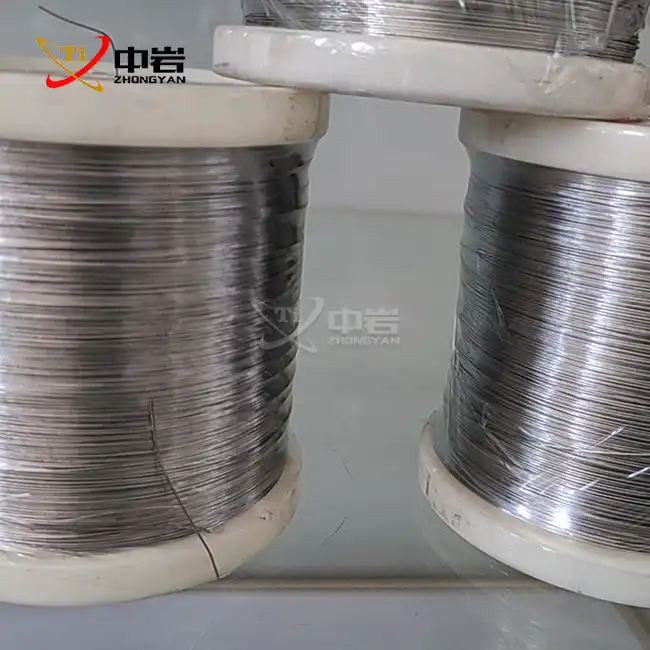
To choose the best medical grade titanium wire, you need to look at biocompatibility standards, mechanical features, and source certifications to make sure you're following the rules and keeping patients safe. The choice is based on the needs of the product, such as tensile strength, resistance to rust, and ability to be sterilized. Some important factors are ASTM F67 or F136 approval, the right wire diameter, the quality of the surface finish, and paperwork that shows how the source can be tracked. By knowing these factors, procurement teams can match the performance needs of the gadget with the standards of the materials while keeping costs low.
Understanding Medical Grade Titanium Wire: Composition and Key Properties
Medical-grade titanium wire is a specific type of biological material that is made to meet the strict standards of the healthcare business. In contrast to most industrial titanium goods, these wires go through strict quality control steps to make sure they are biocompatible, pure, and have the right mechanical stability for human implantation.
The very carefully controlled chemical makeup of medical-grade titanium wire is what makes it work. Commercially Pure (CP) titanium grades, especially ASTM F67 Grade 1, have very few alloying elements. For example, oxygen content is limited to 0.18% and nitrogen content is limited to 0.03%. This level of cleanliness gets rid of any cytotoxic responses that might be dangerous for patients. The material is very resistant to body fluids, which stops the release of ions that could cause inflammatory reactions.
It is the highest level for medical uses to use Grade 23 titanium alloy (Ti-6Al-4V ELI). The "Extra Low Interstitial" label means that the material has less oxygen and iron than aerospace-grade versions. This makes it more flexible and difficult to break, which is important for medical device durability.
Titanium wire made for medical use has unique mechanical qualities that set it apart from other materials. When heated, the tensile strength usually goes above 240 MPa, which is strong enough for load-bearing uses while still being flexible enough for complex shapes. The elastic stiffness of about 110 GPa is very close to that of human bone. This means that there aren't as many stress buffering effects, which can cause implants to fail.
For long-term implant safety, fatigue resistance is one of the most important performance parameters. Medical-grade titanium wire can be loaded and unloaded millions of times without breaking down. This makes it ideal for active uses like joint fixation devices and heart transplants. Because the material is so easy to shape, makers can make complicated forms that still hold together.
Comparing Medical Grade Titanium Wire with Alternative Materials
Knowing the different options for a material lets you make smart buying choices based on the needs of the product and the cost. Each type of material has its own pros and cons that affect how well the gadget works and how well the user does.
Because it is cheap and easy to work with, stainless steel 316L has long been the standard material for temporary medical equipment. In living settings, however, medical-grade titanium wire provides better corrosion protection. Stainless steel can rust and pit in body fluids that are high in chloride, but titanium makes a solid oxide layer that protects it for a long time.
The change in density between these materials has a big effect on how devices are made. Titanium is less dense than stainless steel (4.5 g/cm³ vs. 8.0 g/cm³), which makes it possible to make implants that are lighter. This makes patients less uncomfortable and improves the result of surgery. Also, titanium isn't magnetic, so it works with MRI machines, so there are no safety issues during medical imaging.
Nitinol wires have special qualities that make them useful for medical uses. They can remember their shape and are very springy. These features make it possible for devices to return to their original shapes after being deformed. This is especially useful for orthodontic archwires and minimally invasive surgery tools. However, nitinol can only be used in certain situations because it is more expensive and harder to work with.
Medical grade titanium wire is more flexible and can be used in a wider range of situations while still being biocompatible. The material's consistent mechanical behavior and well-known production methods make it reliable for high-volume production situations where quality is very important.
Key Selection Criteria for Medical Grade Titanium Wire
For procurement to go well, technical requirements, legal compliance, and supplier skills must all be carefully looked over. By knowing these factors, buying teams can make sure that the properties of materials meet the needs of devices while also ensuring patient safety and governmental approval.
The tensile strength standards must match the load needs of the application, and safety factors for dynamic loading situations must be taken into account. The maximum tensile strength of medical-grade titanium wire is usually between 240 MPa and 860 MPa, but this can change based on the alloy and the heat treatment conditions. For industrial processes, engineers have to find a balance between the need for power and the need for shapeability.
The quality of the surface finish has a direct effect on biocompatibility and the speed of production. Polished surfaces make insertion processes easier and cause less tissue discomfort. On the other hand, controlled surface roughness can help osseointegration in permanent implant uses. The surface finish specification should match the purpose and biological interaction needs of the gadget.
Chemical purity levels determine how well something is biocompatible and how well it meets legal requirements. Oxygen and nitrogen levels must stay within certain ranges to keep mechanical qualities stable and prevent weakening. Trace element pollution, especially iron and chlorine, needs to be watched to keep living conditions from speeding up corrosion.
Verification of regulatory compliance is an important part of buying things for making medical devices. Suppliers must show proof that their products have been approved by the FDA, are ISO 13485 certified, and meet all important medical device standards. Verification of the legitimacy of the certificate and its scope guards against fake materials that could put patients' safety at risk.
Quality management system monitoring makes sure that the qualities of materials stay the same and that they can be tracked all the way through the supply chain. Suppliers should keep records for each lot that include the results of chemistry analyses, data from mechanical property tests, and handling factors. This guidance makes it easy to find and fix problems quickly during the development and production stages of the device.
Third-party testing proof gives independent confirmation of the material's specs and agreement with regulations. Periodically, accredited testing labs should check that what suppliers say is true, especially when it comes to important qualities like biocompatibility and mechanical performance. This check lowers the risk of buying and makes regulatory applications stronger.
Practical Considerations When Procuring Medical Grade Titanium Wire
Effective buying strategies include more than just technical specs. They also take into account ties with suppliers, lowering costs, and making sure the supply chain is reliable. These real issues have a big effect on the success of the project and the long-term viability of the business.
An in-depth review of a supplier starts with an analysis of their financial security and production capacity. Suppliers must show that they have the means to keep long-term supply promises and keep high standards even when demand changes. Credit scores, stable yearly income, and investments in good infrastructure are all signs of a company's financial health.
The level of technical knowledge, complex tools, and process control systems is part of a manufacturing capability review. Modern providers use automatic wire drawing tools that can track the diameter in real time and control the process statistically. Quality control labs should keep their testing tools set and hire qualified people who can characterize materials as needed.
Geography affects the stability of the supply chain and the efficiency of transportation. Regional suppliers may have lower shipping costs and faster wait times, while global suppliers may have lower prices and more specialized services. Diversified supplier networks lower the risk of being dependent on one provider and allow for flexible buying strategies when the market is down.
For high-volume uses, negotiating prices based on the number can cut material costs by a large amount. Suppliers usually give deals for big orders or promises to buy a lot of something every year. When looking at bulk buying options, you should think about the costs of keeping goods and the length of time that materials can be kept.
Long-term supply deals keep prices stable and make sure there is a steady supply of goods. They also let suppliers spend on improving quality and capacity. Performance measures, quality standards, and flexibility clauses for making changes to specifications or numbers should all be in these agreements. When people work together, they can often cut costs by making processes better and more efficient.
Comparing different specifications can help you find ways to save money without affecting the performance of the gadget. Working with providers to find the best wire diameter tolerances, surface finish standards, or package specs could lower the cost of production while still meeting useful needs. Value engineering methods make things more efficient and competitive, which is good for everyone.
Application Cases and Best Practices
There are many real-life examples of how medical grade titanium wire can be used to make different kinds of medical devices better. The purpose of choosing materials and how to prove their success is explained in these case studies.
For bone fracture fixation, orthopedic cerclage wire needs to be very resistant to wear and biocompatible. ASTM F67 Grade 1 titanium wire with a thickness of 0.6 mm has shown great results in fixing femur fractures, giving enough tensile strength while minimizing stress shielding effects. The osseointegration property of the material helps bones heal and stay stable over time.
Titanium wire is useful for dental orthodontics because it can be shaped easily and doesn't rust in mouths. Custom spooling setups make clinical use more efficient while keeping the wire's qualities stable during treatment times. The fact that it isn't magnetic keeps patients safe during dental imaging processes and doesn't create any artifacts.
Maxillofacial restoration devices use titanium wire mesh patterns to fix complicated body parts. The biocompatibility of the material lets it touch the bone directly without causing inflammation, and its mechanical qualities allow for useful loading while the body heals. Based on the needs of the repair, surface treatments can be changed to encourage certain tissue reactions.
Standard hospital cleaning methods, such as steam autoclaving, gamma irradiation, and ethylene oxide treatment, don't change the qualities of medical-grade titanium wire. If you take the right steps for handling, steam sterilization at 134°C doesn't change the mechanical qualities or surface characteristics of the item. The materials used for packaging must be compatible with the chosen methods of cleaning to keep things from getting dirty.
When things are stored correctly, they stay intact for as long as they're on the shelf. Moisture-proof packaging keeps the surface from rusting and keeps things from getting damaged while they're being shipped or stored. Temperature-controlled areas keep the qualities of materials stable and stop thermal cycle effects that might harm mechanical performance.
As part of quality testing methods, entering inspection steps should be included for checking dimensions, judging surface quality, and going over paperwork. Statistical sampling plans make it easy to keep an eye on quality while ensuring that materials are consistently good. Procedures for identifying and separating non-conforming materials keep them from being used accidentally in important situations.
Conclusion
To choose the best medical grade titanium wire, you need to carefully look at its technical specs, the supplier's skills, and the needs of the application. Biocompatibility standards, mechanical property alignment, and regulatory compliance proof are some of the most important things that go into making a choice. A good buying process combines the need for performance with the need to save money, all while making sure that the supply chain is reliable and that the quality is always the same. The best choice for important medical uses is this material because it is highly resistant to rust, is biocompatible, and has good mechanical qualities. Working with approved suppliers who can show they have technical knowledge and good quality control skills is the best way to make sure that devices work well and patients are safe.
FAQ
What makes medical grade titanium wire different from regular titanium wire?
Medical-grade titanium wire goes through strict quality control steps to make sure it meets the biocompatibility standards needed for implanting it in people. The material has to follow strict rules set by the FDA and ISO, and it has to stay within certain chemical makeup bounds. Standard titanium wire used in industry doesn't have these approvals and might have flaws that make it unfit for medical uses.
How do I check the qualifications of a provider for medical uses?
To make sure a seller is real, you need to look at their FDA registration paperwork, ISO 13485 certificates, and compliance with important medical device standards. Quality management systems are checked even more by reviewing records from a third party. The certificate's reach and expiration times must match the material it will be used for and the rules that govern it.
What standards for surface finish work best for different uses?
For temporary devices, polished surfaces keep tissue from rubbing against them and bacteria from sticking to them. For permanent implants, controlled roughness helps the bone fuse together. The choice of surface finish relies on how the biological interaction is supposed to work, how it is sterilized, and the needs of the production process. Working together with providers on specifications makes sure that the performance qualities are at their best.
Can normal cleaning methods be used on medical grade titanium wire?
Steam autoclaving, gamma irradiation, and ethylene oxide cleaning can all be used to keep medical-grade titanium wire in good shape. Because the material is chemically and thermally inert, it doesn't break down during normal hospital cleaning processes. Using the right materials for packing and handling will keep the item sterile for as long as it's on the shelf.
What kind of quality paperwork should shippers include with packages?
Mill test papers with chemical analysis results, mechanical property testing data, and dimensional inspection reports are all part of the complete paperwork. Lot tracking information makes it easy to quickly solve problems and make sure that regulations are being followed. The validity of the certificate and the accreditation of the testing center are two more ways to ensure the quality.
Partner with Zhongyan for Premium Medical Grade Titanium Wire Solutions
When it comes to medical-grade titanium wire, Zhongyan is the company you can trust. They make ASTM F67 Grade 1 CP titanium wire that is of the highest quality and accuracy. Our special 0.6mm diameter wire is certified by ISO 5832-2, follows CE/FDA rules, and is biocompatible to the highest standards for demanding medical uses. We are in China's Titanium Valley and use modern production techniques and strict quality control systems to make sure that the properties of our materials are always the same and that we follow all the rules.
Our wide range of products includes unique spooling configurations, controlled surface finishes, and mechanical qualities that can be changed to fit the needs of any device. Our titanium wire is very pure for important medical uses because it has less than 0.03% nitrogen and less than 0.18% oxygen. Get in touch with our technical team at sales@titaniumstudy.com to talk about your needs for a medical grade titanium wire provider and discover the Zhongyan edge in accuracy, dependability, and great customer service.
References
1. ASTM International. "Standard Specification for Unalloyed Titanium for Surgical Implant Applications (ASTM F67)." Annual Book of ASTM Standards, Volume 13.01, Medical and Surgical Materials and Devices.
2. International Organization for Standardization. "Implants for Surgery - Metallic Materials - Part 2: Unalloyed Titanium (ISO 5832-2)." Geneva: ISO Press.
3. Rack, H.J. and Qazi, J.I. "Titanium Alloys for Biomedical Applications." Materials Science and Engineering C, Journal of Biomedical Materials Research.
4. Niinomi, M. "Mechanical Properties of Biomedical Titanium Alloys." Materials Science and Engineering A, Structural Materials Properties and Microstructure.
5. Geetha, M., Singh, A.K., Asokamani, R., and Gogia, A.K. "Ti-Based Biomaterials: The Ultimate Choice for Orthopedic Implants." Progress in Materials Science.
6. Williams, D.F. "Biocompatibility of Clinical Implant Materials." CRC Press, Handbook of Biocompatibility and Regulatory Guidelines for Medical Devices.
_1755652968020.jpg)
(1)_1755587348264.jpg)
Learn about our latest products and discounts through SMS or email