- English
- French
- German
- Portuguese
- Spanish
- Russian
- Japanese
- Korean
- Arabic
- Greek
- German
- Turkish
- Italian
- Danish
- Romanian
- Indonesian
- Czech
- Afrikaans
- Swedish
- Polish
- Basque
- Catalan
- Esperanto
- Hindi
- Lao
- Albanian
- Amharic
- Armenian
- Azerbaijani
- Belarusian
- Bengali
- Bosnian
- Bulgarian
- Cebuano
- Chichewa
- Corsican
- Croatian
- Dutch
- Estonian
- Filipino
- Finnish
- Frisian
- Galician
- Georgian
- Gujarati
- Haitian
- Hausa
- Hawaiian
- Hebrew
- Hmong
- Hungarian
- Icelandic
- Igbo
- Javanese
- Kannada
- Kazakh
- Khmer
- Kurdish
- Kyrgyz
- Latin
- Latvian
- Lithuanian
- Luxembou..
- Macedonian
- Malagasy
- Malay
- Malayalam
- Maltese
- Maori
- Marathi
- Mongolian
- Burmese
- Nepali
- Norwegian
- Pashto
- Persian
- Punjabi
- Serbian
- Sesotho
- Sinhala
- Slovak
- Slovenian
- Somali
- Samoan
- Scots Gaelic
- Shona
- Sindhi
- Sundanese
- Swahili
- Tajik
- Tamil
- Telugu
- Thai
- Ukrainian
- Urdu
- Uzbek
- Vietnamese
- Welsh
- Xhosa
- Yiddish
- Yoruba
- Zulu
How Strong Is Titanium Gr 2 Plate Compared to Steel?
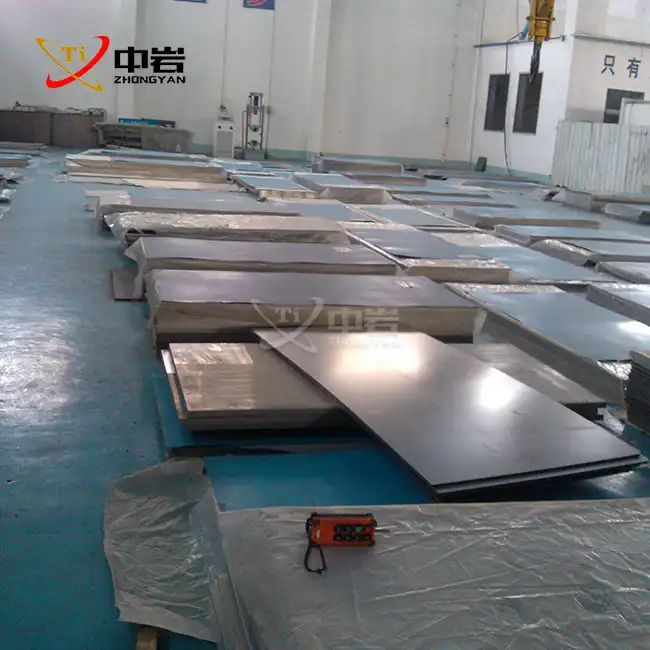
As far as strength goes, the titanium gr 2 plate is the best. This makes it great for tough industrial uses. Titanium-grade iron is very strong and doesn't rust easily. It can be pulled apart to 345 MPa and then back together to 275 MPa. Steel rusts and breaks when it is stressed, but Titanium Grade 2 doesn't. It's the best choice for fields like chemical processing, marine, and airplanes, where steadiness and long life are very important because it always works the same way.
Introduction
It is very important to choose the right materials for business projects. The strength of the titanium gr 2 plate is much higher than that of steel, which makes this even clearer. Designers and buyers in the medical, technology, airplane, and chemical processing fields find it harder to pick the best materials for jobs that need to be done correctly. Titanium Grade 2 is the type of pure titanium that most people buy. It won't rust, it is the hardest, and it is the easiest to make. Steel is still the most common thing used to make things since it is cheap and simple to find. What makes these things different? Knowing this can help you make smart choices that can affect how well a project works, how much it costs, and how long it lasts. Titanium and steel are compared in more ways than just how strong they are. One of these is the amount of weight to strength, another is resistance to damage from the environment, and the third is the cost of life. These days, a lot of industrial uses need products that can last a long time and handle rough work.
Understanding Titanium Gr 2 Plate and Steel Plates
Chemical Composition and Properties of Titanium Grade 2
Titanium Grade 2 is the purest form of titanium that you can buy. It has some middle parts that are carefully controlled to keep the actual way it works in check. More than 99.2% of the base is titanium. There are also small amounts of oxygen (about 0.25%), carbon (about 0.08%), nitrogen (about 0.03%), hydrogen (about 0.015%), and iron (about 0.30%). The performance is at its best, and the mechanical qualities don't change because of these exact science limits. Because it is made of alpha-phase crystals, Grade 2 titanium is very flexible and easy to form. However, it is still strong enough to be used for building. You can do a lot of cold forming with this microstructure without having to anneal in between. This makes it great for manufacturing processes that are hard to understand.
Steel Grades and Their Characteristics
A lot of business steels are carbon steels (AISI 1010–1095), low-alloy steels (4140 and 4340), and stainless steels (304, 316, and 17-4 PH). There are tensile strengths of 400 to 1200 MPa for carbon steels. These strengths depend on how much carbon is in the steel and how it was heated. These steels don't rust, though, and their strengths range from 500 to 900 MPa.When steel is hot, it works very differently from when it is cold. Then, engineers can figure out what level of toughness, strength, and power is best for each job. But when things change this much, people often forget other things about the subject.
Manufacturing Processes and Quality Control
Vacuum arc remelting (VAR) or electron beam melting is used to make titanium gr 2 plates that are chemically pure and uniform. The next steps are to hot roll and heat it. These keep the surface of the metal in great shape and give it the right mechanical properties. The business world in Baoji City is very modern. They need special tools and know-how to make plates that meet ASTM B265 guidelines. Some of the ways that things are checked for quality to make sure they meet foreign standards are chemical analysis, mechanical testing, ultrasound inspection, and surface study. With these strict steps, you can be sure that every plate is ready for its big job.
Strength Comparison Between Titanium Gr 2 and Steel Plates
Tensile and Yield Strength Analysis
There are different substances that are better for different jobs, as shown by this easy test of power. There are two weak spots on a titanium gr 2 plate: one is 345 MPa (50 ksi), and the other is 275 MPa (40 ksi). Plus, it can stretch more than 20%, which makes it very bendy. An exact number that is higher for mild carbon steel is more common. Most types of Teflon have strengths between 400 and 500 MPa. But strength-to-weight isn't the same. Ti is not as solid as steel, which is 7.85 g/cm³. It is 4.51 g/cm³. This makes titanium a much better choice for tasks that need to be light. It takes about 515–620 MPa of force to stretch types of stainless steel like 316L, but titanium is better at keeping out rust when salt is present. Ti-6Al is only 105 GPa strong, while steel is 200 GPa strong and very stiff. Titanium can be bent more easily and is less likely to break if it is used too much.
Corrosion Resistance and Environmental Performance
Titanium is safe because it has a thick oxide film (TiO₂) that keeps it from breaking in seawater, wet chlorine, and organic acids. It doesn't do anything, so if it breaks, it goes back on right away to protect the material. When things get tough, steel breaks down quickly because it rusts evenly, cracks, forms pits, and rusts all at the same time. In places with a lot of salt, even stainless steel that doesn't rust can get hurt. But titanium works great there.
Weight-to-Strength Ratio Advantages
The exceptional weight-to-strength ratio of titanium gr 2 plate makes it particularly valuable for aerospace and marine uses, where reducing weight improves efficiency and fuel economy because of its high weight-to-strength ratio. Parts made of titanium can be very strong, even though they are very light (about 55% as much as steel). This is especially clear when things are moving, since having less mass makes it easier to go faster, save gas, and stay in charge. When you mix enough strength with low weight, you can make plans that work better than they could with a regular steel building.
Applications and Advantages of Titanium Gr 2 Plates Over Steel
Industry-Specific Applications and Case Studies
When weight savings and corrosion protection are crucial, the aircraft industry frequently uses titanium gr 2 plate for structural elements, engine parts, and flight parts. Parts of business planes that will be exposed to cold air and changes in temperature are made of titanium instead of steel because steel would need to be kept or replaced more often. Ti doesn't rust in tough conditions, so chemical plants use it for heat exchangers, reactor tanks, and pipe systems that deal with acidic and chlorinated substances, as well as high temperatures. Most of the time, things that cost more up front are worth it in the long run because they last longer and need less upkeep. Titanium doesn't rust in salt water, which makes it perfect for heaters, motor shafts, and parts of bases that are out at sea. Because it works so well, the material doesn't need to be treated or changed as often as steel options do.
Key Performance Advantages
Steel medical devices could hurt living things, but titanium doesn't. This means that steel medical devices can't be made from titanium. Grade 2 titanium can be used to make safe medical tools, surgical implants, and tooth implants that will last for a long time. Titanium can be used in places where steel might break easily or get too big when heated or cooled because it doesn't change much in temperature, even from very cold to very hot. Because things don't expand or contract as quickly when they heat up and cool down, they are less stressed.
Limitations and Considerations
Even though it is harder than steel, titanium costs more to make. About 5–10 times more per kilogram, most of the time. You should carefully think about this difference in cost from an economic point of view so that you can make a choice based on pay and living costs. Titanium gets hard quickly when heated and gets soft when pressed. Because you need special tools and skills to machine it, the cost of making it might go up. This isn't as much of a problem for people who make things for a job, but they still maintain accuracy and quality.
Procurement Insights: Buying Titanium Gr 2 Plates for Industrial Use
Supplier Selection and Quality Criteria
If you want to buy a titanium grade 2 plate, you should think carefully about how the seller makes things, how they check the quality, and how they treat their customers. Firms that have been making titanium in places like Baoji City for a long time can get goods more easily, handle them better, and keep prices low. Folks who rate businesses check to see how well they follow international rules like ASTM, AMS, and ISO. They also look for goods and test them. One of the most important things that is looked at is ISO 9001 approval. To show that the quality of their work is always the same, suppliers should use statistical process control and a lot of paperwork.
Pricing Trends and Cost Analysis
Titanium Gr 2 plates are priced on the market right now based on the cost of the raw materials, how hard they are to make, and how supply and demand change around the world. When you buy in bulk and look for short-term deals, you can save money and feel better about your production plans. According to a lifelong cost study, the things that need to be replaced and the materials should all be priced at the start. The study should also look at how much it costs to make, keep, and fix. Titanium costs more up front, but it usually ends up being cheaper over time because it lasts longer and doesn't need as much upkeep.
Customization and Delivery Considerations
There are many ways that customers can make their titanium things stand out from the rest. In this case, they can cut, clean, and pack the metal however the customer wants. When parts are processed in certain ways, they can be made in any size, with any surface treatment, and with different dynamic qualities. For normal grades, it takes about 4 to 8 weeks, but for special specs, it may take longer. When handling resources, these times should be thought about so that work doesn't stop.
Making the Right Choice: When to Choose Titanium Gr 2 Over Steel
Decision Framework and Evaluation Criteria
To pick between steel and titanium gr 2 plate, think about how well you need to perform, the weather, and the price. Titanium is often the best material, even though it costs more, for important tasks that need to be safe, not rust, or light. Titanium's high reliability and regular behavior should be carefully thought through in apps where anything going wrong would have big effects. There is less risk and more working trust because the material always works the same way in different situations.
Comparative Analysis with Alternative Materials
Titanium metals with higher strengths aren't always needed when being able to shape and join is more important. This is when Grade 2 titanium is better. When it comes to high temperatures, titanium is stronger than aluminum. The metal also doesn't rust as most aluminum does. It's less likely for titanium to rust than for stainless steel, but stainless steel might work in less harsh conditions. People should think about both the short-term success goals and the long-term service conditions when they make a choice.
Implementation Guidelines
To get the most out of titanium, the people who plan, buy, and make things need to spend less money and work together. You can make up for the fact that titanium is more expensive by changing the design to use its strengths. This might help you do better or lose weight. When you plan what to make, you should think about how to clean titanium, choose the right tools, and put the parts together. Make sure you use titanium the right way, and it will do you good.
Conclusion
When you put a steel plate and a titanium gr 2 plate next to each other, you can see that the job and its needs figure out which material to use. In general, steel is stronger and cheaper than titanium. However, titanium is more stable in harsh conditions, doesn't rust, and is stronger per gram. People should think about how the material will be used, how it will work, and how much it will cost over its whole life. Because of changes to the supply chain and new ways of making titanium, it is easier to get and costs less for important uses.
FAQ
How does titanium Grade 2 compare to steel in tensile strength?
It takes at least 345 MPa of strength to break mild steel, which is between 400 and 500 MPa strong. Steel, on the other hand, is stronger than titanium because it is lighter while still being strong.
What are the main cost factors when choosing titanium over steel?
Five to ten times more expensive raw materials, special needs for production, and longer delivery times are the key things that cause costs to go up. When looking at lifecycle costs, on the other hand, titanium is often chosen because it doesn't need as much upkeep, lasts longer, and doesn't need a cover to keep it safe.
Can titanium Grade 2 replace stainless steel in marine environments?
Yes, the titanium gr 2 plate does work better in military settings than stainless steel because it doesn't rust when salt is present. Titanium doesn't lose its strength over time as stainless steel does. Stress rust doesn't make it dent or crack.
What machining considerations apply to titanium Grade 2 plates?
To cut titanium, you need tools that are very sharp, enough coolant, and slow feed rates to keep the work from getting too hard. Hold the cutting speeds steady and use tungsten tools. Also, make sure you remove enough chips to get accurate results.
How does temperature affect titanium Grade 2 performance compared to steel?
Ti-6Al-2 has the same good traits at very low temperatures as it does at about 425°C. When it's cold, steel can change from being bendy to breaking. It is also less likely to be stressed by changes in temperature than steel because it grows slowly at room temperature.
Partner with Zhongyan for Superior Titanium Gr 2 Plate Solutions
You can trust Zhongyan Titanium, which makes the titanium gr 2 plate. We are in the best place to give you the best quality and accuracy. Our plant is in Baoji City, which is in China's Titanium Valley. Anything you want, from CNC machining and exact cutting to making the surface finish just the way you want it. We promise that the most important things you use will still be of the same high quality and dependability. We are able to do this because we are ISO 9001:2015 approved and strictly follow ASTM B265 rules. When you buy something from us, our skilled engineering team helps you with all the technical parts, from choosing the materials to figuring out how to send them. Write to sales@titaniumstudy.com and tell them what you need. They will tell you how our high-quality titanium goods can make your project work better and cost less in the long run.
References
1. Boyer, R., Welsch, G., & Collings, E.W. (2007). Materials Properties Handbook: Titanium Alloys. ASM International, Materials Park, Ohio.
2. Lutjering, G., & Williams, J.C. (2003). Titanium: Engineering Materials and Processes. Springer-Verlag, Berlin, Germany.
3. American Society for Testing and Materials. (2019). ASTM B265-15 Standard Specification for Titanium and Titanium Alloy Strip, Sheet, and Plate. ASTM International, West Conshohocken, Pennsylvania.
4. Donachie, M.J. (2000). Titanium: A Technical Guide, Second Edition. ASM International, Materials Park, Ohio.
5. Peters, M., Kumpfert, J., Ward, C.H., & Leyens, C. (2003). Titanium Alloys for Aerospace Applications. Advanced Engineering Materials, Volume 5, Issue 6.
6. Schutz, R.W., & Thomas, D.E. (1987). Corrosion of Titanium and Titanium Alloys. Metals Handbook, Ninth Edition, Volume 13, Corrosion. ASM International, Materials Park, Ohio.
Learn about our latest products and discounts through SMS or email