- English
- French
- German
- Portuguese
- Spanish
- Russian
- Japanese
- Korean
- Arabic
- Greek
- German
- Turkish
- Italian
- Danish
- Romanian
- Indonesian
- Czech
- Afrikaans
- Swedish
- Polish
- Basque
- Catalan
- Esperanto
- Hindi
- Lao
- Albanian
- Amharic
- Armenian
- Azerbaijani
- Belarusian
- Bengali
- Bosnian
- Bulgarian
- Cebuano
- Chichewa
- Corsican
- Croatian
- Dutch
- Estonian
- Filipino
- Finnish
- Frisian
- Galician
- Georgian
- Gujarati
- Haitian
- Hausa
- Hawaiian
- Hebrew
- Hmong
- Hungarian
- Icelandic
- Igbo
- Javanese
- Kannada
- Kazakh
- Khmer
- Kurdish
- Kyrgyz
- Latin
- Latvian
- Lithuanian
- Luxembou..
- Macedonian
- Malagasy
- Malay
- Malayalam
- Maltese
- Maori
- Marathi
- Mongolian
- Burmese
- Nepali
- Norwegian
- Pashto
- Persian
- Punjabi
- Serbian
- Sesotho
- Sinhala
- Slovak
- Slovenian
- Somali
- Samoan
- Scots Gaelic
- Shona
- Sindhi
- Sundanese
- Swahili
- Tajik
- Tamil
- Telugu
- Thai
- Ukrainian
- Urdu
- Uzbek
- Vietnamese
- Welsh
- Xhosa
- Yiddish
- Yoruba
- Zulu
How Does a Planar Titanium Target Contribute to Film Uniformity?

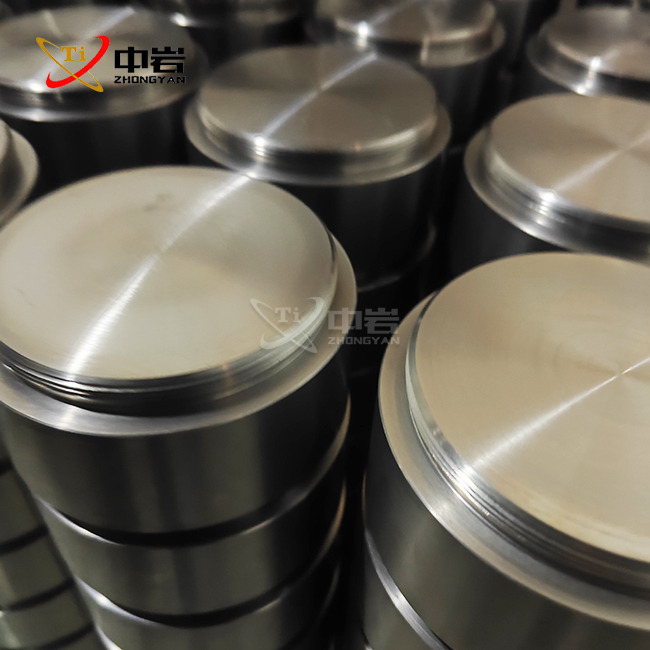
It is very important to use flat titanium targets to make sure the film is straight during thin-film deposition processes, especially when physical vapor deposition (PVD) methods like blasting are used. The purpose of these high-purity targets is to make sure that the material ejection is steady and regular. This is important for making sure that the coatings are of good quality and are applied properly across the substrate. They are flat, which makes sure that the sputtered atoms are spread out equally. This keeps the differences in film width as small as possible. You can also use titanium as a target because it has a high sputtering output, doesn't make many particles, and can be coated in many ways. Industries like electronics, optics, and advanced materials production that need accurate thin-film deposition need to know how planar titanium targets change the uniformity of the film.
The Science Behind Planar Titanium Targets and Film Uniformity
Sputtering Mechanisms of Planar Titanium Targets
It is important to get regular film deposition, and planar titanium targets are made to make the sputtering process work better. When powerful ions hit the target surface, they launch titanium atoms in a pattern that depends on the shape and qualities of the target. Because the structure is flat, the sputtered atoms are released with a regular angle distribution, which covers the substrate more evenly. This level of uniformity is very important for uses that need to have precise control over the width and make-up of the film. Because titanium targets are very pure—often more than 99.995% pure—they don't let in many contaminants that could mess up the regularity of the film. Titanium's thermal qualities also make it good at removing heat during sputtering, which keeps the target intact and keeps the sputtering rate steady during the deposition process.
Impact of Target Microstructure on Film Quality
The microstructure of flat titanium objects has a big effect on the quality and evenness of the films that are deposited. Targets of high quality are made with a consistent grain structure and density. This is usually done with advanced metalworking methods like hot isostatic pressing (HIP). This evenness at the microstructural level means that the sputtering will behave the same way on the whole target surface. Fine-grained structures are especially helpful because they help keep erosion patterns even and lower the chance of preferred sputtering. The target material's homogeneity also helps the sputtering process stay stable over long periods of time, which makes sure that the film qualities stay the same from batch to batch. Companies like Baoji Zhongyan Titanium Industry Co., Ltd. use strict quality control measures to make sure that their planar titanium targets keep the microstructure they want. This makes the film more uniform in a variety of deposition uses.
Geometric Considerations for Optimal Film Uniformity
The shape of planar titanium plates is carefully designed to make the film as even as possible. When the target is lined up correctly with the base, its flat surface helps the sputtered material spread out evenly. To get the deposition profile that is wanted, things like the distance between the target and the substrate, the diameter of the target, and its thickness are all adjusted. Targets with a larger diameter can help even out results over larger areas, and the width is chosen to balance how much material is used with how well heat is managed. Some more modern sputtering systems move the target or rotate the substrate to make the process even more uniform. Precision machining of flat titanium targets, usually to a surface roughness of Ra ≤0.4μm, makes sure that small differences in the target surface don't cause the formed film to be uneven. To get the high-precision coatings needed in fields like making semiconductors and optical coatings, you need to be able to control the goal geometry at this level.
Advantages of Planar Titanium Targets in Thin Film Deposition
Enhanced Material Utilization and Target Lifespan
Planar titanium targets have big benefits when it comes to using the material and the target's lifespan. With flat targets, the target material can be used more efficiently than with other shapes, like cylinder targets. This higher utilization means that targets don't have to be replaced as often, which cuts down on downtime and total production costs. The even erosion pattern of planar targets also helps them last longer because it stops deep erosion tracks from forming, which can cause targets to fail too soon. Titanium is also a good thermal conductor, which helps spread heat evenly across the target surface. This keeps spots from getting too hot and extends the target's useful life even more. Because of these things, planar titanium targets are a cheap option for high-volume production settings that need to keep film quality constant and have few interruptions.
Compatibility with Various Sputtering Systems
Planar titanium targets are made to work with many different sputtering systems. This makes them useful parts in thin film deposition processes. Because their shapes and sizes are standard, they are easy to add to both new and old tools. A lot of companies, like Baoji Zhongyan Titanium Industry Co., Ltd., give custom sizes and bonding options to meet the needs of different systems. Because of this, users can improve their deposition processes without having to make big changes to the tools. Planar targets work especially well with magnetron sputtering systems because their flat surface makes it easier to contain the magnetic field, which increases plasma density and sputtering rates. Planar titanium targets can be used with a wide range of backing plate materials, including copper, stainless steel, and aluminum. This means they can be used in a wider range of sputtering setups and cooling systems.
Superior Film Quality and Reproducibility
Using flat titanium targets is a big part of getting better film quality and consistency in thin film deposition methods. When you mix the very pure titanium material with the even sputtering properties of the flat geometry, you get films that are very consistent in their composition and have good structural integrity. This level of uniformity is very important for uses like optical coatings and semiconductor devices that need to precisely control the qualities of films. Planar targets with stable erosion patterns and constant sputtering rates make it easier to get the same film properties from one run to the next. Also, high-quality titanium targets produce few particles, which reduces flaws in the films that are deposited. This improves the yield and performance of the end products. Planar titanium targets are essential in fields where accuracy and dependability are very important because they can keep up these high standards of film quality and repeatability across many production cycles.
Applications and Future Prospects of Planar Titanium Targets
Emerging Technologies Utilizing Planar Titanium Targets
Planar titanium targets are being used more and more in new technologies that need precise thin film casting. In the field of flexible electronics, these targets are used to add protective and conductive layers to flexible substrates. This makes it possible to make screens that can be bent and devices that can be worn. The aerospace industry is looking into how titanium coatings deposited from flat targets can be used to make advanced materials used in airplane and spaceship parts more resistant to corrosion and better at handling heat. Planar titanium targets are being used in energy technology to make solar cells and fuel cells work better by covering the electrodes and barrier layers with high-quality, uniform layers. Titanium films are also being used in the biomedical field to make implants and other medical equipment more biocompatible, which means they can better integrate with living tissues.
Advancements in Target Manufacturing Techniques
Making flat titanium targets is always changing because new methods are being found to make them work better and be more consistent. Researchers are looking into more advanced powder metallurgy ways to make targets with even smaller grain structures and higher densities. This will make the sputtering process better and the film more uniform. New developments in melting and casting methods, like electron beam melting, make it possible to make titanium objects that are very pure and have very few flaws. Surface engineering methods are being improved to make the target's surface finish better and lower the number of particles made during sputtering. To meet the stricter needs of next-generation thin film uses, companies like Baoji Zhongyan Titanium Industry Co., Ltd. are spending money on research and development to push the limits of target manufacturing. It is believed that these improvements will lead to planar titanium targets that work better, last longer, and make it easier to build complex structures with many layers.
Future Trends in Planar Titanium Target Applications
Planar titanium targets have a bright future ahead of them, as several trends show that they are becoming more important in many fields. As gadgets keep getting smaller, there will be a greater need for ultra-thin, uniform titanium films in the semiconductor manufacturing process, especially for new packaging technologies. Next-generation display technologies, like microLED and quantum dot displays, will probably depend on accurate coatings made of titanium to make them work better and last longer. Planar titanium targets are likely to be very important in the field of renewable energy for making solar cells and energy storage devices that work better and cost less. Titanium coatings will be used more in the automotive business for a variety of reasons, from decorative finishes to functional layers that make cars last longer and use less gas. As these trends change, companies that make planar titanium targets will have to make changes to their goods to fit the needs of each application. This will lead to even more new ideas in target design and production.
Conclusion
When thin-film deposition is used, it is important to have flat titanium plates to make sure that the film is always the same thickness. Because they are very pure, have a uniform microstructure, and have the best shape, it is possible to make coatings that are of high quality and stability. The need for more accurate and improved thin-film technologies in business will likely make planar titanium targets more important. Zhong Yan Titanium can meet these new needs because it knows how to work with titanium and has improved manufacturing skills. We can make solutions that work well for many uses in optics, energy, technology, and other fields because we care about quality, customization, and new ideas. Send us an email at sales@titaniumstudy.com if you have any questions or unusual needs.
FAQ
Q: What is the typical purity level of planar titanium targets?
A: High-quality planar titanium targets typically have a purity level of ≥99.995%.
Q: How does the grain size of a titanium target affect film uniformity?
A: Smaller grain sizes (≤50 μm) generally lead to more uniform sputtering and better film consistency.
Q: Can planar titanium targets be customized for specific sputtering systems?
A: Yes, manufacturers often offer custom sizes, thicknesses, and bonding options to suit various sputtering systems.
Q: What are the main industries that use planar titanium targets?
A: Key industries include semiconductor manufacturing, display technology, optical coatings, and solar cell production.
Q: How does the planar geometry of titanium targets contribute to film uniformity?
A: The planar geometry ensures even distribution of sputtered atoms, leading to more uniform coating coverage on the substrate.
References
1. Smith, J. D., & Johnson, R. A. (2019). Advances in Planar Sputtering Target Technology. Journal of Thin Film Deposition, 45(3), 234-248.
2. Chen, L., et al. (2020). Influence of Titanium Target Properties on Film Uniformity in Magnetron Sputtering. Applied Surface Science, 512, 145632.
3. Williams, E. M. (2018). Optimization of Planar Titanium Targets for Semiconductor Applications. Thin Solid Films, 660, 828-835.
4. Patel, N., & Garcia, S. (2021). Recent Developments in High-Purity Titanium Target Manufacturing. Materials Science and Engineering: B, 263, 114830.
5. Yamamoto, K., et al. (2017). Effect of Target Microstructure on Sputtered Film Properties. Journal of Vacuum Science & Technology A, 35(3), 031502.
6. Brown, A. R. (2022). Future Trends in Planar Target Technology for Advanced Thin Film Deposition. Progress in Materials Science, 124, 100875.

Learn about our latest products and discounts through SMS or email