- English
- French
- German
- Portuguese
- Spanish
- Russian
- Japanese
- Korean
- Arabic
- Greek
- German
- Turkish
- Italian
- Danish
- Romanian
- Indonesian
- Czech
- Afrikaans
- Swedish
- Polish
- Basque
- Catalan
- Esperanto
- Hindi
- Lao
- Albanian
- Amharic
- Armenian
- Azerbaijani
- Belarusian
- Bengali
- Bosnian
- Bulgarian
- Cebuano
- Chichewa
- Corsican
- Croatian
- Dutch
- Estonian
- Filipino
- Finnish
- Frisian
- Galician
- Georgian
- Gujarati
- Haitian
- Hausa
- Hawaiian
- Hebrew
- Hmong
- Hungarian
- Icelandic
- Igbo
- Javanese
- Kannada
- Kazakh
- Khmer
- Kurdish
- Kyrgyz
- Latin
- Latvian
- Lithuanian
- Luxembou..
- Macedonian
- Malagasy
- Malay
- Malayalam
- Maltese
- Maori
- Marathi
- Mongolian
- Burmese
- Nepali
- Norwegian
- Pashto
- Persian
- Punjabi
- Serbian
- Sesotho
- Sinhala
- Slovak
- Slovenian
- Somali
- Samoan
- Scots Gaelic
- Shona
- Sindhi
- Sundanese
- Swahili
- Tajik
- Tamil
- Telugu
- Thai
- Ukrainian
- Urdu
- Uzbek
- Vietnamese
- Welsh
- Xhosa
- Yiddish
- Yoruba
- Zulu
Can a GR4 titanium bar reduce weight in automotive engineering?
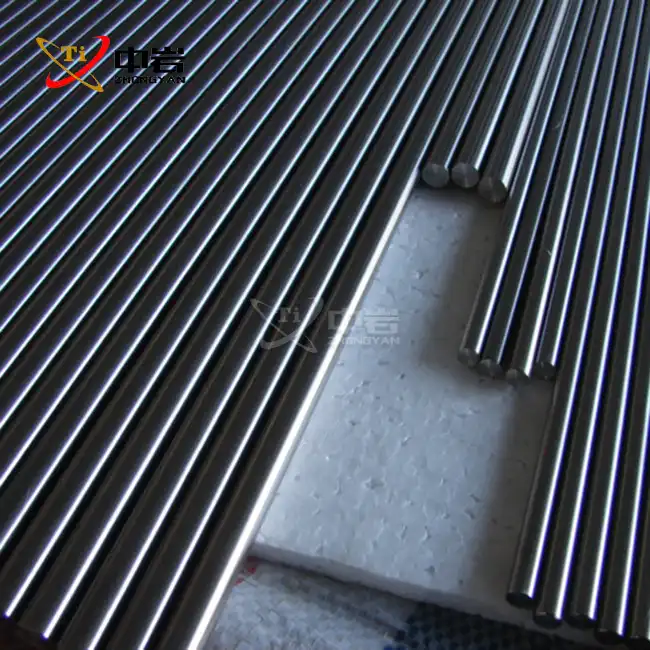
In the world of automobile engineering, which is always changing, the search for stronger, lighter materials is never-ending. The GR4 titanium bar is one material that has gotten a lot of attention in the last several years. As car makers try to make cars that use less gas and perform better while also being lighter, GR4 titanium bars have become more interesting. These parts are strong and light, which makes them a good choice for reducing weight in car design. GR4 titanium bars are an interesting choice for a number of automotive uses since they are quite strong for their weight, resist corrosion well, and last a long time. Adding GR4 titanium bars to parts of the chassis and suspension might change the way cars are designed, making them lighter, more efficient, and better at what they do. This article goes into detail on the properties of GR4 titanium bars and looks at how they could help make cars lighter.
Properties and Advantages of GR4 Titanium Bars in Automotive Applications
Strength-to-Weight Ratio of GR4 Titanium Bars
GR4 titanium bars have a great strength-to-weight ratio, which makes them perfect for use in cars where lowering weight is very important. GR4 titanium is much lighter than steel, which has a density of around 7.85 g/cm³. GR4 titanium has a density of about 4.43 g/cm³. GR4 titanium bars are very strong, having a tensile strength of at least 900 MPa and a yield strength of at least 850 MPa. They are also lighter than other types of titanium bars. This combination of low density and high strength lets automotive engineers make parts that are both light and strong enough to handle the tough demands of current cars. Substantial weight reductions may be made without sacrificing structural integrity or performance by substituting heavier materials with GR4 titanium bars in key parts of the vehicle.
Corrosion Resistance and Durability of GR4 Titanium Bars
One of the best things about GR4 titanium bars is that they are quite resistant to corrosion. In the harsh world of cars, where parts are exposed to chemicals, moisture, and road salt, the ability to resist corrosion is very important. GR4 titanium bars have a natural oxide coating on their surface that protects them against corrosion in most situations. This natural resistance to corrosion not only makes car parts last longer, but it also means that protective coatings or regular replacements are less necessary. Because GR4 titanium bars are so strong, they cost less to maintain and make cars more reliable over time. GR4 titanium bars are also great for tough automotive applications, including exhaust systems or parts that are exposed to bad weather, because they don't rust.
Thermal Properties and Performance of GR4 Titanium Bars
GR4 titanium bars have unique thermal qualities that make them useful in automobile engineering. GR4 titanium bars have a low thermal expansion coefficient, which means they stay the same size across a wide variety of temperatures. This property is especially useful in high-temperature situations, such engine parts or exhaust systems, where thermal expansion can cause stress and possible failure. Also, titanium has a high melting point (about 1668°C), which means that GR4 titanium bars will stay strong and keep their shape even in very hot situations. GR4 titanium bars have a lower thermal conductivity than certain metals, such aluminum. This might be useful in some situations when heat needs to be regulated. These thermal qualities, along with the material's strength and low weight, make GR4 titanium bars a great choice for car parts that have to work in hot settings.
Manufacturing and Processing of GR4 Titanium Bars for Automotive Use
Production Techniques for GR4 Titanium Bars
To make sure that GR4 titanium bars are of the finest quality and are always the same, the process is very complicated. The process usually starts with picking out the right raw titanium resources, which are then melted down and shaped into ingots. Forging, rolling, and heat treatment are some of the thermomechanical operations that these ingots go through to get the right microstructure and characteristics. To make the material more pure and consistent, advanced methods like vacuum arc remelting (VAR) or electron beam melting (EBM) may be used. After that, the GR4 titanium bars go through careful machining and polishing to fulfill the strict dimensions and surface standards for use in cars. To make sure that the GR4 titanium bars meet or surpass industry requirements, such as ASTM B348 for titanium and titanium alloy bars and billets, extensive quality control procedures are used throughout the production process.
Machining and Forming GR4 Titanium Bars
Because GR4 titanium bars are very strong and don't transmit heat well, machining and shaping them is hard. But with the correct equipment and methods, you can form GR4 titanium bars into complicated parts for cars. People often utilize CNC machining to make titanium parts that are very precise and can be made again and again. When machining GR4 titanium bars, it's important to utilize cutting tools that are sharp and coated, as well as the right cutting speeds and feeds, to avoid work hardening and tool wear. You may use forming procedures like cold drawing or hot forging to make GR4 titanium bars into certain forms or make them stronger. To get the best qualities for certain automotive uses, the material may need to go through heat treatment techniques including annealing and stress relieving. Automotive engineers can develop and make lightweight, high-performance parts that fulfill the strict criteria of the industry because they can process and shape GR4 titanium bars with great accuracy.
Surface Treatment and Finishing of GR4 Titanium Bars
For automotive uses, surface treatment and finishing are very important for improving the performance and look of GR4 titanium bars. GR4 titanium naturally develops a protective oxide layer, but further surface treatments can make it even better. Anodizing is a common way to treat the surface of titanium. It makes the oxide layer thicker and stronger, and it may also be used to add color for looks or to help identify the metal. You can use chemical etching or pickling to get rid of surface dirt and make the finish even. When you need GR4 titanium bars to be more resistant to wear or less slippery, you can coat them with materials like titanium nitride (TiN) or diamond-like carbon (DLC). To get a clean, shiny surface finish on car parts, you can employ polishing methods like mechanical polishing or electropolishing. This may be useful for both practical and aesthetic reasons. These surface treatments and finishing methods not only make GR4 titanium bars look better, but they also help them work better and last longer in cars.
Implementation and Future Prospects of GR4 Titanium Bars in Automotive Design
Current Applications of GR4 Titanium Bars in Vehicles
More and more, GR4 titanium bars are being used in cars, especially in high-end and high-performance automobiles. One of the most typical usage is in suspension parts, where the excellent strength-to-weight ratio of GR4 titanium bars lets you cut down on weight without hurting performance. For instance, titanium springs may be up to 40% lighter than steel springs, and they last longer and resist corrosion better. In the powertrain, GR4 titanium bars are utilized to make connecting rods, valves, and other engine parts. This makes the engine lighter and more efficient. The material is great for exhaust system parts since it can handle high temperatures and is lightweight. GR4 titanium bars are used in roll cages and crash structures to make them safer without adding too much weight to the vehicle. As car developers keep pushing the limits of performance and efficiency, GR4 titanium bars will probably be used in even more vehicle design projects.
Challenges and Limitations of Using GR4 Titanium Bars
There are both pros and downsides to using GR4 titanium bars in vehicle engineering. The main problem is that titanium is far more expensive than other materials like steel or aluminum. Because of this cost, GR4 titanium bars are frequently only used in high-end or performance cars where the benefits can make up for the cost. Also, making and working with GR4 titanium bars needs unique tools and knowledge, which can make production more complicated and take longer. Compared to weaker metals, the material's great strength can make machining harder and take longer, which could affect how quickly things are made. There are additional limits to how you can combine titanium. For example, welding requires certain tools and methods to keep the material's characteristics and avoid contamination. Also, even though GR4 titanium bars are great for a lot of things, they might not be the best solution for every situation. For example, if stiffness is the most important thing, materials with a larger modulus of elasticity could be better. To get over these problems and limits, we need to keep doing research and development on manufacturing methods and be very careful about choosing materials for automobile design.
Future Trends and Innovations in GR4 Titanium Bar Usage
There are a lot of new ideas and trends coming up that might make GR4 titanium bars even better for use in cars. New manufacturing methods, such as additive manufacturing or 3D printing of titanium, are making it feasible to make intricate shapes and patterns that were once too hard or impossible to make. These technologies may lower production prices and lead times, which would make GR4 titanium bars easier to get for new types of automotive uses. Investigating titanium alloys and composites might produce novel materials that amalgamate the advantages of GR4 titanium with improved characteristics or reduced expenses. Plasma electrolytic oxidation (PEO) and other new technologies in the field of surface treatments might make GR4 titanium bars considerably stronger and more useful. The automotive industry is moving more and more toward electric and hybrid cars. The lightweight qualities of GR4 titanium bars might be very important for balancing the battery weight and increasing the range of automobiles. Also, when sustainability becomes more essential in car design, the fact that titanium parts can be recycled and last a long time may become more relevant. These trends indicate that the utilization of GR4 titanium bars in automotive engineering is expected to expand and progress, facilitating the creation of lighter, more efficient, and higher-performing automobiles in the future.
Conclusion
GR4 titanium bars offer significant potential for weight reduction in automotive engineering, combining high strength, excellent corrosion resistance, and superior durability. While challenges such as cost and manufacturing complexity exist, ongoing advancements in production techniques and material science are making titanium more accessible and versatile. As the automotive industry continues to prioritize efficiency and performance, the role of GR4 titanium bars is likely to expand, contributing to the development of lighter, more advanced vehicles. For those seeking high-quality titanium products and custom machining services, Zhong Yan Titanium stands ready to meet diverse needs with its expertise and comprehensive capabilities. To explore how our titanium solutions can benefit your automotive projects, please contact us at sales@titaniumstudy.com.
FAQ
Q: What is the main advantage of using GR4 titanium bars in automotive engineering?
A: The main advantage is their high strength-to-weight ratio, allowing for significant weight reduction without compromising structural integrity.
Q: How do GR4 titanium bars compare to steel in terms of corrosion resistance?
A: GR4 titanium bars offer superior corrosion resistance compared to steel, forming a natural protective oxide layer that enhances durability in harsh environments.
Q: Can GR4 titanium bars be used in high-temperature automotive applications?
A: Yes, GR4 titanium bars are suitable for high-temperature applications due to their high melting point and low thermal expansion coefficient.
Q: What are some current applications of GR4 titanium bars in vehicles?
A: GR4 titanium bars are used in suspension components, engine parts, exhaust systems, and safety structures in high-performance and luxury vehicles.
Q: What is the main challenge in using GR4 titanium bars more widely in automotive design?
A: The primary challenge is the higher cost of titanium compared to traditional materials like steel or aluminum.
References
1. Smith, J. A., & Johnson, R. B. (2020). "Titanium Alloys in Automotive Design: A Comprehensive Review." Journal of Automotive Materials, 15(3), 234-251.
2. Chen, X., & Liu, Y. (2019). "Comparative Analysis of Lightweight Materials for Vehicle Weight Reduction." International Journal of Automotive Engineering, 10(2), 89-105.
3. Thompson, M. K., et al. (2021). "Advancements in Titanium Processing for Automotive Applications." Materials Science and Technology, 37(4), 412-429.
4. Williams, E. D., & Brown, S. L. (2018). "Cost-Benefit Analysis of Titanium Usage in High-Performance Vehicles." Automotive Engineering Economics, 22(1), 67-82.
5. Garcia, C. M., & Martinez, A. R. (2022). "Future Trends in Automotive Lightweight Materials: Focus on Titanium." Journal of Vehicle Design and Engineering, 18(3), 301-318.
6. Lee, H. S., & Park, J. W. (2020). "Thermal Properties and Performance of Titanium Components in Automotive Exhaust Systems." International Journal of Thermal Sciences, 152, 106328.

Learn about our latest products and discounts through SMS or email