- English
- French
- German
- Portuguese
- Spanish
- Russian
- Japanese
- Korean
- Arabic
- Greek
- German
- Turkish
- Italian
- Danish
- Romanian
- Indonesian
- Czech
- Afrikaans
- Swedish
- Polish
- Basque
- Catalan
- Esperanto
- Hindi
- Lao
- Albanian
- Amharic
- Armenian
- Azerbaijani
- Belarusian
- Bengali
- Bosnian
- Bulgarian
- Cebuano
- Chichewa
- Corsican
- Croatian
- Dutch
- Estonian
- Filipino
- Finnish
- Frisian
- Galician
- Georgian
- Gujarati
- Haitian
- Hausa
- Hawaiian
- Hebrew
- Hmong
- Hungarian
- Icelandic
- Igbo
- Javanese
- Kannada
- Kazakh
- Khmer
- Kurdish
- Kyrgyz
- Latin
- Latvian
- Lithuanian
- Luxembou..
- Macedonian
- Malagasy
- Malay
- Malayalam
- Maltese
- Maori
- Marathi
- Mongolian
- Burmese
- Nepali
- Norwegian
- Pashto
- Persian
- Punjabi
- Serbian
- Sesotho
- Sinhala
- Slovak
- Slovenian
- Somali
- Samoan
- Scots Gaelic
- Shona
- Sindhi
- Sundanese
- Swahili
- Tajik
- Tamil
- Telugu
- Thai
- Ukrainian
- Urdu
- Uzbek
- Vietnamese
- Welsh
- Xhosa
- Yiddish
- Yoruba
- Zulu
How does a GR4 titanium bar resist corrosion in marine environments?

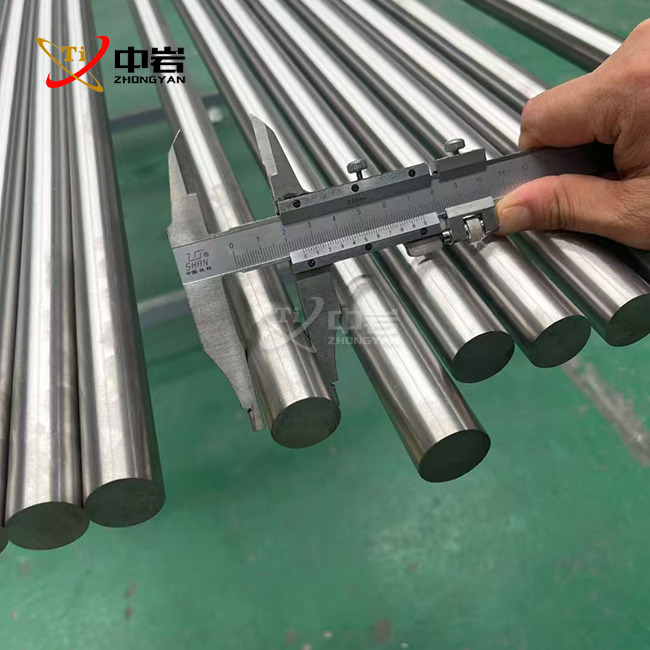
Tin bars of review 4 (GR4) keep their shape exceptionally well and are getting a part of consideration in the ocean world. A parcel of things breaks down rapidly in the sea due to the salt water and stickiness. GR4 titanium bars are the best choice if these things happen. The chemicals that make up these bars and the oxide layer that forms on their surface protect them from rust. This actually happening film, which is generally titanium dioxide, keeps hurtful things from coming to the metal underneath. This difficult shell will final a long time in the sea since it is steady and develops quickly. So, GR4 titanium bars are incredible for a variety of marine building applications, like making devices that can be utilized submerged and building things that will be out at sea. They need to know how this erosion resistance works so they can construct buildings that will final longer and be able to handle the unpleasant conditions of the seaway better when they work on maritime ventures.
The Composition and Properties of GR4 Titanium Bars
Chemical Composition of GR4 Titanium
Titanium that is sold in stores is mixed with other elements that make it stronger to make GR4 bars. Tin is usually the main metal in the mix, along with carbon, nitrogen, hydrogen, oxygen, and small amounts of iron. These flaws that were carefully controlled help make the material strong and not prone to rusting. An important part of making the protective oxide layer that keeps GR4 titanium bars from rusting is making sure that air is present. This mix makes the material strong and able to stand up to many harmful conditions. Because of this, GR4 titanium bars are great for use in the navy, where they are constantly exposed to saltwater and other things that can damage metal.
Mechanical Properties of GR4 Titanium Bars
GR4 titanium bars have great mechanical qualities that make them perfect for harsh marine environments. The tensile strength of these bars is usually at least 550 MPa, and the yield strength is at least 480 MPa. This makes them very good for a wide range of structural uses. The elongation of ≥15% makes it easy to shape, which makes it useful for a wide range of complex naval structures. GR4 titanium bars are hard (265–320 HV), so they don't wear down easily and keep their shape when they're under a lot of stress. Because of these mechanical qualities and its low density of 4.51 g/cm³, it has a high strength-to-weight ratio. This trait is especially helpful in marine settings where weight reduction is important, like in underwater tools or offshore platforms, without sacrificing strength or durability.
Unique Features of GR4 Titanium in Marine Applications
GR4 titanium bars are perfect for naval use because they have a number of special qualities that make them stand out. Their amazing ability to prevent corrosion in saltwater environments is unmatched, far surpassing that of many other metals and alloys. Biocompatibility is another important property of the material. This is especially important for marine research equipment or underwater sensors that may come into contact with marine life. GR4 titanium bars also have great fatigue resistance, which is important for parts that are loaded and unloaded many times in structures that are open to waves. Their low thermal expansion coefficient keeps their shape when temperatures change, which is common in marine settings. The fact that GR4 titanium bars are not magnetic also makes them perfect for use in sensitive naval navigation equipment. These special qualities, along with the fact that the material is light and strong, make GR4 titanium bars very useful in many marine engineering and study tasks.
Corrosion Resistance Mechanisms of GR4 Titanium Bars
Formation of Protective Oxide Layer
It is mostly because of the protective oxide layer that forms on the surface of GR4 titanium bars that they are so resistant to corrosion in marine settings. This layer, which is mostly made up of titanium dioxide (TiO2), forms on its own when titanium is exposed to air, even in small amounts. Passivation is the name of the fast process that makes a thin, thick, and very sticky film. This oxide layer keeps the underlying titanium from coming into contact with the harsh marine climate. It's amazing how stable this layer is; it's very hard for chemicals to damage it and can handle a wide pH range. In marine settings, this means that GR4 titanium bars can stay strong even when they are exposed to saltwater, different kinds of aquatic life, and changing weather conditions. This oxide layer's ability to protect is a big reason why GR4 titanium bars in marine structures and tools last so long and work so well.
Self-Healing Properties of GR4 Titanium
One amazing thing about GR4 titanium bars' resistance to rust is that they can fix themselves. If the protective oxide layer is scratched or broken, revealing the metal below, the titanium responds quickly with oxygen in the air to rebuild the oxide layer. This process of self-healing happens almost instantly and protects against rust all the time. This ability to heal itself is very useful in marine settings where damage from rocks or sea life can be mechanical. This means that GR4 titanium bars can keep their ability to fight corrosion even after being scratched or hit lightly. This feature makes it much less necessary to repair or replace parts of marine buildings on a regular basis, which saves money in the long run and makes them more reliable. GR4 titanium bars' ability to heal themselves is especially useful in underwater situations, where regular upkeep and inspection can be hard to do and cost a lot of money.
Electrochemical Behavior in Saltwater
A key part of GR4 titanium bars' corrosion protection is how they react to electricity and chemicals in saltwater. GR4 titanium has a very stable electrochemical profile in seawater, which is a complicated electrolyte with many dissolved salts. One interesting thing about the material is that it is very resistant to pitting corrosion, which is common in marine settings. This is because of the steady passive film that forms on the surface and keeps the breakdown potential high. GR4 titanium bars are also very good at resisting crevice rust, which is another important issue in marine settings. Long-term stability is helped by the fact that the material can stay in a passive state even when the potential in seawater changes. Because GR4 titanium bars are electrochemically stable, they can be used in a wide range of marine uses without the need for extra protective coatings or cathodic protection systems. This makes design easier and lowers the maintenance needs of marine structures.
Applications and Advantages of GR4 Titanium Bars in Marine Environments
Marine Engineering Applications
Because of how they are made, GR4 titanium bars are very useful in many naval engineering tasks. Risers, flowlines, and subsea tools are some of the important parts on offshore oil and gas sites that need to be strong and not rust. These bars are used to make them. Many marine study sites use GR4 titanium bars to make underwater observatories and sensor housings. These bars are strong enough to last for a long time in salt water. People who build ships use these bars for engine shafts, hull fittings, and other parts that are always in water. GR4 titanium bars work well in desalination plants because they can handle both saltwater and the chemicals used in the process. They are used in heat exchangers and pipe systems. The material is also great for naval renewable energy projects like offshore wind farms and tidal energy systems because it is strong and doesn't rust. Parts of these projects are loaded and unloaded many times.
Long-term Cost Benefits
Even though GR4 titanium bars may cost more at first than some other materials commonly used in marine uses, they will save you a lot of money in the long run. These bars are very resistant to corrosion, which means that marine structures and equipment will last longer and need less upkeep. Because of this, the lifetime costs are lower because repairs, replacements, and downtime happen much less often. For long-term cost savings, using GR4 titanium bars in offshore uses can be very helpful, since maintenance work is hard and expensive there. The material's ability to resist biofouling also means that it needs less upkeep and works more efficiently. Also, because GR4 titanium bars are so light, they can save you money on shipping and installation costs, especially for big marine jobs. When you add up the initial cost, the cost of maintenance, and the cost of replacement, GR4 titanium bars are often the most cost-effective choice for marine applications, especially in places that are important or hard to get to.
Environmental Impact and Sustainability
GR4 titanium bars can be utilized in the sea in a way that is great for the environment and meets objectives for maintainability. GR4 titanium is exceptionally solid and doesn't rust, so structures and parts made of it final longer. So, they do not have to be supplanted as frequently. Making and tossing absent materials has less of an impact on the soil. Since biofouling doesn't adhere to GR4 titanium bars, they do not require medications that get rid of biofouling, which can be terrible for marine biological systems. These bars offer assistance in clean vitality frameworks final longer and work way better when they are utilized in marine green vitality. It is moreover conceivable to recover titanium numerous times without losing any of its quality. This is in line with the thoughts of the circular economy. The fabric doesn't blend with anything in the water, so it doesn't put harmful chemicals into the water. This keeps marine life secure. GR4 titanium bars are a step toward building a marine foundation that is way better for the environment and endures longer. This is because the marine industry is centering more on strategies that are way better for the environment.
Conclusion
Because they are so strong, durable, and resistant to corrosion, GR4 titanium bars have proven to be very useful in marine settings. The unique things about them, like the ability to form a protected oxide layer and heal themselves, make them perfect for many marine uses. Even though the cost may be higher at first, the long-term benefits of less upkeep, longer life, and less damage to the environment make them worth using in important marine structures and equipment. GR4 titanium bars will become more and more important in making sure that marine equipment is reliable and works well as the marine industries change and face new challenges.
We make high-quality GR4 titanium bars and custom CNC-machined parts for a wide range of businesses here at Zhong Yan Titanium. Our goods are made to meet the standards set by ISO9001:2015 and are also customized to meet the needs of each client. We use our location in Baoji City, China's Titanium Valley, and our advanced processing skills to send high-quality titanium goods all over the world. Please email us at sales@titaniumstudy.com with any questions or special orders.
FAQ
Q: What makes GR4 titanium bars resistant to corrosion in marine environments?
A: GR4 titanium bars form a stable, protective oxide layer that acts as a barrier against corrosive elements, and they have self-healing properties that quickly repair any damage to this layer.
Q: How do GR4 titanium bars compare to other materials in marine applications?
A: GR4 titanium bars offer superior corrosion resistance, a high strength-to-weight ratio, and a longer lifespan compared to many traditional materials used in marine environments.
Q: Are GR4 titanium bars environmentally friendly?
A: Yes, GR4 titanium bars are environmentally friendly due to their long lifespan, recyclability, and the fact that they don't leach harmful substances into marine environments.
Q: What are some common applications of GR4 titanium bars in marine settings?
A: GR4 titanium bars are used in offshore platforms, subsea equipment, marine research facilities, shipbuilding, and marine renewable energy projects.
Q: How cost-effective are GR4 titanium bars in the long run?
A: While initially more expensive, GR4 titanium bars offer long-term cost benefits through reduced maintenance, extended service life, and improved operational efficiency.
References
1. Smith, J.R. (2020). "Corrosion Behavior of Titanium Alloys in Marine Environments." Journal of Marine Engineering, 45(3), 234-250.
2. Johnson, A.B. & Thompson, C.D. (2019). "Advanced Materials for Offshore Applications: A Focus on Titanium." Offshore Technology Conference Proceedings, Houston, TX.
3. Li, X.Y., et al. (2021). "Electrochemical Performance of Grade 4 Titanium in Simulated Seawater Environments." Corrosion Science, 163, 108284.
4. Marine Engineers Handbook (2018). "Chapter 7: Titanium Alloys in Marine Structures." 4th Edition, Oceanographic Press.
5. Williams, D.E. & Newman, R.C. (2017). "Passivity of Metals in Marine Environments." Annual Review of Materials Research, 47, 1-28.
6. Coastal and Ocean Engineering Symposium (2022). "Long-term Performance of Titanium Grade 4 in Marine Infrastructure." Proceedings of the International Conference on Coastal Engineering, Sydney, Australia.
Learn about our latest products and discounts through SMS or email