- English
- French
- German
- Portuguese
- Spanish
- Russian
- Japanese
- Korean
- Arabic
- Greek
- German
- Turkish
- Italian
- Danish
- Romanian
- Indonesian
- Czech
- Afrikaans
- Swedish
- Polish
- Basque
- Catalan
- Esperanto
- Hindi
- Lao
- Albanian
- Amharic
- Armenian
- Azerbaijani
- Belarusian
- Bengali
- Bosnian
- Bulgarian
- Cebuano
- Chichewa
- Corsican
- Croatian
- Dutch
- Estonian
- Filipino
- Finnish
- Frisian
- Galician
- Georgian
- Gujarati
- Haitian
- Hausa
- Hawaiian
- Hebrew
- Hmong
- Hungarian
- Icelandic
- Igbo
- Javanese
- Kannada
- Kazakh
- Khmer
- Kurdish
- Kyrgyz
- Latin
- Latvian
- Lithuanian
- Luxembou..
- Macedonian
- Malagasy
- Malay
- Malayalam
- Maltese
- Maori
- Marathi
- Mongolian
- Burmese
- Nepali
- Norwegian
- Pashto
- Persian
- Punjabi
- Serbian
- Sesotho
- Sinhala
- Slovak
- Slovenian
- Somali
- Samoan
- Scots Gaelic
- Shona
- Sindhi
- Sundanese
- Swahili
- Tajik
- Tamil
- Telugu
- Thai
- Ukrainian
- Urdu
- Uzbek
- Vietnamese
- Welsh
- Xhosa
- Yiddish
- Yoruba
- Zulu
Grade 1 Titanium Foil — Superior Ductility and Workability
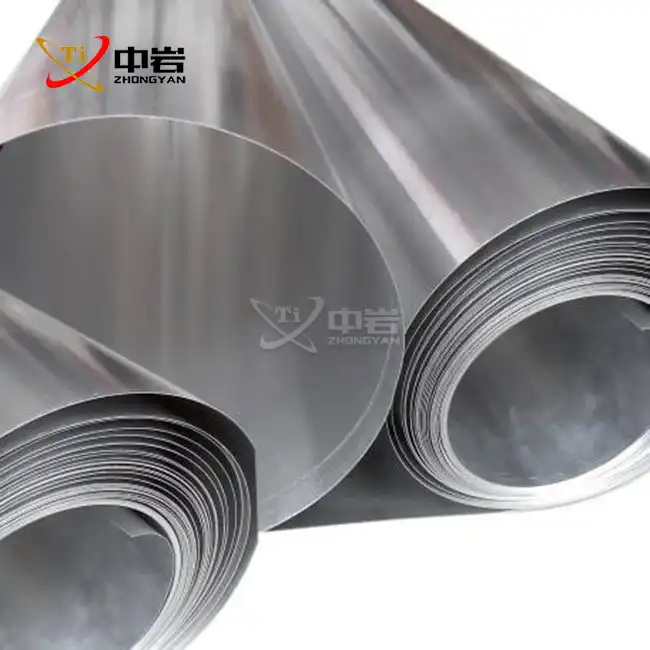
Grade 1 titanium foil represents the pinnacle of commercially pure titanium materials, offering unmatched ductility and exceptional workability for demanding industrial applications. This ultra-pure material combines remarkable corrosion resistance with superior formability, making it an ideal choice for aerospace, medical, and chemical processing industries. With its excellent biocompatibility and lightweight properties, it delivers consistent performance in the most challenging environments while maintaining structural integrity across diverse manufacturing processes.
Understanding Grade 1 Titanium Foil: Properties and Composition
Grade 1 titanium is the best form of titanium that can be bought in stores. It has very few alloying elements and keeps its excellent material purity. A minimum of 99.5% titanium is usually present, and small amounts of iron, oxygen, carbon, and nitrogen are carefully controlled to keep the best performance qualities.
Chemical Composition and Purity Standards
The chemicals that make up pure titanium foil are exactly what is required by ASTM B265. This makes sure that the quality is the same from batch to batch. The material is very resistant to rust and easy to shape because the iron content stays below 0.20% and the oxygen content stays below 0.18%. These carefully managed amounts of impurities keep the foil's great ability to be shaped while also giving it reliable mechanical qualities for important uses. The carbon and nitrogen contents are kept very low, usually below 0.08% and 0.03%, respectively. This has a direct effect on how easy the material is to work with and how good the surface finish is. This exact chemical control makes sure that our titanium foil keeps its smooth surface finish and great shaping abilities across a wide range of thicknesses.
Physical and Mechanical Properties
Because of its material qualities, grade 1 titanium foil is perfect for uses that need both strength and flexibility. The material has a tensile strength of at least 240 MPa and a yield strength of at least 170 MPa. It performs well and is very flexible, with a stretch value of at least 24%. In aircraft and medicine, where reducing weight is very important, density is also very important. Titanium foil is much stronger than standard materials like stainless steel or copper alloys, even though it is heavier (about 4.5 g/cm³). The 103–107 GPa elastic modulus of the material makes it hard enough for structural uses while still letting complex shaping processes happen.
Thickness Variations and Performance Impact
Customizing the thickness of titanium foil goods has a direct effect on how well they work mechanically and what kinds of uses they can be used for. We can manufacture materials with thicknesses ranging from 0.01 mm to 0.5 mm, and each range has its own benefits for different business needs. Thinner foil types work best for tasks that need to be as flexible and moldable as possible, like electronic protection and making custom medical devices. These very thin standards allow for great shapeability while still offering solid protection against corrosive environments. For uses that need more mechanical strength, thicker versions offer better structural stability while still maintaining the material's natural resistance to rust. To get the best performance, the width selection process needs to take into account the needs for shaping, the required strength, and the surrounding environment.
Advantages of Grade 1 Titanium Foil Over Other Materials
There are often a lot of complicated trade-offs between performance traits, cost, and application needs when choosing a material. Pure titanium foil has clear benefits that make it better than other materials in a lot of tough situations.
Comparison with Stainless Steel and Aluminum
Compared to stainless steel options, titanium foil is more resistant to rusting, especially in places with a lot of chloride and acidic conditions. Even though stainless steel might be cheaper at first, titanium is usually a better long-term value because it lasts longer and needs less upkeep. When it comes to weight, titanium is a big plus because its density is about 40% lower than stainless steel's, while still having similar strong properties. This weight advantage directly leads to less fuel use in aircraft and more patient comfort in medical device implementations. Even though aluminum metals are light, they can't compare to titanium when it comes to biocompatibility or resistance to rust. When used in coastal settings or chemical handling, titanium is a better long-term choice than aluminum because aluminum is more likely to rust and react with chemicals.
Grade 1 versus Grade 2 Titanium Comparison
Knowing the differences between the different types of titanium helps buying teams choose the right materials. Grade 2 titanium is stronger than Grade 1 titanium, but it is harder to shape. Grade 1 titanium is the most flexible and easiest to work with, so it's perfect for tasks that need to be shaped in complicated ways or with small radius bends. Because the material is so good at stretching, it can be used in ways that would be hard or impossible to do with higher-strength titanium types. A cost-performance study shows that Grade 1 titanium is usually the best choice for uses that don't need the highest strength. The better shapeability makes manufacturing simpler and cuts down on waste, which cancels out any differences in the cost of the materials at first through higher production efficiency.
Applications and Use Cases of Grade 1 Titanium Foil
Because economically pure titanium foil is so flexible, it can be used in many different industries, each of which can benefit from its unique set of qualities. Knowing the exact needs of an application helps engineers and buying managers figure out the best ways to put it into action.
Aerospace and Defense Applications
Titanium foil's high strength-to-weight ratio and resistance to high temperatures make it ideal for making important aerospace parts. These materials can keep their qualities at high temperatures and prevent corrosion in harsh weather, which makes them useful for heat shields, exhaust system parts, and lightweight structural elements. Thin titanium foil is used in thermal protection devices because it is a good heat conductor and doesn't oxidize at high temperatures. Because the material can handle being heated and cooled many times without breaking down, it is very useful for making reusable spaceship parts and high-performance airplane systems.
Medical and Pharmaceutical Industries
Biocompatibility is one of the best things about titanium for use in medicine. The non-toxic nature of the material and its resistance to biological corrosion processes make it useful for surgical tools, implantable devices, and monitoring equipment. Titanium foil is used for reactor linings and process parts in pharmaceutical processing equipment where chemical cleanliness is very important. The material's resistance to cleaning agents and medicinal chemicals protects the quality of the product and increases the life of the equipment.
Electronics and Sputtering Applications
Titanium foil is used in electronics manufacturing for specific tasks like making capacitors and blocking electromagnetic waves. Because of its electrical features and resistance to corrosion, the material can be used in difficult conditions where other materials would fail. High-purity titanium foil is used as a sputtering target for thin-film deposition methods in the production of optical coatings and semiconductors. It's managed makeup makes sure that the deposition properties are always the same and that sensitive production processes aren't harmed too much.
How to Choose and Procure Grade 1 Titanium Foil for Your Business
To make sure that important users can always get the materials they need, good buying strategies balance quality needs, cost concerns, and the suppliers' abilities. Understanding the most important selection factors can help speed up the buying process while still keeping high standards of quality.
Supplier Certification and Quality Standards
ISO 9001 certification is a basic way for titanium foil suppliers to ensure the quality of their products by making sure that their production methods and paperwork are always the same. Compliance with ASTM B265 ensures that the chemical makeup and mechanical qualities of a material meet industry standards. Traceability paperwork helps keep an eye on quality all along the supply chain. It gives important details for medical and military uses that need to know where a material came from. Reliable sellers keep detailed records that connect raw materials to final goods. This helps customers meet quality standards and follow the rules.
Customization Options and Minimum Orders
Having the ability to change the thickness of a material lets procurement teams find the best specs for a job while cutting down on waste and handling costs. Suppliers who can precisely control thickness and keep tolerances close add extra value by lowering the need for processing further down the line. Customizing the width and length helps make the best use of the material and reduces the need for handling. With coil or cut-to-length choices, you can use the material in a variety of ways while keeping its structure, while transporting and storing it.
Pricing Models and Cost Optimization
Understanding how the titanium market works helps people who work in buying figure out how prices work and how to make the best purchases for grade 1 titanium foil. Market prices change based on the supply of raw materials, the cost of handling them, and patterns of demand around the world. This means that flexible ways of buying things are needed. Volume buying deals often save money and make sure there is a steady supply of goods for ongoing production needs. Long-term relationships with dependable providers can help keep costs stable and make the supply chain more resilient during times when the market is volatile.
Ensuring Quality and Performance: Tips for Using Grade 1 Titanium Foil
Keeping the purity of the material while it is being handled, stored, and made is important for getting the most out of pure titanium foil. The unique features of the material are kept safe and intact by using the right handling methods.
Storage and Handling Best Practices
Clean, dry storage spaces keep surfaces from getting dirty and maintain their quality over long periods of time. Controlling humidity helps avoid problems caused by wetness while keeping the material's features and surface finish. When handling ferrous materials, they should be kept away from ferrous materials as much as possible to avoid iron pollution, which can weaken corrosion protection. Using the right lifting tools and protected covers keeps the integrity of materials while they are being moved or processed.
Fabrication Considerations
Understanding how titanium works when it hardens and when it springs back helps form processes. With the right tooling design and forming settings, you can get reliable results while reducing material stress and the chance of breaking. To keep their mechanical qualities and resistance to corrosion, welding processes need special filler materials and techniques. Choosing the right protective gas and controlling the heat intake will keep the material's good qualities and keep it from getting contaminated.
Long-term Maintenance and Performance
Setting up regular review times helps find problems before they affect how well the system works. When used together, visual inspection and non-destructive testing methods give a full picture of the state of a material in service use. When cleaning, the right products and methods should be used to keep the surface's structure while getting rid of contaminants. Knowing how chemicals react with each other makes sure that cleaning methods improve the performance of materials instead of hurting them.
Conclusion
Grade 1 titanium foil is a great material for fields that need something that is flexible, doesn't rust, and is safe for living things. Because it has such a unique set of qualities, it is essential for use in aircraft, medicine, and chemical processing, where material dependability is very important. The different thickness choices, compliance with ASTM B265, and good formability give engineering teams a lot of options for how to solve difficult design problems. Grade 1 titanium foil provides steady performance and long-term value when purchased from reputable providers like Zhongyan, who uphold strict quality standards and provide extensive customization options. The money spent on high-quality titanium foil returns in the form of longer service life, less upkeep, and better performance in tough situations.
FAQ
What makes Grade 1 titanium foil different from other titanium grades?
Grade 1 titanium is the purest grade of titanium that is offered on the market. It must contain at least 99.5% titanium. Because it is so pure, it is very flexible and easy to shape, which makes it perfect for uses that need complicated shaping. While Grade 2 titanium is stronger, Grade 1 titanium is easier to work with and doesn't rust, which is especially useful in chemical processing and medical settings where cleanliness is important.
Can Grade 1 titanium foil be customized for specific thickness requirements?
Yes, our production skills allow for full customization of thicknesses from 0.01 mm to 0.5 mm. Specifications for width can go up to 1000 mm, and lengths can be ordered in both coil and cut-to-length forms. Because of this, procurement teams can find the best material specs for each job while also cutting down on waste and handling costs.
What certifications should I look for when selecting a titanium foil supplier?
Some important licenses are ISO 9001 for quality management systems and ASTM B265 approval for material requirements. Also, sellers should give full paperwork that shows how raw materials were used to make finished goods. For medical and aircraft uses, AS9100 or ISO 13485 certifications give extra proof of quality standards that are specific to those fields.
How does Grade 1 titanium foil perform in corrosive environments?
Grade 1 titanium is very resistant to rust in a wide range of circumstances, such as the ocean, chloride solutions, and acidic conditions. The inactive oxide layer of the material naturally protects against corrosion, often better than stainless steel and aluminum options. The fact that it doesn't rust and is safe for living things makes it very useful for medical and chemical processing uses.
Partner with Zhongyan for Premium Grade 1 Titanium Foil Solutions
Zhongyan is a reliable company that makes grade 1 titanium foil. We use our site in China's Titanium Valley to send high-quality products all over the world. Our ASTM B265-compliant products come in a range of thicknesses, have excellent corrosion protection, and have smooth surface finishes that meet the strictest industry standards. With full OEM cutting and packaging services, we offer total options that are made to fit your needs. Our ISO 9001:2015-certified production methods guarantee consistent quality, and our experienced technical team is here to help you make choices about what to buy. Talk to our experts at sales@titaniumstudy.com about your needs for titanium foil and find out how our grade 1 titanium foil for sale can help your manufacturing processes by giving you reliable, high-performance materials.
References
1. Boyer, R.R. "An Overview on the Use of Titanium in the Aerospace Industry." Materials Science and Engineering: A, Vol. 213, pp. 103-114.
2. Geetha, M., Singh, A.K., Asokamani, R., and Gogia, A.K. "Ti-Based Biomaterials: The Ultimate Choice for Orthopaedic Implants – A Review." Progress in Materials Science, Vol. 54, pp. 397-425.
3. Schutz, R.W. and Thomas, D.E. "Corrosion of Titanium and Titanium Alloys in Chemical Processing Industries." ASM Handbook Volume 13C: Corrosion Environments and Industries.
4. Lutjering, G. and Williams, J.C. "Titanium Engineering Materials and Processes." Springer-Verlag Berlin Heidelberg, 2nd Edition.
5. Peters, M., Kumpfert, J., Ward, C.H., and Leyens, C. "Titanium Alloys for Aerospace Applications." Advanced Engineering Materials, Vol. 5, pp. 419-427.
6. American Society for Testing and Materials. "ASTM B265-20: Standard Specification for Titanium and Titanium Alloy Strip, Sheet, and Plate." ASTM International.
Learn about our latest products and discounts through SMS or email