- English
- French
- German
- Portuguese
- Spanish
- Russian
- Japanese
- Korean
- Arabic
- Greek
- German
- Turkish
- Italian
- Danish
- Romanian
- Indonesian
- Czech
- Afrikaans
- Swedish
- Polish
- Basque
- Catalan
- Esperanto
- Hindi
- Lao
- Albanian
- Amharic
- Armenian
- Azerbaijani
- Belarusian
- Bengali
- Bosnian
- Bulgarian
- Cebuano
- Chichewa
- Corsican
- Croatian
- Dutch
- Estonian
- Filipino
- Finnish
- Frisian
- Galician
- Georgian
- Gujarati
- Haitian
- Hausa
- Hawaiian
- Hebrew
- Hmong
- Hungarian
- Icelandic
- Igbo
- Javanese
- Kannada
- Kazakh
- Khmer
- Kurdish
- Kyrgyz
- Latin
- Latvian
- Lithuanian
- Luxembou..
- Macedonian
- Malagasy
- Malay
- Malayalam
- Maltese
- Maori
- Marathi
- Mongolian
- Burmese
- Nepali
- Norwegian
- Pashto
- Persian
- Punjabi
- Serbian
- Sesotho
- Sinhala
- Slovak
- Slovenian
- Somali
- Samoan
- Scots Gaelic
- Shona
- Sindhi
- Sundanese
- Swahili
- Tajik
- Tamil
- Telugu
- Thai
- Ukrainian
- Urdu
- Uzbek
- Vietnamese
- Welsh
- Xhosa
- Yiddish
- Yoruba
- Zulu
GR36 Titanium Bar: Is It Good for Lightweight Structural Design?
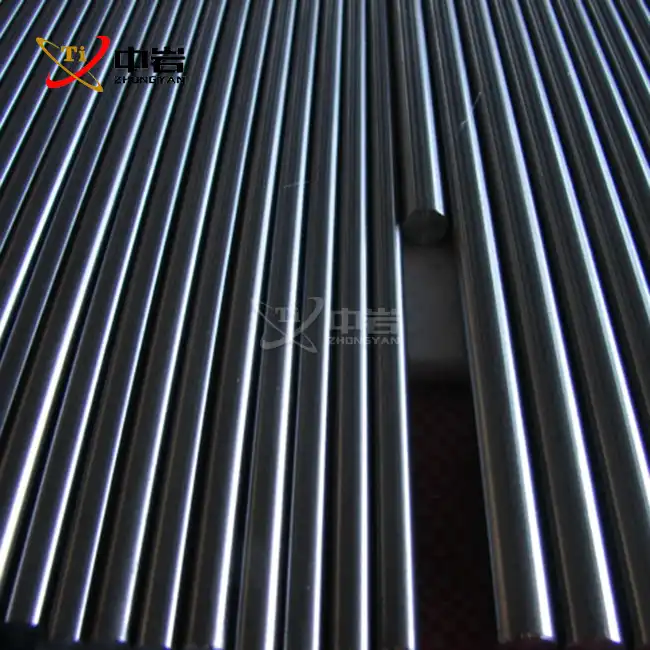
When engineers evaluate materials for weight-sensitive applications, the GR36 titanium bar consistently emerges as a compelling choice. This specialised titanium alloy offers an exceptional balance between mechanical strength and reduced mass, making it particularly suitable for lightweight structural design across aerospace, marine, and industrial machinery sectors. With a tensile strength exceeding 900 MPa and a density of just 4.43 g/cm³, this material delivers performance advantages that address the critical demands of modern engineering projects where every gram counts toward operational efficiency and fuel economy.
Understanding GR36 Titanium Bar: Composition and Mechanical Properties
Chemical Composition and Standards Compliance
The GR36 titanium bar manufactured by Zhongyan adheres to ISO 5832-2 and ASTM B348 standards, ensuring consistent quality across production batches. This alloy, technically designated as Ti-6Al-2Sn-4Zr-6Mo, contains carefully balanced alloying elements that stabilise its alpha-beta microstructure. The aluminium content provides solid-solution strengthening, while molybdenum enhances elevated-temperature performance. Zirconium and tin additions contribute to thermal stability and creep resistance—critical factors when components operate under sustained loads at temperatures approaching 540°C.
Certification documentation accompanies every shipment from our Baoji facility, providing full traceability from raw material sourcing through final inspection. This documentation trail satisfies quality management requirements for aerospace OEMs and medical device manufacturers who must demonstrate regulatory compliance throughout their supply chains.
Mechanical Properties That Define Performance
Titanium bars meeting the Grade 36 criteria have measurable mechanical properties that make them ideal for structural uses. Performance metrics relied upon by engineering teams during design validation are revealed by testing carried out under controlled laboratory conditions:
Structural integrity is provided under dynamic loading situations by the tensile strength, which reaches a minimum of 900 MPa. There is a distinct buffer zone before irreversible deformation happens since the yield strength is higher than 850 MPa. Stiffness is on par with steel, but much lighter, thanks to the elastic modulus of 114 GPa. With an elongation value of 10% or more, the material is sufficiently ductile to withstand shock loads before breaking.
Fatigue life in components subjected to cyclic loading is directly influenced by the quality of their surface finish. With an H9 tolerance, our cold-drawn bars have a smooth, shiny surface that cuts down on CNC material waste and machining allowances. Consistent HRC 36 results from hardness testing across all bar lengths provide repeatable tool life and predictable machining behaviour in production runs.
Heat Treatment and Property Enhancement
The microstructure of the GR36 titanium bar is optimised for further shaping by subjecting it to annealing treatments. When the material undergoes solution annealing, it achieves optimal ductility and strength for structural applications. Parts that need to be more resistant to wear can undergo strengthening phases as a result of post-fabrication ageing treatments; however, this method sacrifices some ductility in exchange for a harder surface.
Keeping the temperature down during heat treating is essential. Prolonged exposure to temperatures above 540°C can change the alpha-beta phase balance, potentially leading to a decrease in creep resistance. To avoid component performance degradation due to localised property fluctuations, our thermal processing equipment maintains furnace zones at a consistent temperature within 5°C.
Corrosion Resistance in Aggressive Environments
Titanium alloy bars exhibit exceptional resistance to oxidising and chloride-rich environments—a property that extends service life in marine and chemical processing applications. The stable oxide film that forms on exposed surfaces provides passive protection against pitting and crevice corrosion, even in saltwater immersion conditions. This corrosion resistance translates directly into reduced maintenance costs and longer replacement intervals for structural components exposed to harsh operating environments.
GR36 Titanium Bar vs Other Materials: Making the Right Choice
Comparing Titanium Grades: GR36, Grade 5, and Beyond
Material selection requires understanding performance trade-offs. Grade 5 titanium (Ti-6Al-4V) dominates the market due to its established supply base and well-documented properties, but the GR36 titanium bar offers distinct advantages for specific applications. Grade 5 excels in high-strength, room-temperature applications, delivering tensile strengths approaching 950 MPa with excellent fatigue resistance. However, its elevated-temperature performance diminishes above 350°C, limiting its usefulness in hot-section aerospace components.
The molybdenum content in Grade 36 titanium bars provides superior creep resistance at temperatures where Grade 5 begins to soften. This thermal stability makes GR36 the preferred choice for compressor sections, turbine casings, and exhaust components where sustained exposure to temperatures between 400 and 540°C occurs. The material's balanced composition also improves weldability compared to higher-strength beta alloys, reducing the risk of heat-affected zone embrittlement during fabrication.
Performance Against Stainless Steel
Stainless steel grades like 316L offer lower raw material costs and readily available supply, making them attractive for budget-constrained projects. However, the density disadvantage becomes immediately apparent: 316L stainless steel weighs approximately 8.0 g/cm³ compared to 4.43 g/cm³ for titanium bars. This 80% weight penalty directly impacts fuel consumption in transportation applications and payload capacity in aerospace structures.
Corrosion resistance comparisons reveal another divergence. While 316L performs adequately in mildly corrosive environments, it remains susceptible to chloride-induced stress corrosion cracking—a failure mode that doesn't affect titanium alloys. Marine applications subjected to saltwater spray and chemical processing equipment handling acidic media benefit substantially from titanium's immunity to these degradation mechanisms.
Cost-Benefit Analysis for B2B Procurement
Depending on market conditions and order volumes, the raw material pricing for a GR36 titanium bar might be up to 30% more than that of stainless steel and Grade 5 titanium. Rather than just comparing unit prices, this initial cost premium needs to be justified through lifecycle analysis. Reducing vehicle weight improves fuel economy, which has a compounding effect over the vehicle's lifespan. Corrosion resistance reduces the total cost of ownership by removing the need for coatings and increasing the intervals between replacements.
Procurement managers should evaluate the whole acquisition cost, including machining expenditures. Titanium has different machinability properties than steel, so you'll need to adjust your equipment and cutting parameters accordingly. Fortunately, we have a technical support staff that can help you with all of that, as well as manufacturing advice that will maximise efficiency and reduce scrap rates as you go from developing prototypes to producing large quantities.
Industrial Applications of GR36 Titanium Bar in Lightweight Structural Design
Aerospace: Where Performance Meets Regulation?
Materials that can reduce structural weight while meeting demanding performance standards are in high demand for aerospace applications. When its properties are combined, the GR36 titanium bar provides operational benefits in several aviation systems. Compressor blades made of this material are engineered to withstand thermal cycle stresses while maintaining aerodynamic profiles because of their elevated-temperature robustness. The alloy's resistance to fatigue and corrosion makes it ideal for use in fasteners, especially in locations that are wet or exposed to hydraulic fluids.
Aeroplane fuel efficiency is enhanced by reducing the weight of individual components. Eliminating every kilogram from the aircraft enhances the payload capacity and range, two performance metrics that airlines consider when acquiring new fleet members. Precision computer numerical control (CNC) milling of titanium bars into completed aerospace components is one of our production capabilities. We can do this process with dimensional tolerances that fulfil AS9100 quality requirements and with material traceability documentation.
Marine Applications: Durability in Saltwater Environments
Marine engineering presents unique material challenges. Saltwater exposure, cyclic loading from wave action, and weight constraints on offshore platforms create demanding service conditions. Titanium alloy bars address these challenges through their exceptional corrosion resistance and strength-to-weight ratio. Subsea equipment manufacturers specify GR36 for valve components, pump housings, and structural brackets where stainless steel would require frequent replacement due to corrosion fatigue.
Boat builders incorporate titanium fasteners and structural members in high-performance racing yachts where weight directly impacts speed. The material's non-magnetic properties also benefit navigation equipment installations, preventing compass deviation and sonar interference that ferromagnetic materials would introduce.
Medical and Industrial Machinery Considerations
Titanium alloys are increasingly used in medical devices, particularly in surgical tools and specialised equipment. However, the compositional controls needed for materials with implant-grade specifications differ from those for materials with structural-grade specifications. The GR36 titanium bar is a popular material for surgical instruments because of its strength, resistance to corrosion during sterilisation cycles, and lightweight handling qualities, all of which contribute to a more comfortable operating experience for the surgeon.
Titanium is used in chemical processing equipment for industrial machinery, especially for parts that are exposed to process streams that are acidic or oxidising. In harsh chemical conditions, heat exchanger tubes, reactor vessels, and pump parts made from titanium bars outlast their stainless steel equivalents.
Machining and Fabrication Best Practices
Successful fabrication of titanium components requires understanding the material's unique characteristics. Our CNC machining operations employ carbide tooling with appropriate coatings, maintaining cutting speeds between 50 and 80 surface meters per minute to manage heat generation. Coolant application prevents work hardening and extends tool life—critical factors when machining complex geometries from solid bar stock.
Welding operations demand inert gas shielding to prevent atmospheric contamination. We utilise argon purge systems during TIG welding, maintaining oxygen levels below 50 ppm to ensure ductile, high-strength joints. Proper fixturing controls distortion during thermal cycling, and post-weld stress relief treatments restore optimal mechanical properties in welded assemblies.
Procurement Guide for GR36 Titanium Bar: What B2B Clients Should Know
Supplier Selection Criteria That Matter
Choosing the right GR36 titanium bar supplier impacts project success beyond initial pricing considerations. A manufacturing location within Baoji's Titanium Valley provides Zhongyan with direct access to raw material refineries and specialised processing equipment, reducing lead times and ensuring material consistency. Our facility operates under ISO 9001:2015 certification, with documented quality management systems that track every production step from ingot melting through final inspection.
Supplier reliability extends beyond on-time delivery metrics. Technical support capabilities separate competent vendors from exceptional partners. Our engineering team assists with material selection, provides machining parameter recommendations, and collaborates on design optimisation to reduce manufacturing costs while maintaining performance requirements. This consultative approach has built long-term relationships with aerospace OEMs and medical device manufacturers who value responsive technical expertise.
Understanding Pricing Structures and Order Quantities
Several factors influence the price of titanium bars, such as the market for raw materials, the amount of production, the dimensions, and the certificates needed. Standard diameter bars in common lengths are usually cheaper per unit because they are produced more efficiently, while higher unit prices come from the dedicated production runs needed for unique specifications. All of these considerations are built into our transparent pricing model, which generates comprehensive quotes that break out the prices of materials, processing, and certification paperwork.
To strike a compromise between production efficiency and customer flexibility, minimum order quantities are established. Minimum order quantities (MOQs) for standard products are 100 kg, but for special requirements, 250–500 kg may be necessary to cover setup costs. In line with the production schedules of aerospace and industrial gear, volume discount structures provide price discounts at 1,000 kg, 5,000 kg and 10,000 kg annual quantities, rewarding larger commitments.
Customisation Capabilities and Lead Times
To meet the needs of its varied clientele, Baoji Zhongyan Titanium Industry Co., Ltd. keeps a full complement of customisation options on hand. For specialised applications, our production machinery can handle lengths of up to 6,000 mm and diameters ranging from 10 mm to 300 mm. In terms of surface roughness and dimensional tolerances, there are a few different finishing options to choose from: as-rolled, cold-drawn, centreless ground, and polished.
The complexity of the specifications and the present manufacturing schedules determine the lead times. It usually takes 3–4 weeks for polished standard-diameter titanium bars to ship after an order is confirmed but 6–8 weeks for unusual dimensions that require special heat treatments. Premium price covers overtime operations and prioritised scheduling, while expedited production accommodates urgent project needs.
Quality Assurance and Material Traceability
Every GR36 titanium bar shipment includes comprehensive material test reports documenting chemical composition, mechanical properties, and dimensional conformance. Spectroscopic analysis verifies alloying element percentages, tensile testing confirms strength and ductility parameters, and ultrasonic inspection detects internal discontinuities that could compromise component integrity. This documentation package satisfies aerospace quality requirements and provides the traceability demanded by regulated industries.
Our quality management system maintains production records for seven years, enabling investigation of field issues and supporting continuous improvement initiatives. Statistical process control charts track key parameters across production batches, identifying trends before they result in nonconforming material. This proactive quality approach has achieved a defect rate below 0.1% over the past three years—a performance level that reduces inspection burden on customer receiving operations.
Conclusion
Lightweight structural design demands materials that deliver exceptional performance without compromising reliability. The GR36 titanium bar meets this challenge through its optimised combination of high strength, thermal stability, and corrosion resistance, all achieved at a density nearly half that of steel. Our analysis demonstrates clear advantages in aerospace, marine, and industrial applications where weight reduction translates directly into operational benefits and lifecycle cost savings.
Procurement success requires partnering with suppliers who understand both material science and manufacturing realities. Zhongyan's location in Baoji's Titanium Valley, combined with our ISO-certified quality systems and comprehensive customisation capabilities, positions us to support your most demanding projects with reliable delivery, technical expertise, and competitive pricing structures that reflect the value of long-term partnerships.
FAQ
What distinguishes GR36 from Grade 5 titanium?
Grade 5 (Ti-6Al-4V) offers excellent room-temperature strength but limited elevated-temperature performance, whereas the GR36 titanium bar maintains mechanical properties up to 540°C due to its molybdenum content. GR36 provides superior creep resistance for high-temperature structural applications, making it preferable for hot-section aerospace components and chemical processing equipment exposed to thermal cycling.
How does heat treatment affect mechanical properties?
Annealing treatments maximise ductility while maintaining structural strength, creating the optimal condition for forming operations and general structural use. Ageing treatments can increase hardness and tensile strength by precipitating secondary phases, though this reduces elongation values. Our technical team recommends heat treatment cycles based on specific application requirements and desired property balances.
Which industries benefit most from titanium bars in structural design?
Aerospace manufacturers gain fuel efficiency through weight reduction, marine applications benefit from saltwater corrosion resistance, and chemical processing facilities appreciate the material's immunity to aggressive media. Industrial machinery producers use titanium alloy components where weight reduction improves handling or operational dynamics. Each industry leverages different property combinations, but all value the strength-to-weight ratio that titanium uniquely provides.
Partner with Zhongyan for Premium GR36 Titanium Bar Supply
Zhongyan brings over 15 years of specialised titanium manufacturing experience to your procurement needs. As a leading GR36 titanium bar manufacturer based in China's Titanium Valley, we combine advanced production capabilities with responsive technical support to deliver materials that meet your exact specifications. Our facility produces titanium bars conforming to ASTM B348 and ISO 5832-2 standards, with complete customisation options covering diameter, length, surface finish, and heat treatment conditions.
Contact our sales team at sales@titaniumstudy.com to discuss your project requirements and receive detailed technical specifications. We provide rapid quotations, material test reports, and engineering consultation that accelerate your design validation and production planning. Visit www.titaniumstudy.com to explore our complete range of titanium materials and CNC machining services supporting aerospace, medical, and industrial applications worldwide.
References
1. Boyer, R., Welsch, G., & Collings, E.W. (2007). Materials Properties Handbook: Titanium Alloys. ASM International, Materials Park, Ohio.
2. Donachie, M.J. (2000). Titanium: A Technical Guide, 2nd Edition. ASM International, Materials Park, Ohio.
3. Lutjering, G. & Williams, J.C. (2007). Titanium: Engineering Materials and Processes, 2nd Edition. Springer-Verlag, Berlin.
4. Peters, M., Kumpfert, J., Ward, C.H., & Leyens, C. (2003). "Titanium Alloys for Aerospace Applications." Advanced Engineering Materials, Vol. 5, No. 6, pp. 419-427.
5. Veiga, C., Davim, J.P., & Loureiro, A.J.R. (2012). "Properties and Applications of Titanium Alloys: A Brief Review." Reviews on Advanced Materials Science, Vol. 32, pp. 133-148.
6. ASTM International. (2021). ASTM B348-13: Standard Specification for Titanium and Titanium Alloy Bars and Billets. West Conshohocken, Pennsylvania.
_1755652968020.jpg)
_1755672221864.jpg)
Learn about our latest products and discounts through SMS or email