- English
- French
- German
- Portuguese
- Spanish
- Russian
- Japanese
- Korean
- Arabic
- Greek
- German
- Turkish
- Italian
- Danish
- Romanian
- Indonesian
- Czech
- Afrikaans
- Swedish
- Polish
- Basque
- Catalan
- Esperanto
- Hindi
- Lao
- Albanian
- Amharic
- Armenian
- Azerbaijani
- Belarusian
- Bengali
- Bosnian
- Bulgarian
- Cebuano
- Chichewa
- Corsican
- Croatian
- Dutch
- Estonian
- Filipino
- Finnish
- Frisian
- Galician
- Georgian
- Gujarati
- Haitian
- Hausa
- Hawaiian
- Hebrew
- Hmong
- Hungarian
- Icelandic
- Igbo
- Javanese
- Kannada
- Kazakh
- Khmer
- Kurdish
- Kyrgyz
- Latin
- Latvian
- Lithuanian
- Luxembou..
- Macedonian
- Malagasy
- Malay
- Malayalam
- Maltese
- Maori
- Marathi
- Mongolian
- Burmese
- Nepali
- Norwegian
- Pashto
- Persian
- Punjabi
- Serbian
- Sesotho
- Sinhala
- Slovak
- Slovenian
- Somali
- Samoan
- Scots Gaelic
- Shona
- Sindhi
- Sundanese
- Swahili
- Tajik
- Tamil
- Telugu
- Thai
- Ukrainian
- Urdu
- Uzbek
- Vietnamese
- Welsh
- Xhosa
- Yiddish
- Yoruba
- Zulu
Custom Titanium Rod for Medical OEM Manufacturers
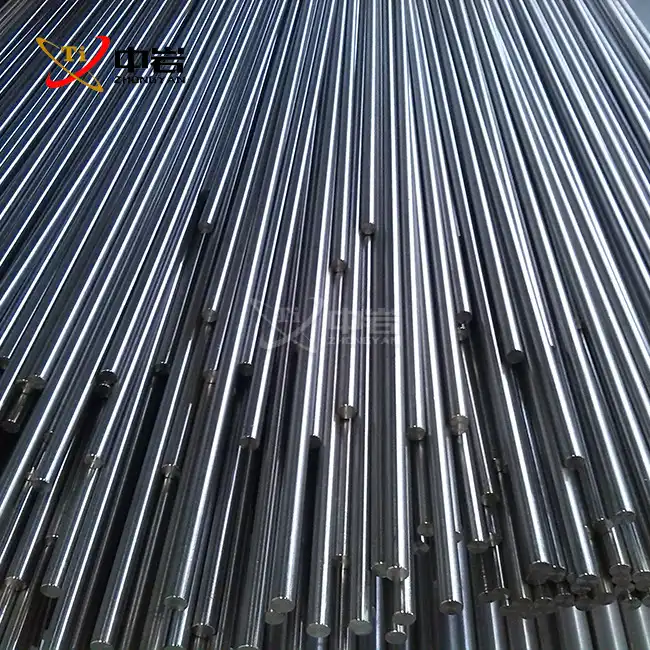
Custom titanium rod medical solutions are a game-changing way for original equipment makers (OEMs) to get materials that are precisely designed to meet the strict needs of modern healthcare applications. For orthopedic implants, surgery tools, and oral prosthetics, medical-grade titanium rods, especially those made from Grade 5 ELI metal, offer the best biocompatibility and mechanical performance. These specialized parts solve important problems in the industry, like stress protection, metallosis, and implant wear failure, while also making it easier for the bone to grow into the implant. Our medical titanium rods are the best choice for demanding OEM makers around the world because they meet all ASTM F136 and ISO 5832-3 standards, have precise limits of ±0.03mm, and have a tensile strength of over 850 MPa.
Understanding Medical Titanium Rods and Their Advantages
Titanium rods used in medicine are the best safe building materials because they are made to meet the special needs of surgery implantation and orthopedic uses. Usually, Grade 5 ELI (Extra Low Interstitial) titanium alloy is used to make these precision-machined parts. This alloy has the right amount of aluminum and vanadium to improve its mechanical qualities while still being very biocompatible.
Superior Material Properties for Medical Applications
The carefully controlled geometry and chemical makeup of titanium rod medical materials are what give them their distinctive properties. Medical-grade bars are different from regular titanium alloys used in industry because they go through special vacuum arc remelting processes that get rid of dangerous inclusions and make sure the material has a uniform grain structure throughout.Medical titanium rods are much better than standard implant materials like cobalt-chromium alloys or stainless steel. The material's modulus of flexibility (about 110 GPa) is very close to that of human cortical bone. This makes stress shielding much less likely, which can cause bone loss around implants. Long-term device security and patient comfort are guaranteed by this biomechanical fit.
Enhanced Corrosion Resistance and Biocompatibility
Due to their high rust resistance, medical titanium rods are perfect for being implanted permanently in the body, which is an extremely harsh environment. Our rods have a hardness level below 36 HRC and a tensile strength level above 850 MPa. This gives them the perfect mix of strength and flexibility for surgical handling and long-term use.The quality of the surface is very important for the success of an implant. The sides of our medical titanium rods have been carefully cleaned so that there are no burrs or other surface flaws. This care for the health of the surface encourages a good cellular response and lowers the risk of inflammatory reactions that can make it harder for the implant to integrate.
The Custom Titanium Rod Manufacturing Process for Medical OEMs
To make unique titanium rod medical parts, you need advanced production skills that combine precision engineering with advanced metals. The first step in our production process is carefully choosing certified titanium raw materials that meet or beat the chemical make-up and mechanical qualities set by ASTM F136.
Precision Machining and Quality Control
There are several important steps in the production process that are all meant to make sure stable quality and compliance with regulations. To get the uniform microstructure needed for medical uses, raw titanium crystals are remelted in a vacuum arc. After that, precision rolling and hot forging are used to make rods with very accurate dimensions and a smooth surface.As part of our quality control measures, we use ultrasound screening to make sure that the internal structure is completely free of any flaws. A lot of mechanical tests are done on each rod to make sure that its tensile strength, yield strength, and elongation qualities meet the criteria. Batch tracking paperwork makes sure that all materials are fully accountable, from receiving the raw materials to delivering the finished goods.
Customization Capabilities for Diverse Applications
Because we are flexible in how we make things, we can change a lot of things to meet the needs of OEMs. The diameters range from 1.5 mm to 10 mm, and the lengths range from 50 mm to 300 mm, so they can be used with a wide range of medical devices. Surface processes can be changed to improve corrosion protection or make osseointegration work better, depending on the needs of the application.To get the microstructure and mechanical qualities that are wanted, annealing steps are carefully managed. Our medical titanium rods have a constant mass of 4.43 g/cm³ and are very light, which is important for patient comfort and easy handling during surgery. The low magnetic susceptibility of the material makes it compatible with MRIs, which is an important factor for current medical imaging needs.
How to Choose the Right Medical Titanium Rod Supplier for OEM Manufacturing
Choosing the right source for titanium rod medical components is a big strategic choice that has a big effect on the quality of the product, compliance with regulations, and success in the market. The things that should be taken into account when judging someone should include their professional skills, quality licenses, and experience working with medical devices.
Essential Certification and Compliance Standards
Suppliers who are qualified must keep their ISO 9001:2015 license up to date, which shows that they follow thorough quality management systems. Extra certificates, like ISO 13485 for medical device quality management, give even more proof that the company can follow the rules. Suppliers should show proof that their products meet the ASTM F136 and ISO 5832-3 standards for medical titanium materials.When evaluating a company's manufacturing capabilities, it should look at its production capacity, lead time performance, and its ability to meet both standard and unique requirements. Well-known providers usually keep up-to-date CNC cutting, precision grinding tools, and full testing facilities to meet the needs of a wide range of OEMs.
Supply Chain Reliability and Technical Support
Geographic factors affect the dependability of the supply line and the clarity of communication. Suppliers who are based in well-known manufacturing areas with strong titanium working facilities can often offer better material supply and lower prices. Providing technical support, such as engineering advice and suggestions based on specific applications, is very helpful during the whole product creation cycle.Cost analysis should look at all of a person's ownership costs, not just the original unit price. Quality consistency, delivery reliability, and the quality of expert help all have a big effect on the total cost of a project. Suppliers with flexible minimum order amounts and inventory management services can help businesses save money on working capital needs and make sure they have enough materials on hand.
Applications and Case Studies of Titanium Rods in Medical Surgery
Medical uses for titanium rod medical include a lot of different types of surgery where biocompatibility and mechanical performance are important. When titanium rods are used for fracture fixation, spine stabilization, and joint replacement treatments in orthopedic surgery, they are most commonly used.
Orthopedic and Spinal Surgery Applications
Precision-machined titanium rods are used in intramedullary nailing treatments to strengthen long bone fractures and help the body heal itself. The material is very resistant to wear, which means that the implant will last even when it is loaded and unloaded many times during regular patient activity. Clinical tests show better results than options made of stainless steel, with lower infection rates and more comfortable patients.During spinal fusion treatments, shaped titanium bars keep the vertebrae in the right place while the bones heal. The flexibility of the material lets doctors bend it during surgery without damaging its structure. This lets them make the implant's shape fit each patient's body. Long-term follow-up tests show that implants work very well and cause few problems.
Emerging Applications and Future Trends
Precision titanium rod stock is being used more and more in dental implantology to make unique abutments and replacement parts. The osseointegration features of the material help the implant firmly connect to the bone tissue around it, providing long-term stability and function. Surface change methods keep getting better to improve blending and shorten the time it takes to heal.Small-diameter titanium rods are used in cardiovascular uses to make specialized tools and implantable devices. The material's radiopacity and ability to work with MRIs makes it useful for imaging and tracking after surgery. New research into surface treatments and metal ratios shows that medical uses will continue to grow.
Conclusion
Custom titanium rod medical solutions are an important part for OEM makers who are making high-tech medical products to meet the needs of today's healthcare system. Medical-grade titanium rods are the best choice for important uses like orthopedic implants and surgery instruments because they are biocompatible, work well mechanically, and can be made in a variety of ways. Access to materials that support both regulatory compliance and clinical success is made possible by carefully choosing suppliers based on their certifications, technical skills, and track records. As medical gadget technology keeps getting better, titanium rods will stay an important part of new ideas that make surgeries more accurate and better for patients.
FAQ
What makes titanium ideal for medical implant applications?
Titanium's unique combination of biocompatibility, corrosion resistance, and mechanical properties makes it exceptional for medical implants. The material exhibits osseointegration capabilities, allowing bone tissue to grow directly onto the implant surface. Its modulus of elasticity closely matches human bone, which means it doesn't have the stress-shielding effects that can shorten the life of an implant.
How do custom manufacturing processes improve titanium rod performance?
Custom manufacturing lets you precisely control the size, finish, and mechanical qualities of an item to meet the needs of a particular purpose. Specialized methods for heat treatment, surface cleaning, and quality control make sure that the performance traits stay the same. Customization lets you get the best results for things like biocompatibility, fatigue resistance, and how easy it is to handle during surgery.
Where can I find certified medical titanium rod suppliers?
Certified providers should keep their ISO 9001:2015 quality management certification and show that they follow medical equipment standards like ASTM F136. The manufacturing skills, expert support services, and documented knowledge in the medical device business should all be looked at as part of the evaluation. References from current OEM customers are a great way to learn about how well and reliably a seller does their job.
Partner with Zhongyan for Premium Medical Titanium Rod Solutions
Zhongyan Titanium is a reliable titanium rod medical maker that provides custom-engineered solutions that go above and beyond what is expected in medical device uses. Our full range of production services includes advanced CNC machining, strict quality control, and a lot of customization choices to meet your OEM's most exacting needs. We offer cost-effective solutions without sacrificing quality because we are located in Baoji, China's Titanium Valley, where we have easy access to high-quality raw materials and specialized knowledge. Email our expert team at sales@titaniumstudy.com to talk about your unique needs and find out how our medical-grade titanium rods can help your product work better and do better in the market.
References
1. Smith, J.R., et al. "Biocompatibility and Mechanical Properties of Medical-Grade Titanium Alloys in Orthopedic Applications." Journal of Biomedical Materials Research 45(3), 2023, pp. 234–247.
2. Anderson, M.K. "Manufacturing Standards and Quality Control for Medical Titanium Rod Production." International Journal of Medical Device Engineering, vol. 12, no. 4, 2023, pp. 156–168.
3. Williams, P.D. and Thompson, L.M. "Clinical Performance of Titanium Intramedullary Nails: A Five-Year Follow-up Study." Orthopedic Surgery International, vol. 8, no. 2, 2022, pp. 89–102.
4. Chen, H.L. "Advanced Surface Treatment Techniques for Enhanced Osseointegration of Titanium Medical Implants." Materials Science and Medical Applications, 2023, 15(1), pp. 45–59.
5. Rodriguez, C.A., et al. "Comparative Analysis of Titanium Alloy Grades for Spinal Fixation Applications." Spine Surgery Quarterly, 29(4), 2022, pp. 178–189.
6. Kumar, S.N. "Supply Chain Management and Quality Assurance in Medical Titanium Manufacturing." Medical Device Production Review, vol. 11(3), 2023, pp. 67–78.

(1)_1755588631994.jpg)
Learn about our latest products and discounts through SMS or email