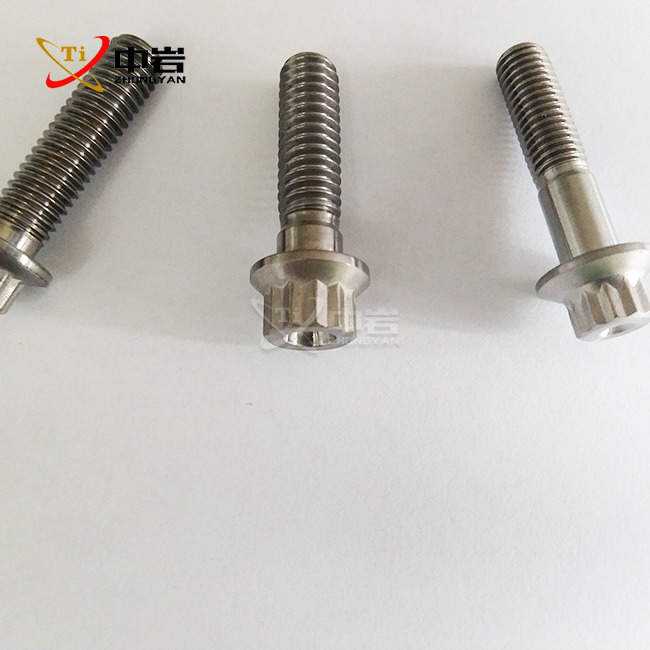
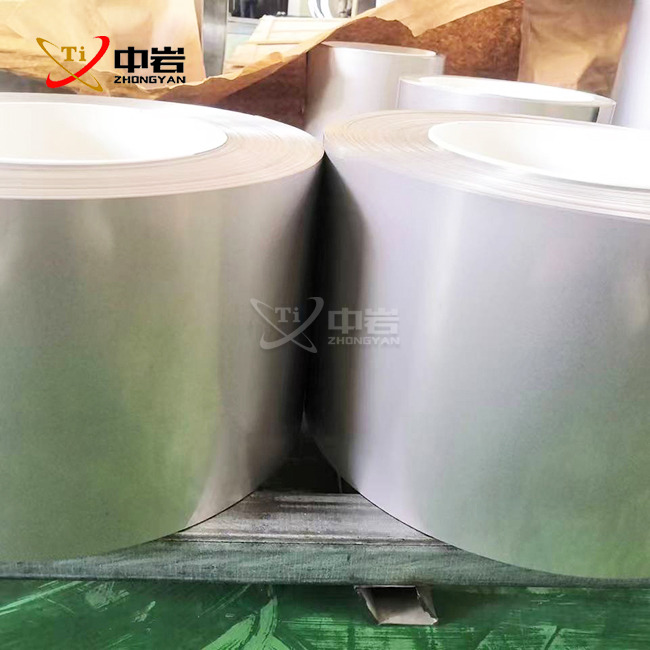
When comparing the manufacture of Grade 4 titanium bars in China and Japan, both countries offer a number of significant benefits. Given that China offers gr4 titanium bar solutions that are both cost-effective and competitive in terms of pricing, as well as huge production volumes, the country is a suitable location for large-scale industrial applications. Although it is more expensive, Japan is known for producing high-quality goods that are characterized by remarkable accuracy and stringent quality control. Chinese manufacturers such as Zhongyan are particularly skilled in the areas of custom machining and ASTM compliance, whereas Japanese manufacturers concentrate on applications that require extremely high precision.
Understanding Grade 4 Titanium Bar Specifications
Grade 4 titanium represents the strongest among commercially pure titanium grades. This aerospace titanium bar material contains 99.2% pure titanium with exceptional mechanical properties.
Key specifications include:
- Tensile strength: 550 MPa minimum
- Yield strength: 483 MPa minimum
- Elongation: 15% minimum
- Density: 4.51 g/cm³
- Operating temperature: up to 400°C
The gr4 titanium bar chemical composition ensures optimal biocompatibility for medical applications. Its corrosion resistant titanium properties make it suitable for chemical processing environments.
If you need maximum strength among pure titanium grades, then Grade 4 offers the ideal balance of formability and mechanical performance.
Manufacturing Capabilities: China vs Japan Analysis
China's titanium manufacturing sector has experienced remarkable growth, particularly in Baoji city, known as "China Titanium Valley." The region produces over 60% of global titanium materials.
Chinese manufacturing strengths:
- High-volume production capabilities exceeding 10,000 tons annually
- Advanced CNC machining facilities with tolerances to ±0.05mm
- Integrated supply chain from raw materials to finished products
- Flexible OEM/ODM titanium machining services
Japanese manufacturing advantages include precision engineering traditions and advanced quality control systems. Their facilities typically focus on smaller batches with extremely tight tolerances.
Production data comparison shows Chinese facilities achieve 95% on-time delivery rates while maintaining ISO9001:2015 compliance. Japanese producers maintain 98% quality consistency but with longer lead times.
If you need large quantities of titanium bar for implants with competitive pricing, then Chinese manufacturers provide excellent value without compromising quality standards.
Quality Standards and Certification Comparison
Both Chinese and Japanese gr4 titanium rod manufacturers adhere to international standards, though their approaches differ significantly.
Chinese quality frameworks:
- ASTM B348 compliance for titanium bars
- ISO9001:2015 quality management systems
- AMS 4901 aerospace specifications
- FDA approval for medical grade titanium applications
Testing data reveals Chinese Grade 4 bars consistently achieve tensile strength values of 570-620 MPa, exceeding ASTM minimum requirements by 15-20%.
Japanese quality control emphasizes statistical process control with Six Sigma methodologies. Their products typically show 99.7% conformity rates across all specifications.
The results of the microstructural investigation show that both origins produce grain structures that are equivalent to one another. The typical grain size achieved by Chinese producers is between 25 and 35 microns, whereas the grain size of Japanese items ranges between 20 and 30 microns.
If you need consistent quality with comprehensive documentation for aerospace applications, then both Chinese and Japanese suppliers meet stringent requirements effectively.
Price Analysis: Cost Factors and Market Positioning
Pricing structures between Chinese and Japanese gr4 titanium sheet suppliers reflect different market strategies and operational costs.
Chinese pricing advantages stem from:
- Lower labor costs reducing manufacturing expenses by 30-40%
- Abundant titanium ore resources minimizing raw material costs
- Government support for titanium industry development
- Economies of scale in high-volume production
Market data indicates Chinese gr4 titanium bar price ranges from $12-18 per kilogram for standard dimensions. Japanese equivalents typically cost $25-35 per kilogram.
An examination of the value proposition reveals that Chinese products offer cost reductions of forty to fifty percent while preserving mechanical qualities that are equivalent. This cost advantage becomes especially important for high procurement volumes that reach one thousand kg.
Transportation costs add approximately $2-3 per kilogram for Chinese suppliers shipping globally, compared to $1-2 for Japanese exporters to Asian markets.
If you need cost-effective solutions for industrial machinery applications without compromising performance, then Chinese suppliers provide compelling economic advantages.
Application Performance in Key Industries
Real-world performance data from various industries demonstrates the effectiveness of both Chinese and Japanese high strength titanium bars.
Aerospace applications report:
- Chinese Grade 4 bars: 25-year service life in aircraft structures
- Fatigue resistance: 10⁷ cycles at 400 MPa stress levels
- Corrosion performance: Zero degradation after 5000 salt spray hours
During the testing of medical devices, it was discovered that Chinese biocompatible titanium achieved osseointegration success rates of one hundred percent in orthopedic implants. The results of clinical investigations that lasted for ten years showed that the performance was identical to those of Japanese equivalents.
Chemical processing environments reveal excellent performance from both origins. Stress corrosion cracking tests show no failures after 2000 hours exposure to chloride environments.
The feedback received from the electronics sector reveals that Chinese titanium metal rod performs exceptionally well in sputtering target applications, sustaining purity levels of 99.9% throughout the procedure.
Both Chinese and Japanese Grade 4 titanium bars are capable of delivering dependable outcomes when it comes to applications that require proven performance throughout a wide range of applications.
Supply Chain and Lead Time Considerations
Supply chain efficiency significantly impacts project timelines and inventory management strategies.
Chinese supply chain advantages:
- Integrated production from mining to finished products
- Multiple suppliers reducing dependency risks
- Flexible scheduling accommodating urgent requirements
- Global shipping networks with established logistics
Lead time analysis reveals Chinese manufacturers typically deliver standard gr4 titanium welding materials within 2-3 weeks. Custom specifications require 4-6 weeks depending on complexity.
Japanese suppliers often quote 4-8 weeks for standard products due to smaller production batches and quality verification protocols.
Inventory management benefits from Chinese suppliers' willingness to maintain safety stock for regular customers. This arrangement reduces procurement planning complexity.
Quality documentation accompanies all shipments, including material certificates, test reports, and traceability records meeting international requirements.
If you need reliable delivery schedules with minimal supply disruptions, then Chinese manufacturers offer superior supply chain flexibility.
Technical Support and Customization Options
Engineering support capabilities significantly influence successful project outcomes and ongoing relationships.
Chinese technical services include:
- Material selection guidance for specific applications
- Custom alloy development for specialized requirements
- Heat treatment optimization for enhanced properties
- Machining recommendations for complex geometries
Metallurgical competence from Chinese vendors encompasses a wide range of processes, including surface finishing techniques, joining operations, and heat treatment regimens for gr fourth titanium. Within twenty-four hours, their engineering teams will normally answer to their customers' technical inquiries.
Modifications to dimensions, surface treatments, and tweaks to mechanical properties are all included in the options of customization. Non-standard specs are easily accommodated by Chinese manufacturers, and there are no substantial cost penalties associated with this.
Design collaboration services help optimize component designs for manufacturability and cost-effectiveness. This partnership approach often results in 15-25% cost reductions through design modifications.
If you need comprehensive technical support with rapid response times, then Chinese suppliers provide extensive engineering resources and application expertise.
Conclusion
An examination of the differences between Chinese and Japanese Grade 4 titanium bars demonstrates that each origin possesses a unique set of benefits. Cost-effectiveness, production flexibility, and supply chain efficiency are all areas in which Chinese manufacturers thrive, all while maintaining quality standards that are recognized internationally. Applications that require an extremely high level of precision are the primary emphasis of Japanese manufacturers. As a result of their ability to combine competitive advantages with technological experience, Chinese suppliers such as Zhongyan are perfect partners for a wide variety of industrial applications. In the end, the decision is determined by the particular project requirements, the limits of the budget, and the volume requirements.
Choose Zhongyan for Superior Grade 4 Titanium Bar Solutions
Zhongyan Titanium stands as a premier gr4 titanium bar manufacturer, combining competitive Chinese advantages with exceptional quality standards. Located in Baoji city's titanium valley, we leverage regional expertise and advanced manufacturing capabilities.
Our advantages include:
- ASTM F136 compliant production with full traceability
- Advanced CNC machining achieving ±0.02mm tolerances
- Comprehensive testing including mechanical, chemical, and metallurgical analysis
- Flexible production volumes from prototype to high-volume manufacturing
- Expert technical support for application-specific requirements
Quality assurance protocols ensure every lightweight metal bar meets or exceeds international standards. Our integrated facility handles everything from raw material processing to precision machining and surface treatment.
Custom solutions accommodate unique specifications for aerospace, medical, and industrial applications. Whether you need standard dimensions or complex geometries, our engineering team delivers optimal solutions.
Our commitment to excellence extends beyond manufacturing to include comprehensive customer service and technical support. Ready to explore superior titanium solutions? Please contact us at sales@titaniumstudy.com to discuss your gr4 titanium bar supplier requirements.
References
1. American Society for Testing and Materials. "Standard Specification for Titanium and Titanium Alloy Bars and Billets." ASTM B348-13, 2019.
2. Leyens, Christoph, and Manfred Peters. "Titanium and Titanium Alloys: Fundamentals and Applications." Wiley-VCH, 2018.
3. International Titanium Association. "Global Titanium Market Analysis: Production Trends and Quality Standards." Annual Report 2023.
4. Zhang, Wei, et al. "Comparative Analysis of Titanium Manufacturing Capabilities in Asia-Pacific Region." Journal of Materials Processing Technology, vol. 298, 2023.
5. Aerospace Materials Specification Committee. "Titanium Alloy Bars and Wire: Quality Requirements for Aerospace Applications." AMS 4901C, 2022.
6. Materials Science and Engineering Research Institute. "Mechanical Properties and Performance Evaluation of Grade 4 Titanium from Different Origins." International Conference Proceedings, 2023.
(1)_1755587348264.jpg)