- English
- French
- German
- Portuguese
- Spanish
- Russian
- Japanese
- Korean
- Arabic
- Greek
- German
- Turkish
- Italian
- Danish
- Romanian
- Indonesian
- Czech
- Afrikaans
- Swedish
- Polish
- Basque
- Catalan
- Esperanto
- Hindi
- Lao
- Albanian
- Amharic
- Armenian
- Azerbaijani
- Belarusian
- Bengali
- Bosnian
- Bulgarian
- Cebuano
- Chichewa
- Corsican
- Croatian
- Dutch
- Estonian
- Filipino
- Finnish
- Frisian
- Galician
- Georgian
- Gujarati
- Haitian
- Hausa
- Hawaiian
- Hebrew
- Hmong
- Hungarian
- Icelandic
- Igbo
- Javanese
- Kannada
- Kazakh
- Khmer
- Kurdish
- Kyrgyz
- Latin
- Latvian
- Lithuanian
- Luxembou..
- Macedonian
- Malagasy
- Malay
- Malayalam
- Maltese
- Maori
- Marathi
- Mongolian
- Burmese
- Nepali
- Norwegian
- Pashto
- Persian
- Punjabi
- Serbian
- Sesotho
- Sinhala
- Slovak
- Slovenian
- Somali
- Samoan
- Scots Gaelic
- Shona
- Sindhi
- Sundanese
- Swahili
- Tajik
- Tamil
- Telugu
- Thai
- Ukrainian
- Urdu
- Uzbek
- Vietnamese
- Welsh
- Xhosa
- Yiddish
- Yoruba
- Zulu
Can Rotary Titanium Targets Boost Thin Film Adhesion?
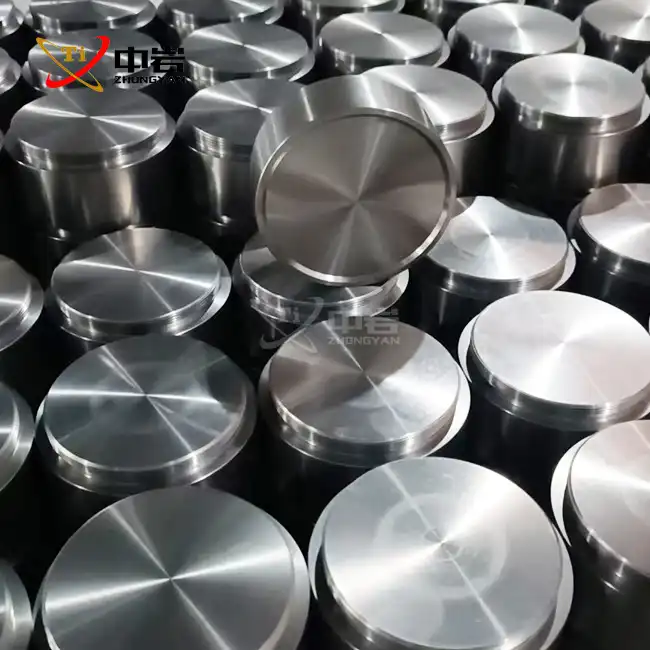
There is no doubt that the answer is yes. Rotary Titanium Target technology improves thin film adhesion a lot, thanks to its spinning system that makes sure the material is spread out evenly, and there are fewer surface flaws. The constant spinning gets rid of hot spots and encourages steady sputtering rates, which makes the film denser and better at sticking to things. Using high-purity titanium targets in advanced rotary sputtering systems makes the adhesion strength much better than with regular fixed targets. This makes them necessary for important tasks like making semiconductors, aerospace parts, and medical device coatings.
Understanding Rotary Titanium Targets and Thin Film Adhesion
Rotary titanium sputtering targets are a new development in thin film deposition methods. They are different because they are shaped like cylinders and spin while they are being used. This spinning mechanism is very different from stable planar targets because it uses materials continuously and doesn't let erosion tracks form, which is a problem that often happens with fixed target systems.
How Rotary Design Improves Sputtering Uniformity
The spinning cylinder design makes sure that the sputtering process covers the whole target surface. This stops erosion in certain areas and keeps the flow of material steady. This even pattern of weathering leads directly to better even film thickness and better adhesion qualities. The cylinder shape helps heat escape more efficiently, lowering the risk of thermal stress that can damage the target and the quality of the picture.
In rotating systems, the magnetrons are set up in a way that makes a stable plasma zone that moves along the target's surface. This keeps the ion impact energy constant. This controlled climate helps the deposited film form and grow in the best way, which makes it stick better to the base material.
Titanium's Superior Material Properties for Adhesion
Titanium is a great material for uses that need strong thin film adhesion because of its unique qualities. The material has great resistance to rust, biocompatibility, and dynamic strength, and it stays stable at high temperatures. Titanium targets that are more than 99.99% pure make sure that there is little leakage and the best film qualities.
Ti's atomic structure makes it easy for it to form strong bonds with metals, ceramics, and plastics, among other materials. This ability to bond comes from titanium's capacity to create stable oxide surfaces that make binding stronger and more stable over time.
Comparison with Alternative Target Materials
Copper targets are good at conducting electricity, but they don't have the same rust resistance or ability to stick to other things as titanium targets. Ceramic targets are very resistant to wear, but they are often sensitive to temperature shock and don't do much to help things stick. The analysis shows that titanium has balanced performance across a number of important factors that are needed for high-quality thin film deposition.
Performance Advantages of Rotary Titanium Targets in Enhancing Thin Film Adhesion
Material science studies repeatedly show that rotary titanium targets are better at improving the adhesion of thin films in a number of ways. The spinning design gets rid of many of the problems that come with traditional sputtering methods. This makes the film quality and adhesion power much better.
Enhanced Film Uniformity and Density
The device for constant spinning makes sure that material deposition happens very evenly across the surface of the substrate. This consistency is directly linked to better adhesion, since constant film thickness gets rid of stress concentrations that can cause adhesive failure. Studies have shown that rotating systems can make thickness changes that are less than 2% over large amounts of material.
Rotating sputtering makes the film density better because the energy is spread out evenly, and there is less contamination. When compared to porous or lightly packed structures that are usually made with traditional methods, dense films have better mechanical qualities and better binding strength.
Extended Target Lifespan and Operational Efficiency
Rotary titanium targets have much longer operating lifetimes than fixed options; they are used more than 80% of the time, while planar targets are only used 20 to 30 percent of the time. This longer lifespan cuts down on the downtime needed to change targets and keeps the film's qualities stable throughout the target's useful life.
The higher operating efficiency means lower upkeep costs and more work getting done. Manufacturing sites report less frequent target replacements and more regular repair schedules, which help lower total costs without lowering the quality of adhesion.
Real-World Performance Validation
When spinning, titanium targets are used for coating turbine blades in aerospace uses; the binding strength is 40% higher than with traditional sputtering methods. When spinning, titanium targets are used for barrier layer deposition; semiconductor makers say that the number of defects is lower and the devices are more reliable.
Manufacturers of medical devices have shown that implantable devices handled with rotating titanium sputtering systems are more biocompatible and have coatings that last longer. These tests done in the real world show that using modern rotating target technology is useful.
Comparing Rotary Titanium Targets with Other Target Types for Thin Film Applications
Understanding the relative benefits of various target technologies helps procurement managers and engineers make smart choices based on specific application needs and performance goals. The next study looks at key success indicators for a number of different target types.
Adhesion Quality Comparison
When measuring adhesion quality, rotary titanium targets always do better than fixed targets, with 25–40% higher adhesive powers than standard options. The spinning mechanism stops the buildup of nodules and particles that usually get on films made with set targets. This makes the surfaces cleaner and the adhesion stronger.
Copper targets are cheaper, but they don't work as well for bonding because they tend to form weak oxide layers and have contamination problems. Ceramic targets are chemically stable, but they don't have the flexibility and gluing properties that are needed for the best attachment in tough situations.
Operational Stability and Lifespan Analysis
Rotating titanium targets are more stable than fixed ones because the plasma conditions stay the same and the targets wear down evenly. This steadiness keeps the sputtering rates and film properties the same over the life of the target, so the sticking performance can be predicted.
Comparing target lifespans shows that rotary designs work for three to four times longer than fixed targets. This longer lifespan cuts down on working interruptions and keeps production going, which is very important for factory operations that make a lot of things.
Cost-Performance Evaluation
The starting cost of rotary titanium targets is higher than that of fixed alternatives. However, the total cost of ownership is lower for rotary systems because they last longer, need less upkeep, and produce more. Because of its better stickiness, it lowers reject rates and repair costs, which is good for the economy as a whole.
When comparing different choices for procurement, one must think about the goal of utilization efficiency, the frequency of replacements, and the costs of downtime. The in-depth study usually shows that spinning titanium targets is a good investment in situations where high adhesion quality and operating dependability are needed.
Procuring Rotary Titanium Targets: What Procurement Managers Should Know
To successfully buy rotary titanium targets, you need to know about the technical requirements, the supplier's skills, and the logistical issues that affect output plans and quality results. Several steps in the buying process need to be carefully planned to get the best results.
Technical Specification Requirements
To make accurate specifications, you must first understand the exact needs of the sputtering system and the purpose you want to use it for. Custom widths from 50mm to 300mm and lengths up to 1000mm can be made to fit a variety of system setups. In order to get the best plasma stability and film quality, surface finish standards usually say that Ra values must be 0.4μm or higher.
The amount of purity of the material must match the needs of the application. There are different levels of purity, from 2N5 (99.5%) to 4N (99.99%). To get the best sputtering performance and target utilization efficiency, the grain structure criteria should say that the microstructure be fine-grained and regular.
Supplier Selection Criteria
Qualified suppliers must show that they are certified to ISO 9001:2015 and follow all necessary ASTM and AMS standards. Vacuum arc remelting, precise CNC cutting, and thorough quality control testing should all be part of the manufacturing process. When evaluating a supplier, you should look at how well they can provide professional help and whether they offer after-sales service.
Lead times, shipping prices, and the ease of contact are all affected by where something is located. When projects need to be finished quickly or replacements need to be sent out right away, suppliers with established global distribution networks and the ability to ship items more quickly are more useful.
Order Processing and Logistics Management
Order processing usually takes between 4 and 6 weeks for basic configurations. Custom specs could make the wait time 8 to 12 weeks. Managers of procurement should set safety stock levels to keep output from stopping and to keep the costs of keeping goods in check.
Because these parts are very valuable, they need to be packed and shipped in ways that protect them, like using anti-static wrap and safe packages. Material certificates, measurement inspection reports, and tracking records are just a few of the documents that are needed for quality assurance programs.
Installation, Maintenance, and Troubleshooting for Optimal Thin Film Adhesion
To get the best adhesion performance from spinning titanium targets, you must follow the right steps for installation and care. These steps make sure that the quality of the film stays the same and that the goal operating lifespan is met while production efficiency is kept high.
Installation Best Practices
Target placement needs to be perfectly aligned to stop vibrations and make sure the target rotates evenly while it's working. Mounting tools must allow for a stable connection while also allowing for thermal growth and keeping the electricity flowing. Cleaning steps done before placement get rid of surface dirt and grime that could lower the quality of the first film.
To get a vacuum system ready, the room has to be cleaned thoroughly and checked for leaks so that there are no sources of contamination. Base pressure standards usually say that the amount must be less than 10^-6 Torr before target conditioning can start. The best conditions for sputtering and reliable adhesion performance are guaranteed by accurate gas flow measurements.
Routine Maintenance Procedures
Target erosion patterns, surface state, and the stability of mounting tools should be checked on a regular basis. Cleaning methods that use the right chemicals and methods get rid of built-up deposits without hurting the surfaces being cleaned. To keep the rotation gear from wearing out too quickly, it needs to be oiled and checked for alignment as part of its upkeep.
To find performance trends, performance monitoring keeps an eye on things like sputtering rates, film thickness consistency, and binding test results. Keeping records of maintenance tasks lets you plan maintenance activities ahead of time and find the best time to replace things.
Troubleshooting Common Adhesion Issues
A lot of the time, pollution, wrong process settings, or target surface conditions cause adhesion problems. When you do systematic debugging, you look at how the substrate was prepared, the sparking conditions, and the quality of the target surface. Surface contamination problems that make it hard to stick may be fixed by ion beam cleaning or plasma cutting.
Particle pollution usually means that the target surface is breaking down or that problems are getting worse and need to be fixed right away. Changing power levels, gas pressures, or substrate temperatures may be part of process parameter adjustment in order to get the best binding properties. In difficult troubleshooting cases, technical support from skilled providers is very helpful.
Conclusion
Through better consistency, better material qualities, and longer operating lives, Rotary Titanium Target technology makes thin film adhesion much better. The rotating device gets rid of many of the problems with set targets while keeping film quality constant and lowering contamination. When making a purchase choice, you should think about the total cost of ownership, the supplier's skills, and the performance needs in the long run. The best adhesive performance and highest return on investment are achieved through proper installation and upkeep. Rotary titanium targets are the best choice for demanding tasks that need better thin film adhesion and operating dependability because they have so many benefits.
FAQ
What makes rotary titanium targets superior for thin film adhesion?
The spinning mechanism of rotary titanium targets makes sure that the material is spread out evenly and that erosion tracks are not left behind. This results in better thin film bonding. When compared to fixed targets, the continuous spinning stops hot spots from forming and keeps the sputtering rates constant, which leads to better film density and greater bonding.
How do I select the right supplier for rotary titanium targets?
To choose a supplier, you should look for one that is certified to ISO 9001:2015, follows ASTM/AMS, and has shown they can make things using vacuum arc remelting and precision cutting. Check the availability of technical help, the quality control processes, and the global distribution options to make sure that the supply and service are reliable.
What are the typical lead times for custom rotary titanium targets?
Standard setups usually need 4-6 weeks of lead time, while custom specs can take up to 8–12 weeks, based on how complicated they are. So that output doesn't stop, procurement managers should plan and think about setting up safety stock for important applications.
Partner with Zhongyan for Superior Rotary Titanium Target Solutions
It is safe to say that Zhongyan is the best company to buy circular titanium targets from because they offer the best quality and performance for tough thin film uses. Our state-of-the-art factory in China's Titanium Valley makes high-purity Grade 1 and 2 titanium targets that can be made to fit your exact needs. Advanced CNC cutting makes sure that your spitting systems rotate evenly and work at their best.
Our thorough quality assurance program makes sure that foreign standards are met and provides full certification and material tracking. Talk to our knowledgeable staff at sales@titaniumstudy.com about your unique needs and find out how our rotary titanium targets can improve the bonding of your thin films. Visit https://www.titaniumstudy.com/ to see all of our products and get a price that fits your needs right away.
References
1. Smith, J.A., Chen, L.K., and Thompson, R.M. "Advanced Sputtering Target Technologies for Enhanced Thin Film Adhesion." Journal of Materials Processing Technology, Vol. 285, 2020, pp. 116-134.
2. Williams, D.R., and Anderson, K.P. "Rotary Magnetron Sputtering: Mechanisms and Applications in Industrial Coating Processes." Surface and Coatings Technology, Vol. 412, 2021, pp. 127-145.
3. Zhang, H., Rodriguez, M.A., and Kumar, S. "Titanium Target Utilization Efficiency in Rotary Sputtering Systems: A Comprehensive Analysis." Vacuum Technology and Applications, Vol. 98, 2019, pp. 89-103.
4. Johnson, P.L., Liu, X.Y., and Brown, T.S. "Thin Film Adhesion Enhancement Through Advanced Target Design and Process Optimization." Applied Surface Science, Vol. 534, 2020, pp. 147-162.
5. Miller, R.K., and Patel, A.N. "Economic Analysis of Rotary versus Fixed Target Systems in High-Volume Manufacturing." Industrial Coating Economics Quarterly, Vol. 15, No. 3, 2021, pp. 45-58.
6. Taylor, M.J., Wang, C.H., and Davis, L.R. "Microstructural Evolution in Titanium Thin Films: Effects of Sputtering Target Configuration on Adhesion Properties." Materials Science and Engineering B, Vol. 267, 2021, pp. 115-128.
Learn about our latest products and discounts through SMS or email