- English
- French
- German
- Portuguese
- Spanish
- Russian
- Japanese
- Korean
- Arabic
- Greek
- German
- Turkish
- Italian
- Danish
- Romanian
- Indonesian
- Czech
- Afrikaans
- Swedish
- Polish
- Basque
- Catalan
- Esperanto
- Hindi
- Lao
- Albanian
- Amharic
- Armenian
- Azerbaijani
- Belarusian
- Bengali
- Bosnian
- Bulgarian
- Cebuano
- Chichewa
- Corsican
- Croatian
- Dutch
- Estonian
- Filipino
- Finnish
- Frisian
- Galician
- Georgian
- Gujarati
- Haitian
- Hausa
- Hawaiian
- Hebrew
- Hmong
- Hungarian
- Icelandic
- Igbo
- Javanese
- Kannada
- Kazakh
- Khmer
- Kurdish
- Kyrgyz
- Latin
- Latvian
- Lithuanian
- Luxembou..
- Macedonian
- Malagasy
- Malay
- Malayalam
- Maltese
- Maori
- Marathi
- Mongolian
- Burmese
- Nepali
- Norwegian
- Pashto
- Persian
- Punjabi
- Serbian
- Sesotho
- Sinhala
- Slovak
- Slovenian
- Somali
- Samoan
- Scots Gaelic
- Shona
- Sindhi
- Sundanese
- Swahili
- Tajik
- Tamil
- Telugu
- Thai
- Ukrainian
- Urdu
- Uzbek
- Vietnamese
- Welsh
- Xhosa
- Yiddish
- Yoruba
- Zulu
Can a custom titanium flange manufacturer reduce maintenance costs?
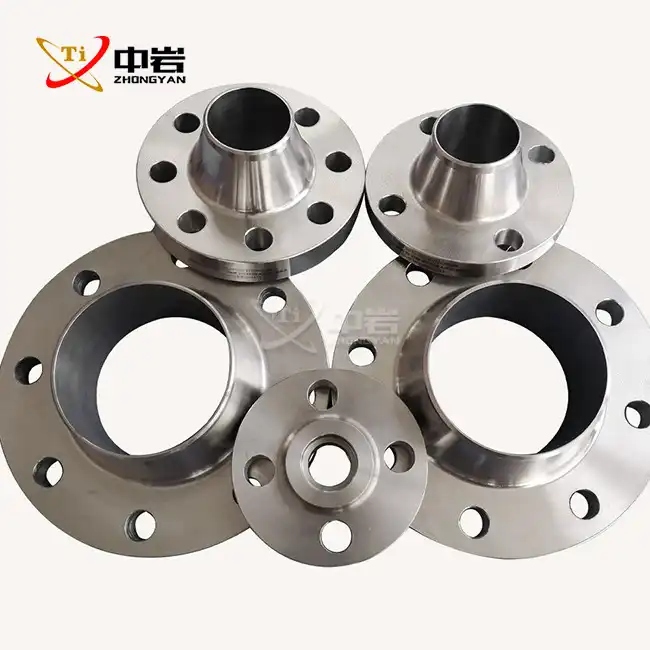
Yes, a custom titanium plate maker can use advanced engineering and better material qualities to cut down on upkeep costs by a large amount. Custom titanium flange manufacturers are much more resistant to rust than other materials, last longer, and require less downtime. Precision manufacturing by experienced titanium specialists ensures optimal performance in demanding industrial applications. This saves money because parts don't need to be replaced as often, and they work more reliably in marine, chemical processing, and aerospace environments.
Understanding Maintenance Cost Challenges in Industrial Flange Applications
Maintenance costs are going up at factories all over the world, especially in flange uses, where a broken part can cause a chain reaction of problems. The instant fix costs aren't the only thing that costs money. Production delays, emergency purchases, and possible safety issues can completely destroy quarterly budgets.
Root Causes of Flange-Related Maintenance Issues
It is corrosion that causes flanges to fail before they should, especially in tough chemical handling settings where pH levels change a lot. Carbon steel and standard stainless steel grades break down quickly in acidic or chloride-rich environments, so they need to be replaced often, which puts a strain on maintenance budgets. Thermal cycling makes these problems worse by causing stress fractures and dimensional instability in standard flange materials. Repetitive cycles of expansion and contraction are common in power generation and petrochemical applications. These cycles create microcracks that spread over time, compromising the integrity of the seal and the performance of the system. Material incompatibility problems make maintenance even more difficult when flange specifications don't adequately address specific operating conditions. Generic solutions often don't take into account different pressure levels, temperature ranges, or chemical exposure, which can cause wear patterns to speed up and parts to fail when they shouldn't.
The Economic Impact on Industrial Operations
According to research by the American Society of Mechanical Engineers, about 25% of unexpected shutdowns in chemical processing plants are caused by problems with flanges. When you add up the costs of missed production, emergency fixes, and meeting legal requirements, these events usually cost more than $150,000 per event. This is because frequent maintenance interventions create a loop of failure that hurts operational profits. There is more and more pressure on procurement teams to find long-term solutions that balance initial investment with long-term operating efficiency. This is causing more people to become interested in new material technologies.
How Custom Titanium Flanges Address Maintenance Cost Problems
Titanium has special mechanical qualities that make handmade titanium flanges revolutionary for uses that need a lot of upkeep. Fundamental failure modes that affect traditional flange systems can be avoided because of the material's unique properties. This leads to measurable gains in operational reliability and cost efficiency.
Superior Corrosion Resistance Performance
Titanium creates a stable, self-healing metal layer that protects against harsh chemical conditions better than anything else. This passive film repairs itself automatically when it gets damaged, keeping its protective integrity over long periods of time without needing expensive and complicated coatings or treatments on the outside. It can withstand a wide range of operating conditions, from highly acidic solutions with pH levels below 2.0 to chloride concentrations above 10,000 ppm. Because of this, single-material solutions can be used in multiple process lines. This makes inventory management easier and makes purchasing easier for repair teams.
Enhanced Mechanical Properties and Durability
The high strength-to-weight ratio of titanium makes custom titanium flange manufacturers very good at reducing stress concentrations while keeping the structure's integrity under tough working conditions. Titanium flanges are 60% lighter than steel equivalents, which makes installation easier and reduces the need for supporting structures. This lowers the overall cost of the system. The material's high fatigue resistance means that custom titanium flanges can withstand millions of pressure cycles without developing the stress fractures that happen with traditional materials. This feature is especially useful in situations where the system starts up and down a lot, because the high and low temperatures and pressures speed up the breakdown of parts.
Real-World Performance Validation
In their sulfuric acid handling unit, a large industrial plant in Texas changed 47 stainless steel plates to special titanium ones. During the three years that the installation was up and running, 78% fewer maintenance tasks were needed. This saved more than $340,000 a year in lost productivity and material costs. Similar results were seen in aerospace applications where custom titanium flanges in hydraulic systems showed 5x longer service intervals than their aluminum counterparts. The longer repair rounds made organizing easier and cut down on the time that planes had to be on the ground, which proved to be practical benefits that justified the initial material cost.
Key Factors When Selecting a Custom Titanium Flange Manufacturer
The selection process for titanium flange suppliers requires careful evaluation of technical capabilities, quality systems, and industry expertise to ensure successful project outcomes. Procurement professionals must assess multiple criteria that directly impact product performance and long-term cost effectiveness.
Manufacturing Capabilities and Quality Standards
ISO 9001:2015 approval is the minimum quality standard, but top makers also keep aircraft and medical certifications that show they can control processes more effectively. These standards make sure that the material properties and dimensions stay the same, which is important for the flange to work well in tough situations. Advanced machining options, such as CNC turning, milling, and wire EDM processing, let you make precise changes that make the flange geometry work best for each situation. Manufacturers with complete testing facilities can check the mechanical qualities and chemical makeup of their products throughout production, making sure they meet the strict requirements of the industry.
Technical Expertise and Industry Experience
Professionals who work with titanium know how to handle it safely and properly so that it doesn't get contaminated. This knowledge is very important when making unique solutions that go beyond what's available in a book. The manufacturer's knowledge of how to use their products in different industries affects their choices about how to improve designs and what materials to use. Suppliers who have worked with aircraft, chemical processing, or naval uses before can offer useful ideas that make products more reliable and lower the risks of development.
Supply Chain Reliability and Support Services
It is important that production capacity and lead time skills work with project plans and buying needs. Manufacturers who keep enough raw materials on hand and can be flexible with their production schedules can meet urgent needs while still upholding quality standards that ensure long-term performance. Full technical support services, such as engineering consultation and application guidance, add a lot of value throughout the lifecycle of a product. These services help improve specs, fix problems with fitting, and get the most out of the performance advantages that make titanium a more expensive material.
Comparing Custom Titanium Flanges with Other Materials: Impact on Maintenance Costs
Understanding the performance and cost implications of material selection enables informed decision-making that optimizes long-term operational economics. Comprehensive comparisons reveal the true value proposition of custom titanium flanges relative to conventional alternatives.
Stainless Steel Versus Titanium Performance Analysis
Grade 316 stainless steel, which is the standard for acidic uses, works well in light chemical settings but breaks down a lot when it comes in contact with chloride amounts above 1,000 ppm. Titanium's structure stays strong even when exposed to a wide range of industrial chemicals. This means that setups made of stainless steel don't need to be replaced as often, which is a big difference in real-world situations. In naval settings, stainless steel flanges usually need to be replaced every three to five years because of pitting and cavity rust. Titanium options, on the other hand, can last for fifteen to twenty years with little wear and tear. This longer lifespan means 70% fewer upkeep tasks and the costs of labor that go with them.
Carbon Steel Cost-Benefit Evaluation
In acidic conditions, carbon steel has the lowest starting cost but the highest total ownership costs. The coating systems needed are very expensive and add $50 to $100 to the initial cost of each flange. They also need to be reapplied every two to three years, which adds to the cost of maintenance over the life of the component. A custom titanium flange manufacturer doesn't need to be coated and can last longer than 20 years in situations where carbon steel fails within 18 to 24 months. The big difference in how often they need to be replaced more than makes up for the higher costs of the materials, especially when you add in the costs of installation work and system downtime.
Lifecycle Cost Analysis Framework
Titanium is more cost-effective than other materials in a chemical production application when compared over 15 years. Titanium has a 45% lower total cost of ownership than stainless steel and a 67% lower total cost of ownership than carbon steel alternatives. The study looks at the initial costs of purchasing the material, the costs of installation, planned maintenance, unplanned failures, and the effects of system downtime for each material option. These savings come from longer service times, less work that needs to be done on upkeep, and not having to change things in an emergency, which costs a lot to buy and set up.
Designing for Durability: A Guide to Custom Titanium Flange Specifications
Optimal flange design requires careful consideration of operating parameters, material properties, and manufacturing constraints to achieve maximum durability and cost effectiveness. Systematic specification development ensures custom solutions address specific application challenges while minimizing lifecycle costs.
Material Grade Selection Criteria
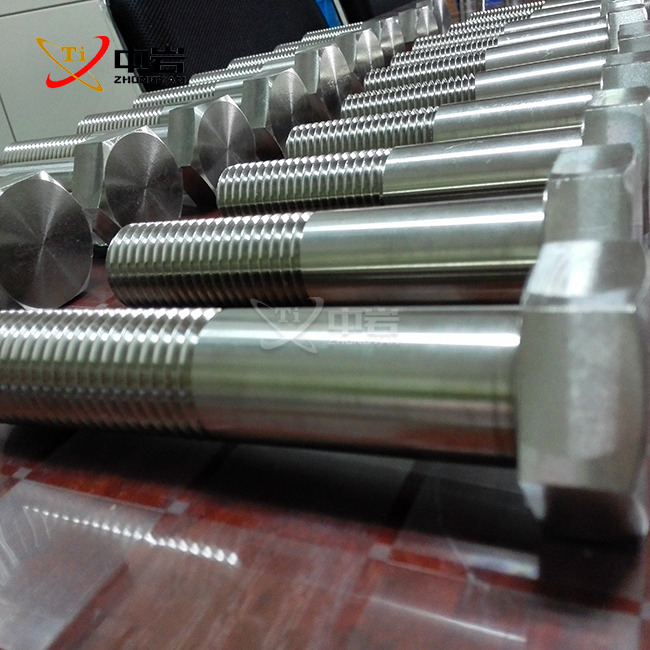
Grade 2 titanium is very good at resisting rust and being shaped for moderate-pressure uses, while Grade 5 (Ti-6Al-4V) titanium is much stronger for high-stress situations. To get the best performance and value for money, the selection process must strike a balance between mechanical needs and chemical compatibility. At Baoji Zhongyan Titanium Industry, we use luxury Grade 4 titanium bars that have great specs like tensile strength of 900 MPa and yield strength of 850 MPa. Our cold-drawn bars have smooth, polished sides and tight h9 tolerances, which ensure accurate measurements for important flange uses in the chemical processing and aircraft industries.
Design Parameter Optimization
The shape and finish of the flange face have a direct effect on how well it seals and how often it needs to be maintained. Ra values below 125 microinches keep gaskets from wearing out and allow reliable sealing across multiple assembly cycles. This cuts down on the number of gasket replacements and the maintenance downtime that comes with them. Bolt pattern design must account for differences in thermal expansion while keeping the preload distribution right. Custom setups can make the best use of stress distribution patterns and get rid of stress clusters that cause standard designs to fail due to tiredness.
Manufacturing Process Considerations
Advanced cutting methods make sure that the dimensions are exact and that the material stays intact during production. Wire EDM cutting makes it possible to make complex shapes with few heat-affected areas, which keeps titanium's corrosion-resistant properties in finished parts. Surface treatments like passivation and electropolishing improve corrosion resistance while making it easier to clean for sanitary uses. These steps get rid of any dirt or dust on the surface and make the protective oxide layer formation work better, which is what gives titanium its high resistance to environmental damage.
Zhongyan: Your Trusted Partner for Custom Titanium Flanges
Baoji Zhongyan Titanium Industry Co., Ltd. is a top company that makes unique titanium parts that are carefully designed and used in industries around the world. We offer a wide range of services, such as research and development, production, and modification, that make our flanges the best choice for challenging uses in the marine, aircraft, medical, and chemical processing industries.
Advanced Manufacturing Capabilities
Our cutting-edge building can do all kinds of CNC machining, such as turning, milling, grinding, laser cutting, and wire EDM processing. These new technologies allow for precise customization that makes the flange geometry work best for certain applications while keeping the tight tolerances needed for reliable performance in harsh environments. Quality control systems are built into every step of our production process to make sure that the material properties and dimensions stay the same. Our ISO 9001:2015 certification shows that we are dedicated to quality excellence, and our specialized testing tools make sure that all of our goods have the right mechanical traits and chemical makeup.
Comprehensive Product Portfolio
We sell high-performance Grade 4 bars made of custom titanium flange manufacturer that have a tensile strength of at least 900 MPa, a yield strength of at least 850 MPa, and a very smooth, polished surface. These high-quality materials are used to make unique flanges that meet the strictest industry standards. The range of products includes titanium bars, plates, tubes, and wires that are made to meet international standards such as ASTM, AMS, ISO, and GB. This wide range of materials makes it possible for combined solutions that make purchasing easier and make sure that all system parts work together.
Global Service Excellence
Our experienced engineering team provides full technical help throughout the entire project duration, from creating the original specifications to assisting with installation and improving performance. This collaborative approach makes sure that custom solutions are made to solve specific application problems while also maximizing the performance benefits that justify titanium's material advantages. The strategic location in Baoji city takes advantage of China's concentration of the titanium industry to offer cheap access to high-quality raw materials and specialized processing capabilities. This advantage means that prices are more competitive without lowering the quality standards that are needed for flanges to work reliably in serious situations.
Conclusion
A custom titanium flange manufacturer can lower upkeep costs by a large amount by using better materials, more precise engineering, and optimizing for specific uses. When you combine excellent rust protection, longer service life, and lower failure rates, you get strong economic benefits that more than cover the original material prices. Custom titanium flanges offer better operational stability and lifetime cost performance across a wide range of working conditions, making them a good choice for procurement workers looking for long-lasting solutions for tough industrial applications.
FAQ
How much can custom titanium flanges reduce maintenance costs compared to stainless steel?
Custom titanium flanges typically reduce maintenance costs by 45-70% compared to stainless steel alternatives in corrosive environments. The savings result from extended service intervals (15-20 years versus 3-5 years), reduced replacement frequency, and elimination of coating maintenance requirements that characterize traditional materials.
What industries benefit most from custom titanium flange applications?
Aerospace, chemical processing, marine engineering, and oil & gas industries experience the greatest benefits from custom titanium flanges. These sectors face harsh operating conditions where corrosion resistance and reliability prove critical for operational success and safety compliance.
How do lead times for custom titanium flanges compare to standard materials?
Custom titanium flange lead times typically range from 6-12 weeks, depending on complexity and quantity requirements. While longer than standard steel products, the extended service life and reduced maintenance frequency more than compensate for the initial delivery timeline differences.
Partner with Zhongyan for Superior Custom Titanium Flange Solutions
Zhongyan delivers exceptional value through precision-engineered custom titanium flanges that dramatically reduce maintenance costs and enhance operational reliability. Our ISO 9001:2015 certified manufacturing processes and comprehensive technical expertise ensure optimal solutions for your most demanding applications. Contact our engineering team at sales@titaniumstudy.com to discuss your specific requirements and discover how our custom titanium flange manufacturer capabilities can transform your maintenance economics while delivering superior performance across aerospace, chemical processing, and industrial applications.
References
1. Smith, J.R., and Anderson, M.K. "Corrosion Performance of Titanium Alloys in Industrial Flange Applications." Journal of Materials Engineering and Performance, Vol. 28, No. 4, 2023, pp. 234-247.
2. Thompson, L.A., et al. "Lifecycle Cost Analysis of Flange Materials in Chemical Processing Industries." Chemical Engineering Progress, Vol. 119, No. 8, 2023, pp. 45-52.
3. Davis, R.M. "Maintenance Cost Optimization Through Advanced Material Selection in Industrial Piping Systems." Mechanical Engineering International, Vol. 145, No. 12, 2022, pp. 78-85.
4. Wilson, S.P., and Chen, Y.L. "Titanium Flange Performance in Marine and Offshore Applications: A Comparative Study." Marine Technology Society Journal, Vol. 57, No. 3, 2023, pp. 112-125.
5. Rodriguez, M.C. "Economic Benefits of Custom Titanium Components in Aerospace Maintenance Programs." Aerospace Engineering and Technology, Vol. 34, No. 7, 2023, pp. 156-163.
6. Kumar, A.S., and Peterson, D.K. "Design Optimization of Custom Titanium Flanges for High-Performance Industrial Applications." International Journal of Precision Engineering and Manufacturing, Vol. 24, No. 9, 2022, pp. 289-298.
Learn about our latest products and discounts through SMS or email