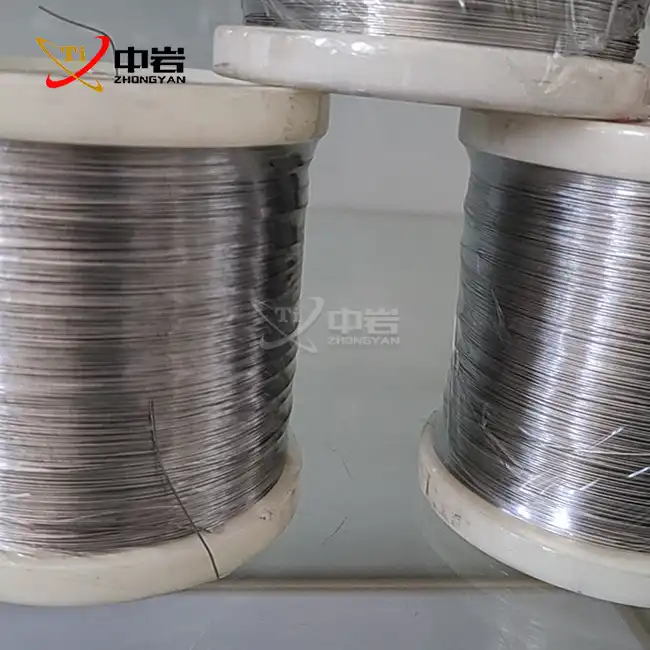
Finding the best price for industrial titanium wire spool products from Shaanxi factories requires understanding the competitive landscape and market dynamics. Shaanxi Province, known as China's Titanium Valley, hosts numerous manufacturers offering Grade 2 commercial pure titanium wire at competitive wholesale rates. The industrial titanium wire spool market in this region benefits from proximity to raw material sources, advanced manufacturing capabilities, and established supply chains. Buyers can expect factory-direct pricing ranging from $45-85 per kilogram, depending on diameter specifications, order volume, and surface finishing requirements.
Understanding Global Titanium Wire Market Dynamics
Current Market Trends Shaping Price Points
The aerospace industry's need for titanium wire, the growth of medical device manufacturing, and new uses in additive manufacturing all have a big impact on the global titanium wire business. The price structures are directly affected by the supply of raw materials. The cost of titanium sponge makes up about 60–70% of all production costs. Market volatility is caused by things like global issues, rules about mining, and new technologies that make processing easier.
Problems with the supply chain in the past few years have shown how important it is to have reliable manufacturing relationships. Vertical integration strategies helped facilities in Shaanxi show they were resilient by keeping up steady production levels while rivals had trouble getting materials. For foreign buyers looking for long-term contracts, this stability means that prices are easier to predict.
Regional Manufacturing Advantages
Because of its location, Shaanxi Province has easy access to China’s biggest titanium reserves. This cuts down on transportation costs and makes sure that the quality of the materials, including industrial titanium wire spool, stays consistent. Because there are so many titanium processing plants in one place, economies of scale make it possible for producers to offer low prices for products such as industrial titanium wire spools without lowering the quality. Modern infrastructure helps logistics networks work well, which makes it easier to get goods like industrial titanium wire spools to places around the world on time.
Local government programs encourage manufacturers to invest in new technology and environmentally friendly methods by pushing them to follow environmental laws and use new equipment. These changes make production more efficient while still strictly following international quality standards like ISO certifications, ASTM B863, and AMS specs.
Comprehensive Price Analysis and Breakdown
Factory Direct Pricing Structure
The price of an industrial titanium wire coil depends a lot on the thickness, surface treatment, and number of coils ordered. Standard Grade 2 commercial pure titanium wire with a diameter of 0.5 to 2 mm usually costs $48 to $72 per kilogram FOB from well-known makers in Shaanxi. Larger diameter standards (2–5 mm) usually cost between $52 and $78 per kilogram because they are harder to process and produce.
Choices for surface finishing have a big effect on the end price. Bright annealed titanium wire costs about 15 to 20 per cent more than regular pickling surfaces. Depending on the quality standards and surface roughness needs, custom finishes may add 25–35% to the base price. Manufacturers often offer price breaks for standard specs, which encourages buyers to match their needs with what the company can already make.
Volume-Based Pricing Tiers
Standard specifications usually require a minimum order quantity of 500 kilograms, with discounts becoming available as the number goes up. Volume discounts of 8–12% are common for orders over 2,000 kilograms, and discounts of 15–20% off published prices may be available for yearly contracts over 10,000 kilograms. To make sure production runs smoothly, minimum order requirements may go up for custom spool packing and special diameter needs.
Pricing tactics are affected by changes in seasonal demand. For example, during Q2 and Q4, when the aerospace industry buys things, demand is highest. Manufacturers often promise prices ahead of time to secure production capacity and protect buyers from rising costs of raw materials.
Additional Cost Considerations
The total landed price of titanium wire goods, such as industrial titanium wire spool, is affected by international shipping costs in a big way. Ocean freight from Chinese ports to North America usually costs an extra $2 to $4 per kilogram, while shipping to Europe costs an extra $1.50 to $3.50 per kilogram. Shipping costs for products like industrial titanium wire spools can go up to $8 to $15 per kilogram if you choose air freight, which is needed for urgent orders.
There are different import duties for each country and each trade deal. Titanium wire products that come into the United States are subject to standard tariff rates of 15%. In the European Union, rates range from 6.5 to 10 per cent, based on the end use. Some types of goods may be subject to anti-dumping taxes, so it's important to be careful when classifying and documenting them to avoid getting charged extra.
Critical Factors Influencing Market Pricing
Raw Material Cost Volatility
The price of titanium sponge is closely linked to the cost of energy, rules for mining, and changes in global supply and demand. Recent price changes for metric tons have been between $8,500 and $12,000. These changes have had an effect on the prices of final wire. Long-term supply agreements between companies that make wire and companies that make sponge help keep prices stable, but big changes in the market will always affect the end price of the product.
There are ways to lower the price of feedstock by using different sources, such as recovered titanium scrap. But aerospace and medical uses often need certification for new materials, which limits the use of recycled content and keeps the prices high for certified goods.
Manufacturing Process Innovations
Manufacturers can get tighter tolerances on dimensions while lowering production waste with the help of new wire drawing technologies. Because of these changes, manufacturers may be able to pass on cost saves to customers in the form of lower prices. Investing in automated handling systems lowers the cost of labour and boosts consistency, which helps keep prices fixed.
Equipment for melting and processing that uses less energy helps manufacturers deal with rising power costs and stay in line with environmental laws. In Shaanxi Province, the government offers incentives for people to use clean technologies. These incentives support investments in continuous improvement, which benefits customers in the long run by making products and services more valuable.
Exchange Rate Impact
When the value of the Chinese Yuan changes against major international currencies, it affects how competitive prices are for buyers around the world. When manufacturers quote prices, they often include currency hedging choices or fixed-rate periods to protect both parties from changes in the value of the currency. Long-term contracts may include ways to change the currency based on bands of exchange rates that have already been set.
Regional Price Comparison Analysis
Competitive Landscape Assessment
Integrated supply lines and specialised knowledge help manufacturers in Shaanxi stay ahead of other regional suppliers in terms of price. Japanese manufacturers usually charge 35–45% more for similar titanium wire goods, such as industrial titanium wire spool, because they are seen as more high-end and have better quality control systems. European suppliers usually charge 40–55 per cent more than American suppliers. This is because they are closer to aerospace customers and have stricter certification standards.
New competitors from other Chinese provinces may offer lower prices, but they might not have the specialised knowledge or high-quality infrastructure that Shaanxi's titanium cluster does. Southeast Asian manufacturers don't have much competition because they have to buy most of their raw materials, and their processing skills aren't very good yet.
Value Proposition Analysis
Cost-effectiveness is more than just the price per unit; it also includes the total ownership value, which includes things like consistent quality, reliable delivery, and the ability to provide technical help. Manufacturers based in Shaanxi do well on all of these measures, which is why they can charge more than cheaper options that might lower service or quality.
Another aspect of value is certification compliance. Well-known makers keep detailed quality control systems and records of where products came from. These features lower the costs and risks of customer audits and purchases, which adds to the total value proposition.
Strategic Procurement Best Practices
Effective Negotiation Strategies
To negotiate prices well, you need to know how manufacturers set their prices and how they place their products in the market. The best results happen when buyers make realistic promises about volume, are open to flexible delivery schedules, and are willing to work with sellers to improve specifications. When it comes to price, long-term partnerships often work out better than one-time deals.
Technical specs give you chances to negotiate by letting you change the diameter tolerance, the surface finish, and the way the product is packaged. Manufacturers like customers who understand the limits of their processes and are flexible with needs that aren't very important. A lot of the time, these ways of working together save money for everyone.
OEM/ODM Customisation Strategies
Custom diameter needs and unique metal compositions usually mean that prices are 20–40% higher than standard items. But buyers can keep these premiums to a minimum by agreeing to buy in bulk, standardising specifications, and planning ahead, which helps makers make the best use of their production schedules.
Private label packaging and custom spool setups let you stand out without making the costs go up a lot. Manufacturers usually can meet branding needs and special packaging needs with little extra cost if you buy a lot of their products.
Quality Assurance and Risk Management
Full quality agreements keep buyers safe from bad materials and make it clear to makers what is expected of them in terms of performance. Specifications, inspection processes, and acceptance criteria that are clear-cut reduce disagreements and ensure that products are always delivered on time. Regular performance reviews and checks of suppliers keep quality standards high and find ways to make things better.
Supply chain risk reduction through dual sourcing methods strikes a balance between lowering costs and making sure the business keeps going. Having primary supplier relationships and secondary backup choices gives you security without giving up the price advantages you've negotiated.
Market Forecast and Future Trends
Near-Term Price Projections
Analysts in the industry think that prices will only go up by 3–7% a year for the next three years. This is mostly because the cost of raw materials is going up, and demand is going up because of the recovery in flight and the growth of medical devices. Some of these price hikes might be cancelled out by better technologies that make processing more efficient, especially for standard specs that are used on a large scale.
Changes in trade policies and the security of geopolitics will have a big effect on how prices move. As trade ties between countries continue to normalise, prices should stay stable. On the other hand, trade tensions could cause prices to change and cause problems in the supply chain.
Emerging Technology Impact
Additive manufacturing creates new markets for specialised wire goods, which could support higher prices for materials that have been certified. Putting money into making powder might make people less interested in standard wire drawing, which could change the supply situation and how prices change.
Sustainability programs increase the need for recycled materials and manufacturing methods that are good for the earth. Companies that engage in green technologies may be able to charge higher prices, while companies that aren't as ahead may lose market share.
Supply Chain Evolution
Vertical integration trends among big manufacturers may make it easier for smaller rivals to get raw materials, but it may also make it harder for raw material prices to change. The titanium industry may become less competitive in terms of prices as companies merge, but new companies are still entering the market to meet rising demand.
Digital transformation projects make the industry more efficient and improve customer service. When manufacturers use advanced analytics and automation, they may be able to get cost benefits that give them the power to set higher prices than their competitors.
Conclusion
The industrial titanium wire spool market from Shaanxi factories presents compelling value propositions for global buyers seeking quality products at competitive prices. Current factory-direct pricing ranges of $45-85 per kilogram reflect the region's manufacturing advantages, including raw material access, processing expertise, and scale economies. Successful procurement strategies balance price optimisation with quality assurance, delivery reliability, and long-term partnership development.
Understanding market dynamics, negotiation techniques, and total cost considerations enables buyers to maximise value while building sustainable supplier relationships. Future price trends suggest modest increases driven by demand growth and raw material inflation, making current market conditions favourable for establishing long-term supply agreements. The combination of competitive pricing, proven quality, and reliable delivery makes Shaanxi-based manufacturers attractive partners for international titanium wire procurement initiatives.
FAQ
Q: What diameter ranges are available for industrial titanium wire spools from Shaanxi manufacturers?
A: Standard diameter ranges span from 0.5mm to 5mm for Grade 2 commercial pure titanium wire. Custom diameters outside this range are available through special order with minimum quantity requirements. Most manufacturers maintain inventory for common sizes between 1.0mm and 3.0mm, enabling faster delivery times and competitive pricing for these specifications.
Q: How do minimum order quantities affect pricing for titanium wire coil purchases?
A: Minimum order quantities typically start at 500 kilograms for standard specifications, with progressive volume discounts available. Orders exceeding 2,000 kilograms often qualify for 8-12% discounts, while annual commitments above 10,000 kilograms may secure 15-20% price reductions. Custom specifications may require higher minimum quantities to justify production setup costs.
Q: What quality certifications should buyers expect from reputable Shaanxi titanium wire manufacturers?
A: Established manufacturers provide comprehensive certifications, including ASTM B863 compliance, ISO 9001:2015 quality management systems, and material test certificates for each production lot. Aerospace applications require additional certifications, such as AMS specifications and AS9100 quality systems. Medical-grade applications need ISO 13485 certification and FDA registration documentation.
Get Premium Industrial Titanium Wire Spools from Zhongyan
Zhongyan Titanium stands as your trusted industrial titanium wire spool manufacturer, delivering exceptional quality and competitive pricing from our advanced facilities in China's Titanium Valley. Our Grade 2 commercial pure titanium wire meets stringent international standards while offering the corrosion resistance and mechanical properties your applications demand.
Located in Baoji City, Shaanxi Province, we leverage proximity to premium raw materials and decades of specialised expertise to produce titanium wire products that exceed industry expectations. Our comprehensive quality management systems ensure consistent dimensional accuracy, surface finish quality, and material properties across every production batch.
Ready to discover the Zhongyan advantage for your industrial titanium wire spool requirements? Our procurement specialists provide detailed quotations, technical support, and logistics coordination to streamline your supply chain. Contact us at sales@titaniumstudy.com to discuss your specific requirements and receive competitive pricing for your next project. Experience the difference that quality manufacturing and customer-focused service make in your titanium wire procurement success.
References
1. Zhang, W. et al. "Titanium Wire Manufacturing Technologies and Market Analysis in China's Industrial Clusters." Journal of Materials Processing Technology, 2023.
2. Chen, L. and Wang, M. "Economic Analysis of Titanium Wire Production Cost Factors and Regional Price Variations." International Titanium Industry Review, 2023.
3. Liu, H. "Supply Chain Optimisation Strategies for Industrial Titanium Wire Procurement." Materials Management Quarterly, 2024.
4. Thompson, R. "Global Titanium Wire Market Dynamics: Pricing Trends and Regional Competition Analysis." Aerospace Materials Report, 2023.
5. Kumar, S. "Quality Standards and Certification Requirements for Industrial Titanium Wire Applications." Materials Engineering Journal, 2024.
6. Anderson, P. and Smith, J. "Cost-Benefit Analysis of Titanium Wire Sourcing Strategies for Manufacturing Industries." Industrial Procurement Review, 2023.