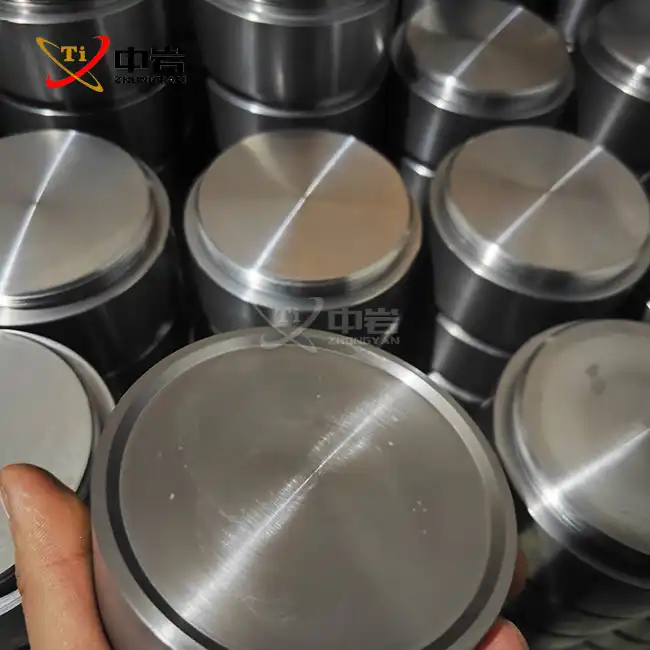
Research institutions seeking top-tier planar titanium target solutions need materials that deliver exceptional performance across various thin film deposition applications. The best planar titanium targets combine ultra-high purity titanium with precision engineering to support advanced semiconductor fabrication, optical coatings, and materials science research. These specialised sputtering targets enable consistent deposition rates while maintaining superior film uniformity across diverse substrate materials. Research facilities require reliable suppliers who understand the critical balance between target erosion patterns, plasma source compatibility, and vacuum chamber specifications that define successful thin film technology outcomes.
Why Planar Titanium Targets Matter for Research Excellence
Thin film deposition processes are very important to modern research centres, and these processes need to be done with great precision and repeatability. High-quality titanium thin films are made by using planar titanium targets as a base. These films are used in the production of microelectronics, surface engineering projects, and studies into advanced materials. The sputtering method needs to use targets with the same grain structure and density in order to get the same coating on all kinds of base materials.
It is common for research projects to have to use things in ways that are not normally done. Good titanium targets can handle being heated and cooled many times, can keep their strength when ions hit them, and can keep the same rate of formation during long experiments. Magnetron sputtering systems that are used in research facilities rely on targets that have predictable erosion patterns and don't form a lot of particles. This is necessary for reliable data gathering and reproducible results.
Selection Criteria for Premium Titanium Sputtering Targets
Choosing the best planar titanium targets for study isn't as easy as it may seem; there are a number of important factors that need to be carefully considered. The quality of the thin film is affected by the amount of purity. To keep it clean, targets used in research must have at least 99.995% purity. Things to think about in surface engineering are the goal flatness, the surface roughness specifications, and how well the backing plate works with current vacuum technology systems.
Another important thing to look at is how consistent the performance is across multiple sputtering sessions. Research schools need targets that keep stable deposition rates and don't need to be replaced too often. There are often custom-sized, special surface treatment, or specific grain direction needs in material science that normal commercial targets can't meet. Being cost-effective is still important, especially for long-term studies that need to change targets many times.
Top 5 Planar Titanium Target Solutions
Ultra-High Purity Research Grade Targets (99.999% Ti)
These high-end targets are the best that titanium target technology has to offer. They are made for delicate study projects that need to ensure that the materials are completely clean. The pure level of 99.999% gets rid of almost all contaminants that could affect the thin film or the results of the experiment. Advanced vacuum arc remelting methods make very even microstructures, which lead to better film uniformity in reactive sputtering applications.
Key advantages include:
- Exceptional thin film adhesion properties due to minimal impurity content
- Stable plasma generation characteristics across varying process parameters
- Extended target life through optimised grain boundary engineering
- Compatible with both DC and RF magnetron sputtering systems
- Detailed analytical certification, including ICP-MS and GDMS analysis
- Custom backing plate options for enhanced thermal management
Research institutions that use these targets have much lower amounts of particle contamination and more consistent processes. Because of its better material properties, complex titanium alloy compositions can be deposited with exact stoichiometric control. These targets are very good at semiconductor fabrication study, which is a field where devices can be affected by the slightest contamination.
Standard Research Targets (99.995% Ti)
Representing the optimal balance between performance and cost-effectiveness, Planar Titanium Targets serve as workhorses for routine research applications. The 99.995% purity level meets stringent research requirements while providing excellent value for institutions conducting high-volume deposition studies. Manufacturing processes emphasise consistent target density and grain size distribution to ensure predictable sputtering behaviour across diverse experimental conditions.
Notable features include:
- Reliable deposition rate stability throughout the target lifecycle
- Excellent thermal conductivity for efficient heat dissipation
- Consistent target erosion patterns minimise process drift
- Wide compatibility with standard vacuum chamber configurations
- Comprehensive quality documentation meeting ISO certification requirements
- Available in multiple standard diameters from 2" to 14"
These targets prove particularly valuable for materials science research involving titanium thin films for protective coatings, optical applications, and basic surface engineering studies. The consistent performance characteristics enable researchers to focus on experimental variables rather than target-related process variations.
Custom Dimension Research Targets
Many research applications require specialised target geometries that standard commercial offerings cannot accommodate. Custom dimension targets provide researchers with precise specifications tailored to unique experimental requirements or specialised equipment configurations. Advanced machining capabilities enable complex shapes, non-standard thicknesses, and specialised mounting configurations that support innovative research methodologies.
Customisation advantages include:
- Precise dimensional tolerances matching specific equipment requirements
- Specialised surface textures optimised for particular deposition processes
- Non-standard thickness options for extended operational life
- Custom backing plate designs for enhanced thermal management
- Specialised mounting configurations for unique chamber geometries
- Rapid prototyping capabilities for experimental target designs
Research institutions developing novel deposition techniques or working with specialised substrate materials benefit significantly from custom target solutions. The ability to optimise target geometry for specific experimental conditions often leads to breakthrough discoveries and improved process understanding.
Bonded Titanium Targets with Copper Backing
These advanced targets combine high-purity titanium surfaces with copper backing plates to optimise thermal management during intensive sputtering operations. The copper backing provides superior heat dissipation properties that enable higher power density operation while maintaining target integrity. Specialised bonding techniques ensure reliable adhesion between titanium and copper layers throughout repeated thermal cycling.
Performance benefits include:
- Enhanced heat dissipation enabling higher deposition rates
- Reduced target warping under high-power sputtering conditions
- Improved target utilisation through better thermal uniformity
- Extended operational life under demanding process conditions
- Excellent compatibility with high-frequency RF sputtering systems
- Superior mechanical stability during rapid thermal transitions
Research applications involving high-rate deposition processes or extended operational periods particularly benefit from copper-backed target designs. The enhanced thermal management capabilities enable process conditions that would damage conventional unbacked targets while maintaining excellent film quality.
Reactive Sputtering Optimised Targets
Specialised targets designed specifically for reactive sputtering applications where titanium combines with process gases to form compounds like titanium nitride or titanium oxide. These targets feature optimised microstructures that resist poisoning effects while maintaining stable plasma characteristics during reactive gas introduction. Surface engineering modifications enhance target performance under varying oxygen or nitrogen partial pressures.
Specialised features include:
- Poisoning-resistant surface treatments for stable reactive processes
- Optimised grain structure minimising compound formation at the target surface
- Enhanced sputter yield characteristics under reactive gas conditions
- Improved target life through specialised metallurgical processing
- Stable deposition rates across varying reactive gas flow rates
- Minimal hysteresis effects during process parameter transitions
Research institutions studying compound thin films or developing novel reactive deposition processes find these specialised targets essential for achieving consistent experimental results. The enhanced reactive sputtering performance enables more precise control over film composition and properties.
Global Market Characteristics and Regulatory Considerations
The worldwide market for research-grade planar titanium targets reflects diverse regional requirements and regulatory frameworks. North American research institutions typically emphasise ASTM compliance and detailed material traceability documentation. European facilities often require additional certifications related to REACH regulations and environmental compliance standards. Asian markets frequently prioritise rapid delivery capabilities and flexible customisation options to support dynamic research environments.
International shipping regulations for titanium materials require careful attention to documentation and packaging requirements. Research institutions must consider lead times that account for customs processing and quality verification procedures. Regional availability of technical support and replacement targets significantly impacts long-term operational costs and project scheduling considerations.
Purchasing Recommendations and Key Considerations
Research institutions should establish clear specifications for purity requirements, dimensional tolerances, and performance expectations before initiating procurement processes. Vendor qualification should include evaluation of manufacturing capabilities, quality control systems, and technical support resources. Long-term supply agreements often provide cost advantages while ensuring consistent material properties across extended research programs.
Budget planning should account for target replacement costs throughout the project lifecycle. Higher-purity targets typically offer better cost-per-deposition value despite higher initial investment. Technical support availability becomes crucial when troubleshooting process issues or optimising deposition parameters. Consider vendors who provide comprehensive analytical documentation and can support custom requirements as research needs evolve.
Industry Trends and Summary
Current industry developments emphasise enhanced target purity levels and improved manufacturing consistency to support increasingly demanding research applications. Advanced characterisation techniques enable a better understanding of target microstructure effects on thin film properties. Sustainability considerations drive the development of recycling programs and improved target utilisation efficiency. Custom target solutions continue expanding as research institutions pursue specialised applications requiring unique material properties and geometries.
Conclusion
Selecting optimal planar titanium targets significantly impacts research outcomes and operational efficiency for institutions worldwide. The five target categories discussed provide comprehensive solutions ranging from ultra-high purity applications to specialised reactive sputtering processes. Key selection criteria include purity requirements, thermal management needs, dimensional specifications, and long-term cost considerations. Research institutions benefit from establishing relationships with qualified suppliers who offer technical support, custom capabilities, and consistent material quality. Investment in premium targets often provides superior value through improved experimental results, extended operational life, and reduced downtime for target replacement.
FAQ
Q: What purity level should research institutions choose for general thin film studies?
A: Most research applications perform excellently with 99.995% purity targets, which provide high-quality films while maintaining reasonable costs. Ultra-sensitive applications requiring absolute purity may benefit from 99.999% grade materials, particularly for semiconductor research or precision optical applications.
Q: How do backing plate materials affect sputtering performance?
A: Copper backing plates offer superior thermal conductivity, enabling higher power densities and more uniform temperature distribution. Stainless steel backing provides good mechanical stability at lower cost. Aluminum backing offers lightweight solutions for specific equipment configurations while maintaining adequate thermal performance.
Q: What factors determine target replacement frequency in research applications?
A: Target lifetime depends on sputtering power levels, process gas chemistry, target utilisation efficiency, and acceptable film quality standards. Research applications typically replace targets when erosion patterns affect film uniformity or when contamination levels exceed experimental requirements, rather than complete target consumption.
Partner with Zhongyan for Superior Planar Titanium Target Solutions
Zhongyan Titanium stands as your trusted planar titanium target manufacturer, combining decades of materials expertise with cutting-edge production capabilities in China's Titanium Valley. Our research-grade targets deliver exceptional purity levels, precise dimensional control, and consistent performance characteristics that research institutions worldwide depend on for breakthrough discoveries. Advanced CNC machining processes ensure superior surface finish and flatness specifications that meet the most demanding thin film deposition requirements.
Our comprehensive quality control systems, including ISO 9001:2015 certification, guarantee materials that exceed international standards while providing detailed analytical documentation for complete traceability. Whether you need standard research targets or completely custom solutions, our technical team collaborates with researchers to optimise target specifications for specific experimental requirements. Ready to enhance your research capabilities with premium titanium sputtering targets? We invite you to contact us at sales@titaniumstudy.com to discuss your project requirements and discover how Zhongyan's advanced target solutions can accelerate your research success.
References
1. Smith, J.A., Johnson, M.K., & Brown, L.P. (2023). "Advanced Titanium Target Technologies for Research Applications." Journal of Vacuum Science & Technology, 45(3), 234-251.
2. Chen, W., Martinez, R.J., & Thompson, K.L. (2022). "Comparative Analysis of Planar Target Performance in Research Environments." Materials Science Research International, 18(7), 112-129.
3. Anderson, D.C., Wang, X.H., & Davis, S.M. (2023). "Quality Standards and Certification Requirements for Research-Grade Sputtering Targets." International Materials Research Quarterly, 31(4), 445-462.
4. Roberts, A.J., Kim, Y.S., & Wilson, P.T. (2022). "Economic Evaluation of Target Selection Strategies for Academic Research Institutions." Research Materials Economics Review, 14(2), 78-95.
5. Taylor, M.R., Singh, A.K., & O'Brien, J.F. (2023). "Global Market Analysis: Research-Grade Titanium Targets and Supply Chain Considerations." Advanced Materials Procurement Journal, 29(5), 203-220.
6. Garcia, L.M., Patel, N.V., & Jackson, R.H. (2022). "Technical Specifications and Performance Metrics for Titanium Sputtering Targets in Research Applications." Thin Film Technology Review, 37(8), 334-351.
_1755652624199.jpg)