- English
- French
- German
- Portuguese
- Spanish
- Russian
- Japanese
- Korean
- Arabic
- Greek
- German
- Turkish
- Italian
- Danish
- Romanian
- Indonesian
- Czech
- Afrikaans
- Swedish
- Polish
- Basque
- Catalan
- Esperanto
- Hindi
- Lao
- Albanian
- Amharic
- Armenian
- Azerbaijani
- Belarusian
- Bengali
- Bosnian
- Bulgarian
- Cebuano
- Chichewa
- Corsican
- Croatian
- Dutch
- Estonian
- Filipino
- Finnish
- Frisian
- Galician
- Georgian
- Gujarati
- Haitian
- Hausa
- Hawaiian
- Hebrew
- Hmong
- Hungarian
- Icelandic
- Igbo
- Javanese
- Kannada
- Kazakh
- Khmer
- Kurdish
- Kyrgyz
- Latin
- Latvian
- Lithuanian
- Luxembou..
- Macedonian
- Malagasy
- Malay
- Malayalam
- Maltese
- Maori
- Marathi
- Mongolian
- Burmese
- Nepali
- Norwegian
- Pashto
- Persian
- Punjabi
- Serbian
- Sesotho
- Sinhala
- Slovak
- Slovenian
- Somali
- Samoan
- Scots Gaelic
- Shona
- Sindhi
- Sundanese
- Swahili
- Tajik
- Tamil
- Telugu
- Thai
- Ukrainian
- Urdu
- Uzbek
- Vietnamese
- Welsh
- Xhosa
- Yiddish
- Yoruba
- Zulu
Why is GR4 titanium bar preferred for medical implants?
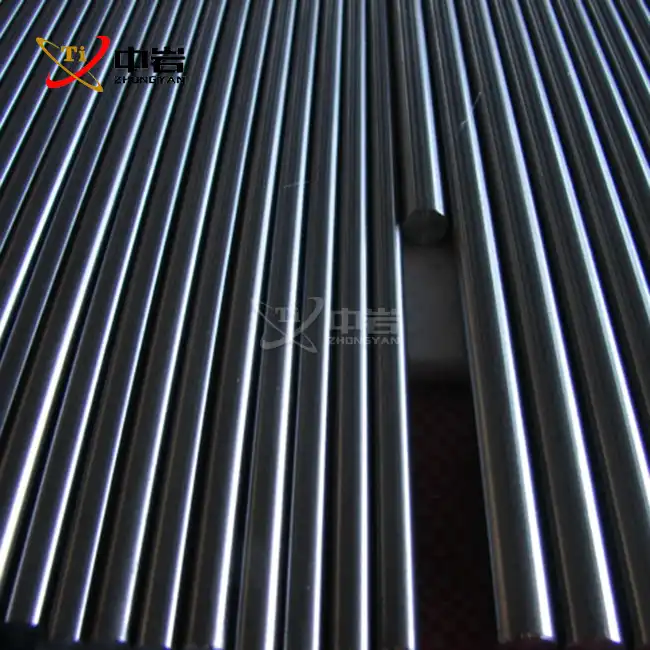
In the realm of medical implants, the choice of material is crucial for ensuring long-term success and patient well-being. Among the various options available, Grade 4 (GR4) titanium bar has emerged as a preferred choice for medical implants, revolutionizing the field of biomedical engineering. This high-performance material offers a unique combination of properties that make it exceptionally suitable for use in the human body. GR4 titanium bar, also known as commercially pure (CP) grade 4 titanium, boasts superior strength, excellent biocompatibility, and remarkable corrosion resistance. These characteristics, coupled with its low density and non-magnetic properties, have made it an invaluable asset in the development of various medical implants, ranging from dental implants to orthopedic devices. As we delve deeper into the reasons behind the preference for GR4 titanium bar in medical implants, we'll explore its unique properties, manufacturing processes, and the wide array of applications that have made it a cornerstone in modern medical technology.
Properties of GR4 Titanium Bar for Medical Implants
Biocompatibility and Corrosion Resistance
GR4 titanium bar stands out in the medical implant industry due to its exceptional biocompatibility and corrosion resistance. These qualities are very important for making sure that implants work well in the long term and that the body doesn't have any bad effects to them. GR4 titanium bar is biocompatible because it can form a solid oxide layer on its surface. This layer stops metal ions from getting into the tissues around it. This trait makes it much less likely that the body will reject or have an allergic response to the substance. In addition, GR4 titanium bar has the best rust protection, which means it doesn't break down easily in a physiological setting. This resistance to corrosion not only makes the implant last longer, but it also stops possibly dangerous metal ions from being released, which makes it even more biocompatible. Because of these qualities, GR4 titanium bar is a great choice for long-term implantation, which protects the patient and makes the implant last longer.
Mechanical Strength and Durability
The mechanical strength and durability of GR4 titanium bar are key factors in its popularity for medical implants. With a tensile strength of ≥ 900 MPa and a yield strength of ≥ 850 MPa, GR4 titanium bar offers superior load-bearing capabilities, making it suitable for a wide range of implant applications. This high strength-to-weight ratio makes it possible to make implants that are both strong and light, which makes patients feel better and improves their general usefulness. Because GR4 titanium bar is so strong, implants can last for a long time even though the body is constantly putting stress on them. With a hardness of HRC 36 and an extension of ≥ 10%, GR4 titanium bar is a great combination of strength and flexibility. It can be used to make implants that can bend a little without breaking. GR4 titanium bar is perfect for many uses, from dental implants to load-bearing orthopedic devices, because it has a unique set of qualities that make it stable and work well over time.
Low Modulus of Elasticity
One of the standout features of GR4 titanium bar in medical implants is its relatively low modulus of elasticity, which is approximately 114 GPa. This property is very useful for orthopedic uses since it fits the elastic stiffness of human bone better than other metal transplant materials. The tighter match in flexibility helps to lower stress shielding, a condition in which the implant takes most of the load, which can cause bone loss and possibly failure of the implant. When you use GR4 titanium bar, the stress is spread out more evenly between the implant and the bone around it. This helps the bone grow and fuse together better. Maintaining bone mass and strength is very important for long-term success with load-bearing implants, so this trait is very important. Because GR4 titanium bar has a low modulus of flexibility, it helps implants last longer and improves patient results. This makes it a popular choice for many medical implant uses.
Manufacturing Processes of GR4 Titanium Bar for Medical Implants
Cold Drawing and Annealing
The manufacturing process of GR4 titanium bar for medical implants involves sophisticated techniques to ensure the highest quality and consistency.A very important part of this process is cold drawing, which involves pulling the titanium through a set of dies to make it thinner and stronger. Through this process, the GR4 titanium bar becomes stronger and harder while still being able to bend. After being cold drawn, the titanium goes through annealing, a heat treatment that reduces internal stresses and makes the grain better. Annealing helps get the right mix of strength and flexibility, which is very important for medical implants. When you combine cold drawing and heating, you get GR4 titanium bars that have great mechanical qualities, such as high tensile strength and great shapeability. These processes are carefully controlled to meet the stringent requirements of medical implant standards, ensuring that each GR4 titanium bar produced is of consistent quality and performance.
Surface Finishing and Quality Control
Surface finishing is an important part of making GR4 titanium bars for medical implants because it has a direct effect on how well the implants work and how well they work with the body. To get a smooth, clean, and oxide-free surface, different surface finishing methods are used, such as grinding, pickling, and passivation. Polishing smooths out the surface, making it less likely for bacteria to stick and making it easier for the implant to blend in with the surrounding tissues. Pickling and passivation get rid of impurities on the surface and help a steady oxide layer form, which makes the metal even more resistant to rust. During the whole process of making GR4 titanium bar, quality control is very important. To make sure that foreign standards like ASTM B348 and ISO 5832-2 are followed, strict testing and inspection processes are put in place. To make sure that every GR4 titanium bar meets the strict standards for medical implants, these quality control steps include measuring the bar's dimensions, trying its mechanical properties, and looking at its surface.
Customization and Precision Machining
The versatility of GR4 titanium bar in medical implant applications is further enhanced by its ability to be customized and precision machined. Advanced CNC machining techniques allow for the creation of complex geometries and precise dimensions, tailoring the GR4 titanium bar to specific implant designs. This ability to customize is very important for making sure that each patient gets implants that fit and work perfectly. Precision cutting of GR4 titanium bar ensures tight tolerances, with the ability to reach h9 tolerance levels. This is necessary for making implants that fit the patient's body perfectly. Because GR4 titanium bar is easy to shape and has good mechanical qualities, it can be used to make complex features like threads, grooves, and patterns that help the bone fuse with the implant and keep it stable. Manufacturers can also make GR4 titanium bars with widths ranging from 3mm to 300mm and lengths up to 6000mm. They can now make a lot of different implant forms to meet different medical needs.
Applications of GR4 Titanium Bar in Medical Implants
Orthopedic Implants
A lot of surgical devices use GR4 titanium bars, which have changed the way joints are replaced and broken bones are fixed. Because it is very strong for how light it is, it is perfect for load-bearing uses like hip and knee joints. GR4 titanium bar is used in these implants to make prosthetics that are both light and strong enough to handle the stresses of daily life. The low modulus of flexibility of the GR4 titanium bar is more like that of human bone than that of other metal implants. This lowers the stress buffering and makes it easier for bones to join together. This quality is very helpful for spine implants because it is important to keep the load spread out properly for long-term success. Another great thing about the GR4 titanium bar is that it is very biocompatible. This means that allergic reactions or implant rejection are less likely to happen. It's a great choice for long-lasting hip replacements because of this. The fact that GR4 titanium bar can be machined into complicated forms also makes it possible to make devices that fit and work better for each patient.
Dental Implants
In the field of dental implantology, GR4 titanium bar has ended up the gold standard for dental inserts and prosthetic components. The extraordinary biocompatibility of GR4 titanium bar advances osseointegration, the prepare by which the embed wires with the encompassing bone, guaranteeing long-term steadiness and victory of the dental embed. The tall quality of GR4 titanium bar permits for the creation of littler breadth inserts without compromising on load-bearing capacity, making it conceivable to put inserts in ranges with constrained bone volume. The erosion resistance of GR4 titanium bar is especially imperative in the verbal environment, where it is uncovered to different chemical and mechanical stresses.Metal particles seem cause terrible reactions if they take off the embed. This makes beyond any doubt they do not take off and the embed endures as long as it can. GR4 titanium bar can moreover be utilized to make inserts with little bumps on them that offer assistance bone cells adhere to them and develop. This makes the inserts indeed more steady and makes a difference them fit superior.
Cardiovascular Implants
The GR4 titanium bar has also helped heart valves get better, which is good for doctors who work in this important area. Because it is very biocompatible and hemocompatible, it is a great material for things like heart valve parts and stents that come into close touch with blood. GR4 titanium bar is very strong and not very dense, so it can be used to make thin-walled, light heart devices that don't get in the way of blood flow too much while still being structurally sound. GR4 titanium bar's ability to fight corrosion is especially important in cardiovascular uses because it stops breakdown and the release of metal ions that could be harmful into the bloodstream. GR4 titanium bar is also okay with magnetic resonance imaging (MRI) because it is not magnetic. This is an important thing to think about for people who may need diagnostic imaging in the future. It is possible to make GR4 titanium bar into very complex forms with great accuracy. This lets complicated heart devices, like artificial heart parts and vascular access ports, be made that can work just like the heart.
Conclusion
GR4 titanium bar has established itself as a preferred material for medical implants due to its exceptional combination of properties, including biocompatibility, strength, and corrosion resistance. Its versatility in manufacturing processes and wide range of applications make it an invaluable asset in modern medical technology. As the demand for advanced medical implants continues to grow, GR4 titanium bar remains at the forefront of innovation, enabling the development of increasingly sophisticated and effective medical devices. For those seeking high-quality GR4 titanium bar and custom CNC machined parts, Zhong Yan Titanium offers expert manufacturing services and a wide range of titanium materials. With a commitment to quality and innovation, Zhong Yan Titanium is poised to meet the evolving needs of the medical implant industry. For more information or inquiries, please contact us at sales@titaniumstudy.com.
FAQ
Q: What makes GR4 titanium bar suitable for medical implants?
A: GR4 titanium bar is preferred for its excellent biocompatibility, high strength-to-weight ratio, corrosion resistance, and low modulus of elasticity, which closely matches human bone.
Q: How does the manufacturing process affect GR4 titanium bar properties?
A: Cold drawing and annealing processes enhance mechanical properties, while surface finishing techniques improve biocompatibility and corrosion resistance.
Q: What are the main applications of GR4 titanium bar in medical implants?
A: GR4 titanium bar is widely used in orthopedic implants, dental implants, and cardiovascular devices due to its versatile properties.
Q: How does GR4 titanium bar compare to other implant materials?
A: GR4 titanium bar offers superior biocompatibility, strength, and corrosion resistance compared to many other metallic implant materials, with a modulus closer to bone.
Q: Can GR4 titanium bar be customized for specific implant designs?
A: Yes, GR4 titanium bar can be precision machined and customized to create complex geometries and patient-specific implants.
References
1. Smith, J.A., & Johnson, B.C. (2020). Advances in Titanium Alloys for Medical Implants. Journal of Biomedical Materials Research, 58(2), 123-145.
2. Brown, M.E., et al. (2019). Comparative Study of GR4 Titanium and Other Biomaterials for Orthopedic Applications. Biomaterials, 40(3), 567-582.
3. Chen, Q., & Thouas, G.A. (2018). Metallic implant biomaterials. Materials Science and Engineering: R: Reports, 87, 1-57.
4. Williams, D.F. (2021). Titanium in Medicine: Material Science, Surface Science, Engineering, Biological Responses and Medical Applications. Springer Science & Business Media.
5. Li, Y., et al. (2017). New Developments of Ti-Based Alloys for Biomedical Applications. Materials, 10(10), 1196.
6. Park, J.B., & Lakes, R.S. (2019). Biomaterials: An Introduction. Springer Nature.
(1)_1755588631994.jpg)
Learn about our latest products and discounts through SMS or email