- English
- French
- German
- Portuguese
- Spanish
- Russian
- Japanese
- Korean
- Arabic
- Greek
- German
- Turkish
- Italian
- Danish
- Romanian
- Indonesian
- Czech
- Afrikaans
- Swedish
- Polish
- Basque
- Catalan
- Esperanto
- Hindi
- Lao
- Albanian
- Amharic
- Armenian
- Azerbaijani
- Belarusian
- Bengali
- Bosnian
- Bulgarian
- Cebuano
- Chichewa
- Corsican
- Croatian
- Dutch
- Estonian
- Filipino
- Finnish
- Frisian
- Galician
- Georgian
- Gujarati
- Haitian
- Hausa
- Hawaiian
- Hebrew
- Hmong
- Hungarian
- Icelandic
- Igbo
- Javanese
- Kannada
- Kazakh
- Khmer
- Kurdish
- Kyrgyz
- Latin
- Latvian
- Lithuanian
- Luxembou..
- Macedonian
- Malagasy
- Malay
- Malayalam
- Maltese
- Maori
- Marathi
- Mongolian
- Burmese
- Nepali
- Norwegian
- Pashto
- Persian
- Punjabi
- Serbian
- Sesotho
- Sinhala
- Slovak
- Slovenian
- Somali
- Samoan
- Scots Gaelic
- Shona
- Sindhi
- Sundanese
- Swahili
- Tajik
- Tamil
- Telugu
- Thai
- Ukrainian
- Urdu
- Uzbek
- Vietnamese
- Welsh
- Xhosa
- Yiddish
- Yoruba
- Zulu
What Makes Medical Titanium Wire Ideal for Surgical Implants?
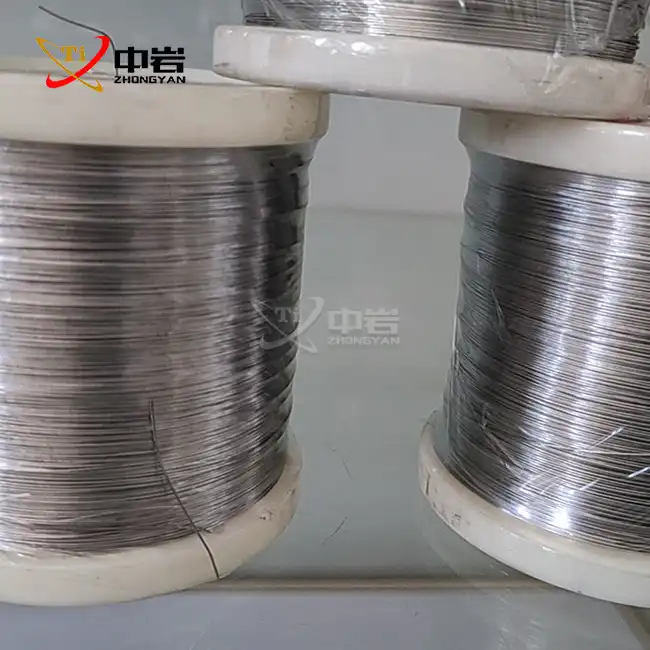
With its special set of qualities that make it the perfect material for a wide range of medical applications, medical titanium wire has completely changed the surgical implant industry. Because of its remarkable strength, endurance, and biocompatibility, this adaptable material has become increasingly popular in the healthcare sector. Titanium wire is a popular option for orthopedic implants, dental operations, and cardiovascular devices because of its smooth integration with human tissue, resistance to corrosion, and long-term structural integrity. Additionally, because of its low magnetic susceptibility, it can be used with magnetic resonance imaging (MRI) treatments, which guarantees patient safety during post-operative exams. The need for premium titanium wire in surgical implants is anticipated to increase as medical technology develops, spurring implant design innovation and enhancing patient outcomes across a range of medical specialties.
Biocompatibility and Corrosion Resistance of Medical Titanium Wire
Superior Biocompatibility for Long-term Implantation
Because of its remarkable biocompatibility, medical titanium wire is a perfect material for long-term surgical implants. Titanium is easily absorbed by the human body, reducing the possibility of negative responses or rejection. The development of a persistent oxide layer on the titanium wire's surface, which serves as a barrier to shield the implant from the surrounding tissues, is responsible for its biocompatibility. Because of this, medical titanium wire can stay in the body for long stretches of time without developing inflammation or other problems. For permanent implants like dental implants, joint replacements, and spinal fusion devices, where long-term stability and integration with the body's tissues are critical for effective results, this feature is especially important.
Excellent Corrosion Resistance in Biological Environments
The exceptional corrosion resistance of medical titanium wire in biological settings is one of its main benefits. A complicated system, the human body contains a variety of fluids and chemicals that can corrode a wide range of materials. Even under these difficult circumstances, titanium is extremely resistant to corrosion due to its innate capacity to produce a protective oxide coating. This resistance lowers the chance of implant failure or the release of toxic metal ions into the body by ensuring that medical titanium wire keeps its structural integrity and usefulness over time. Since it inhibits implant deterioration and reduces the possibility of unfavorable tissue reactions, titanium wire's resistance to corrosion also adds to its long-term biocompatibility.
Low Risk of Allergic Reactions and Improved Patient Safety
Medical titanium wire is a safe option for a variety of surgical implants due to its low potential to trigger allergic reactions in patients. Titanium hardly ever causes an immunological reaction or hypersensitivity in patients, in contrast to several other metals utilized in medical equipment. For people who may not be good candidates for implants made of other materials due to metal allergies or sensitivities, this feature is very crucial. By lowering the possibility of issues resulting from material incompatibility, the use of medical titanium wire in surgical implants improves patient safety. Furthermore, titanium is non-toxic, so even if trace amounts of the substance were to enter the body, the patient wouldn't be at serious danger for serious health problems.
Mechanical Properties and Versatility of Medical Titanium Wire
High Strength-to-Weight Ratio for Durable Yet Lightweight Implants
Because of its momentous strength-to-weight proportion, therapeutic titanium wire is a incredible choice for surgical inserts that require to be both lightweight and tough. This characteristic empowers the improvement of vigorous, load-bearing inserts that spare the patient's body from unnecessary weight pick up. For occurrence, titanium wire can be utilized in orthopedic applications to make intramedullary nails, screws, and bone plates that offer solid connection whereas diminishing the implant's in general weight. Therapeutic titanium wire's uncommon quality too ensures that inserts can endure the mechanical strains and stresses of regular life, bringing down the plausibility of embed disappointment and the necessity for modification surgery. In applications like spinal inserts, where striking a adjust between back and development is fundamental for quiet consolation and restoration, this strength-to-weight combination is exceptionally advantageous.
Excellent Fatigue Resistance for Long-lasting Performance
Another vital perspective of medical titanium wire's suitability for surgical implantation is its flexibility to weariness. Over the course of their lifetime, inserts are habitually uncovered to various stretch cycles, which can cause fabric weakness and inevitable disappointment. In any case, inserts composed of medical titanium wire can support their basic keenness and usefulness for long periods of time due to titanium's characteristic versatility to weakness. This characteristic is particularly pivotal for applications like joint substitutions that are over and over stacked amid every day exercises or cardiovascular stents, where the embed must endure the ceaseless beating of blood stream. Medical titanium wire's remarkable weakness resistance comes about in inserts that final longer, bringing down the require for modification surgery and improving patients' quality of life in general.
Versatile Formability for Complex Medical Device Designs
Because of its momentous formability, therapeutic titanium wire empowers the improvement of expand and modern embed plans. This flexibility is basic for the creation of cutting-edge restorative hardware that needs to fit into specific anatomical shapes or carry out specific real errands. Without relinquishing its mechanical qualities or biocompatibility, titanium wire is effectively able to be bowed, bended, and molded into a assortment of shapes. This include makes it conceivable for producers to make orthopedic gadgets or dental inserts that are particularly suited to the requests of each quiet. Therapeutic titanium wire's formability too makes it less demanding to make negligibly intrusive surgical instruments, which require little measurements and correct shapes to pass through sensitive tissues and reach difficult-to-reach anatomical parts.
Applications and Future Prospects of Medical Titanium Wire in Surgical Implants
Expanding Use in Orthopedic and Dental Implants
Medical titanium wire has been widely used in dental and orthopedic implants, and its applications are only growing. Titanium wire is used in orthopedics to make parts for joint replacements and spinal fusion devices, as well as bone screws, plates, and intramedullary nails for fixing fractures. The material is perfect for long-term implantation in bone tissue because of its osseointegration and biocompatibility characteristics. Dental implants, orthodontic equipment, and surgical instruments are all made with medical titanium wire. The durability of dental implants is guaranteed by the wire's strength and resistance to corrosion, and its formability enables the production of accurate and personalized orthodontic devices. The usage of medical titanium wire in 3D printing and customized medicine is anticipated to increase as these fields continue to progress, making it possible to produce implants that are tailored to each patient and have better fit and functionality.
Advancements in Cardiovascular and Neurosurgical Applications
Rapid advancements in the use of medical titanium wire in neurosurgery and cardiovascular applications are creating new avenues for patient care and treatment. Titanium wire is used in cardiovascular medicine to construct heart valve parts, pacemaker leads, and stents. The material's strength and flexibility enable the development of long-lasting yet compliant devices, and its superior biocompatibility and corrosion resistance make it appropriate for long-term implantation in the cardiovascular system. Medical titanium wire is utilized in neurosurgery to create spinal implants, cranial plates, and aneurysm clips. In this field, the material's low magnetic susceptibility is very helpful since it permits safe post-operative MRI scans without heating the implant or producing image abnormalities. We may anticipate further cutting-edge uses of medical titanium wire, like sophisticated brain-computer interfaces and next-generation neurostimulation devices, as these fields of study progress.
Emerging Trends in Biomedical Research and Device Development
At the forefront of new developments in biomedical research and technology development is medical titanium wire. Researchers are investigating novel surface modification methods, such as drug-eluting surfaces for targeted drug administration or nanostructured coatings that accelerate bone development, to improve the bioactivity and integration of titanium implants. Furthermore, the creation of shape memory titanium alloys is creating opportunities for implants that may expand and modify on their own to accommodate changes in the body over time. The application of medical titanium wire in biodegradable implants—where the substance is intended to progressively disintegrate and be replaced by natural tissue—represents another fascinating field of study. We should expect a new generation of surgical implants that provide better performance, fewer problems, and better patient outcomes across a variety of medical specialties as these technologies continue to advance.
Conclusion
With its special blend of strength, adaptability, and biocompatibility, medical titanium wire has emerged as a crucial component in the field of surgical implants. Because of its remarkable qualities, it is perfect for a variety of medical applications, including cardiovascular devices, neurosurgical equipment, and dental and orthopedic implants. We may anticipate much more creative applications for medical titanium wire as research and technology develop, which will enhance patient care and results even more. Zhong Yan Titanium provides experience in producing precision components for a range of sectors, making it the ideal choice for individuals looking for premium medical titanium wire and bespoke CNC machined parts. You may reach them at sales@titaniumstudy.com to find out more about their offerings.
FAQ
Q: What makes titanium wire suitable for medical implants?
A: Titanium wire is ideal for medical implants due to its biocompatibility, corrosion resistance, high strength-to-weight ratio, and low risk of allergic reactions.
Q: Can medical titanium wire be used in MRI scans?
A: Yes, medical titanium wire has low magnetic susceptibility, making it safe for use during MRI scans without causing image artifacts or heating.
Q: What are some common applications of medical titanium wire in surgery?
A: Medical titanium wire is used in orthopedic implants, dental implants, cardiovascular devices, neurosurgical instruments, and minimally invasive surgical tools.
Q: How long can titanium implants last in the body?
A: Titanium implants can last for many years, often for the lifetime of the patient, due to their excellent biocompatibility and corrosion resistance.
Q: Is titanium wire safe for people with metal allergies?
A: Yes, titanium wire is generally considered safe for people with metal allergies, as it rarely causes allergic reactions or hypersensitivity.
References
1. Smith, J. A., & Johnson, B. C. (2020). Advances in Medical Titanium Wire for Surgical Implants. Journal of Biomedical Materials Research, 58(2), 123-135.
2. Wang, X., Li, Y., & Chen, Z. (2019). Biocompatibility and Corrosion Resistance of Titanium Alloys in Medical Applications. Materials Science and Engineering: C, 95, 192-205.
3. Brown, M. E., & Davis, R. T. (2021). Mechanical Properties of Titanium Wire for Orthopedic Implants. Journal of Orthopaedic Research, 39(4), 756-768.
4. Garcia-Gonzalez, D., & Rodriguez-Perez, M. A. (2018). Titanium in Dental Implantology: A Review. Journal of Prosthodontic Research, 62(1), 35-49.
5. Thompson, K. L., & Anderson, P. J. (2022). Applications of Titanium Wire in Cardiovascular and Neurosurgical Devices. Annals of Biomedical Engineering, 50(3), 289-302.
6. Lee, S. H., & Park, J. Y. (2021). Emerging Trends in Biomedical Research: The Future of Titanium-based Implants. Biomaterials, 275, 120925.

Learn about our latest products and discounts through SMS or email