- English
- French
- German
- Portuguese
- Spanish
- Russian
- Japanese
- Korean
- Arabic
- Greek
- German
- Turkish
- Italian
- Danish
- Romanian
- Indonesian
- Czech
- Afrikaans
- Swedish
- Polish
- Basque
- Catalan
- Esperanto
- Hindi
- Lao
- Albanian
- Amharic
- Armenian
- Azerbaijani
- Belarusian
- Bengali
- Bosnian
- Bulgarian
- Cebuano
- Chichewa
- Corsican
- Croatian
- Dutch
- Estonian
- Filipino
- Finnish
- Frisian
- Galician
- Georgian
- Gujarati
- Haitian
- Hausa
- Hawaiian
- Hebrew
- Hmong
- Hungarian
- Icelandic
- Igbo
- Javanese
- Kannada
- Kazakh
- Khmer
- Kurdish
- Kyrgyz
- Latin
- Latvian
- Lithuanian
- Luxembou..
- Macedonian
- Malagasy
- Malay
- Malayalam
- Maltese
- Maori
- Marathi
- Mongolian
- Burmese
- Nepali
- Norwegian
- Pashto
- Persian
- Punjabi
- Serbian
- Sesotho
- Sinhala
- Slovak
- Slovenian
- Somali
- Samoan
- Scots Gaelic
- Shona
- Sindhi
- Sundanese
- Swahili
- Tajik
- Tamil
- Telugu
- Thai
- Ukrainian
- Urdu
- Uzbek
- Vietnamese
- Welsh
- Xhosa
- Yiddish
- Yoruba
- Zulu
Titanium in the Automotive Industry – Driving Performance, Efficiency, and Innovation
Introduction
The automotive industry is undergoing a revolution driven by lightweight materials, sustainability, and advanced engineering. Among the various metals competing for attention, titanium stands out as a high-performance material that provides strength, weight reduction, corrosion resistance, and durability. While once confined to aerospace and motorsport applications, titanium is now making its way into mainstream automotive manufacturing, particularly in high-end, electric, and performance vehicles. This article explores the role of titanium in automotive engineering, its unique advantages, specific applications, and the trends shaping its future in the mobility sector.
Why Titanium for Automotive Applications?
-
Lightweight Advantage
Titanium is about 45% lighter than steel while offering comparable strength. Weight reduction improves fuel economy in traditional vehicles and extends driving range in electric vehicles. -
Corrosion Resistance
Automotive parts exposed to moisture, road salts, and chemicals benefit from titanium’s resistance to rust and corrosion, ensuring longer service life. -
High-Temperature Performance
Titanium maintains its strength and stability at elevated temperatures, making it ideal for exhaust systems and turbocharger components. -
Durability and Fatigue Resistance
In high-performance cars, titanium withstands cyclic stresses and vibrations better than many other metals, reducing the risk of premature failure. -
Aesthetic Appeal
Titanium fasteners and accessories are popular in the aftermarket due to their sleek appearance and premium branding.
Applications of Titanium in Automobiles
-
Exhaust Systems
Titanium exhausts are widely used in racing and luxury cars. They provide significant weight savings, resist oxidation, and produce a unique sound profile. -
Engine Components
Titanium valves, connecting rods, and turbocharger blades reduce reciprocating mass, improving engine responsiveness and efficiency. -
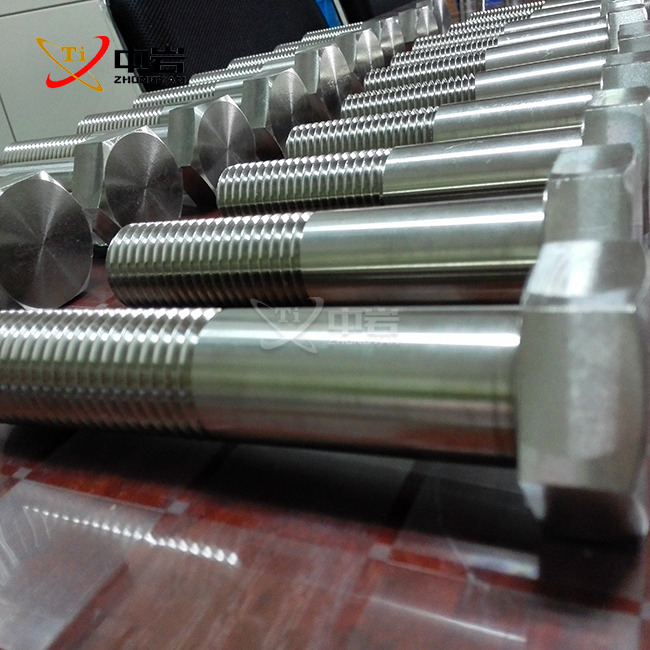
Fasteners and Bolts
High-strength titanium bolts are used in suspension systems, wheel hubs, and brake assemblies where both weight and strength matter. -
Chassis and Structural Parts
Though expensive, titanium is sometimes used in chassis components for high-performance sports cars. -
Springs and Suspension Systems
Titanium springs reduce unsprung weight, improving handling and ride comfort. -
Electric Vehicles (EVs)
Titanium is increasingly used in EV battery enclosures, cooling systems, and lightweight components that improve driving range.
Motorsport and Titanium
The use of titanium in motorsport has driven much of the innovation in automotive applications. Formula 1, MotoGP, and endurance racing cars rely heavily on titanium components for strength, weight reduction, and performance. Over time, these innovations trickle down into commercial automotive technology, making titanium more accessible.
Manufacturing Challenges and Solutions
-
Cost: Titanium is significantly more expensive than steel or aluminum, limiting its use to premium vehicles.
-
Machining Difficulty: Titanium’s toughness makes it challenging to cut and shape. Advanced CNC machining and forging techniques are essential.
-
Additive Manufacturing (3D Printing): Emerging technology is helping reduce waste and costs by producing near-net-shape titanium parts.
Market Trends and Future Outlook
-
Electrification of Vehicles: EVs require lightweight solutions, and titanium’s adoption is expected to grow.
-
Sustainability: Titanium’s recyclability and long service life support sustainable automotive manufacturing.
-
Cost Reduction through Alloys: Advances in alloy design and processing are reducing material costs.
-
Luxury and Branding: Titanium will continue to be a premium feature in luxury and sports cars.
-
Hybrid Titanium Materials: Titanium-clad steels may offer a balance of performance and cost for mass production.
Conclusion
Titanium is no longer confined to aerospace or motorsport; it has secured its role in the automotive industry as a performance-driven material. Its benefits—lightweight strength, durability, corrosion resistance, and high-temperature performance—make it indispensable for high-performance and electric vehicles. While cost remains a limiting factor, ongoing innovations in processing and additive manufacturing are expected to expand titanium’s role in mainstream automotive production. As the global automotive industry transitions toward electrification, sustainability, and efficiency, titanium is positioned to become one of the defining materials of next-generation mobility.
_1755674651182.jpg)
Learn about our latest products and discounts through SMS or email