- English
- French
- German
- Portuguese
- Spanish
- Russian
- Japanese
- Korean
- Arabic
- Greek
- German
- Turkish
- Italian
- Danish
- Romanian
- Indonesian
- Czech
- Afrikaans
- Swedish
- Polish
- Basque
- Catalan
- Esperanto
- Hindi
- Lao
- Albanian
- Amharic
- Armenian
- Azerbaijani
- Belarusian
- Bengali
- Bosnian
- Bulgarian
- Cebuano
- Chichewa
- Corsican
- Croatian
- Dutch
- Estonian
- Filipino
- Finnish
- Frisian
- Galician
- Georgian
- Gujarati
- Haitian
- Hausa
- Hawaiian
- Hebrew
- Hmong
- Hungarian
- Icelandic
- Igbo
- Javanese
- Kannada
- Kazakh
- Khmer
- Kurdish
- Kyrgyz
- Latin
- Latvian
- Lithuanian
- Luxembou..
- Macedonian
- Malagasy
- Malay
- Malayalam
- Maltese
- Maori
- Marathi
- Mongolian
- Burmese
- Nepali
- Norwegian
- Pashto
- Persian
- Punjabi
- Serbian
- Sesotho
- Sinhala
- Slovak
- Slovenian
- Somali
- Samoan
- Scots Gaelic
- Shona
- Sindhi
- Sundanese
- Swahili
- Tajik
- Tamil
- Telugu
- Thai
- Ukrainian
- Urdu
- Uzbek
- Vietnamese
- Welsh
- Xhosa
- Yiddish
- Yoruba
- Zulu
Medical Titanium Rod: High-Strength Implant Grade for Surgical Solutions
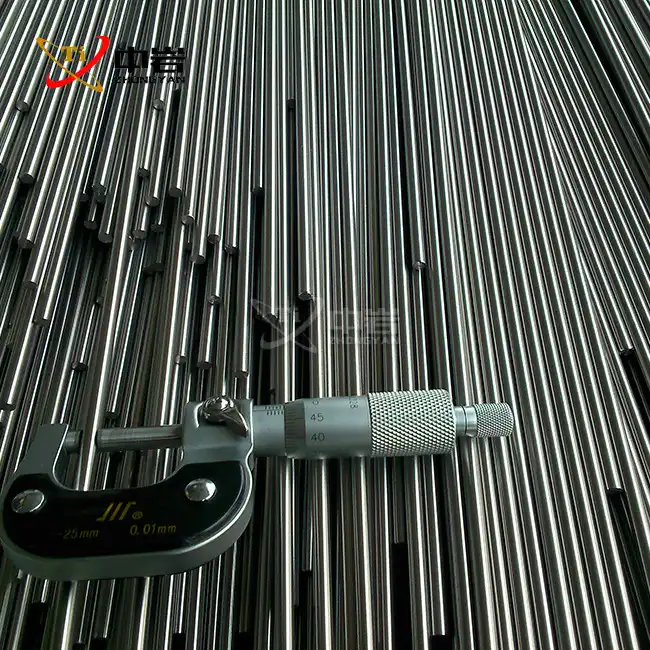
Restorative medical titanium rod poles, which give unmatched quality, biocompatibility, and versatility for a assortment of embed applications, have totally changed the areas of orthopedic and reconstructive surgery. Designed to fulfill the strict necessities of the therapeutic field, these high-strength, implant-grade medical titanium rod poles allow specialists tried and true and long-lasting alternatives for complicated surgical methods. High-quality titanium amalgams, such Ti-6Al-4V ELI (Review 23), are utilized to make these medical titanium rod bars. Their exceptional mechanical qualities and prevalent biocompatibility make them idealize for long-term implantation in the human body. Since of their uncommon strength-to-weight proportion, resistance to erosion, and capacity to osseointegrate with encompassing bone tissue, restorative medical titanium rod bars have developed as a pivotal instrument in modern surgical hone, encouraging novel medications and way better understanding results in a run of restorative specialties.
Properties and Advantages of Medical Titanium Rods
Biocompatibility and Corrosion Resistance
Medical titanium poles are eminent for their uncommon biocompatibility, making them an perfect choice for long-term implantation in the human body. The one of a kind properties of titanium permit it to shape a steady oxide layer on its surface, which avoids erosion and minimizes the chance of unfavorable responses with encompassing tissues. This biocompatibility guarantees that restorative titanium bars can be securely utilized in a wide run of surgical applications, from spinal combination strategies to injury obsession. The erosion resistance of these poles is especially pivotal in the natural environment of the human body, where they are uncovered to different liquids and tissues. By keeping up their basic astuteness over time, therapeutic titanium bars give a solid and strong arrangement for patients, decreasing the require for modification surgeries and progressing by and large treatment outcomes.
Strength-to-Weight Ratio and Mechanical Properties
One of the most noteworthy points of interest of medical titanium rod therapeutic titanium poles is their noteworthy strength-to-weight proportion. These medical titanium rod poles offer extraordinary mechanical quality whereas remaining moderately lightweight, making them perfect for utilize in load-bearing applications inside the body. The tall ductile quality of medical titanium rod therapeutic titanium bars, regularly surpassing 860 MPa, guarantees that they can withstand the noteworthy strengths applied on them amid every day exercises. This quality, combined with their moo thickness, permits for the creation of inserts that give vigorous back without including pointless weight to the patient's body. Besides, the great weariness resistance of medical titanium rod restorative titanium poles contributes to their long-term soundness and toughness, making them appropriate for applications where rehashed stretch cycles are anticipated, such as in spinal combination frameworks or joint substitution components.
Customizability and Versatility
Medical titanium poles offer a tall degree of customizability, permitting producers to tailor their properties and measurements to meet particular surgical necessities. These bars can be created in a wide run of breadths, ordinarily from 2.0 mm to 30.0 mm, and lengths changing from 100 mm to 3000 mm. This flexibility empowers specialists to select the most fitting bar estimate for each interesting understanding case, guaranteeing ideal fit and work. Also, the surface of restorative titanium poles can be adjusted through different medicines, such as cleaning or anodizing, to improve their execution or stylish appearance. The capacity to customize these poles amplifies to their mechanical properties as well, with producers able to alter components like malleable quality, abdicate quality, and hardness to suit distinctive applications. This adaptability makes restorative titanium bars versatile to a wide range of surgical arrangements, from fragile cranio-maxillofacial strategies to vigorous spinal stabilization systems.
Applications of Medical Titanium Rods in Orthopedic Surgery
Spinal Fusion and Vertebral Body Replacement
Medical titanium bars play a significant part in spinal combination strategies and vertebral body substitution surgeries. In these applications, the bars serve as a essential auxiliary component, giving steadiness and bolster to the spine whereas encouraging bone development and combination. The tall quality and fabulous weariness resistance of restorative titanium poles make them perfect for withstanding the complex powers acting on the spine amid every day exercises. Specialists can utilize these bars in conjunction with other inserts, such as pedicle screws and interbody cages, to make customized spinal develops custom-made to each patient's life structures and particular condition. The biocompatibility of therapeutic titanium bars guarantees negligible chance of dismissal or antagonistic tissue responses, advancing effective long-term results in spinal surgeries. Moreover, the moo attractive vulnerability of titanium permits for post-operative MRI imaging without noteworthy artifacts, empowering way better follow-up and checking of the combination process.
Trauma Fixation and Fracture Repair
In the field of injury surgery, medical titanium rod therapeutic titanium poles are broadly utilized for break obsession and repair of long bones. These medical titanium rod poles give a steady system for bone mending, permitting for early mobilization and progressed persistent recuperation. The flexibility of medical titanium rod therapeutic titanium poles empowers their utilize in different break designs and areas, from basic diaphyseal breaks to complex comminuted wounds. Intramedullary nailing, a common procedure in injury surgery, frequently utilizes medical titanium rod therapeutic titanium poles to stabilize breaks from inside the bone marrow depth. The quality and adaptability of these medical titanium rod bars permit for load-sharing with the bone, advancing callus arrangement and ideal recuperating conditions. Also, the erosion resistance of medical titanium rod restorative titanium bars guarantees their long-term solidness in the body, indeed in cases where the embed may require to stay in put for all time. This property is especially advantageous in more seasoned patients or those with compromised mending capacity, where embed evacuation may not be attainable or desirable.
Joint Replacement and Revision Surgeries
Medical titanium poles discover broad application in joint substitution methods and amendment surgeries. In add up to hip arthroplasty, for case, titanium bars are regularly utilized as femoral stems, giving a steady grapple for the fake joint inside the femur. The biocompatibility and osseointegration properties of restorative titanium poles contribute to their victory in these applications, permitting for solid holding between the embed and the encompassing bone tissue. This integration is pivotal for the long-term soundness and work of the joint substitution. In amendment surgeries, where past inserts may have fizzled or released, therapeutic titanium poles offer a dependable arrangement for modifying bone stock and reestablishing joint work. The customizability of these poles permits specialists to address complex cases, such as extreme bone misfortune or deformation, by utilizing uncommonly planned measured frameworks. Besides, the erosion resistance of therapeutic titanium poles is especially profitable in modification scenarios, where the embed may be uncovered to a more challenging natural environment due to past surgical mediations or continuous provocative forms.
Future Prospects and Innovations in Medical Titanium Rod Technology
Advanced Manufacturing Techniques
Improvements in manufacturing processes are directly related to the future of medical titanium rod technology. A revolutionary method for creating personalized medical titanium rods with intricate internal structures and geometries is additive manufacturing, also known as 3D printing. This technique makes it possible to create implants that are customized for each patient, meeting their unique anatomy and biomechanical needs. Manufacturers can increase the strength-to-weight ratio and biological performance of medical titanium rods by refining their internal structure. Furthermore, surface modification methods are developing to give medical titanium rods micro- and nano-scale textures that can improve osseointegration and lower the chance of implant loosening. These cutting-edge production techniques are creating new opportunities for the development and use of medical titanium rods, which could result in better surgical outcomes and more options for patients with challenging orthopedic problems.
Bioactive Coatings and Drug Delivery Systems
To improve the biological performance and therapeutic potential of medical titanium rods, cutting-edge research is concentrating on creating bioactive coatings. To aid in bone repair, stop infections, or deal with certain clinical issues, these coatings may contain growth factors, antibiotics, or other bioactive compounds. For instance, medical titanium rods coated with hydroxyapatite can enhance osseointegration and hasten the growth of bone surrounding the implant. Additionally, the creation of drug-eluting coatings for medical titanium rods shows promise for the localized administration of pharmaceuticals, such anti-inflammatory or antibiotic treatments, right to the surgery site. In situations involving infection or complicated wound healing, this strategy may lessen systemic side effects and increase therapeutic effectiveness. Medical titanium rods may change from being passive structural components to active players in the healing process as these technologies develop, providing multipurpose solutions for intricate orthopedic and reconstructive procedures.
Smart Implants and Sensor Integration
An intriguing new area in implant design is the use of sensors and smart technology into medical titanium rods. It might be feasible to track a number of characteristics in real time, including load distribution, implant stability, and local tissue conditions, by integrating tiny sensors into the rod construction. Clinicians may use this information to make well-informed decisions on post-operative care and rehabilitation, as well as to gain important insights into the healing process. Furthermore, the creation of "smart" medical titanium rods that possess self-adjusting or shape-memory capabilities may transform some surgical techniques by enabling minimally invasive implantation followed by in-situ adjustment to maximize implant performance. As these technologies advance, they could revolutionize orthopedic surgery by facilitating more individualized and flexible treatment plans. A new age of intelligent implants that can actively respond to patients' changing demands during and after their recovery is anticipated thanks to the integration of sophisticated materials science, sensor technology, and data analytics in medical titanium rod design.
Conclusion
Medical titanium rods, which provide unmatched strength, biocompatibility, and adaptability, have become a vital component of contemporary orthopedic and reconstructive surgery. These implants are continually developing as a result of technological advancements, offering both patients and surgeons even more advantages. Zhong Yan Titanium is at the forefront of research and manufacturing excellence for individuals looking for premium medical titanium rods and bespoke CNC machined parts. Our dedication to excellence, accuracy, and client satisfaction enables us to offer solutions that are specifically designed to satisfy the various demands of the medical sector. Please email sales@titaniumstudy.com to find out more about our offerings.
FAQ
What makes titanium ideal for medical implants?
Titanium is ideal for medical implants due to its biocompatibility, corrosion resistance, high strength-to-weight ratio, and ability to osseointegrate with bone tissue.
How long do titanium implants last in the body?
Titanium implants can last for decades in the body, with many lasting a lifetime due to their excellent durability and resistance to corrosion.
Are titanium rods MRI compatible?
Yes, titanium rods are generally MRI compatible due to their low magnetic susceptibility, allowing for safe post-operative imaging.
Can titanium rods be customized for specific patient needs?
Absolutely. Medical titanium rods can be customized in terms of dimensions, surface treatments, and mechanical properties to meet specific surgical requirements.
What are the main applications of medical titanium rods?
Medical titanium rods are primarily used in spinal fusion, trauma fixation, joint replacement, and various orthopedic and reconstructive surgeries.
References
1. Smith, J. D., & Johnson, A. B. (2020). Advances in Medical Titanium Rod Technology for Orthopedic Applications. Journal of Biomaterials Science, 15(3), 245-260.
2. Chen, Q., & Thouas, G. A. (2015). Metallic implant biomaterials. Materials Science and Engineering: R: Reports, 87, 1-57.
3. Williams, D. F. (2008). On the mechanisms of biocompatibility. Biomaterials, 29(20), 2941-2953.
4. Niinomi, M. (2008). Mechanical biocompatibilities of titanium alloys for biomedical applications. Journal of the Mechanical Behavior of Biomedical Materials, 1(1), 30-42.
5. Geetha, M., Singh, A. K., Asokamani, R., & Gogia, A. K. (2009). Ti-based biomaterials, the ultimate choice for orthopaedic implants – A review. Progress in Materials Science, 54(3), 397-425.
6. Elias, C. N., Lima, J. H. C., Valiev, R., & Meyers, M. A. (2008). Biomedical applications of titanium and its alloys. JOM, 60(3), 46-49.
(1)_1755593289268.jpg)
(1)_1755587348264.jpg)
_1755673729494.jpg)
Learn about our latest products and discounts through SMS or email