- English
- French
- German
- Portuguese
- Spanish
- Russian
- Japanese
- Korean
- Arabic
- Greek
- German
- Turkish
- Italian
- Danish
- Romanian
- Indonesian
- Czech
- Afrikaans
- Swedish
- Polish
- Basque
- Catalan
- Esperanto
- Hindi
- Lao
- Albanian
- Amharic
- Armenian
- Azerbaijani
- Belarusian
- Bengali
- Bosnian
- Bulgarian
- Cebuano
- Chichewa
- Corsican
- Croatian
- Dutch
- Estonian
- Filipino
- Finnish
- Frisian
- Galician
- Georgian
- Gujarati
- Haitian
- Hausa
- Hawaiian
- Hebrew
- Hmong
- Hungarian
- Icelandic
- Igbo
- Javanese
- Kannada
- Kazakh
- Khmer
- Kurdish
- Kyrgyz
- Latin
- Latvian
- Lithuanian
- Luxembou..
- Macedonian
- Malagasy
- Malay
- Malayalam
- Maltese
- Maori
- Marathi
- Mongolian
- Burmese
- Nepali
- Norwegian
- Pashto
- Persian
- Punjabi
- Serbian
- Sesotho
- Sinhala
- Slovak
- Slovenian
- Somali
- Samoan
- Scots Gaelic
- Shona
- Sindhi
- Sundanese
- Swahili
- Tajik
- Tamil
- Telugu
- Thai
- Ukrainian
- Urdu
- Uzbek
- Vietnamese
- Welsh
- Xhosa
- Yiddish
- Yoruba
- Zulu
How to request quotes from titanium block suppliers?

Requesting quotes from titanium block suppliers requires a systematic approach that includes defining your technical specifications, researching certified manufacturers, and preparing comprehensive RFQ documents. The process involves identifying suppliers who meet ASTM B381 or ISO standards, specifying exact dimensions and grades needed, and evaluating responses based on price, quality certifications, and delivery capabilities. Successful procurement depends on clear communication of your requirements and thorough evaluation of supplier credentials to ensure you receive high-quality materials that meet your project specifications.
Understanding Titanium Blocks and Their Market Context
Titanium has become an important material in many high-performance industries. This has caused the world market for it to grow very quickly. Titanium blocks are important for CNC cutting because they can be used to make precise parts in a lot of different ways. These stable, rectangular pieces of titanium metal can be used as the base for many different kinds of goods, from medical implants to rocket engine parts.
Material Grades and Composition
Titanium comes in several types, and each has its own properties that make it useful for various jobs. Because it doesn't rust and is easy to shape, grade 2 titanium is great for tools used with chemicals. The most common type of titanium metal is Grade 5 (Ti-6Al-4V), which is 4.43 g/cm³ dense and can withstand over 950 MPa. When it comes to structural uses, airplane engineers look for grades that have a good mix of strength-to-weight. This makes a difference in how well it works and how much it costs. Alum (5.5–6.75%) and vanadium (3.5–4.5%) make Grade 5 stronger while still making it easy to work with. Procurement pros can pick the right grade for their needs without over-engineering or dropping performance standards if they know about these changes in makeup.
Market Supply Chain Dynamics
Metal makers in Baoji's "Titanium Valley" and Timet are some of the biggest businesses that make titanium. There is a lot of titanium in the Baoji area of China, and modern tools have made it a big output hub. The area is in a good place, so it is easy to get to both raw materials and high-tech production facilities. In this way, prices stay low, and quality stays good. Supply chain stability varies a great deal from one area to another. Lead times range from 4 to 12 weeks, depending on where the seller is located and how complicated the order is. Chinese manufacturers can usually offer fair prices since they have access to local materials and have already set up processes for making things. For urgent needs, European and North American companies often have shorter lead times, but they may charge more for faster delivery.
Preparing for the Quote Request: Crucial Factors to Consider
The first steps in setting a good price are to carefully look at what the market wants and know a lot about it. How correct and similar the answers from providers are depends on how well you prepare. You need to plan carefully if you want to buy something.
Technical Specification Definition
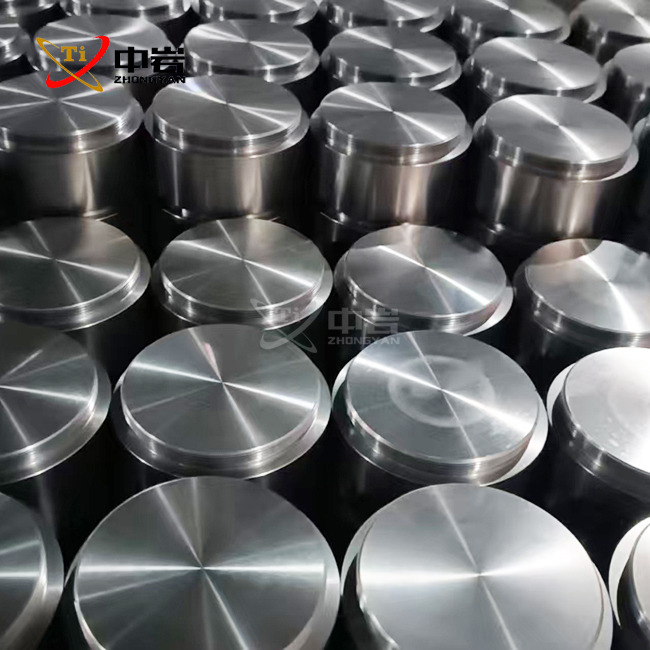
A clear explanation of the features eliminates any question and ensures the right price. You need to measure the titanium block to find out how long, wide, tall, and accurate they are. Standard sizes range from 50x50x50mm blocks, which are good for making small pieces, to blocks that are more than 500mm long and are used for building. You need to be very clear about the weight because weights range from 0.5 kg for testing to 50 kg for production. Surface finish standards have a big impact on costs and lead times. The pickled surfaces are very clean and ready to be cut further. The chamfered edges make them safer to handle and lower the risk of damage during processing. When you buy something, you should think about these surface treatments because they raise the value of the item, but also take longer to do and cost more.
Quality and Certification Requirements
Different fields have very different certification needs. For example, plane users have the toughest requirements. If forged titanium block goods are approved by ASTM B381, you can be sure that they meet certain standards for chemical makeup and mechanical properties. If a seller has ISO 9001 approval, it means they follow the quality management system. This system makes sure that the ways they make things and keep records are always the same. An extra quality check that is often needed in medical and military settings is ultrasonic testing for flaws inside the item. This way of checking doesn't damage the part, but it does find internal cracks that could make it lose its shape while it's being used. You can cut down the list of providers to those who can give you the right paperwork and test services if you know what licenses your application needs.
Market Pricing and Budget Planning
The price of titanium changes based on the grade, the amount, and the market state. Grade 5 titanium block materials generally cost more than pure grades because the alloying elements are expensive and the materials are hard to work with. As of 2024, the market is stable, with only small price increases. This is because the medical device market is growing and the aircraft industry is getting better. Unit prices change a lot based on the minimum order amount, and sellers offer savings for buying in bulk. If you know what the normal MOQ is, you can make sure that your plans to buy don't go over your budget and that you save as much money as possible. A lot of companies set MOQs based on the size of their production lots or the number of orders that will help them make the most money.
Step-by-Step Guide: How to Request Quotes from Titanium Block Suppliers
A structured way to talk to sellers raises the quality of answers and cuts down on the time needed to buy. It's easy to compare providers because of how well this process is set up to cover the whole market.
Supplier Research and Qualification
Start your source search with trade groups, industry ads, and well-known B2B sites. Pay close attention to manufacturers who know what they're doing and have the right licenses for your needs. It is better for producers based in Baoji to work with titanium products because they are close by and already have established supply lines. They also meet high standards around the world. Check the supplier's credentials, like whether they have an ISO license, customer references, and the ability to make the things you need. Find out where the factory is located and look at their quality records to make sure the skills they have meet your needs. Providers who have been in business for a while usually give full capability statements that list their quality control systems, testing facilities, and tools.
RFQ Document Preparation
Filling out a full RFQ paper clears things up and lets sellers give correct replies. Include all the scientific information you can about the grade of the material, its size, any limits that need to be met, the finish on the surface, and when it needs to be delivered. Make sure there are clear standards for tests and certification so that providers know what to do and can give the right papers. It should be clear in your RFQ how much you need, where you'd like it sent, and what terms you'd like. Especially for foreign sellers, list your shipping and packing needs. The right package keeps things from getting damaged while they're being shipped. Make it clear if samples are wanted and list the things that will help you decide which seller to buy from.
Communication and Response Management
Send out RFQs to accepted sellers all at once to get fair prices and delivery times that are close to each other. Allow enough time for people to fully prepare while still meeting the goals of the project plan. Set clear dates for replies. At this point, business conversation helps build relationships that will last for a long time with suppliers. Going over the answers often and asking for help with anything that isn't clear to you right away. To help with objective evaluation, keep detailed records of all the times you talk to sellers and the different ways they answer. This information helps when making the final choice and negotiating the deal.
Comparing and Evaluating Supplier Quotes: Decision-Making Criteria
Comparing costs is only one part of evaluating a quote; you also have to decide how much the quote is worth as a whole. Price is only one part of a full study that also looks at quality, dependability, service skills, and the chance of building a long-term connection.
Technical Compliance Assessment
Before you buy something, make sure that it meets all of your specific needs, like the grade, size, standards, and surface finish. Check to see if the companies you're thinking about can give you proof of their certifications and tests. Different processes change the mechanical properties of titanium block materials, so make sure the state given is the right one for your needs. Talk to the company about the tests and quality control methods they use. Suppliers looking for internal problems with ultrasound adds another level of safety for important uses. Check with providers to see if they have the right testing tools on hand or if they hire someone else to do it. This could change how long it takes to ship and how well quality control is done.
Total Cost of Ownership Analysis
Find the total cost of landing. This should include the price of the materials, the cost of shipping, any customs fees, and any costs for storing the goods. Even if the unit prices of buyers from other countries are low, the cost of shipping is higher, which hurts the economy as a whole. When you look at different provider deals, you should think about how the payment terms will affect your cash flow. Check out how quick and easy it is to talk to the company during the quote process. These traits generally show how well they can do long-term work. When suppliers talk to you for the first time, they should be quick and polite. They should usually keep up these standards while the project is going on. Bad communication during the quote stage is often a sign of service issues that could happen during production and shipping.
Risk Assessment and Mitigation
You should look at the supplier's finances and production skills to make sure they can meet your needs. For big orders to go easily, sellers need to be able to keep track of the money they spend on materials and the plans they make for how they will be made. Ask customers who have bought similar goods, for example, to see if a source is telling the truth about their performance and to look for possible risk factors. There may be problems with borders, shipping delays, or politics in the area that could make transportation less reliable. It's possible that local providers are less risky, but they may charge more. Foreign providers, on the other hand, might be cheaper, but they are harder to handle.
Common Challenges and How to Avoid Them When Requesting Quotes
A lot of the time, buying problems happen because people aren't ready or don't talk to each other enough during the RFQ process. You can take steps to improve the results of your shopping and your relationships with providers by learning about the mistakes that most people make.
Specification Clarity Issues
Most of the time, shipping troubles and differences in quotes are caused by specs that are not clear. Give specifics about your technical needs and use terms that are popular in your area instead of broad ones. To keep things clear, titanium block specs should include exact sizes with margins, details on the surface finish, and rules for the edge condition. Instead of private details, use standard material specs like ASTM or AMS numbers. With this method, sellers are sure to know what things are needed and have the right licenses to give them. Add pictures or dimensional sketches when you need to show difficult forms or unique features.
Certification and Quality Oversights
Not saying the appropriate licenses early on in the process slows things down and could cause issues with quality. For each job, you need a different type of license. Some uses, like flight, need more detailed paperwork than other uses, such as general industry uses. Find out if you need mill test papers, third-party checks, or other tests before the providers give you their prices. Set clear quality standards, like what kind of surface conditions are okay, what kind of quality standards should be used inside, and how much measurement error is okay. They need this information to give you accurate prices and reasonable arrival times. Adding quality standards at the last minute can cause delays and higher costs that could have been avoided if the plan had been better in the beginning.
Communication and Relationship Management
Communication should always be polite and on time during the whole buying process. When suppliers need to give more information or clear something up, they like to be able to get in touch with you easily and quickly. Get to know each other well during the price part. This is the first step to making a good long-term deal. Tell providers how the quotes are coming along and what makes you choose one over another. Providers who didn't get the job should still know why their bid wasn't picked. Being nice in this way can help you get better quotes in the future and keep relationships going for when you need to source something in the future.
Conclusion
To buy a titanium block successfully, you need to make plans ahead of time, carefully evaluate possible sellers, and stay in touch with them throughout the process. You can make smart decisions that balance cost, quality, and shipping needs if you know what kinds of things are out there, how the market works, and what providers can do. It is important to carefully write down technical specs, learn a lot about sources, and use objective evaluation criteria that look at value as a whole rather than just price. Procurement professionals can build strong relationships with suppliers that will help their business succeed in the long run and get the best products at the lowest cost by following these well-organized steps and not making the common mistakes.
FAQ
What certifications should I require from titanium block suppliers?
ISO 9001 certification ensures quality management system compliance, while ASTM B381 certification guarantees material properties for forged titanium block products. Aerospace applications often require additional AMS specifications, and medical applications may need ISO 13485 certification. Request mill test certificates and material traceability documentation for all purchases to ensure compliance with your quality requirements.
How do I verify supplier authenticity and reliability?
Call past customers, look at the building, and read over the provider's qualifications to get a full picture of them. Ask for samples to be tried and analyzed to make sure the claims about the material's quality are true. Make sure the seller has a business license, insurance, and other signs that they can pay their bills. People who have been in business for a while usually give full business accounts and let customers visit their sites to get to know them and make sure they can do what they say they can do.
What are typical minimum order quantities for titanium blocks?
MOQs can be very different based on how big they are and how they make the things. Most of the time, they weigh between 10 and 100 kg for smaller sources and 500 kg or more for big manufacturers. To cover the cost of putting up the production line, the MOQ needs to be higher for custom forms and grades. Standard sizes like 50x50x50mm blocks may be lower since they are made more often and are easier to find.
How long do delivery lead times typically require?
Orders of standard titanium block products from reputable suppliers usually arrive in 4 to 8 weeks. Orders made just for you may take 8 to 12 weeks. Chinese suppliers can often offer short wait times because they already have a lot of production capacity and can connect their supply chains. It's possible to get things faster, but it costs more, so it's best to plan ahead for the best prices and service.
What factors most significantly affect titanium block pricing?
The main thing that sets the price is the grade of the material. Grade 5 costs more than grades that are commercially pure. The amount has a direct effect on the unit price through big savings and more efficient production. There are extra costs that need to be thought about when the product needs to be tested with ultrasound, comes in a special size, or needs to be shipped quickly.
Partner with Zhongyan for Your Titanium Block Requirements
Because it is located in the best place in China's Titanium Valley, Zhongyan Titanium can make high-quality titanium block solutions for tough uses in medicine, space travel, and industry. The mechanical properties of our Grade 5 titanium blocks are very good. It's more than 950 MPa, and it meets all the requirements of ASTM B381. We have a lot of experience making titanium blocks and follow strict quality standards. We can test for ultrasonic waves and offer a range of sizes, from 0.5 kg to 50 kg, to meet the needs of any project. Our expert team can be reached at sales@titaniumstudy.com to talk about your specific needs and get detailed prices that show how dedicated we are to quality, accuracy, and on-time delivery.
References
1. Boyer, R. & Welsch, G. (2022). Materials Properties Handbook: Titanium Alloys in Industrial Applications. ASM International Press.
2. Donachie, M.J. (2021). Titanium: A Technical Guide for Procurement and Manufacturing Professionals. Industrial Materials Research Institute.
3. Lutjering, G. & Williams, J.C. (2023). Engineering Applications of Titanium and Its Alloys: Supplier Selection and Quality Management. Springer Materials Science.
4. Peters, M. & Leyens, C. (2022). Aerospace Materials Procurement: Best Practices for Titanium Component Sourcing. Aerospace Engineering Publications.
5. Rack, H.J. & Qazi, J.I. (2021). Biomedical Titanium Alloys: Procurement Standards and Supplier Qualification Guidelines. Materials Research Society.
6. Veiga, C. & Davim, J.P. (2023). Industrial Procurement of Titanium Materials: Market Analysis and Supplier Evaluation Methodologies. Manufacturing Technology Review.
Learn about our latest products and discounts through SMS or email