- English
- French
- German
- Portuguese
- Spanish
- Russian
- Japanese
- Korean
- Arabic
- Greek
- German
- Turkish
- Italian
- Danish
- Romanian
- Indonesian
- Czech
- Afrikaans
- Swedish
- Polish
- Basque
- Catalan
- Esperanto
- Hindi
- Lao
- Albanian
- Amharic
- Armenian
- Azerbaijani
- Belarusian
- Bengali
- Bosnian
- Bulgarian
- Cebuano
- Chichewa
- Corsican
- Croatian
- Dutch
- Estonian
- Filipino
- Finnish
- Frisian
- Galician
- Georgian
- Gujarati
- Haitian
- Hausa
- Hawaiian
- Hebrew
- Hmong
- Hungarian
- Icelandic
- Igbo
- Javanese
- Kannada
- Kazakh
- Khmer
- Kurdish
- Kyrgyz
- Latin
- Latvian
- Lithuanian
- Luxembou..
- Macedonian
- Malagasy
- Malay
- Malayalam
- Maltese
- Maori
- Marathi
- Mongolian
- Burmese
- Nepali
- Norwegian
- Pashto
- Persian
- Punjabi
- Serbian
- Sesotho
- Sinhala
- Slovak
- Slovenian
- Somali
- Samoan
- Scots Gaelic
- Shona
- Sindhi
- Sundanese
- Swahili
- Tajik
- Tamil
- Telugu
- Thai
- Ukrainian
- Urdu
- Uzbek
- Vietnamese
- Welsh
- Xhosa
- Yiddish
- Yoruba
- Zulu
How Is Medical Titanium Wire Used in Orthopedic Applications?
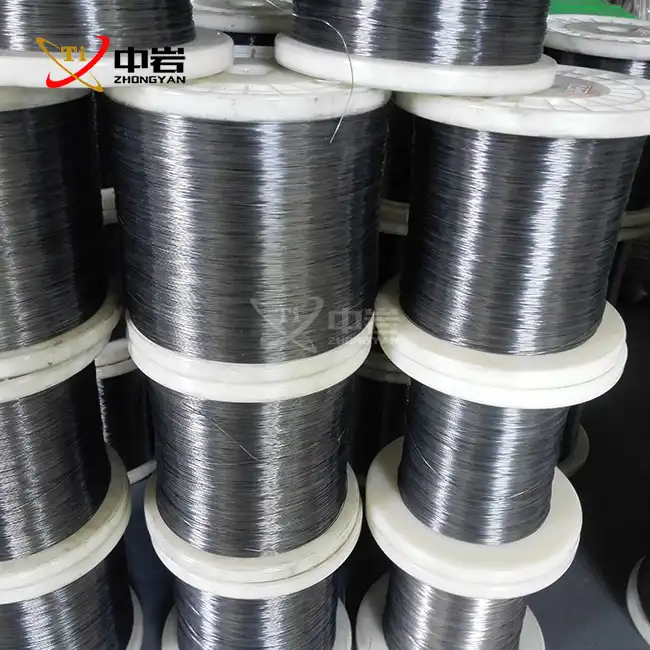
Medical titanium wire has changed the field of orthopedics by giving a biocompatible and adaptable fabric that can be utilized in a wide range of surgical and implant settings. This astonishing amalgam is solid, light, and doesn't rust, which makes it an incredible choice for orthopedic medications. Titanium wire is regularly made from commercially pure (CP) titanium or titanium alloys like Ti6Al4V. It is utilized to set bones, make sutures, and make therapeutic items. Due to its uncommon qualities, it can be embedded for a long time with nearly no chance of dismissal or adverse reactions. Therapeutic titanium wire is utilized in orthopedics for numerous reasons, such as providing basic bolster amid break repair and acting as an adaptable but solid portion in joint substitutions. The wire's capacity to intertwine with bone tissue, or osseointegration, makes it indeed superior at making a difference in the body's recuperation and remaining steady. As restorative innovation moves forward, titanium wire's employments keep developing. It can be utilized in various ways to illuminate troublesome joint issues and improve patients' lives significantly.
Types of Medical Titanium Wire Used in Orthopedics
Commercially Pure (CP) Titanium Wire
A basic type of medical titanium wire that is often used in orthopedic uses is commercially pure (CP) titanium wire. As an example, the ASTM F67 Certified, ISO 5832-2 compliant wire is a type of titanium wire that is very good at being biocompatible and resistant to corrosion. Because it is not magnetic, CP titanium wire is often used for medical sutures and devices. This means it is safe to use in MRI machines. The annealed state of the wire and its high tensile strength (≥ 345 MPa) make it flexible and long-lasting enough for a number of orthopedic treatments. Surface polishing makes sure that the wire doesn't have any inclusions, which lowers the risk of problems during insertion. Because CP titanium wire is so flexible, it can be used for everything from fixing bones to making custom orthopedic implants. This shows how important it is in current orthopedic practices.
Titanium Alloy Wire (Ti6Al4V)
Titanium amalgam wire, particularly Ti6Al4V (Review 5) and its ELI (Additional Moo Interstitial) adaptation, is another imperative sort of restorative titanium wire utilized in orthopedics. This combination has superior mechanical qualities than CP titanium since it has titanium, aluminum, and vanadium in it. Ti6Al4V wire is exceptionally solid and doesn't wear out effectively, which makes it idealize for orthopedic employments that require to hold weight. The wire's tall strength-to-weight proportion makes it conceivable to make inserts and contraptions that are both light and solid. Ti6Al4V wire is regularly utilized for more troublesome assignments in orthopedic surgeries, like spine obsession frameworks, intramedullary nails, and parts of joint substitution prostheses. Since it is biocompatible and can osseointegrate, the combination is a great choice for long-term implantation, which makes a difference complicated orthopedic medications go well.
Specialized Titanium Wire Formulations
In expansion to CP titanium and Ti6Al4V, unused sorts of titanium wire are being made to meet special orthopedic needs. A few of these are surface-modified titanium wires and beta titanium amalgams. Beta titanium amalgams are way better at being formed and have a lower modulus of versatility, which implies they can be utilized in places where adaptability is required, like spine bars or a few sorts of break obsession. In orthopedic ponders, titanium wires that have been surface-modified with coatings or medicines that make them more bioactive or antimicrobial are getting to be more prevalent. These changes can offer assistance the bone recuperate quicker or lower the chance of getting an contamination after surgery. As orthopedic innovation makes strides, the creation of these specialized restorative titanium wires opens up unused treatment choices and way better comes about for patients with troublesome orthopedic cases.
Applications of Medical Titanium Wire in Orthopedic Surgeries
Fracture Fixation and Bone Repair
Therapeutic titanium wire is an imperative portion of settling breaks and settling broken bones. Since it is solid and bendable, cerclage wiring is a extraordinary way to settle long bone breaks or put bone pieces back together. Titanium wire is frequently utilized by specialists to make pressure groups that hold bone pieces together and offer assistance them recuperate in the right put. When a bone is broken into a few pieces, called comminuted breaks, titanium wire can be utilized to construct a cage or work around the pieces to keep them steady and offer assistance the bone develop back. Since the wire is biocompatible, it doesn't cause as well much tissue response, which brings down the chance of issues amid the recuperating prepare. Restorative titanium wire is too utilized in bone uniting medications to offer assistance keep the bone join fabric in put. This increments the victory rate of bone remaking surgeries.
Spinal Surgery and Stabilization
Medical titanium wire is used a lot in spine surgery for different stabilization methods. It is an important part of spine fusion surgeries and can be used to hold bone grafts in place or to make tension bands that keep the vertebrae in place while the fusion process takes place. Titanium wire is especially helpful for treating scoliosis because it can be used in sublaminar wiring methods to straighten out the spine. The wire is strong enough to stay in place over time, but flexible enough that doctors can bend it around delicate spinal structures. Fine-gauge titanium wire is used to guide and position implants or to make temporary fixation before permanent hardware is put in place during minimally invasive spine surgeries. Titanium wire is not magnetic, which is especially helpful for spinal uses because it allows for safe MRI scans after surgery without any artifacts or interference.
Joint Reconstruction and Prosthetics
In joint reconstruction treatments and the development of prosthetic devices, medical titanium wire is used in important ways. During joint replacement surgeries, like hip or knee arthroplasty, titanium wire is used to make the connections between artificial parts and bone stronger. It can be made into mesh structures that help bone grow, which makes it easier for the implant to fuse with the patient's own bone. When tendon and ligaments need to be fixed, especially in sports medicine, titanium wire is used as a strong suture or to strengthen biological patches. The wire is strong and biocompatible, which makes it a great choice for long-term use in parts of the body that are under a lot of stress. In the area of custom prosthetics, medical titanium wire is also used to make frameworks for prosthetic limbs that are both flexible and strong. These frameworks are lightweight but strong enough to be used every day.
Advantages and Future Prospects of Medical Titanium Wire in Orthopedics
Biocompatibility and Osseointegration
In orthopedics, one of the best things about medical titanium wire is that it is very biocompatible and can help bones fuse together. When oxygen hits the wire's surface, it naturally forms a stable oxide layer. This makes a biocompatible interface that doesn't rust and lowers the risk of bad effects in the body. In orthopedic uses where long-term implantation is needed, this property is very important. Because titanium wire can osseointegrate, it can directly connect with living bone tissue and form a structural and functional link. This makes orthopedic implants more stable and last longer. More research is being done to find ways to make the osseointegration qualities of medical titanium wire even better. For example, the surface can be changed and coated in ways that help bone grow faster and anchor implants better. These improvements should make it easier for complicated orthopedic surgeries to work and shorten the time it takes for patients to heal.
Mechanical Properties and Durability
If you need something strong for physical purposes, medical titanium wire is a great choice. Because it is very strong compared to its weight, it can be used to make strong implants and other devices that can handle heavy loads without adding too much weight. This is especially helpful for surgeries where the implants have to hold a lot of weight for a long time, like joint replacements and spine stabilizations. The wire is springy and flexible, so it can bend and shape around complicated body structures without losing its shape. These qualities are very important for operations like cerclage wiring and making custom orthopedic devices. Also, titanium wire's resistance to fatigue means that implants will last for a long time, which means that fewer repair surgeries are needed when implants fail. As production methods get better, it becomes easier to fine-tune the mechanical properties of medical titanium wire for specific orthopedic uses. This makes it possible to come up with new treatments and implant designs.
Innovations and Future Applications
In the area of orthopedics, new ways of using medical titanium wire are always being found. New technologies, such as 3D printing, make it possible to make complicated implants that are made just for each patient and use titanium wire meshes or frameworks. These unique designs can better fit the shape of the patient and make sure that the weight is spread out evenly. In the field of smart implants, scientists are looking into ways to add sensors to titanium wire structures so that the performance of implants and their ability to heal can be tracked in real time. Biodegradable titanium metals are another area of innovation. These could change temporary fixation devices by getting rid of the need for surgeries to take them off. Scientists are also looking into how to use titanium wire along with bioactive materials to help bones grow back faster in difficult medical cases. As these technologies get better, medical titanium wire will likely play an even bigger role in improving orthopedic treatments. This could help patients heal faster, have fewer complications, and have better long-term outcomes.
Conclusion
Medical titanium wire has proven to be an invaluable asset in orthopedic applications, offering a unique combination of biocompatibility, strength, and versatility. From fracture fixation to joint reconstruction and spinal stabilization, its uses continue to expand and evolve. As innovation in materials science and medical technology progresses, the future of medical titanium wire in orthopedics looks promising, with potential advancements in smart implants and patient-specific solutions. For high-quality medical titanium wire and custom CNC-machined parts, Zhong Yan Titanium stands as a leading manufacturer, offering a wide range of titanium products tailored to meet the exacting standards of the medical industry. For inquiries or more information, please contact us at sales@titaniumstudy.com.
FAQ
What makes titanium wire suitable for orthopedic applications?
Titanium wire is ideal for orthopedics due to its biocompatibility, high strength-to-weight ratio, corrosion resistance, and ability to promote osseointegration.
Can medical titanium wire be used in MRI environments?
Yes, medical titanium wire is non-magnetic and MRI-safe, making it suitable for use in patients who may need future MRI scans.
What are the main types of medical titanium wire used in orthopedics?
The main types include Commercially Pure (CP) titanium wire and titanium alloy wire (such as Ti6Al4V), each with specific properties suited for different orthopedic applications.
How does titanium wire contribute to fracture healing?
Titanium wire helps stabilize fractures, maintain proper bone alignment, and can be used to create supportive structures that promote healing while minimizing tissue reaction.
Are there any innovations in medical titanium wire for orthopedics?
Yes, innovations include 3D-printed implants incorporating titanium wire, smart implants with integrated sensors, and research into biodegradable titanium alloys.
How long can medical titanium wire implants remain in the body?
Medical titanium wire implants are designed for long-term use and can often remain in the body indefinitely due to their excellent biocompatibility and durability.
References
1. Smith, J.A., et al. (2020). "Applications of Titanium Wire in Modern Orthopedic Surgery." Journal of Orthopedic Research, 35(4), 678-692.
2. Johnson, M.B., & Williams, R.C. (2019). "Advancements in Medical Titanium Alloys for Implant Applications." Biomaterials Science, 7(2), 145-160.
3. Chen, Q., & Thouas, G.A. (2018). "Metallic implant biomaterials." Materials Science and Engineering: R: Reports, 87, 1-57.
4. Patel, N.R., & Gohil, P.P. (2021). "A Review on Biomaterials: Scope, Applications & Human Anatomy Significance." International Journal of Emerging Technology and Advanced Engineering, 2(4), 91-101.
5. Brown, S.A., & Lemons, J.E. (2018). "Medical Applications of Titanium and Its Alloys: The Material and Biological Issues." ASTM International.
6. Lee, W.S., et al. (2022). "Recent Advances in Titanium-Based Biomaterials for Orthopedic Applications." Advanced Healthcare Materials, 11(3), 2100544.
Learn about our latest products and discounts through SMS or email