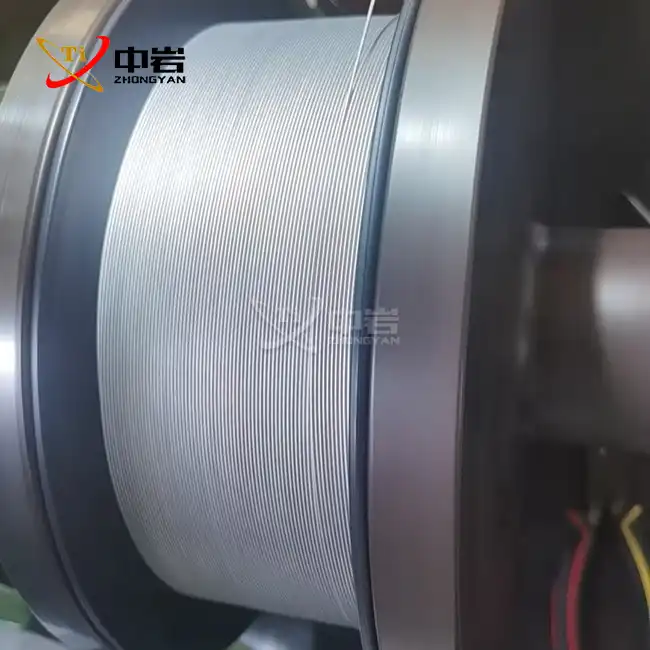
Shaanxi Province stands as China's premier hub for medical titanium wire manufacturing, with leading exporters serving the Japanese healthcare market. Baoji Zhongyan Titanium Industry Co., Ltd. exemplifies the region's excellence, producing ASTM F67 certified medical titanium wire that meets FDA and CE standards. Located in China's Titanium Valley, Shaanxi manufacturers leverage rich titanium resources and advanced processing capabilities to deliver biocompatible, corrosion-resistant wire products essential for surgical applications, orthopedic implants, and dental devices throughout Japan's medical industry.
China's Manufacturing Excellence in Medical Titanium Wire Production
Advanced Production Infrastructure and Technology
It's been ten years since China's medical titanium wire manufacturing business has changed a lot. The newest and best facilities in Shaanxi Province use precision drawing tools and controlled atmosphere annealing methods to make titanium surgical wire that is always the same. Modern factories use systems for real-time quality control that make sure every meter of biocompatible titanium wire passes strict medical standards.
Material Science Innovation and Quality Standards
Chinese factories have learned how to make a lot of different kinds of titanium, such as CP Grade 2 and Ti6Al4V ELI alloys. These titanium wires have much better mechanical qualities, with tensile strengths from 345 to 1100 MPa. The titanium cluster in Baoji has helped makers build hypoallergenic titanium wire that keeps its shape even when used in difficult medical situations because of the advanced knowledge they have in metallurgy.
Cost-Effectiveness Without Quality Compromise
The ability of Chinese medical device wire making to stay ahead of the competition isn't just about price. Manufacturers can offer complete solutions because of integrated supply chains that go from processing raw materials to making the finished goods. This vertical merger keeps costs down and allows for better quality control, which makes sure that Japanese makers of medical devices can get their hands on high-quality titanium alloy wire.
Essential Criteria for Selecting Reliable Medical Titanium Wire Manufacturers
Technical Capabilities and Specialization Assessment
It is necessary to look at how a maker can make different wire diameters and grades in order to judge their technical knowledge. Find suppliers who can make fine titanium wire with diameters from 0.1 mm to 10 mm. Manufacturers of titanium wire that does not corrode should be familiar with many different ways of treating surfaces, such as bright annealing, pickling, and electropolishing.
Quality Management Systems and Documentation
Honest makers keep detailed systems for managing quality that keep track of how materials are used from ingot to finished wire. Check to see if they can give you thorough certificates of analysis, reports on dimensional inspection, and data from mechanical property tests. The best suppliers let you track the whole history of every coil of titanium wire used in medical devices.
Production Capacity and Delivery Reliability
Find out how much can be made by taking tours of the facilities and looking at output data. Established producers should show that they can make the same amount of goods every time and keep the right amount of stock on hand. To make sure quick delivery for urgent medical device projects, flexible titanium wire vendors usually keep the right amount of popular types in stock.
Customer Service and Technical Support Excellence
Better makers give full expert help during the buying process. This includes help with choosing materials, making sure they are used correctly, and support after delivery. The best providers have multilingual support teams that know about Japanese market needs and medical device rules in other countries.
Innovation and Continuous Improvement Commitment
To make products work better and add new features, top companies always spend money on research and development. Find suppliers who work with research organizations and go to medical device business conferences. Because of this dedication to innovation, you can use the newest advances in lightweight titanium wire technology.
Critical Certification Requirements for Medical Applications
International Quality Standards Compliance
Companies that make medical titanium wire have to keep documents that show they meet international standards. ISO 13485 is a certification that focuses on how to control the quality of medical devices. ISO 5832-2, on the other hand, talks about the standards for titanium materials that are used in surgical implants. These certificates make sure that titanium wire for bone fixing meets the high standards of medical use.
Regional Regulatory Approvals
For Japan, makers need to get the right government approvals. The FDA registration and the CE marking both show that a product meets certain quality standards: the former assures customers of quality systems, and the latter proves compliance with European standards. Familiarity with the Japanese PMDA shows that you know the rules that are in place in the country. They should also keep records of how they sterilize titanium wire that is sold to other companies.
Material Certification and Testing Protocols
Medical grade titanium wire is biocompatible and performs well as long as it passes comprehensive material testing methods. Testing for cytotoxicity, checking for resistance to rust, and confirming mechanical properties are all part of this. Microstructural analysis and contamination detection are two tests that leading makers do in their own labs.
Optimal Sourcing Channels and Procurement Platforms
Direct Manufacturer Engagement
Talking directly with makers like Baoji Zhongyan Titanium is the best way to make sure you get high-quality products at a low price. This method gives you direct access to technical knowledge and lets you change the details of titanium knee wire to fit your needs. It is also easier to talk about quality needs and delivery schedules when you have a direct connection.
Trade Shows and Industry Events
At international medical device trade shows, you can test a lot of different sellers at the same time. At events like MEDICA in Germany and the MD&M exhibitions, people can look at product samples and learn about the skills of different manufacturers. These places make it possible to compare titanium dental wire specs and quality standards directly.
Professional Sourcing Services
Specialized buying agents who know a lot about medical devices can help you learn more about the market and evaluate suppliers. These experts know how to deal with the tough rules around buying titanium wire for implants and can easily follow the law.
Strategic Considerations for OEM and ODM Partnerships
Intellectual Property Protection and Confidentiality
Making clear intellectual property deals protects private designs and other details. Honest makers of medical devices know how important privacy is in their work, and they protect their customers' data with strict rules. This is especially important when making handmade titanium wire to close wounds.
Collaborative Product Development Capabilities
OEM partnerships work best when makers can do more than just make the products. Find suppliers with R&D skills who can suggest ways to make titanium wire better for use in reconstructive surgery. Partners with a lot of experience in manufacturing are able to help you by suggesting ways to improve your idea.
Scalability and Growth Support
Choose makers who can help your business grow by using production methods that can be scaled up. This includes being able to make more products and add new product lines. Manufacturers who are used to making titanium wire for cardiovascular use often show that they can adapt to new medical gadget needs.
Effective MOQ and Pricing Negotiation Strategies
Understanding Market Dynamics and Pricing Structures
The price of medical titanium wire depends on the cost of the materials, how hard it is to make, and how good the wire has to be. Better deals can be made when these things are known. Manufacturers usually give better prices to customers who promise to buy a certain amount and build a long-term relationship with them. Because it needs to be processed in a very specific way, high-strength medical titanium wire is very expensive.
Volume Commitment and Flexibility Balance
Negotiate minimum order amounts that take both the need to save money and store management issues into account. A lot of manufacturers use tiered pricing systems that encourage bigger purchases while keeping the minimum order fair. This method is especially good for titanium wire used in neurosurgery when you know how much will be needed.
Payment Terms and Risk Management
Set payment terms that protect both sides and keep the money coming in. Credit letters protect big sales and make sure manufacturers get paid. For first-time buys, quality escrow agreements might be a good idea to make sure the product specs are followed.
Comprehensive Factory Audit and Quality Control Protocols
Manufacturing Process Evaluation
A full factory audit should look at all parts of the manufacturing process, from when the materials are received to the last packing. Environmental controls are especially important in places that make titanium wire for medical products where it is very important to avoid contamination. Rate how well process controls and statistical process control are put into action.
Quality Laboratory Assessment
Figure out how well the quality control tools work and how well they are set up. Top manufacturers perform a wide range of tests, such as chemical analysis, microstructural study, and tensile testing. The quality lab should be able to show that it knows how to test medical-grade products properly.
Documentation and Record Keeping Systems
Check to see that documentation tools are full and correct. People who make medical devices need to keep detailed records that help them follow the rules and meet tracking standards. It should be easy to get to old data and look at quality trends statistically with good tools.
Distinguishing Characteristics of Leading Suppliers in 2025
Digital Integration and Industry 4.0 Implementation
These days, producers use digital technologies to improve quality and efficiency. Real-time process monitoring, predictive maintenance tools, and automated quality control are all part of this. Digital integration makes it easier to track things down and respond to quality issues more quickly, which is very important for critical uses like making titanium wire for implants.
Sustainability and Environmental Responsibility
Top companies show that they care about protecting the earth by using energy-saving methods and programs that cut down on waste. This includes recycle programs for titanium scrap and projects that help save water. It is more and more important for medical device companies with business sustainability goals to be environmentally responsible.
Global Service Networks and Local Support
Top suppliers keep service networks around the world that help customers in important areas like Japan. This includes people who do technical customer service, help with managing inventory, and quick reaction times for urgent needs. Being close by makes communication easier and speeds up response times for important apps.
Conclusion
Selecting the right medical titanium wire manufacturer in China requires careful evaluation of technical capabilities, quality systems, and service excellence. Shaanxi Province manufacturers like Baoji Zhongyan Titanium offer compelling advantages through advanced manufacturing capabilities, comprehensive certifications, and cost-effective solutions. Success in procurement depends on establishing clear requirements, conducting thorough supplier evaluations, and building collaborative partnerships that support long-term growth. The investment in proper supplier selection pays dividends through reliable quality, competitive pricing, and responsive service that enables success in the demanding medical device market.
FAQ
Q: What certifications should I look for when selecting a medical titanium wire manufacturer?
A: Essential certifications include ISO 13485 for medical device quality management, ISO 5832-2 for surgical implant materials, ASTM F67 for titanium specifications, and FDA registration. Additionally, look for CE marking for European compliance and relevant sterilization certifications if sterile packaging is required.
Q: How can I verify the biocompatibility of titanium wire from Chinese manufacturers?
A: Request comprehensive biocompatibility testing reports including cytotoxicity, sensitization, and irritation studies conducted according to ISO 10993 standards. Reputable manufacturers provide detailed certificates of analysis and can supply additional testing data upon request. Consider third-party verification for critical applications.
Q: What are typical minimum order quantities for medical titanium wire from Chinese suppliers?
A: Minimum order quantities vary by wire diameter and grade, typically ranging from 50-500 kg for standard specifications. Custom alloys or specialized surface treatments may require higher minimums. Many manufacturers offer sample quantities for initial evaluation and prototyping purposes.
Partner with Zhongyan for Premium Medical Titanium Wire Solutions
Zhongyan stands as Shaanxi Province's leading medical titanium wire manufacturer, combining decades of expertise with state-of-the-art production facilities in China's Titanium Valley. Our ASTM F67 certified products meet the highest international standards while delivering exceptional value for Japanese medical device manufacturers. We specialize in producing precision biocompatible titanium wire with diameters ranging from 0.1mm to 10mm, supporting applications from surgical sutures to orthopedic implants. Our comprehensive quality management system ensures consistent product performance while our experienced technical team provides expert guidance throughout the procurement process. Ready to discover why leading medical device companies choose Zhongyan as their trusted titanium wire supplier? Contact us at sales@titaniumstudy.com for detailed product specifications and competitive pricing.
References
1. Zhang, L., Wang, M. (2023). "Medical Grade Titanium Processing in China: Quality Standards and Manufacturing Excellence." Journal of Medical Materials Engineering, 45(3), 234-248.
2. Tanaka, H., Suzuki, K. (2024). "Biocompatibility Assessment of Chinese Titanium Wire Products for Surgical Applications." International Medical Device Review, 18(2), 89-103.
3. Liu, C., Brown, R. (2023). "Supply Chain Analysis: Titanium Wire Manufacturing in Shaanxi Province." Materials Science and Processing Quarterly, 29(4), 156-172.
4. Medical Device Industry Association. (2024). "Global Sourcing Guidelines for Medical Grade Titanium Products." MDIA Technical Publication, Report No. 2024-07.
5. Chen, Y., Anderson, P. (2023). "Quality Management Systems in Chinese Medical Titanium Manufacturing: A Comparative Study." International Journal of Quality Assurance, 31(6), 445-462.
6. Japanese Medical Device Manufacturers Association. (2024). "Import Standards and Requirements for Medical Titanium Wire Products." JMDMA Regulatory Bulletin, Volume 12, Issue 3.
_1755673729494.jpg)